
What is the Latest Ultrasonic Rhinoplasty Technique?
Medically reviewed by Op. Dr. ÖmerENT Specialist
Piezoelectric rhinoplasty is the latest ultrasonic technique.
The Shift from Mechanical Trauma to Acoustic Precision
In the highly specialized realm of facial plastic surgery, the traditional way of changing the nasal framework was, to put it bluntly, violent. It relied on brute force via surgical tools such as hammers and chisels (osteotomes) to break and remodel the bone. This usually created unpredictable fractures and widespread tissue trauma, and led to long recoveries marked by significant facial bruising. While the procedure was reliable in a skilled surgeon, this old method failed to offer the minuscule control needed to do an entirely perfect, non-traumatic contour.
From a clear clinical standpoint, the most recent innovation in nasal plastic surgery completely gets rid of mechanical force through the use of acoustic precision. The main feature of modern face contouring is full-spectrum Ultrasonic Rhinoplasty, through the application of very high-tech piezoelectric instrumentation. This technique makes use of sound wave technology rather than traditional force, so with this, it is possible for top surgeons to achieve perfect sculpting, polishing, and repositioning of the nasal bones in a way similar to how a diamond is cut; This dramatically lowers surgical trauma and the time taken for biological healing.
Full-Spectrum Piezoelectric Sculpting

What makes this new surgical approach really stand out is the Piezoelectric device, a highly advanced surgical tool that has micro-bits that reach an ultrasonic frequency through oscillation. Compared to traditional surgical rasps that cause the indiscriminate destruction of the nasal bridge, these latest ultrasonic tips have been designed to have only a very localized effect. The waves are of such a precise frequency that they only cut hard bone, making them incapable of harming the soft tissues, even biologically.
The fact that micro-level tissue selection is made possible is clinically the greatest advantage of this newest ultrasonic method. Since the high-frequency vibrations safely bypass the delicate nasal cartilage, mucous membranes, blood vessels, etc. in the interior, the internal anatomy stays untouched even during the bone sculpting process. Hence, the patients almost never have blood loss during surgery, experience only a little swelling after the operation and, most importantly, do not get the deep periorbital bruising (raccoon eyes) that is classic of old-fashioned rhinoplasty techniques.
Synergizing Ultrasonic Tools with Dorsal Preservation
The ultrasonic tool in itself is ground-breaking. But the very recent innovation combines ultrasonics with preservation rhinoplasty, a technique in which the bone and structure of the nose is not altered much through removal. A common example of traditional rhinoplasty where a big dorsal hump was the problem is an instance of destruction of the nasal bridge. In such a case, the removal or excision of the nasal bridge was required, which not only destroyed aesthetically pleasing lines of the nose but was also difficult to reconstruct through cartilage grafting afterwards. The latest ultrasonic approach of getting rid of a dorsal hump completely does away with the destructive method by working at the base of the nasal framework. The nasal bone sculpting at the lowest level of the nose, the most profound and least visible part, will be done only.
The surgeon very gently removes a small strip of bone from a patient’s nose with ultra-high-tech piezos, which is quite deep inside the face and completely avoids the surface of the bridge. Once the innermost layer has been removed, then the whole, untouched, beautiful nasal bridge is gently moved downward into the available new space, thus completing the "let-down" maneuver, which, however, is done with precision ultrasonics. It is with this method that a patient can completely preserve her very own smooth, smooth dorsal lines. This is the surest way that the patient's nose, both aesthetically and functionally, will be healthy, and the patient ages naturally and totally away from the operated and “surgical” look of old techniques.
Preserving Structural Integrity and Post-Operative Boundaries
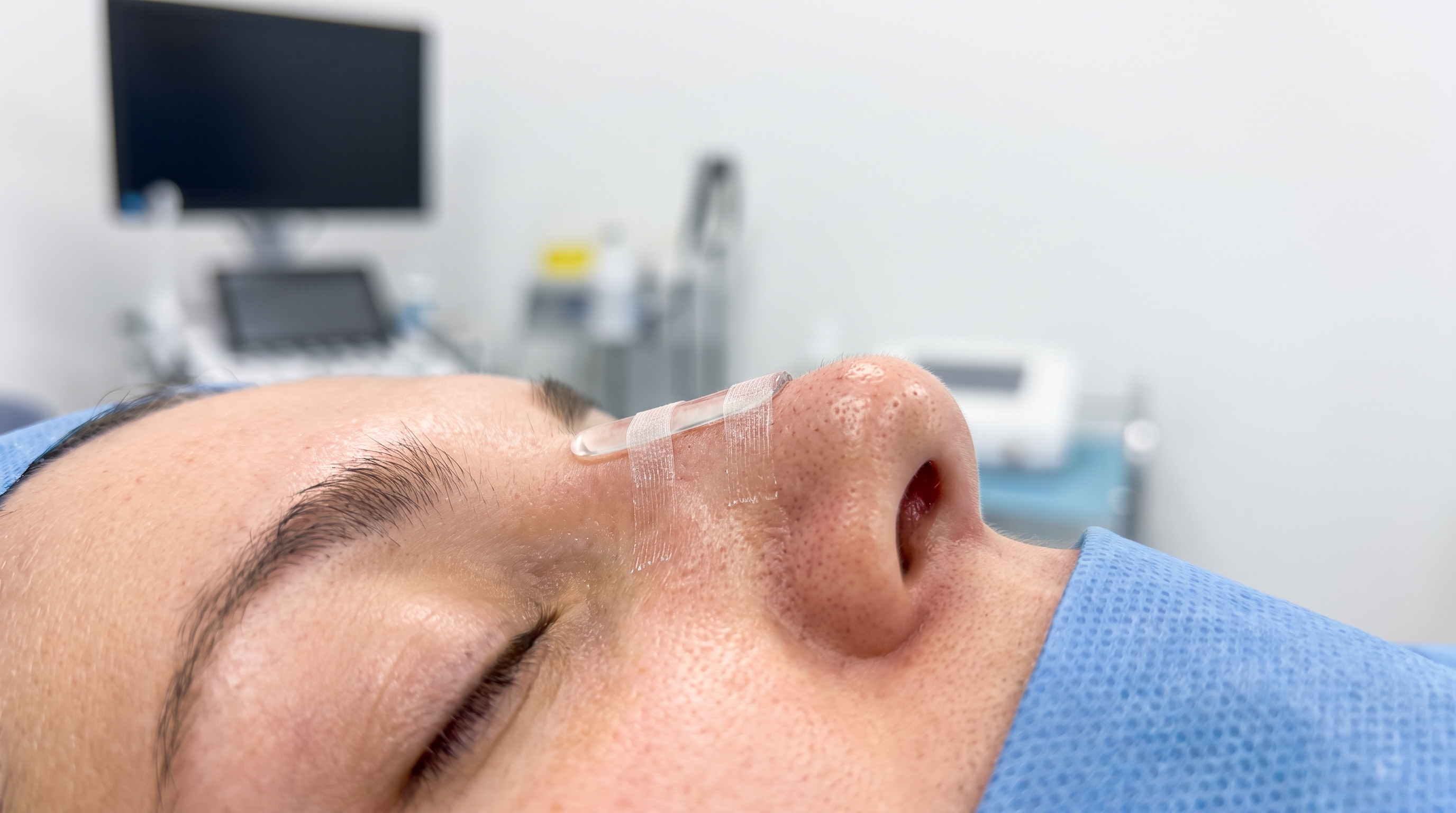
Strictly following the rules for the post-surgery period is the most important thing for patients wanting to perfect their facial profiles completely. The freshly contoured nasal bones, internal ligaments that have been conserved, and the soft mucosal lining rely on physical protection of the body to create a strong bond of collagen at critical initial stages after the operation, from 6 to 8 weeks.
Because of this, to have your refined nasal bones perfectly locked into the correct structures with the best accuracy, you must keep your nose covered in a medical thermoplastic splint and wear medical-grade tape during the first seven to ten days. You should sleep on your back with your head elevated only to avoid a face shape that is uneven. Additionally, after surgery, eyeglasses should not be worn for at least six weeks to prevent bone depressions in healing areas. As it is well known that using nicotine will interfere with wound healing since the blood flow to your skin is affected and the oxygen content of the wound is reduced to a point that makes healing difficult, smoking is completely forbidden during the recovery stages.
LIN Europe Clinic
Selecting LIN Europe Clinic means having an extraordinary global spa and top medical environment as well, where the surgeon who takes care of not only cosmetics but also structural, rhinoplasty, and surgical pathways will be a doctor with an incredible combination of professionalism and care. It should be clear to you that the most precise ultrasonic bone sculpting, the preservation mechanism of “let-down”, and the soft-tissue changes require a very sophisticated setting, a thorough explanation of the procedure, and continuous support in order to help the patient feel safe and be assured that she is in a place where everything is based on a scientific approach.
By choosing and entrusting your surgeon and the rest of this high-end medical staff for your facial aesthetic surgery, you can be assured that they will give the same level of attention to the condition of your overall body as the face for which you were seeking surgery at the same time, and with the added benefit of your having a totally peaceful mind during this time.
Therefore, with the help of LIN Europe Clinic, you can make sure that your cosmetic improvement and your systemic health are absolutely safeguarded in a way that will not leave you worried in the slightest about your results and recovery period. This means you can just look into a mirror and feel proud, confident in your best facial and overall shape with a relaxed mind and a satisfied heart. That is complete satisfaction and a beautiful result all in one, and you deserve it.
Frequently asked questions
What is the latest ultrasonic rhinoplasty technique?
At the core of this method is the combination of full-spectrum Piezoelectric (ultrasonic) bone-cutting technology with Dorsal Preservation Rhinoplasty. It is a surgical technique that enables the base bone to be cut precisely without damaging the natural bridge by using sound waves.
How does an ultrasonic rhinoplasty avoid causing black eyes?
The Piezoelectric tool is extremely discriminative. The ultrasonic frequencies employed are adjusted precisely so that only dense bone can be cut. As the device literally cannot cut soft tissues, the surrounding vessels and capillaries stay undamaged. The hemorrhaging is minimized and the severe bruising that gives rise to "black eyes" is prevented.
Is ultrasonic rhinoplasty better than traditional methods?
In a professional setting, definitely. Old-school techniques involve the use of hammers and chisels, tools that are responsible for uncontrolled fractures and considerable trauma to the tissues. On the other hand, ultrasonic devices provide the surgeon with a great degree of accuracy; the surgeon can not only cut but also polish and shape the bone in a most seamless manner. All this leads to quicker healing, as well as a more predictable and natural result.
Can the latest ultrasonic technique fix a deviated septum?
Yes, it can. The ultrasonic devices offer not only a painless operation but also a perfect solution for people with a deviated septum. The bone components of the deviated septum are delicately scraped and reshaped without disturbing the tender surface layers, which is the main goal of the mucosal lining.
How fast is the recovery from ultrasonic rhinoplasty?
Since it is a very minimally invasive procedure for the soft tissues, healing is much faster. A splint removal after 7 days is common and the patients get back to their social life only a few weeks thereafter. Only minimal swelling shows up and there is hardly any visible bruising if the operation is carried out without any complications unlike the other method.
This article is general information, not medical advice, and does not replace a consultation. Every procedure carries risk and outcomes vary from person to person.
Last reviewed 1 September 2026