What is the Most Advanced Rhinoplasty Method?
Medically reviewed by Op. Dr. ÖmerENT Specialist
Ultrasonic (Piezo) rhinoplasty.
The Evolution of Nasal Sculpting
It might sound a bit harsh, but historically most rhinoplasty techniques basically relied on mechanical force. This meant that a surgeon’s hammer and chisel, or osteotomes, were a big part of the work when it came to breaking and reshaping the nasal bones. Even with this, it is still a good method when carried out by a masterful physician, it does not mean that the old technique did not inflict a significant amount of trauma to the surrounding vascular structures, cartilage, and soft tissues, hence the reason why many surgical procedures lead to major post-operative bruises, extensive swelling, and unpredictable healing processes which kept the patients away from their normal lives for weeks!
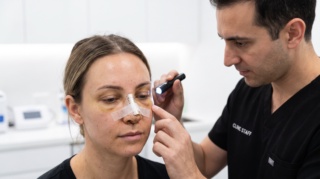
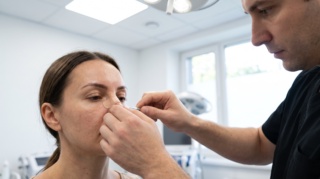
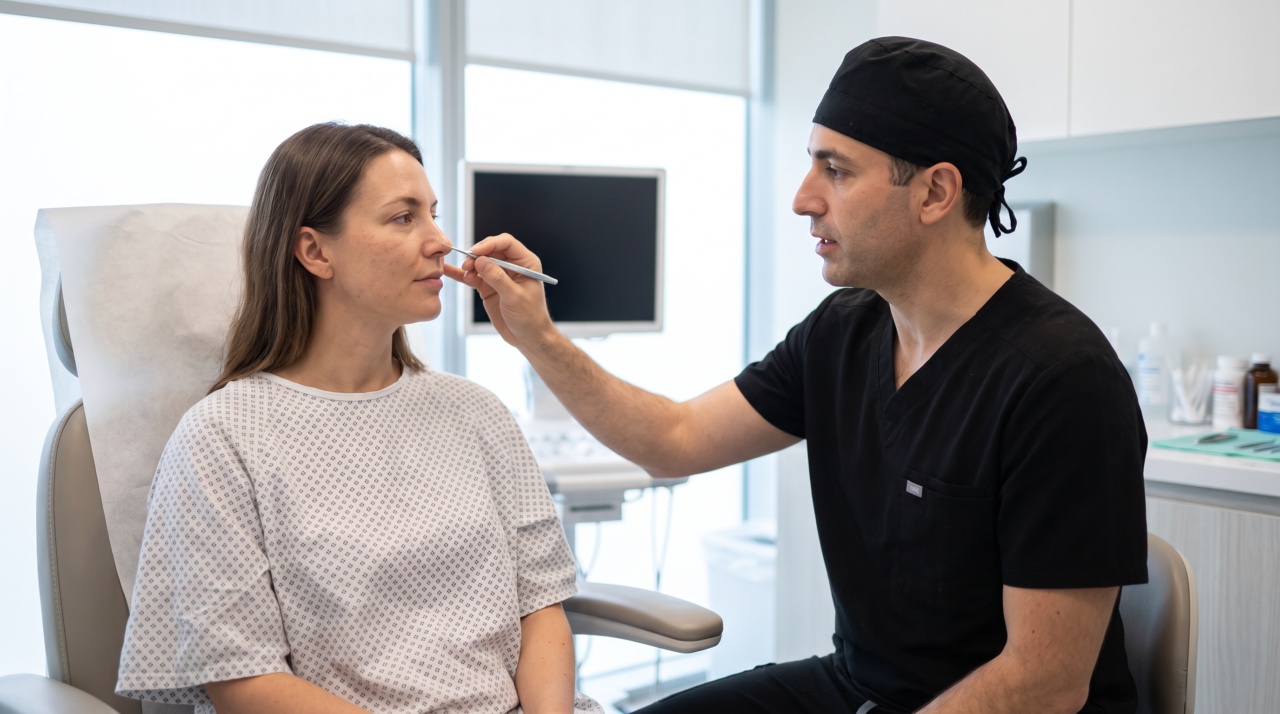
If asked from a medical standpoint, the best advanced rhinoplasty techniques today would be the combination of Ultrasonic (Piezo) Technology with Preservation Rhinoplasty. This new dual method has rendered the old way, hammers and chisels, completely unnecessary and in contrast, the method has been redeveloped to use high-frequency sound waves at a micro-level of bone while keeping the original structure of the nose fully intact. Hence, this procedure is characterized by a beautiful shape and faster restoration.
Ultrasonic (Piezo Technology) Rhinoplasty
This new technology-based surgical revolution is represented by the Piezoelectric device which is a top-notch piece of medical equipment that harnesses ultrasonic vibrations to cut and shape denser bones of the nose. The ultrasonic inserts, unlike traditional metal rasps or osteotomes that crush and tear, work specifically at a high-frequency which is only capable of dealing with hard bone. This very precise feature enables the surgical removal or alteration of the nasal framework with exactness akin to a diamond cutter, leaving the surface smooth, narrow, and sculpted.
Besides the microscopic-level precision, the greatest benefit of ultra-SONIC rhinoplasty is its total selectivity toward tissues. The sound waves, which have a very high frequency, do not biologically allow the cutting of soft tissue, i.e., the cartilage of the nose, mucous membranes, vessels, etc. Thus, through a bone sculpting operation, those parts remain untouched and in good condition. So, not only do patients hardly bleed but, also their bruising is minimized to a great extent without leaving severe “raccoon eyes.” In addition, they can start resuming their work and daily routines soon, pain-free, with a faster recovery.
Preservation Rhinoplasty
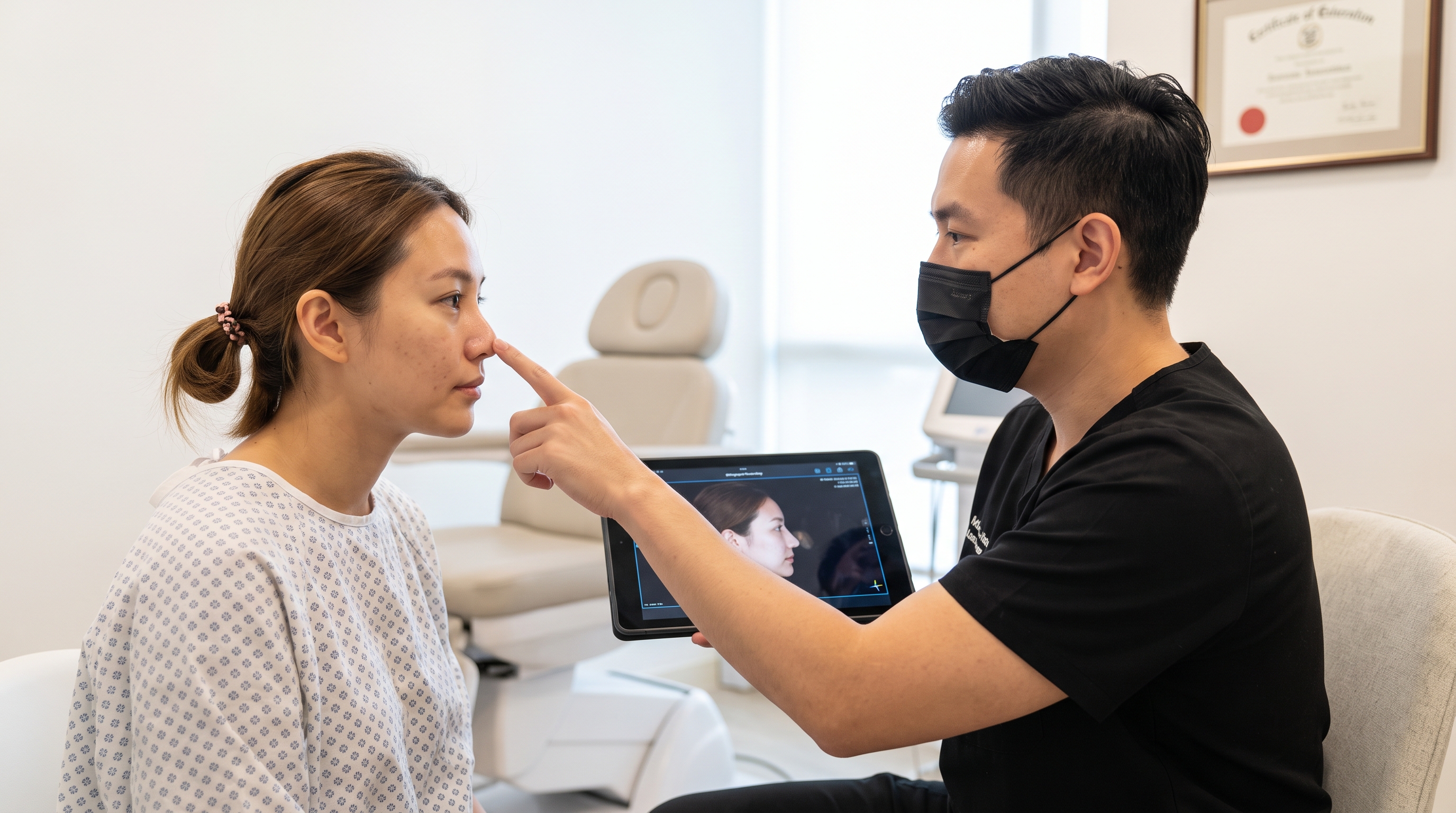
Preservation rhinoplasty serves as a philosophy that works in hand with the tiny precision of ultrasound devices. In the past, to eliminate a dorsal hump, a surgeon would cut and remove the top of the nose, causing the destruction of the dorsal aesthetic lines. Then, a reconstruction phase with cartilage grafts was needed to get the nose shape right and to get back the nose’s nose bridge shape. This approach changes preservation rhinoplasty, which uses totally opposite principles of destruction. Rather than shaving off the upper surface of the nasal bridge, one carefully removes the very last layer of nasal bone and cartilage at the deepest part of the facial architecture.
When the base strip is taken, the bridge of the whole, healthy nose is pushed lower - that is the technique clinically referred to as either the “Let-down” or the “Push-down.” Since none of the natural surface of the nose bridge has been damaged through cutting, fracturing, or any form of compromise, the patient’s original smooth dorsal lines are entirely preserved. This modern method of maintaining a structure not only greatly reduces the risk of long-term issues related to breathing but also prevents the mid-vault collapse and the nose from becoming "surgically operated" with age.
Ensuring Structural Integrity and Setting Post-Operatively Boundaries
During your recovery period, it is very important to strictly stick to your physical limits (you cannot just do whatever you like), especially if you want maximum results. Your newly reshaped nasal bones as well as internal ligaments that are preserved and the sensitive mucosal lines will depend on full mechanical protection in order to develop strong collagen bonds in a crucial time span of six to eight weeks after your operation. With no strong protection, unintentional injury or uneven swelling within a nose could push the small breaks in a wrong direction, leading to uneven contours and ruined aesthetic results.
In order for your redesigned nose shape to get locked in place with the highest level of anatomical accuracy, you need to be wearing the thermoplastic customized splint as well as medical-grade taping continuously for the very first seven to ten days. Additionally, you are to rest only in the lie-back position of bed while having your head elevated at all times to prevent the asymmetrical facial features caused by gravity, plus you need to completely steer clear of heavy eyeglasses for at least six weeks to avoid indentations in developing nasal bones. Finally, one thing is to completely eliminate nicotine and any kind of tobacco, because nicotine deprives the wounds of oxygen-rich blood which is essential for clean, safe and speedy healing.
LIN Europe Clinic
By entrusting your facial features, advanced structural rhinoplasty, and surgical pathways to us at LIN Europe Clinic, you enter one of the world’s best healthcare resorts, where you can be sure to get top-level medical expertise combined with deep empathy and genuine concern for what you experience on a personal level. We understand that in an excellent rhinoplasty case, not only perfect ultrasonic bone contouring is necessary, but also the preservation mechanisms (let-downs, etc.) and soft-tissue adaptations should be carried out flawlessly without a single error. This is why, only if you are given a top-notch, highly professional work environment, will you get to be at the top of your game.
LIN Europe Clinic in Istanbul, Turkey, your surgeon, and the whole medical team will take full care of you and your well-being, and also guide your healing process step by step as you recover your face shape to the full. Our team will monitor your structural status and physical condition with great accuracy throughout the whole period of your healing and recovery. You will be given extensive pre-operation counseling sessions with thorough mapping as well as imaging review and will be provided with an individualized, step-by-step healing plan which will be tailored precisely to help you get over your recovery and return to your normal routine very quickly.
Frequently asked questions
What is the most advanced rhinoplasty method?
The latest method is a combination of Ultrasonic (Piezo) Rhinoplasty and Preservation Rhinoplasty. This technique uses sound to sculpt bone instead of hammers, and it changes the nose from the base upwards in order not to destroy the natural top structure of the nose.
How does Piezo (Ultrasonic) rhinoplasty work?
Piezo technology is a highly specialized instrument, which sends ultrasonic waves. These high-frequency oscillations are only directed at bone for cutting and polishing without harming the delicate parts surrounding it, e.g., soft tissues, blood vessels, and cartilage.
What is Preservation Rhinoplasty?
Preservation rhinoplasty is more patient-centered since instead of cutting down and destroying the bridge of nose by shaving it off to solve a bump, small piece of tissue underneath the bridge is removed so that the nose drops the remaining whole structure as a result while still maintaining the natural shape of the bridge without change.
Does ultrasonic rhinoplasty reduce recovery time?
Indeed there is. The ultrasonic device leaves patients with reduced amount of wounds that are either bleeding or causing serious pain, since there is no need to cut the vessel or soft tissue. Therefore, there will not only be much less bleeding but even the swelling will be to the minimum, so that the typical bruising like "black eye" that appears after traditional hammer-and-chisel techniques hardly takes place.
Are the results of preservation rhinoplasty permanent?
Preservation rhinoplasty results are definitely permanent, as the bone structural change is done during the healing of the tissue. Moreover, by leaving the ligaments and dorsal structures of the nose in their original forms, the nose not only functions better but also remains more youthful for a lifetime.
This article is general information, not medical advice, and does not replace a consultation. Every procedure carries risk and outcomes vary from person to person.
Last reviewed 28 August 2026