Midfacelift: Can a Midface Lift Fix Heavy Malar Bags?
Medically reviewed by Op. Dr. Halil İbrahimPlastic, Reconstructive and Aesthetic Surgery
Yes, it can improve prominent malar bags.
Biological Explanation of Malar Bags and Festoons
In the realm of facial plastic surgery, heavy malar bags remain one of the toughest structural riddles in facial rejuvenation. Compared to the lower eyelid bags caused by the herniation of orbital fat beneath the eyes, the malar bags appear at a lower level on the malar eminence (the upper cheekbone). These big bulges arise mainly as a result of the extreme stretch and loosening of both the orbicularis retaining ligament and the zygomaticocutaneous ligament, thereby allowing a loose hammock to be created in which localized fat, interstitial fluid, and redundant muscle can drip down.
From a strictly clinical perspective, classic lower eyelid operations (a so-called blepharoplasty) have no effect at all in the case of removing malar bags or, in some cases, even causing their visibility to increase due to the changes in tissue tension. A malar festoon is the consequence of a profound structural collapse of the midfacial architecture rather than a mere skin issue; thus, correcting those features requires a surgical intervention that operates not only at the surface level but also at the deep level of the tissues. These anatomical facts definitely make the midface lift the absolute surgical solution for fixing heavy malar bags.
Midface Structural Rearrangement
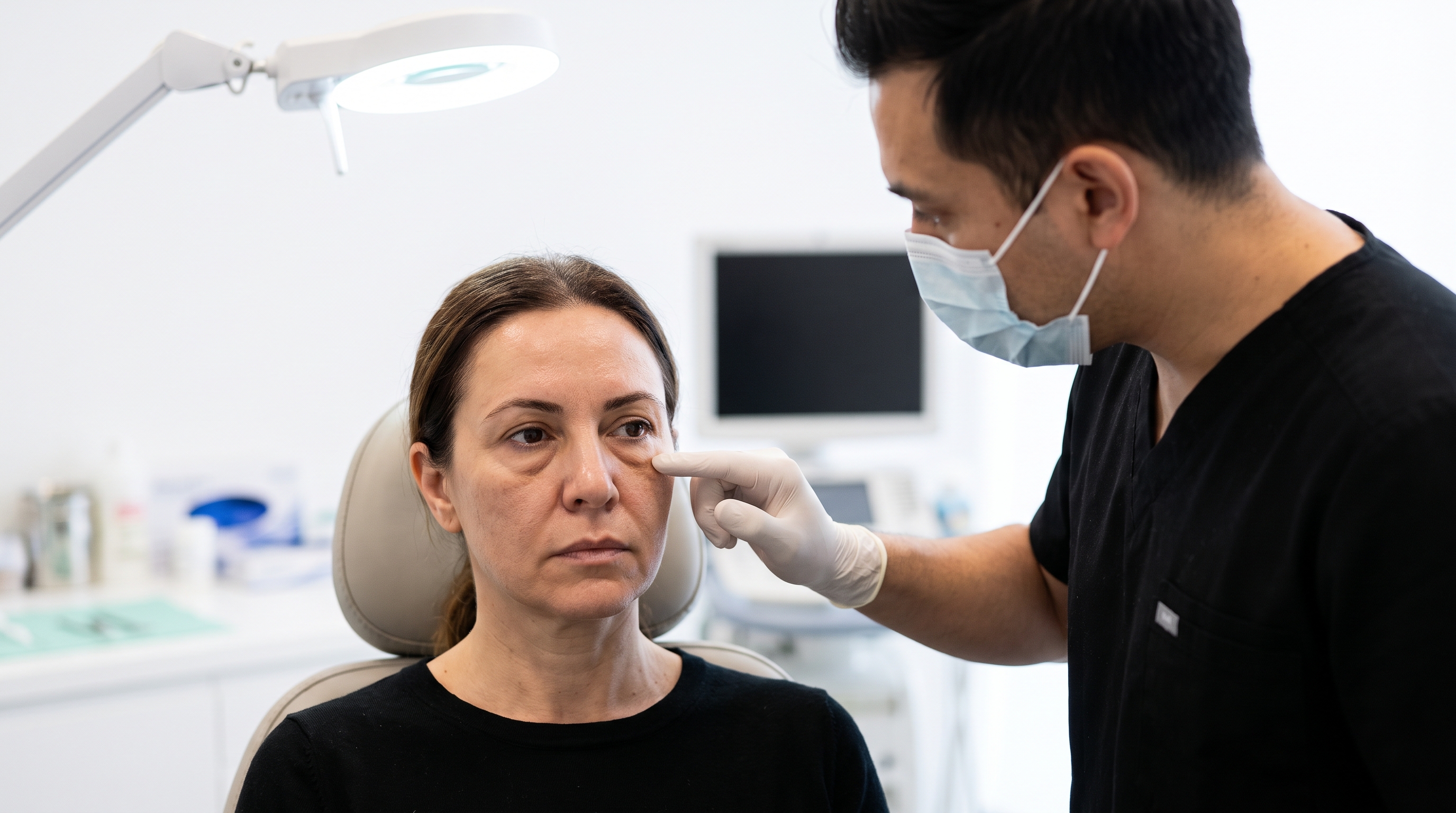
A midface lift gets to the very bottom of the root of the malar bags by completely moving up, i.e., resuspending, the entire midfacial descent tissue block. Through such an exquisite technique, the certified plastic surgeon gets access either to the direct bone-level, subperiosteal level, or alternatively, the deep plane beneath the facial musculature layer. Then the surgeon carefully cuts through and removes those drooping, rigid ligaments that are responsible for making the festoons protrude outward; thus, he is able to raise the whole malar fat pad upwards again and return it to its old location at the high point of the cheekbone as a malar eminence.
It is this kind of vertical lifting that forms the structural suspensions just like one would find on the cables of a suspension bridge. When the malar fat pad gets fixed in place over the thick and solid fascia near the temple region, the whole loose, saggy face is pulled taut over the cheekbone so there are no more loose spaces for the fluid to accumulate. The heavy malar bumps are literally gone by flattening them out completely. You get a very fine, smooth, and natural-looking transition line from the lower eyelid through the upper cheek, and it effectively wipes out the look of exhaustion or swelling that usually is caused by the presence of festoons.
Tissue Reshaping and Fluid Handling Synergy
A midface lift is considered the final structural method for the removal of heavy malar bags; however, very top surgeons will often combine the surgery with other tissue remodeling procedures to produce even the slightest difference to overall appearance. For patients who are suffering from extreme festoons, their skin will usually have been stretched for so many years to such a degree that its elasticity has gone. In order to deal with this issue of the skin layer itself, the surgeon will at times during a midface lift also perform a deep fractional radiofrequency (RF) microneedling or an ablative CO2 laser resurfacing so that the skin is contracted and tightly wraps itself around the new position of the facial structures on the cheek.
Another thing to mention regarding festoons is that they are quite stubborn in terms of being exacerbated by chronic lymphatic fluid retention; hence why, re-establishing normal lymphatic drainage is not only a surgical necessity but a highly vital one too. In this case, the surgeons will not only be releasing all the deep lymphatic blockages by virtue of the midface being lifted in a vertical position, but the patient will also have to undergo quite stringent lymphatic massage therapy following the operation in order to have the newly established vascular network trained and to prevent any recurrence of fluid congestion leading to temporary re-emergence of malar bags during a post-surgical recovery stage.
Guarding Post-operative Integrity
A great post-surgery lifestyle with a strict regime of protective and behavioral rules is fundamental to a face that has the utmost demands for perfection. The tissues that have been lifted—the malar fat pads, the internal fascia anchors, and the ligaments—must not be subjected to too much mechanical strain, or they will be at risk of breaking during those six to eight weeks when they are supposed to be undergoing a strengthening phase through firm and resistant collagen bonds. If that physical strength fails to come through, then you could get the kind of damage that is usually accidental (like hitting the face), that results in major facial manipulation, or due to asymmetric internal swelling that may cause the deep sutures to be stretched and, subsequently, the appearance of festoons.
Taking a very serious approach to the protection of facial tissues will allow the freshly sculpted midface to settle down with maximum structural exactness. You need to be asleep on your back while the head is raised with the angle of the neck being around 45 degrees, to a minimum level of physical fluid pooling in the cheeks caused by the effects of gravity. In certain circumstances, it may be decided to have the malar regions medically tapped so as to compress the loose space and prevent pockets of dead tissue from forming. Also, the complete giving up of nicotine or tobacco products before and after the operation cannot be emphasized enough, as both are a very major reason for vascular deprivation of the facial tissue through which one can't get the healing of the deep internal suspension sutures in a safe way.
LIN Europe Clinic
By becoming a guest of LIN Europe Clinic you get to be at one of the world's best medical resorts where the beauty and youth aspects of the face as well as your plastic surgery choices are taken care of with maximum dedication to the profession and an in-depth understanding of the patients' individual care. We are aware that to perform a good midface lift, you have to precisely cut each involved ligament, do the deep plane suspensions in the areas of the cheek where the facial musculature meets the bones under the skin, and at the same time make changes to the layers around the tissues of the midface. Hence, it demands a surgical setting that not only allows but encourages the use of very highly advanced yet transparent methods of treatment in an open, supportive style where the patient truly feels cared for.
Our super-elite medical team will take good care of both the aesthetic changes of your skin and your deeper tissues. That means they will protect your overall good condition by the use of proper medicines, dietary advice, and lifestyle changes in order to get a balanced physical profile that you really love and that you never need to worry about.
Frequently asked questions
What is the primary cause of malar bags and festoons?
Malar bags and festoons primarily result from the extreme stretching and loosening of the orbicularis retaining ligament and zygomaticocutaneous ligament. This creates a loose "hammock" where localized fat, interstitial fluid, and redundant muscle can accumulate and sag. They signify a profound structural collapse of the midfacial architecture rather than just a skin issue.
How does a midface lift effectively correct malar bags, compared to a standard blepharoplasty?
A midface lift directly addresses the root cause of malar bags by resuspending the entire midfacial tissue block, accessing deep levels beneath the facial musculature or subperiosteally. It involves carefully cutting drooping ligaments and raising the malar fat pad to its original high position on the cheekbone, creating structural suspension. In contrast, classic lower eyelid blepharoplasty operations are ineffective and can sometimes even increase the visibility of malar bags.
Are there complementary procedures often combined with a midface lift to enhance results for severe malar festoons?
Yes, for patients with severe festoons and stretched skin, a midface lift can be combined with deep fractional radiofrequency (RF) microneedling or ablative CO2 laser resurfacing to contract and tighten the skin. Additionally, re-establishing normal lymphatic drainage is crucial, often supported by stringent post-operative lymphatic massage therapy to prevent fluid congestion.
What post-operative care is essential to maintain the structural integrity and long-term results after a midface lift for malar bags?
Post-operative care is crucial for success, requiring strict adherence to protective and behavioral rules for six to eight weeks to allow tissues to strengthen. Patients must avoid mechanical strain on the lifted areas, sleep on their back with the head elevated to minimize fluid pooling, and completely cease nicotine or tobacco use. These measures prevent damage and ensure the newly sculpted midface settles with maximum structural exactness.
What is the anatomical difference between malar bags and typical lower eyelid bags?
Malar bags appear at a lower level on the malar eminence (upper cheekbone), distinct from lower eyelid bags which are caused by the herniation of orbital fat directly beneath the eyes. Malar bags result from the loosening of specific retaining ligaments in the midface, leading to a deeper structural issue rather than just orbital fat protrusion.
This article is general information, not medical advice, and does not replace a consultation. Every procedure carries risk and outcomes vary from person to person.
Last reviewed 1 September 2026