
What is the Most Common Plastic Surgery for Men?
Written by LIN Europe Clinic Editorial Team
Gynecomastia
The Presentation of Male Glandular Hypertrophy
The chest area of men, which usually features flat chest muscles, might experience notable changes in shape if extra breast or fat tissue accumulates there. This situation, referred to by doctors as gynecomastia, is the result of benign overdevelopment of the breast tissue of male persons - a very common physical condition that often ends up causing a chest contour that is too feminizing and disproportional looking one. The underlying reasons are many-fold: from hormonal imbalances to certain kinds of drugs, to gene defects and the physiological changes that naturally happen as one gets older; all of these factors can have a very significant psychological impact on how people perceive their bodies and themselves in general.
Looking at pure medical reasons for this procedure, gynecomastia correction - male breast reduction - is the most frequently done plastic operation worldwide on male patients. This procedure is aimed at the overdevelopment of the gland part, the buildup of fat below the skin, or both, and the target is to reshape the chest contour to look more masculine with proper contours, reduced projection, and enhanced structural properties of the pectoral area.
Operative Procedures for Reshaping the Chest
Operating for gynecomastia requires a careful and individual approach depending on the tissue type and how much tissue excess is present in a given patient. If the case mainly concerns fatty tissue, modern methods like power-assisted liposuction (PAL) or ultrasound-assisted liposuction (UAL) will be used. They allow very accurate fat removal of skin-level subcutaneous deposits through special cannulas without hurting the surrounding blood vessels, nerves and fascial tissue.
When fibrgalandular hypertrophy is dominant, the fibro-glandular tissue will be removed through an operation, often through a circle around-the- areola cut, so that the visible part of the operation is minimal, plus that the appearance of the area around the areola remains untouched (nipple-areola complex aesthetic vectors are preserved). For cases where the skin is very loose or there is extreme hypertrophy, liposuction along with removal of gland tissue would most likely be followed by redraping or actual removal of skin so that the skin is brought to close fit around the newly contoured tissue resulting in a natural look. This would also help in maintaining the skin elasticity and giving the patient the best overall aesthetic results.
Deciphering Patient Needs and Choosing Higher Level Interventions

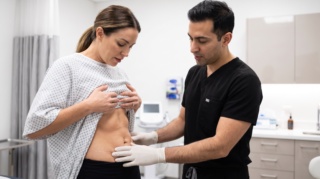
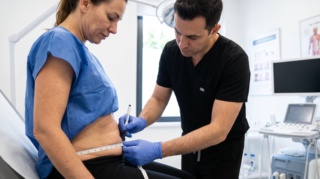
Patients suitable to undergo gynecomastia treatment are thoroughly vetted by a detailed consideration of various aspects of their condition: the nature of the tissue present, the elastic properties of the skin, health in general, and exclusion of any underlying pathologies that might account for breast enlargement are some of the areas to be considered. Adequate understanding of distinguishing between true gynecomastia - excess breast tissue - and pseudogynecomastia (fat deposit) is vital for the correct surgical treatment option. State-of-the-art imaging technologies - like high-definition ultrasound - allow pinpointing of the glandular tissue and surgical planning based on that for comprehensive and symmetrical removal.
The cosmetic surgery world has come up with new surgical approaches that offer better precision while making recovery easier. VASER liposuction, as a form of liposuction, can speed up the removal of fat cells and allow the skin to tighten as well. The removal method also has the potential to be less invasive but done under a tiny opening - endoscopy, in such cases, where the surgeon is doing the excision of glands without open surgery. These advances in technique are, of course, for the sake of achieving a harmoniously proportionate silhouette, not only for the patient’s outer appearance but also by respecting the skin structures and tissue integrity of the patient.
Maintaining Skin Integrity and Post-op Protection
In the initial period of 6 to 8 weeks after a gynecomastia surgery is performed, it becomes very important how a patient takes their new chest contours and heals so that they are able to be proud of them. At this stage, the body is still a sort of fragile organism, and the patient should strictly follow any mechanical protection that is advised for the surgical zone. Pressure or rubbing forces, plus direct injury, might lead to seroma, hematoma, or skin and subcutaneous necrosis, so that the result might suffer in both its appearance and functional aspects if one is not careful. It is advised that patients not engage in exercises that involve chest muscular strain, such as weight lifting or sports activities, at least until their skin has completely healed.
In order to have wound healing going along with the best aesthetic outcome and prevent surgical complications, following postoperative guidelines becomes absolutely essential after a gynecomastia surgery, which is one of the major plastic surgeries performed in men nowadays. One of the guidelines for post-surgery care involves wearing pressure garments that are especially designed for this purpose in order to support the chest area, reduce swelling, and to enable the new skin layers to contract over the altered structure without wrinkles. A completely no-go rule also concerns the use of all forms of cigarettes and tobacco as such substances are very strong in constricting blood vessels hence leading to decreased local blood circulation, which is an essential factor of healing at the micro level (tissue) that can lead to complications like infection, separation of the two layers of wound edges in different directions (dehiscence), or, worse, skin flap death (necrosis).
LIN Europe Clinic
By picking a clinic from a country with an excellent reputation in plastic surgery to have a procedure done on oneself is indeed an investment in one’s beauty through a combination of top-notch technology, a state-of-the-art medical environment, and a dedicated healthcare team who will personally attend to every need to make sure that your stay is most enjoyable and pleasant while also having successful results. Patient care is among our priorities, and at our facility, you will experience clinical excellence that is combined with empathetic care in the field of medicine.
Placing your faith in our professional team at LIN Europe Clinic, Istanbul, the anatomical dimensions are checked by means of the most accurate diagnosis methods; thus, not only the health-related recovery process but also the aesthetic evolution can be followed accurately through and through.
Frequently asked questions
What is gynecomastia and what causes it?
Gynecomastia is the benign overdevelopment of male breast tissue, often resulting in a feminized and disproportional chest contour. It can be caused by various factors, including hormonal imbalances, certain medications, genetic predispositions, and the natural physiological changes associated with aging.
What surgical techniques are used to correct gynecomastia?
Surgical correction for gynecomastia is tailored to the individual's tissue type and excess. For predominantly fatty tissue, advanced liposuction methods like Power-Assisted Liposuction (PAL), Ultrasound-Assisted Liposuction (UAL), or VASER liposuction are employed. If glandular tissue is dominant, it is surgically removed, often through a discreet incision around the areola, sometimes combined with skin redraping for optimal contour.
How is a patient evaluated to determine the best gynecomastia treatment?
Patient evaluation involves a detailed assessment of general health, skin elasticity, and the specific nature of the chest tissue. It is crucial to distinguish between true gynecomastia (excess breast tissue) and pseudogynecomastia (fat deposit) for correct surgical planning. State-of-the-art imaging technologies, such as high-definition ultrasound, are used to pinpoint glandular tissue and guide comprehensive, symmetrical removal.
What are the key post-operative care instructions after gynecomastia surgery?
After gynecomastia surgery, patients must strictly follow mechanical protection advice for 6 to 8 weeks to ensure proper healing and aesthetic outcomes. This includes wearing specially designed pressure garments to reduce swelling and support the new contours, avoiding strenuous chest exercises and sports, and refraining from smoking, which can impair healing.
What is the difference between true gynecomastia and pseudogynecomastia?
True gynecomastia involves the benign overdevelopment of the actual glandular breast tissue in men. Pseudogynecomastia, conversely, is characterized by the accumulation of excess fatty tissue in the chest area without significant glandular enlargement. Correctly identifying the underlying tissue type is essential for selecting the most effective surgical approach and achieving the desired masculine chest contour.
This article is general information, not medical advice, and does not replace a consultation. Every procedure carries risk and outcomes vary from person to person.
Last reviewed 27 August 2026