What is the Newest Technique for Beard Transplants?
Written by LIN Europe Clinic Editorial Team
DHI is a newer beard transplant technique.
The Evolution of Facial Hair Implants
The modern facial hair restoration techniques are so much different from the old ways that they used strip methods, which caused great damage to the skin. Hair that grows on your face is not much the same as the hair that you find on the scalp. Hair on the face grows at a much lower angle, is very thick, and usually comes from a single follicular unit. The use of the old methods to extract hair for a beard transplant resulted in a very unnatural look with a rough cobblestone-like skin surface.
We may be confident that beard plantation at the moment is entirely based on the very minimally traumatic ways of the harvest and then the grafting. There is not a single incision being done by the scalpel, which is then the source of a large wound. Instead, they use micrometer-level precision in the extraction and also in the planting stages. Nowadays, there are two modalities, which represent the cutting edge in the field of facial hair restoration, that is the Direct Hair Implantation (DHI) using the Choi Implanter Pen, and Sapphire Follicular Unit Extraction (Sapphire FUE). Thanks to these technologies, hair experts can create the direction, the angle, and the thickness of each follicle with mathematical accuracy. That's why their patients' looks are so perfect; no one can ever detect a difference.
Direct Hair Implantation (DHI) and the Choi Pen
Direct Hair Implantation (DHI) technique has completely revolutionized the whole concept of planting hair grafts directly into the dermal layer. During a standard hair transplant surgery, the doctor has to make a lot of micro incisions on the face before manually placing the grafts with a pair of tweezers. DHI technology eliminates the two-step approach altogether, as a surgeon has an extremely specific medical tool called the Choi Implanter Pen, a spring-loaded instrument, at their disposal. In effect, the hair is put straight into a hole that the needle of the pen makes in the skin, so the two actions are combined.
The reason that DHI is the main choice for a beard transplantation is the incredible freedom of control over the angle at which hair is placed into the skin as grafts. Natural beard hair is very flat in its root; it goes at an average of between 10 and 15 degrees to the skin surface. The Choi Implanter Pen empowers the surgeon with the ability to choose precisely the same angle and flow direction with no error whatsoever. Moreover, since there are no incisions, there's practically no blood, and the recovery time is shorter due to much less trauma to the skin so the facial scars will fade rapidly.
Sapphire FUE to Achieve the Highest Thickness
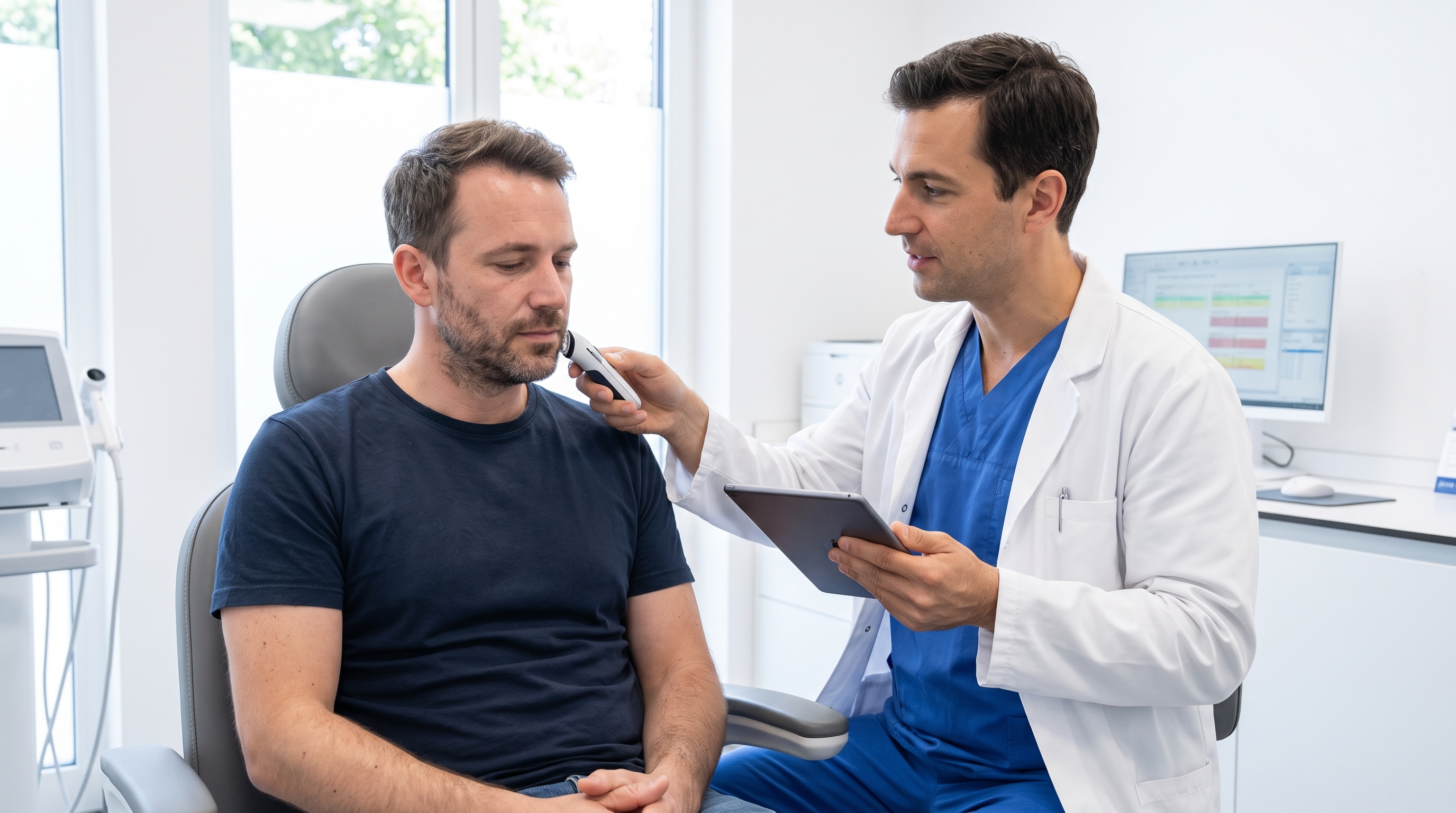
For the ones who dream of growing a full beardless beard or a thick one without going under the skin first, Sapphire FUE is the only way out of this dilemma, and actually, a newer DHI alternative. The traditional FUE method utilizes cutting a channel on the face through surgical steel blades. However, in the case of Sapphire FUE technology, blades are crafted out of sapphire stones. As the sapphire blades are V-shaped, their edge is super sharp compared to steel blades; besides, the blades do not wear down quickly so there is no need to frequently recondition the edges of surgical steel blades. The surgeons can get microscopic level of precision by using the very narrow and smooth edges of the cutting blades.
The main thing is that with Sapphire FUE, we can get the highest grafting number without any damage to the structural framework of the facial skin. Thanks to very narrow and uniform channels, the surgeon can implant follicles much closer to each other compared to steel instruments. As well, the presence of certain antimicrobial properties and higher sharpness of the blade helps not only to reduce the swelling after the operation but also the scabbing and at the same time, the healing speed of the implantation sites.
Maintaining Facial Structure and Boundaries After the Operation
It is very important to maintain all the protective and behavioral restrictions during the post-operative period, especially if you are looking forward to a perfect aesthetic result and the only reason you are in the hospital bed is for the surgical procedure. Whether DHI has been performed with Choi Pen or Sapphire FUE, the newly implanted follicular units are very fragile for the first 7 days after the operation. Only after the body has firmly adhered the new follicles with a fibrin layer are they not in danger of dislodgment anymore. However, any mechanical stress from the outside (friction, pressure by scratching, aggressive washing, etc.) may lead to the loss of the planted hairs and subsequent bald spots.
You have to always sleep lying on your back, preferably keeping your head lifted up, so that your face will not come in contact with your bed linen even during sleep. If you work a physically intensive job and sweat a lot during the day, then you have to refrain from all such physical activities in order to be sure that the skin will not be contaminated with bacteria entering the micro-sites on the face. Moreover, smoking in any form (cigarettes as well as e-cigarettes) is completely off the table before and after the operation, as the nicotine is the major culprit behind vasoconstriction. The face, an organ very rich in vessels, would get starved of oxygen and nutrients, which are normally conveyed to the skin and the hair by the blood.
LIN Europe Clinic
With our LIN Europe Clinic, you will not only have facial aesthetics done but also your structural hair restoration and surgical path. You will be treated by a medical team with very high standards of ethics who at the same time, show great empathy. We are aware that it is no simple challenge to find a hair transplant surgeon who is capable of providing not just technical skills but also a very detailed and personalized approach, especially for a beard transplantation. The environment should be such that all the parties involved - the patient, the doctor, the nurse - feel comfortable and understand each other perfectly. We take pride in the fact that our medical facility is an ultra-modern micro-surgery center in Turkey with an international reputation for excellence that also sets a very high bar when it comes to cosmetic treatments and the aftercare.
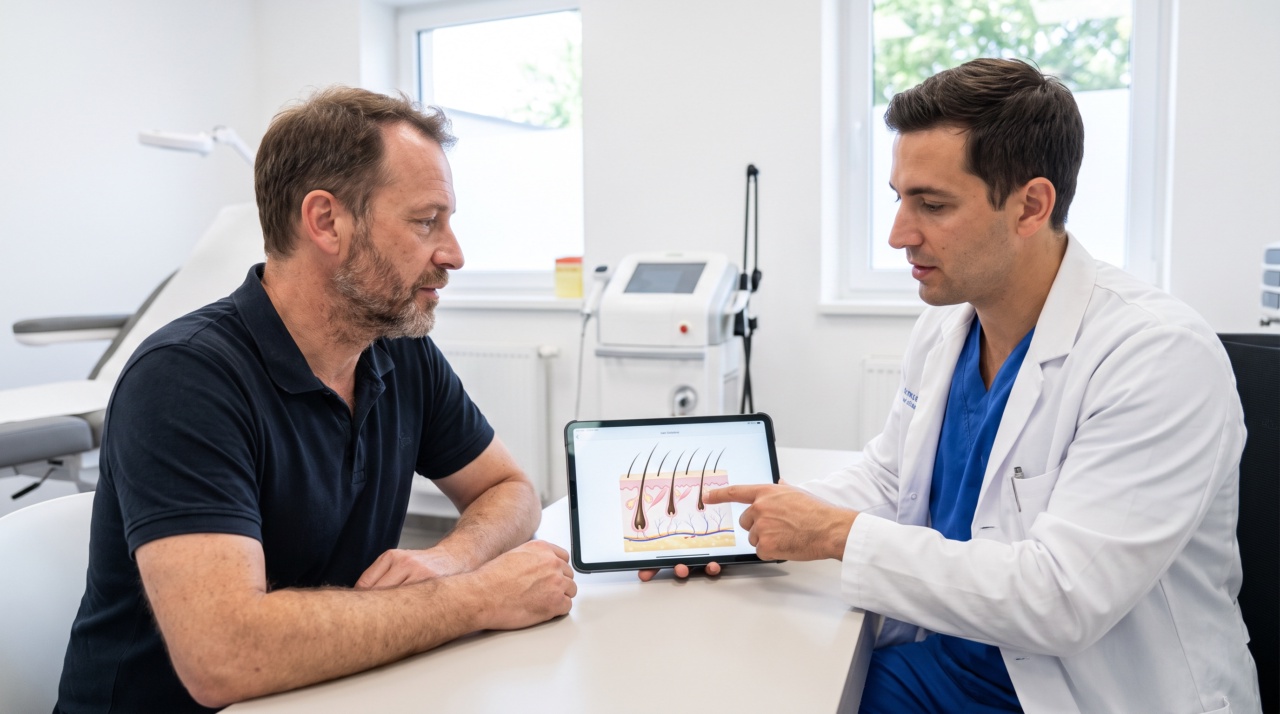
Entrusting yourself to our highly professional team at LIN Europe Clinic means that all of your vital information on the structure of your skin and hair follicles will remain strictly private and confidential at all times. We will carry out the full pre-op imaging session so that your facial contours will be mapped with a high degree of accuracy. Then, during the post-op phase, you can rely on personalized healing checklists to help you keep tabs on each aspect of your recovery. All members of our team are very careful with the patients not to leave room for mistakes and that both cosmetic and medical sides are well covered so that you may feel very confident in a new, more masculine look of yourself.
Frequently asked questions
What is the newest technique for a beard transplant?
The latest and technically the most sophisticated techniques are Direct Hair Implantation (D HI) that is performed with the aide of Choi Implanter Pen and Sapphire FUE that uses sapphire synthetic gemstone blades. Both methods guarantee very high level of precision and leave no linear scars.
Why is DHI considered the best for beard transplants?
DHI enables the doctor to put in and make an incision at the exact same time with a special tool. So the doctor is in complete control of the hair's angle and direction that it lays perfectly flat against the skin of face just like natural beard.
What is the difference between Sapphire FUE and traditional FUE?
Traditional FUE incisions are made with standard steel blades that could give micro trauma to the skin, whereas Sapphire FUE incisions are done by ultra-sharp natural sapphire gemstone blades resulting in minimal trauma, finer and cleaner incision. It allows for a higher density of hairs per unit area thus a fuller appearance besides healing rapidly with very slight crusting.
Do beard transplants look natural?
When the procedures are done by a professional surgeon and using D_HI and S_aphire F_UE technology, the results are completely natural. Your surgeon, with a high level of detail, aligns precisely the direction and growth pattern to match those of your original facial hair.
How long does it take for a beard transplant to heal?
Major phase of healing is very quick. Most patients get their redness and scabs cleared away in 7-10 days. At this stage your transplanted hairs come off in about several weeks (this is a typical phenomenon that we call shock脱发, but don't worry! Your new permanent beard will be coming through smoothly about 3-4 months later.)
This article is general information, not medical advice, and does not replace a consultation. Every procedure carries risk and outcomes vary from person to person.
Last reviewed 27 August 2026