What is the Newest Laser for Surgical Scar Removal?
Written by LIN Europe Clinic Editorial Team
Fractional CO₂ lasers are a leading option.
The Evolution of Scar Remodeling and Hybrid Technologies
As medical technology progresses rapidly, the methods used by cosmetic dermatologists and reconstructive surgeons to treat surgical scars have advanced significantly - beyond the old techniques of aggressive ablative resurfacing. Earlier on, doctors mostly treated surgical scars with the use of Carbon Dioxide (CO2) lasers, which would just completely burn away the scar tissue. Although this method was fairly effective, it also caused a lot of burning damage that could easily spread to the healthy surrounding skin. That made recovery time quite painful and lengthy, not to mention the high risk of post-inflammatory hyperpigmentation (PIH), particularly in patients with darker skin tones.
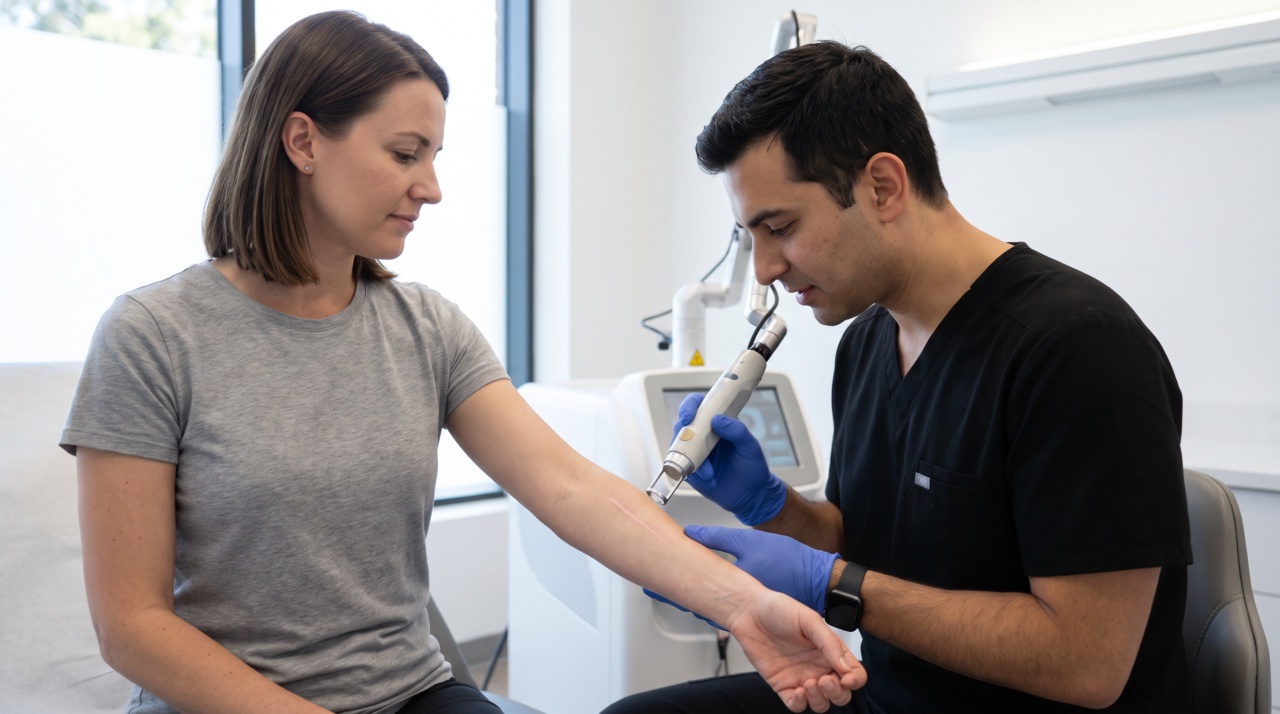
According to clinical evidence, the Hybrid Fractional Laser (HFL) is the latest and most advanced laser technology for surgical scar removal available nowadays. This new device that can deliver two separate laser wavelengths at precisely the right moment - one being ablative and the other being non-ablative - is an excellent example of how technology has revolutionized the treatment of surgical scars. At the surface, it uses the ablative wavelength of the laser microscopically to vaporize the rigid and damaged scar tissue, while it is at the same time, with the help of the non-ablative wavelength, it deepens its laser rays to heat the underlying collagen matrix of the dermis.
Picosecond Technology and Laser-Induced Optical Breakdown (LIOB)
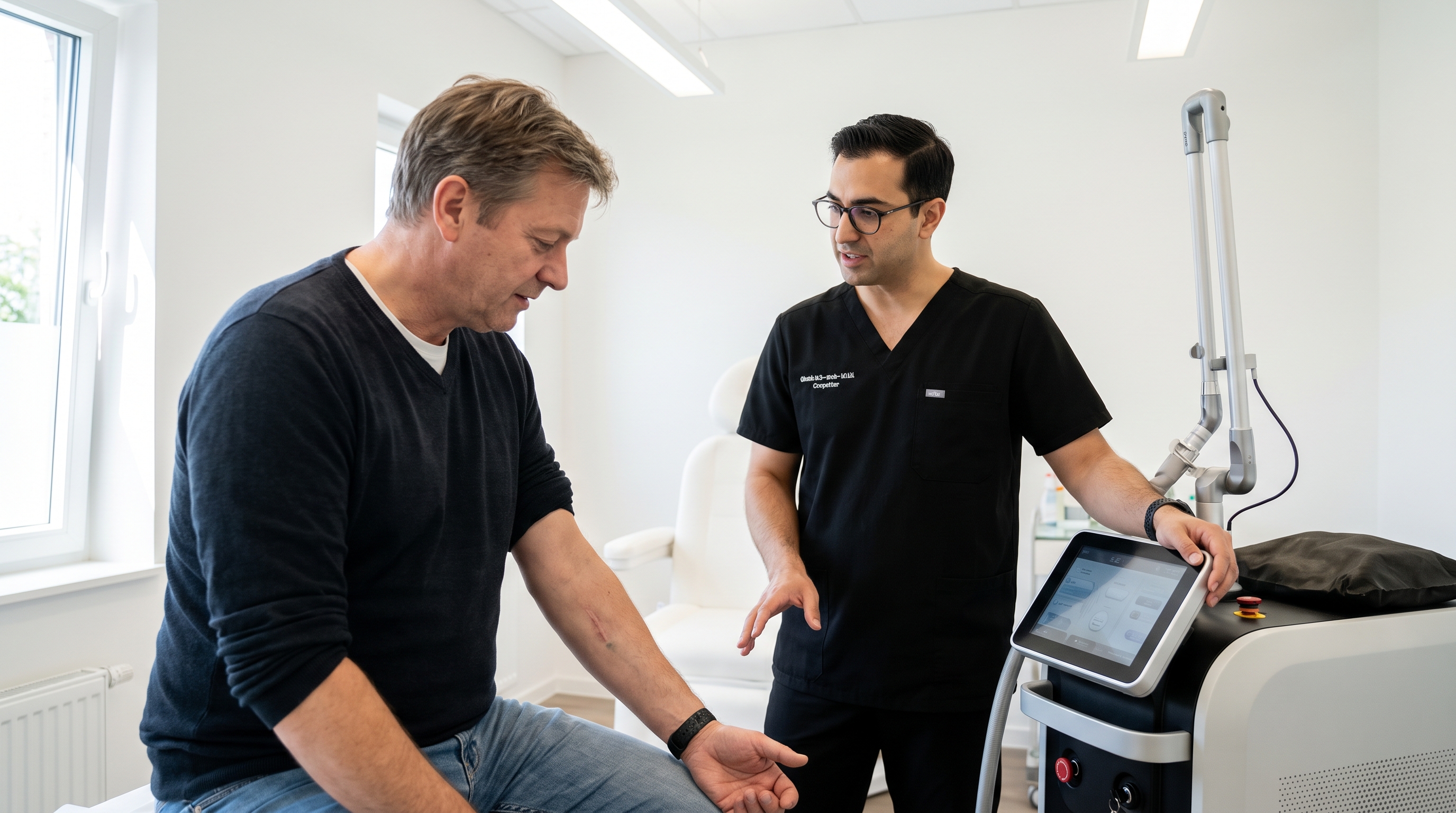
The most modern level of laser surgery in the field of scar removal is the Picosecond technology that relies on Laser-Induced Optical Breakdown (LIOB) with fractional arrays. These picosecond lasers do not cause skin damage through the method of photothermal (heat) destruction as conventional lasers do but instead work through photo-acoustic (i.e., sound) energy. Since pulses with a duration of femtoseconds are extremely small fractions of seconds (actually, one million times less than millionths of seconds), they will have the effect of literally breaking up unwanted pigment spots/areas and stiff scars without generating heat that may result in injury to your healthy skin adjacent to the scar area.
Laser treatments with fractional handpieces give way to an amazing phenomenon that the body reacts to, known medically as Laser-Induced Optical Breakdown (LIOB). A part or most of the laser beam power passes harmlessly around the epidermis and only enters the deeper layers of the scar through the fractional handpiece of the machine. There, it creates little bubbles or vacuoles under significant pressure. Your skin cells interpret such micro-injuries as large mechanical injuries and hence, they activate a healing process that has not seen any such damage in a while. In the course of several weeks, your rigid scar collagen bundles will be replaced by soft, elastic, and harmoniously blended new skin tissue.
Synergistic Modalities: Laser-Assisted Drug Delivery (LADD)
To maximize the outcomes achieved by the latest generation of laser devices, the field of medicine has also introduced the Laser-Assisted Drug Delivery (LADD) technique. Laser-Assisted Drug Delivery has a dual purpose in that it allows for the delivery of medications and other substances that will stimulate tissue regeneration to the treatment site. After the application of a fractional hybrid or CO2 laser on a scar, this treatment modality creates thousands of micro-channels at a depth corresponding to the stratum corneum of the skin, which is a barrier to the passage of molecules and drugs into the body.
As soon as the laser treatment is finished, the doctor pours a combination of highly potent regenerative substances, which can be in the form of exosomes from stem cells, polynucleotides, or corticosteroids specific for hypertrophic scars, into the treated area through the laser-induced microchannels. These molecules will have penetrated deep within the layers of the scar as the laser effectively removes the natural defense of the skin against these very active substances for several hours. Thanks to this, the scar tissue is physically blocked from reforming aggressively and the color of the skin returns to its normal state very quickly, resulting in the surface of the affected skin appearing flat and flawless.
Preserving Structural Integrity and Post-Procedural Boundaries
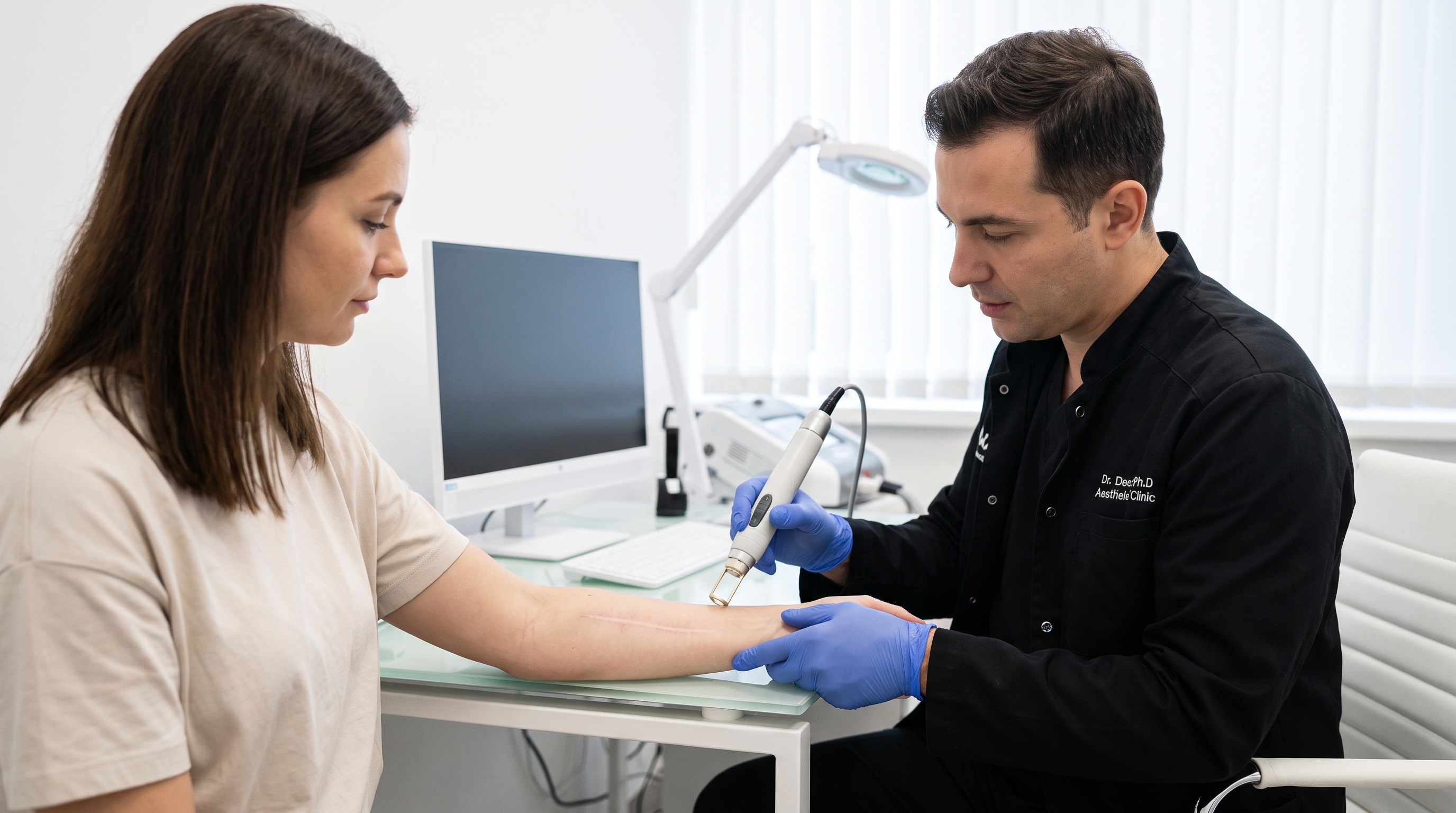
Following strictly the boundaries of protection and behavior strictly during the recovery period after the procedure is extremely important for those who set the bar of perfection very high for aesthetic works. As these lasers are actually intended to deliberately stimulate a wound-healing reaction in an ordered, controlled way to reshape and renew a surgical scar, the newly laid-down bundles of collagen should not be exposed in the least to any damage from the environment. After either a hybrid or a fractional laser treatment, it is a patient’s job to let the protective microcrusts fall off by themselves, not by picking them or scrubbing them; otherwise, you will suffer major new scar marks and serious pigmentation disruptions.
Avoid any UV radiation from the sun by consistently and religiously using broad-spectrum SPF 50+ sunscreen, which is medically approved, to minimize damage and prevent pigmentation by blocking sunlight from the newly healing tissues, as that is a very thin layer. In addition, nicotine products will absolutely not be allowed during any stage of the scar removal program for you. This is because nicotine makes you feel colder at times, as it contracts blood vessels, and that means less oxygen-rich blood, which is essential for the cellular regeneration processes that are required to fully eliminate very dense surgical scars.
LIN Europe Clinic
A major benefit of choosing LIN Europe Clinic for your various treatments is that you get to step into a world-class medical retreat where your facial beauty, intensive skin renovation through lasers, and scar removal plans will all be handled at a clinical level of excellence that cannot be matched, and at the same time, your emotional well-being will be taken care of with utmost sensitivity. There is no doubting it; we are aware that using hybrid fractional lasers and LIOB as well as delivering regenerative drug combinations through lasers is an intricate medical procedure that demands a well-informed, completely honest, and very reassuring environment that puts the patients and evidence-based medicine at its core.
By giving your deep trust to our devoted specialist team at LIN Europe Clinic in Istanbul, we will take great pains in monitoring your structural profile on a diagnostic level, ensuring the absolute accuracy of everything to a large extent. We will assist you every step of the way of your tissue maturation and the incorporation of the new look into your lifestyle by means of a detailed pre-operative check-up with a personal physician, a super high-resolution tissue review, and individual healing plans and support checklists. Our top medical staff guarantees that you get perfect results and your whole health is safeguarded without any compromise. You are going to be able to feel and appear the best that you are all the way without the slightest doubt about your looks.
Frequently asked questions
What is the newest laser for surgical scar removal?
Hybrid and Picosecond lasers are the latest and most effective laser technologies for scar removal. These technologies combine lasers firing two different wavelengths at the same time and Picosecond lasers with fractional arrays that allow new tissue to develop without burning the outer layer of the skin.
Can a laser completely erase a surgical scar?
No technology is capable of removing surgical scars 100%, especially the deep ones. Advanced treatment plans with lasers have the capacity to transform the scar's color, texture, and appearance by up to 90% and to a point, it is invisible to the normal eye.
How does a hybrid laser work on a scar?
Burning away the top layer of a thick, bumpy scar with a surface removing laser is paired with heating the lower tissue and stimulating new healthy collagen through a non-ablative laser in a hybrid lasers. The combination offers the best flattening with little downtime.
What is Laser-Assisted Drug Delivery for scars?
It's an innovative technique where one uses a fractional laser device to make thousands of micro holes in a thick area of scar tissue. Right away, after that procedure, regenerative substances or exosomes are placed on top of the skin and the microscopic holes serve as pathways to the inside of the skin, where they will facilitate scar healing.
How many laser sessions are needed for a surgical scar?
Remodeling of a scar is a biologically slow process, and the skin needs to physically build up a new collagen foundation for it to happen. Therefore, it usually takes from 3 to 6 laser treatments, each spaced 4 to 6 weeks apart, to achieve a long-term and satisfactory outcome.
This article is general information, not medical advice, and does not replace a consultation. Every procedure carries risk and outcomes vary from person to person.
Last reviewed 31 August 2026