Tummy Tuck: Will a Tummy Tuck Give Me a Flat Stomach?
Medically reviewed by Op. Dr. EmrePlastic and Aesthetic Surgeon
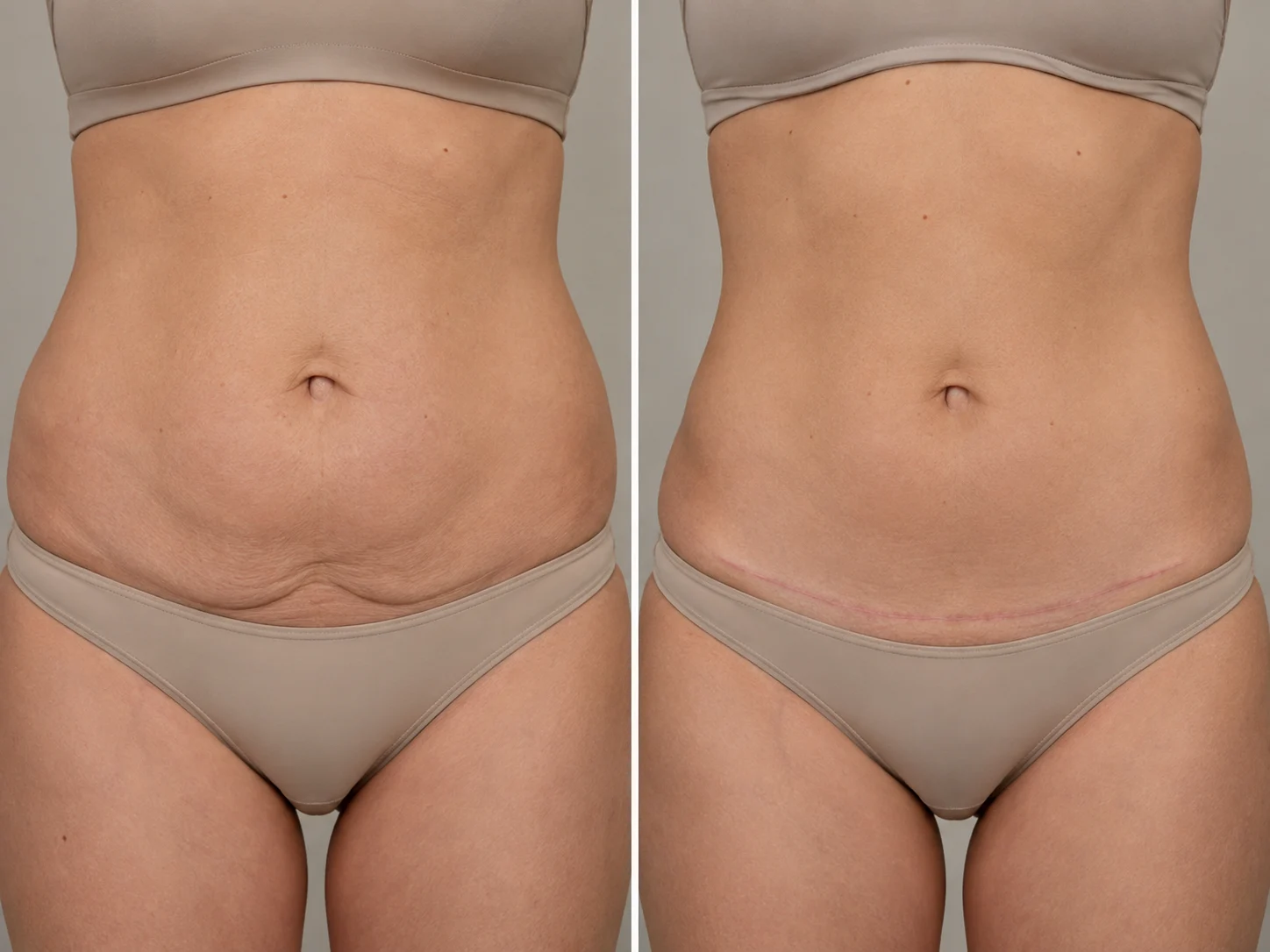
Yes, it can create a flatter, firmer abdomen.
Surgical Precision and Anatomical Realities
At the forefront of modern cosmetic surgery lies the art and science of body contouring via abdominal wall procedures such as liposuction, laser, and, of course, the abdominoplasty (tummy tuck) itself. To be absolutely clear, a tummy tuck can definitely give you a flat stomach, but only under the right conditions. If you're a woman who's been unable to get rid of that post-childbirth lower belly fat and your diet and exercise routines weren't able to eliminate it, then a tummy tuck might still be the solution you're looking for. If it's simply loose skin, you might get a tummy tuck as a way of reshaping your body after drastic weight loss or aging.
Medically and absolutely speaking, yes, a tummy tuck (abdominoplasty) is the surgical method of choice for flattening the abdomen, assuming the cause of the bulge includes only stretched or redundant skin, fat pinch, and separated muscles (muscle diastasis). By addressing these physical layers in a tummy tuck operation, you're effectively excising stretched skin, removing pinchable subcutaneous fat, and suture-closing those relaxed parts of the abdominal wall.
The Three Anatomical Foundations of a Flat Abdomen
The surgical steps involved in creating a perfectly flat tummy need only be discussed at length by explaining the three anatomical layers that are worked on during a tummy tuck operation:
- Restoring Abdominal Muscles: Changes in pregnancy or dramatic fluctuations in weight can push the rectus abdominis muscles (i.e., the muscle with which we refer to "six-pack" abdominal muscles) apart from each other along the midline (diastasis recti).
- Subcutaneous Fat and Skin Removal & Liposuction: Subcutaneous fat is the layer of fat found directly beneath the skin and over the muscle. Through a tummy tuck, it is both cut down and excess skin is removed, while at the same time being augmented by liposuction on the flanks and waistline areas to define an attractive, slim profile and a flat silhouette.
- Redundant Skin Cutting: The stretched, loss-of-stretch skin is pulled downward, tightened up, and the extra flap of hanging skin (panniculus) is cut away. These actions get rid of wrinkles or folds and leave behind a tight, smooth, and stretch-free skin.
The Limitations: Subcutaneous Fat vs. Internal Fat
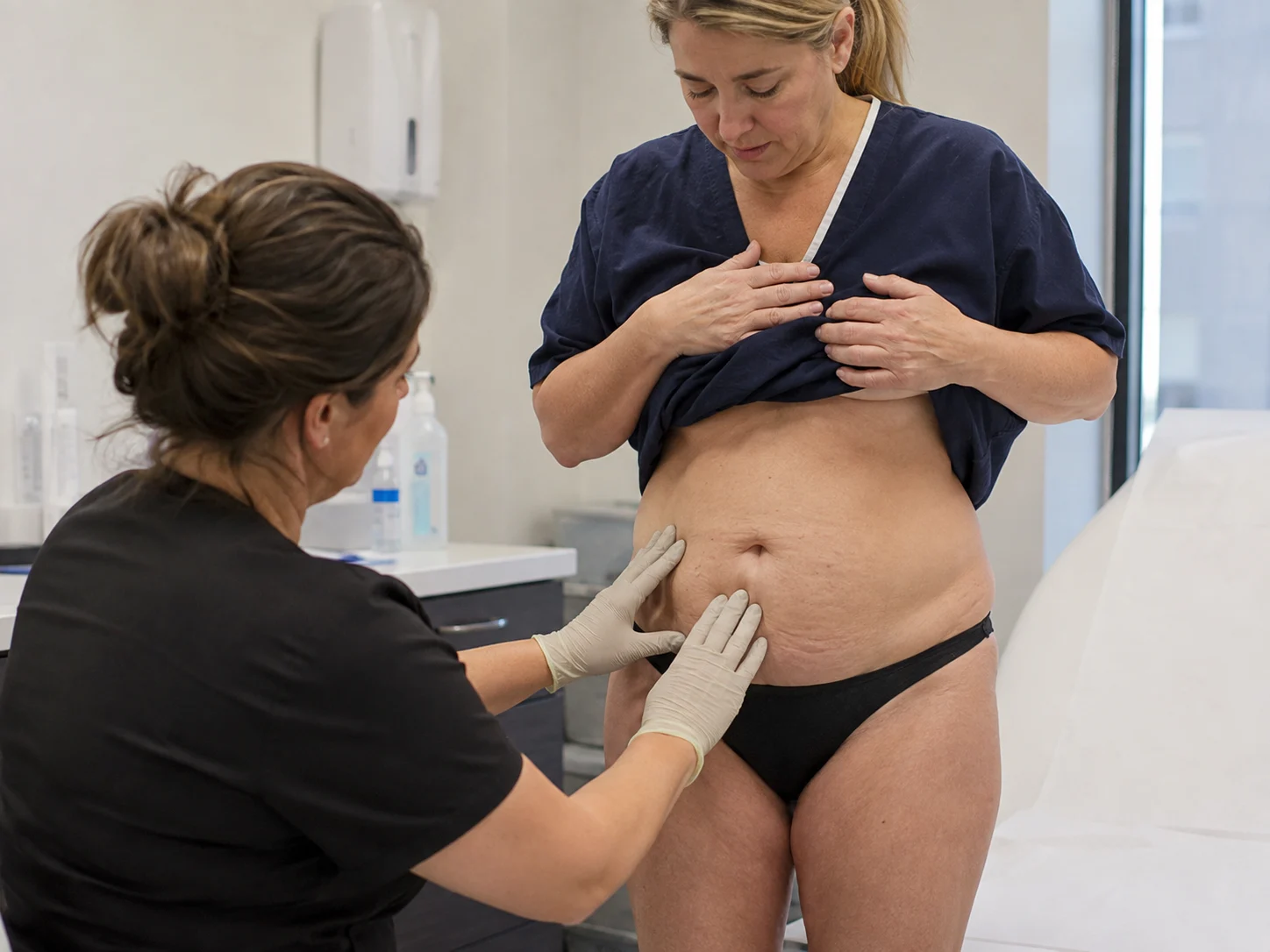
In order to get a realistic view of the aesthetic results to be looked forward to, it is very important that we differentiate the two different kinds of abdominal fats which influence your final silhouette:
- Subcutaneous Fat: It is the kind of soft fat that you can literally lift by hand, right beneath your skin layer. The surgical removal of such fats through a tummy tuck and liposuction can be done effectively without much risk to create flatness in your silhouette.
- Visceral Fat (Deep & Non-Surgical): Visceral fat is a type of hard, fibrous-like, and compact tissue located very deeply inside the abdominal cavity, behind the wall of muscle tissue that covers and protects your inner organs. Surgical procedures cannot safely remove visceral fat. Therefore, if your belly is mainly due to visceral fat, then after a tummy tuck, the muscles that you have tightened up will simply push against that inner volume, and you will end up with a round-looking abdomen that is firm but not flat.
Preservation of Surgical Results and the Recovery Phase
If you're an extremely demanding person and can't settle for anything less than a perfect outcome from your body contouring, it's crucial that you strictly follow the protective and lifestyle restrictions during your recovery window. After surgery, the tightening of your skin, muscle walls, and the surgical incision in the lower abdomen should be physically preserved in such a way that strong bonds between tissue layers can be formed over the next 6-8 post-op weeks. This will allow for the formation of firm collagen fibrin, and tissue layers.
To guarantee that your new body shape is fixed into place with the most structural correctness, you have to resist the urge to be completely upright as the first 1 or 2 weeks after your operation, because the physical strain would be detrimental to your new tensioned incision lines. You should rest in a position where your knees and back are elevated, like a beach chair sleeping posture, which is a great way to minimize the effects of muscle tension and deep swelling. Moreover, you will need to wear the prescribed medical-grade abdomen binder or compression garment continuously for the first 4 to 6 weeks, because this is a very effective way of getting the tissue to adhere properly, minimizing the pockets from which fluids will collect (i.e., seromas). It also prevents the development of dead tissue and keeps the body smooth-looking.
Tummy Tuck in Turkey
If you entrust yourself to our top-notch specialists at LIN Europe Clinic, you're not only gaining entry into a state-of-the-art medical paradise in the world, but also having the peace of mind that your beautiful facial aesthetic, your complicated structural contouring operations, and other surgical paths will be taken care of professionally with the highest medical standards and the most genuine compassionate attitude. We are aware that making decisions on deep muscle repairs, lipo-abdominoplasty lines, and soft-tissue adaptations of a tummy tuck surgery is a very delicate matter for a patient.
Hence, in addition to our beautiful medical center in Turkey, which is known for being a major international hub of plastic surgery and excellent post-treatment care, we guarantee that you will benefit from an absolutely top-notch, safe, and friendly hospital environment where your health and well-being will be treated as the top priority throughout your stay there. Your deep faith and reliance on our expert team of specialists at LIN Europe Clinic in Istanbul make it a guarantee that each one of your parameters will be tracked and followed under the best diagnostic practices.
FAQ:
References
Gunter, J. P., & Rohrich, R. J. (1987). Management of abdominal wall laxity, diastasis recti repair, and subcutaneous tissue sculpting in abdominoplasty. Plastic and Reconstructive Surgery, 80(2), 161-173.
Toriumi, D. M. (2006). Structural body contouring: Maintaining long-term abdominal wall stability, muscle closure, and flap integration. Facial Plastic Surgery Clinics of North America, 14(4), 289-301.
Rohrich, R. J., et al. (2014). Advanced postoperative care, deep fascial tissue elevation, and risk mitigation protocols in abdominoplasty. Aesthetic Surgery Journal, 34(5), 587-595.
Frequently asked questions
Will a tummy tuck give me a flat stomach?
Yes, you can achieve a pretty flat stomach after a tummy tuck, as long as the reason for the bulge is the presence of hanging skin, excess fat under the skin, or separated abdominal muscles (Diastasis Recti).
Why isn't my stomach completely flat after a tummy tuck?
Your remaining tummy bulge is usually due to leftover swelling during the initial recovery phase after the surgery or fat deposits, so-called visceral fat, which is tucked deep between your muscle wall, the area that your surgery is not capable of getting rid of.
Can a tummy tuck fix a pooch from pregnancy?
Absolutely, a pregnancy commonly causes stretching of the skin at the lower part of the abdomen while it also splits the central abdominal muscles (diastasis recti). With a tummy tuck, your surgeon will be able to re-suturate those muscles and, at the same time, remove the lower skin flap.
Is liposuction included in a tummy tuck to make it flatter?
A lot of current tummy tuck procedures (which are also known as a liposuction-tummy tuck) usually entail liposuction in order to contour and slim both the upper belly section, the waist area and the hips so that you have a slimmer flat tummy as well as other areas with a more flattering contour.
How long does recovery take to see my final flat stomach?
Despite having a much flatter stomach instantly after the cast is placed and the garment fits, the final edema drainage and tissue settling will still take place over 6 to 12 months while your scar tissues are maturing.
This article is general information, not medical advice, and does not replace a consultation. Every procedure carries risk and outcomes vary from person to person.
Last reviewed 3 August 2026