
Eyelid Surgery: Does Blepharoplasty Get Rid of Crow's Feet?
Medically reviewed by Op. Dr. Halil İbrahimPlastic, Reconstructive and Aesthetic Surgery
No, it targets excess eyelid skin.
In the framework of perioral aesthetics and eye rejuvenation, the major clinical point of differentiation is that blepharoplasty (eyelid surgery) and the treatment of the crow’s feet (lateral canthal lines) refer to two different anatomical areas. The purpose of a blepharoplasty is to deal with the upper eyelid "hooding" and lower eyelid fat "bags" or prolapse. Even though the operation removes the excess skin and slightly tightens the area surrounding the eyes, it does not, by itself, get rid of the fine lines spreading out from the corners of the eyes. Those crow's feet are mainly "dynamic" wrinkles resulting from the repeated contraction of the orbicularis oculi muscle, so a different treatment approach is required—most often neuromodulators or laser-induced neocollagenesis.
What Does Eyelid Surgery Restore?
By surgically removing the excess skin and repositioning the fat beneath, a blepharoplasty is the best way to give a refreshed and younger-looking appearance that has the life taken out of it. It can effectively "tidy up" right above and below the eye, for example, resolving the issue of heavy lids that can block the line of sight and the puffiness that is constant. However, the eyelids' natural creases are usually the only place where the incisions are made, so the surgery's impact area is not extended to the lateral "smile lines" on the temples. Looking at a blepharoplasty as a cure for crow’s feet is like requesting a highly skilled carpenter to fix a plumbing leak—the set of biological tools is completely different for a different anatomical problem.
Here at Lin Health Europe Clinic, we explain eye rejuvenation as a "zonal" problem to our international patients. Our surgeons' level of professional rigor allows us to clearly chart which areas will be improved by surgery and which ones will be left for non-surgical care. Our clients in Istanbul undergo a thorough biometric ocular analysis, so any misalignment between your expectations and surgical reality can be prevented. We are honest about the extent of the lift so that your journey to a more vibrant gaze in Turkey is underpinned by clinical honesty and expert knowledge.

The Importance of Lateral Lines in Facial Expression
Crow’s feet are basically a result of muscle activity. When you smile, squint, or laugh, the orbicularis oculi muscle contracts and tightens the skin around the corners of the eyes, which leads to wrinkles forming permanently. Blepharoplasty is is focus on the "static" problems of the skin but it doesn’t impact muscle activity that is responsible for dynamic lines. As such, after the surgery, the crow’s feet will probably come back once the face moves because the muscular "engine" behind them will still be fully operational.
Our team at Lin Health Europe Clinic is well-versed in strategizing for the lateral eye area with a variety of modes. We find that for our international patients in Turkey, it is most effective to combine a blepharoplasty with Botox or Dysport treatments to "relax" the muscles that cause crow's feet. Our policy in Istanbul is to aim for the natural look that not only allows movement but also prevents the formation of deep wrinkles. This concerted effort makes sure that the surgical structural reset is followed by a smooth, youthful skin surface, thus affording a total "Cinderella" transformation that takes into account both the skin and the muscle mechanics.
How Different Procedures Can Work Together
Surgical operations mainly deal with the lifting of the heavy parts, while skin refinement needs to focus on the dermis itself. It is very rare for blepharoplasty patients to see a total crow’s feet removal without some kind of medical-grade surface treatment such as chemical peel or laser resurfacing. These procedures peel off the damaged skin layers and the deeper ones are warmed up to cause massive neocollagenesis. This biological process results in the skin at the corners of the eyes becoming thicker, so it is less susceptible to folding due to muscle movement and the appearance of the lines that the scalpel is not capable of reaching is significantly diminished.
At Lin Health Europe Clinic, we leverage the most recent CO2 fractional laser technology to enhance our surgical outcomes. For international patients coming to us in Turkey, we are able to provide aesthetic mastery that works by activating natural body repair mechanisms to "iron out" the line forming at the temples. The overall approach taken at Lin Health Europe Clinic to your care is to guarantee high-definition results that pay equal attention to skin quality as well as to surgical contour. With the integration of these advanced technologies, we make sure that the phase of neocollagenesis yields a radiant, smooth skin surface that perfectly frames your rejuvenated eyes.
Skin Condition and the Process of Neocollagenesis
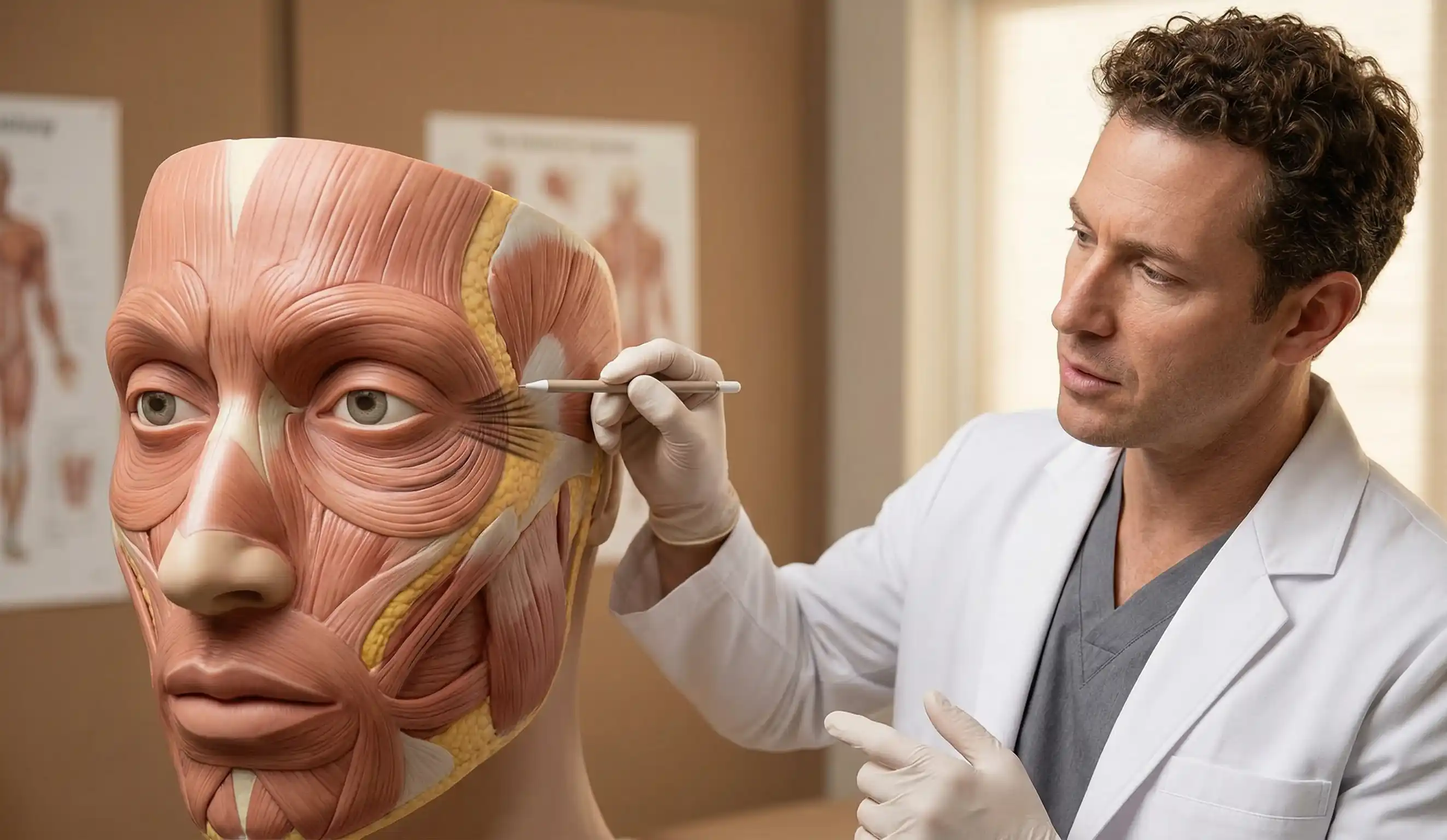
Any perioral procedure’s long-term effectiveness relies on a healthy collagen matrix. With aging, the skin around the eyes tends to thin and become "crepey," which leads to the visibility of the crow's feet becoming enhanced and a surgical intervention alone is incapable of hiding them. When the focus of the treatment is on neocollagenesis, basically, what is happening is that the "scaffolding" of the skin is being fortified. This keeps the skin from "breaking" or wrinkling at the slightest movement of your facial muscles. When the skin is supported by a collagen-rich, healthy environment, it behaves more elastically, which means the appearance of the results of the blepharoplasty will be gentler and more harmonious with the whole face.
Each patient at Lin Health Europe Clinic having a surgery in Turkey receives a very special "Ocular Care Kit." Our staff in Istanbul, medical, is committed to the nourishment of the skin during the most important phase of neocollagenesis by means of medical-grade skin preparations and directed nutrition. We argue that professional rigor does not get arrested even after the surgical intervention; it simply goes on the complete maturation of the skin. For our Turkey guests, that means after the skin does not just look "tucked"—it looks healthy, thick, and naturally rejuvenated so that the boundary between the eyelids and the cheeks is seamless.
Lin Health Europe Clinic: Your Choice for Premium Eye Rejuvenation
Lin Health Europe Clinic serves as a world sanctuary for those who think that the youthful look in the eyes is a major source of self-assurance. Our center in Turkey is a shining example of medical advancement, where sophisticated ocular science is coupled with the hospitality of the highest level to international patients and care that is top-notch. We work in the most advanced, JCI-accredited hospitals that portray our role as a global leader in the field of medical tourism and high-precision facial rejuvenation. Selecting our facility means entrusting your wellbeing in the hands of extremely skilled and safety-conscious professionals in Istanbul, where every surgical operation is seen as a beauty of biology.
FAQ:
References
- Rohrich, R. J., et al. (2011). The evolution of blepharoplasty: a clinical review. Plastic and Reconstructive Surgery.
- Jacono, A. A. (2018). The Art and Science of Periorbital Rejuvenation. Quality Medical Publishing.
- Tzikas, T. L. (2004). The role of Botox in treating lateral canthal lines alongside surgery. Aesthetic Surgery Journal.
- Coleman, S. R. (2006). Structural fat grafting and skin quality in ocular aesthetics. Plastic and Reconstructive Surgery.
- Williams, E. F., et al. (2011). Laser resurfacing and neocollagenesis in the periorbital region. Archives of Facial Plastic Surgery.
Frequently asked questions
Does blepharoplasty get rid of crow's feet?
Exceptionally, blepharoplasty is meant to get rid of drooping eyelid skin and fat, but it doesn't prevent the muscle movements that result in crow's feet. At our Istanbul clinic, we frequently pair eyelid surgery with Botox or laser therapy to have a completely smooth outcome in Turkey.
How do you fix crow's feet after eyelid surgery?
Neuromodulators (such as Botox) or laser resurfacing to induce neocollagenesis are the best crow's feet treatments possible after a blepharoplasty. In this way, the muscle and skin changes that the surgery doesn't reach are targeted and a complete rejuvenation in Istanbul is achieved.
Is blepharoplasty a permanent surgery?
Blepharoplasty is a procedure which yields results that could last for decades. That is, with proper care, your eyelid rejuvenation may be visible for more than a decade. In Istanbul, neocollagenesis is the phase in which skin matures. During this time, your structural changes not only remain but are stable thanks to the care we provide you in Turkey.
Will I look "surprised" after a blepharoplasty?
It is usually because the eyelid surgery was done carelessly or incorrectly that one looks surprised after a blepharoplasty. Our professionals in Turkey ensure the natural look of being rested and refreshed instead of the perpetually surprised look. We always aim at natural symmetry together with biometric proportions in Istanbul for your gaze not to lose its authenticity and balance.
How long is the recovery from eyelid surgery in Turkey?
The great majority of those treated with blepharoplasty in Istanbul do their regular social activities 7 to 10 days after surgery by which time the first bruising and swelling have largely disappeared. Since in Turkey during the phase of neocollagenesis the internal tissues get stronger, the results continue to change as time passes for several months.
This article is general information, not medical advice, and does not replace a consultation. Every procedure carries risk and outcomes vary from person to person.
Last reviewed 30 March 2026