Breast Augmentation with Fat Transfer: What to Expect

Medically reviewed by Op. Dr. EmrePlastic and Aesthetic Surgeon
The search for self-esteem and body aesthetics, natural beauty being only the initial stage. The shape and volume of breasts may change as a result of life, genetics, pregnancy, and weight changes. For a great number of people, breast volume restoration or enhancement by any means except artificial implants is their first priority. So as to achieve this goal, breast augmentation with fat transfer method has been suggested. At Lin Health Europe Clinic in Istanbul, Turkey, this surgery is the one that merges the application of safe and precise techniques of plastic surgery with the care that is given to patients, resulting in natural, durable results.
Breast Augmentation with Fat Transfer
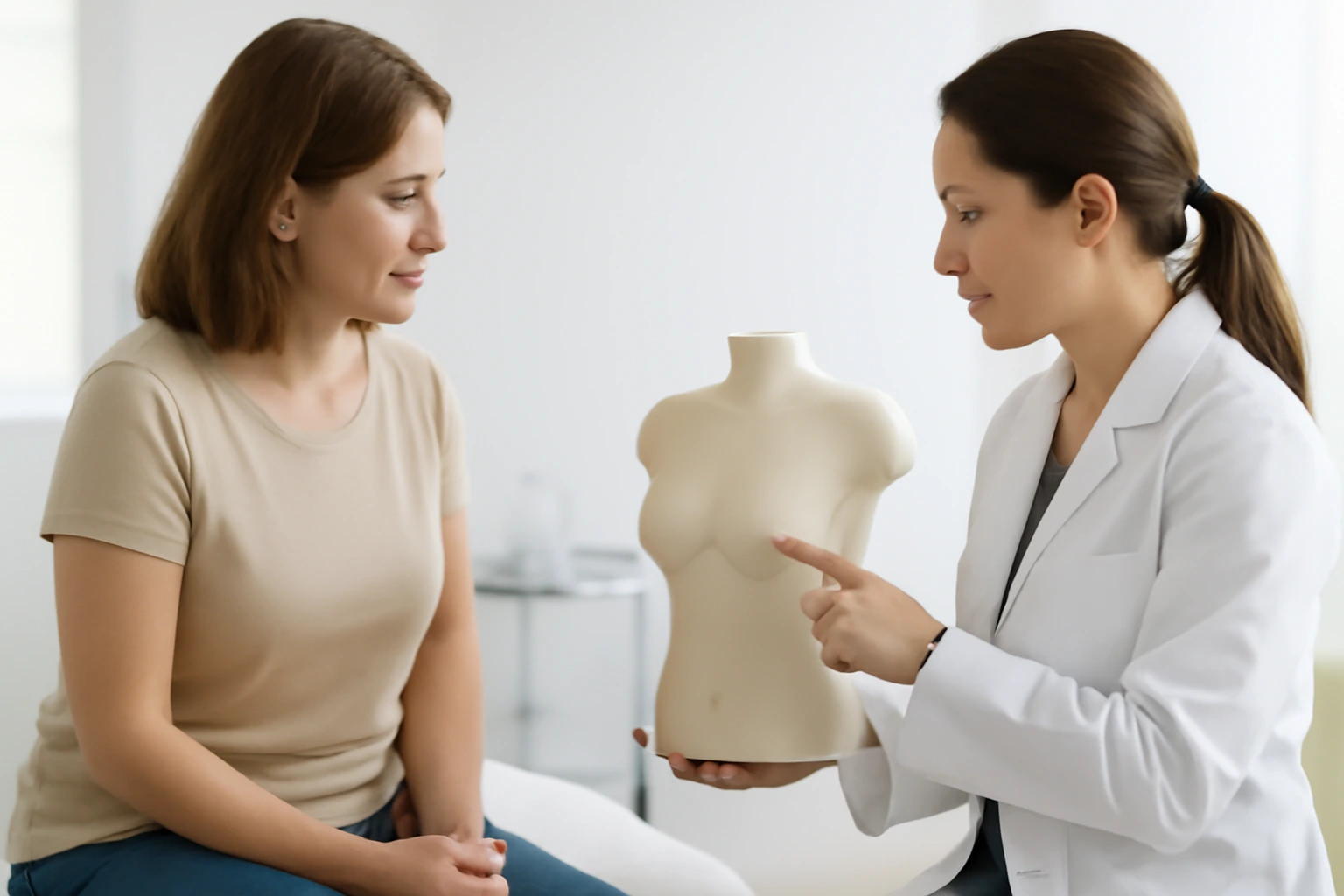
Fat transfer breast augmentation is a method known as autologous fat grafting in which the fat is taken from the patient's body, processed, and injected into the breasts to get more volume, make the breasts shape and symmetry. This is different from a traditional breast implant as it uses tissues from your own body, which means that the need for synthetics is reduced and a more delicate and natural look is given.
The concept is very simple but technically advanced: the fat is extracted from the parts where it is in surplus—usually the belly, thighs, or flanks—cleaned, and selectively injected into the breasts. The outcome is lightening of the breast that appears soft, natural, and moving like any other part of your body.
The procedure of Breast Fat Transfer is very attractive, to the persons who:
- Want the increase of the volume of breasts with the help of implants but in a moderate way.
- Try to redefine the shape and balance of the breast and have contours that mirror each other.
- If so, they might combine breast augmentation with fat transfer to achieve this goal by reshaping the donor areas and also sculpting the breasts.
- Would you rather do it with as less as possible metal or foreign material inside your body, that is, without using implants?
The Procedure: How Fat Transfer Breast Augmentation Works
The surgical process starts with liposuction to remove fat from areas that the patient agrees on. To keep the fat cells alive, doctors at Lin Health Europe Clinic apply g and tumescent sensitive liposuction techniques. After the harvest, fat is purified to remove blood, fluids, and cell debris. Only the most viable fat cells are allowed to transplant.
Injection Phase:
- The purified fat is injected into the breasts in very small portions hence the term 'micro-droplets'. Fat cells survive better and fewer complications are expected with this technique.
- The fat is distributed into multiple areas or layers, thus vascularization is enhanced and it is ensured that the fat that has been transferred is mixed with breast tissue successfully.
- During the procedure, the surgeon checks for symmetry, shape, and volume changes of the breast to achieve the desired and natural looking results.
Duration and Anesthesia:
- The 'From 2 to 4 hours' range is the usual time for which the operation takes place. The exact time depends on various factors like donor areas and how much fat is transferred.
- Local anesthesia with sedation or general anesthesia are options, which are left to the patient’s discretion or the clinical requirements and then decided.
Benefits of Fat Transfer for Natural-Looking Breast Enhancement
1. Natural Feel and Appearance:
When the augmented breasts are made of autologous fat the feeling is the same as if it is natural. Moreover, the breasts are soft, flexible, and natural looking in terms of both feel and movement. The danger of the occurrence of an unnatural stiffness or wrinkling of the breast is not present along with implants.
2. Dual Body Contouring:
Fat is taken out of areas such as the stomach, thighs, or flanks, thus, giving a double sculpting effect since the donor and recipient areas are both worked on at the same time.
3. Reduced Risk of Allergic Reactions:
Completely the opposite of a foreign implant, autologous fat transfer doesn't cause allergies, so the risk of allergic reactions, capsular contracture, or other implant-related complications is minimized.
4. Subtle, Gradual Enhancement:
Fat injection is the best option if the patient wants a small increase in breast size rather than a big one. Volume and contour can be adjusted very easily to look totally natural by the surgeon.
5. Long-Lasting Results:
If the procedure was done right, most of the fat that is injected successfully revascularizes and is permanently alive, thus, they provide a stable solution for volume enhancement for a long time.
Recovery Timeline and Aftercare Following Fat Transfer
The breast fat transfer is a relatively simple and comfortable process, nonetheless, commitment to the post-procedure guidelines is necessary to achieve maximum results.
Immediate Post-Procedure:
- Mild swelling, bruising, and tenderness in both donor and breast areas are common during the first week.
- Parts of the body where compression is applied help in absorbing the swelling, as well as in the healing process.
Weeks 1–2:
- In most cases, patients are allowed to go back to their normal day-to-day work mildly after two weeks of rest.
- No heavy lifting, intense aerobic exercises, or pushing on the breasts should be practiced so that the fat is well integrated.
Weeks 3–6:
Most swelling goes away, and the new shape starts to show.
- Fat cells which are not integrated may be reabsorbed by the body; to balance this, surgeons are doing the operation with a bit of overcorrection.
Long-Term Care:
- Keep your weight constant to avoid breast volume changes. The fat survival rate can be affected by the regain of lost fat and vice versa.
- Do not smoke and drink moderately to assist tissue health and blood supply.
Patients at Lin Health Europe Clinic are given very comprehensive aftercare instructions including details of compression, activity restrictions, and follow-up schedules which all contribute to a safe period of recuperation and excellent results.
Long-Term Results and Considerations of Breast Fat Transfer
Fat Survival and Longevity:
In general, 60–80% of fat that has been transferred remains alive permanently, thus giving a natural, long-lasting enlargement. A small part of the fat may be resorbed and therefore a secondary procedure will balance this if needed.
Breast Shape and Symmetry:
An accurate reshaping is possible through fat transfer, thus the size is just one of the aspects that can be improved along with shape, upper-pole fullness, and symmetry between breasts.
Limitations:
- Fat transfer is mainly for patients who are aiming for small volume (1–2 cup sizes) enhancement.
- Implants might still be the better solution for those who want a drastic volume increase and can be complemented with fat transfer.
Safety Considerations:
- You are not exposed to implant-related risks since your own tissue is used.
- Referring to the negative occurrence of fat survival and the postoperative instruction non-compliance as the main causes, it goes without saying that surgical skill and strict adherence to the post-op regimen are the keys to having no complications and fat survival.
- Those with particular health issues such as poorly controlled diabetes, ongoing infection, or lack of available donor fat for liposuction might need different treatment methods.
When done properly, breast fat transfer with the skilled hands of a plastic surgeon at Lin Health Europe Clinic can bring comfortable, long-lasting, and beautiful results to women who want a slight increase in their breast size.
References
- American Society of Plastic Surgeons (ASPS). "Fat Grafting for Breast Augmentation." Plastic and Reconstructive Surgery, 2023.
Retrieved from: https://www.plasticsurgery.org - Coleman, S. R. "Structural Fat Grafting: More Than a Permanent Filler." Plastic and Reconstructive Surgery, 2006; 118(3 Suppl):108S-120S.
DOI: 10.1097/01.prs.0000234610.81670.34 - Gentile, P., et al. "Long-Term Follow-Up in Breast Fat Grafting: Radiological Findings and Patient Satisfaction." Aesthetic Surgery Journal, 2019; 39(3):217–226.
DOI: 10.1093/asj/sjy033 - Rohrich, R. J., and Pessa, J. E. "Autologous Fat Grafting for Facial Rejuvenation: A Critical Review." Aesthetic Surgery Journal, 2017; 37(2):133-145.
DOI: 10.1093/asj/sjx089
Frequently asked questions
What is breast augmentation with fat transfer?
It is a procedure where a patient’s own fat is harvested, purified, and injected into the breasts to enhance size, shape, and symmetry naturally.
How long do fat transfer breast results last?
Most of the transferred fat (about 60–80%) survives permanently, providing long-term volume improvement.
Is breast fat transfer safe?
Yes, using your own fat reduces the risk of allergic reactions or implant complications, making it a safe and natural alternative to traditional breast implants.
How much fat survives after transfer?
Typically, 60–80% of the injected fat establishes blood supply and integrates successfully, while some minor resorption may occur.
Can fat transfer replace implants completely?
For moderate size enhancement, yes. However, for dramatic volume increases, implants may be recommended in combination with fat transfer.
This article is general information, not medical advice, and does not replace a consultation. Every procedure carries risk and outcomes vary from person to person.
Last reviewed 16 September 2025