Hydration, walking, and time reduce bloating.
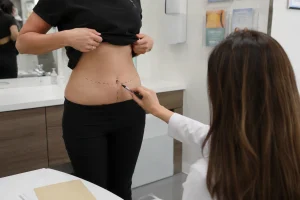
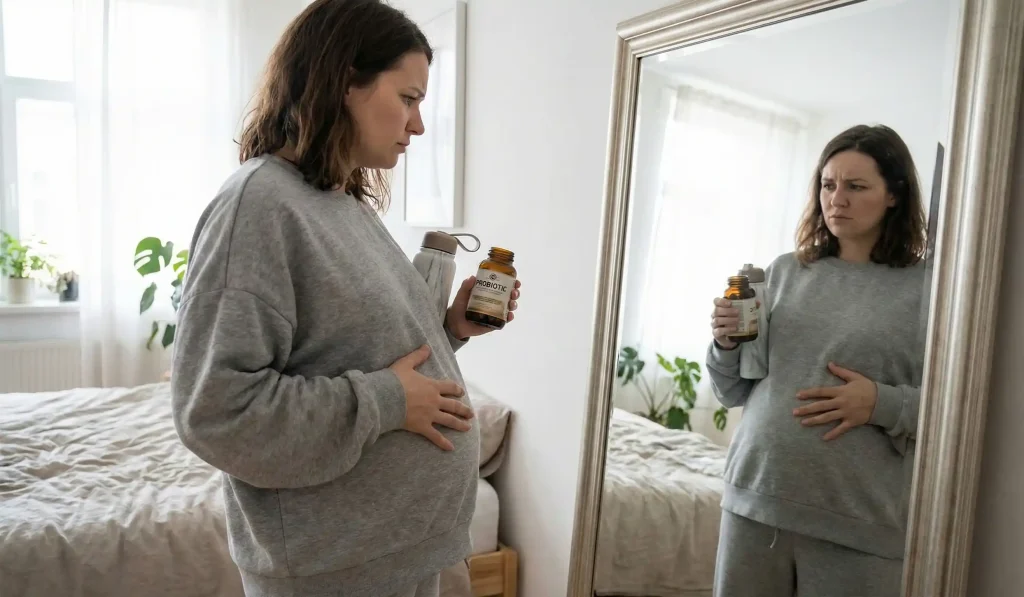
After a tummy tuck or liposuction to get a flat stomach, when you see yourself in the mirror a few days after surgery, it might actually look like your belly is rounder and harder than before. You might even have seen some joking comments or angry ones like “The Post-Op Bloat” or “Opioid Belly” on social media regarding this very common and very frustrating effect of surgery that patients complain about. Most patients panic when they see this sign and they wrongly think that the surgery did not work or they have gained visceral fat overnight.
In reality, this bulge is seldom fat. It is a transient situation where gas is trapped in the intestines, you can be constipated, and on top of that, the trauma of surgery and the drugs to keep you comfortable induce fluid retention. It is as if the digestive system has been put to sleep during the operation that when it wakes up, you no longer experience fullness and discomfort. At Lin Health Europe Clinic, we want you to be fully aware that this ‘pregnant look’ is just a normal stage of recovery and not your last outcome. Knowing how to start your body’s machinery again is what really unlocks that gas and lets you see the flat shape you have paid for.
The Biological Stall: Why Anesthesia Stops Your Gut
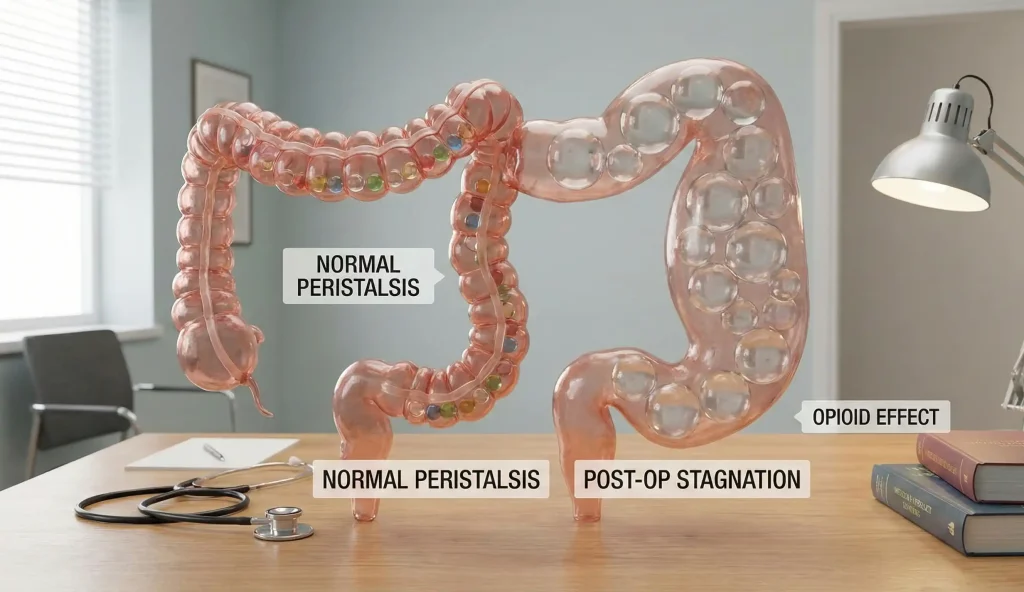
In order to get rid of the bloat, you need to figure out the cause(s) first. The main factor is General Anesthesia. The drugs that are used to paralyze your muscles when you are put under also work to paralyze your intestines. This condition is medically known as “Ileus.” Your peristalsis—the wave-like muscle contractions that move food and gas through your digestive tract—ceases altogether.
Even after you have regained consciousness, the intestines take a while to start functioning again. In addition, there are Opioid Painkillers (like Percocet or Vicodin) that you may be prescribed, which are well known for binding to certain receptor sites in the bowel and thereby slowing down the transit time even more, thus causing very severe constipation. Because stool and gas cannot exit and are accumulating, your abdomen bulges. This pressure from the inside is somehow a pain in the operation area of the tummy (especially after a tummy tuck), hence the tight, hard, “bursting” feeling, and every day when you try to put on your faja, it is almost impossible.
The Hydration Paradox: Flush to De-Bloat
When you already feel full of water, it may seem foolish to drink more water. But dehydration aggravates bloating. For instance, after a surgery, the body, as a way to protect itself from blood loss, retains sodium and water. When you do not take in enough fluids, the body stores every drop of water making the swelling worse.
You should – almost forcibly – drain your body. Consuming water in the range of 2 to 3 liters per day will help reduce the sodium level in your blood, so that the kidneys will not hold the fluid anymore but instead release it. Moreover, it helps to keep the stool soft and therefore, avoid the need of straining during its passing. We indeed encourage you to spice up your water with the addition of some natural diuretics like lemon or cucumber. On the other hand, make sure to stay away from Carbonated Drinks in any and all forms. The last thing you want is to add even more gas bubbles to your already struggling digestive system which is unable to get rid of them efficiently.
Movement as Medicine: Walking Wakes the Bowel
It is not a drug, but motion and gravity that cure postoperative ileus most effectively. Being wrapped in a blanket and lying in a warm bed all day long just makes your digestive system more dormant. Your gut needs to be woken up by a walk.
Simple walking engages the abdominal muscles slightly, which in turn, aids the gas bubbles to move along the intestines with the help of gravity. We have seen many cases where patients have been advised to do short, slow walks around their place of residence every 2 hours when they are awake. This little “rocking” action is a better natural stimulator of peristalsis than any stimulant laxative. Of course, these patients only performed gentle walking, not intense cardio nor twisting motion which are able to damage the internal sutures. Think more “gently pacing” than exercising. What the body needs to be told by the mind here is simply, “Hey, we are all awake, so let’s get moving!”
Dietary Deflators: Tea, Fiber, and Enzymes
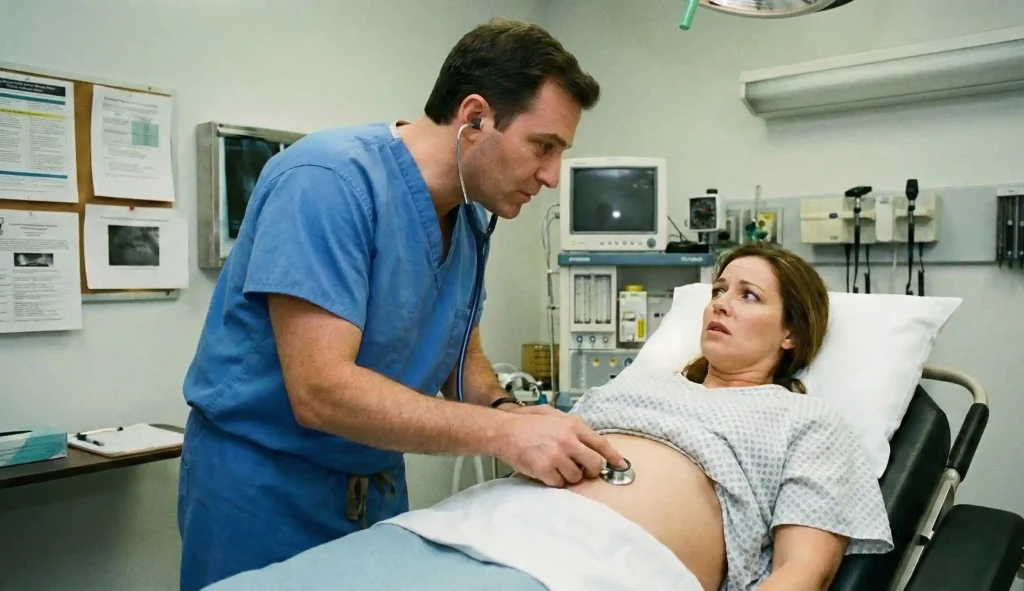
The way you eat in the first week is hugely significant. You do not yet have a strong digestive fire, so it makes no sense to stuff it with heavy, greasy, or processed foods (which have a lot of salt) because inevitably, you will end up overrunning it. Go for “low residue” or easy-to-digest meals such as soups, smoothies, and soft proteins.
Some natural solutions are extremely effective in reducing bloating. Peppermint Tea is an antispasmodic that relaxes the muscles of the intestines, thus, aid in the passing of gas. Ginger Tea is very helpful in alleviating the nausea that often accompanies constipation. Pineapple is the most beneficial of all in the recovery process because it contains Bromelain which is the anti-inflammatory enzyme that also supports digestion. On the contrary, do not consume “gassy” veggies such as broccoli, cauliflower, beans, and cabbage) during the initial 2 weeks. Even though they are extremely healthy, during the digestion, they create sulfur gas which, in turn, will result in more pain and bloating.
Lin Health Europe Clinic: The Gut-Health Protocol
We focus on your internal recovery as well as your external ones at Lin Health Europe Clinic in Turkey. We very well understand that severe bloating shortly after the operation can put in jeopardy the repair of a tummy tuck if the pressure build-up inside becomes too much for the abdominal wall to bear. Hence, gut health gets featured heavily in our post-op regimen.
We are firm believers that the use of Stool Softeners should be started on the surgery day, long before the patient feels libidinal to use it because of the pain caused by the accumulated stool. We are all about the patient’s wellbeing, thus helping to switch medication from narcotic painkillers to non-narcotic alternatives (like Tylenol) as soon as possible to remove the brake on the bowels. In addition, we coach patients on the “I-L-U” abdominal massage (if the procedure he/she has undergone allows for it) aimed at manually guiding the trapped gas toward the exit so that the patient can get relief. We see the removal of bloating as a pivotal step towards your reveal and a step along the way at which your external appearance and internal feelings become perfectly aligned.
Frequently Asked Questions About Post Op Bloating
The most severe part of post op bloating usually goes away within 10-14 days after you stop taking painkillers and start moving around. Nevertheless, mild swelling that comes and goes may last for several months especially if you consume salty foods.
Yes. This is a typical “endo belly” caused by post op bloating and inflammation. It is not fat or a failed operation; it is air and fluid that will disappear.
Begin with stool softeners (such as Colace), which are gentle. Potent stimulant laxatives can cause cramping, which is very painful after abdominal surgery. Before taking strong laxatives for post op bloating, talk to your surgeon.
Gravity and accumulation. As the day goes on, the fluid drains down, and you accumulate gas from eating. It is very common for post op bloating to be minimal in the morning and maximal in the evening.
Stay away from high-sodium processed foods, dairy (if you’re sensitive), carbonated sodas, and gas-producing veggies like beans and broccoli. These will aggravate post op bloating and cause abdominal discomfort.
Bragg, D., et al. (2015). Postoperative ileus: Recent developments in pathophysiology and management. Clinical Nutrition.
Story, S. K., et al. (2012). Opioid-induced constipation in the post-operative patient. Journal of Pain and Symptom Management.
Maddux, J. A. (2014). Nutrition and Wound Healing in the Plastic Surgery Patient. Plastic and Reconstructive Surgery.