Usually 9–12 months.
Deciding to get a treatment for the under-eye area is mostly a matter of a person’s emotions. Patients are sick of their faces reflecting their lack of sleep while. But at the same time, tear trough filler is a hefty financial and emotional commitment. So it goes without saying that the most important question raised at any consultation is about the durability of the solution: “If I do it today, when will I need to come back?”
The answer is frequently quite astonishing to the patients. Compared to other facial parts, tear trough filler is extremely long-lasting. Whereas lip fillers may disappear in a few months, the under-eye area offers a much better “return on investment.” At Lin Health Europe Clinic, we are all for scientifically backed facts rather than marketing tricks to set the expectations of our patients. Here is the factual basis of how long your results will actually last and the biological factors that dictate that timeline.
The Clinical Timeline: 9 to 18 Months
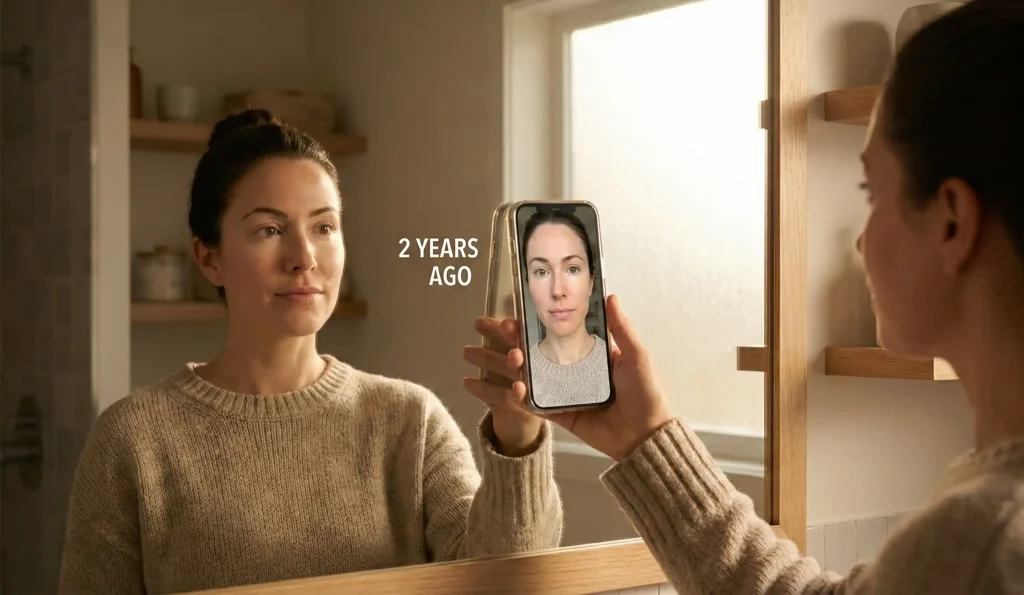
Typically, the effect of a properly administered Tear Trough Filler treatment lasts for a period of 9 to 18 months. According to our medical practice, several patients can enjoy a visible difference for up to two years.
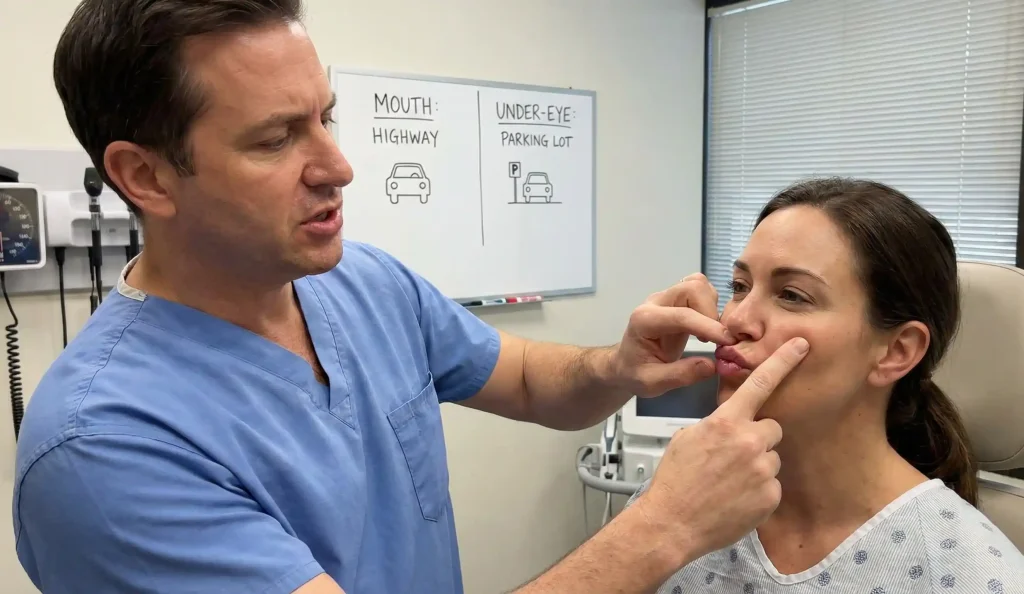
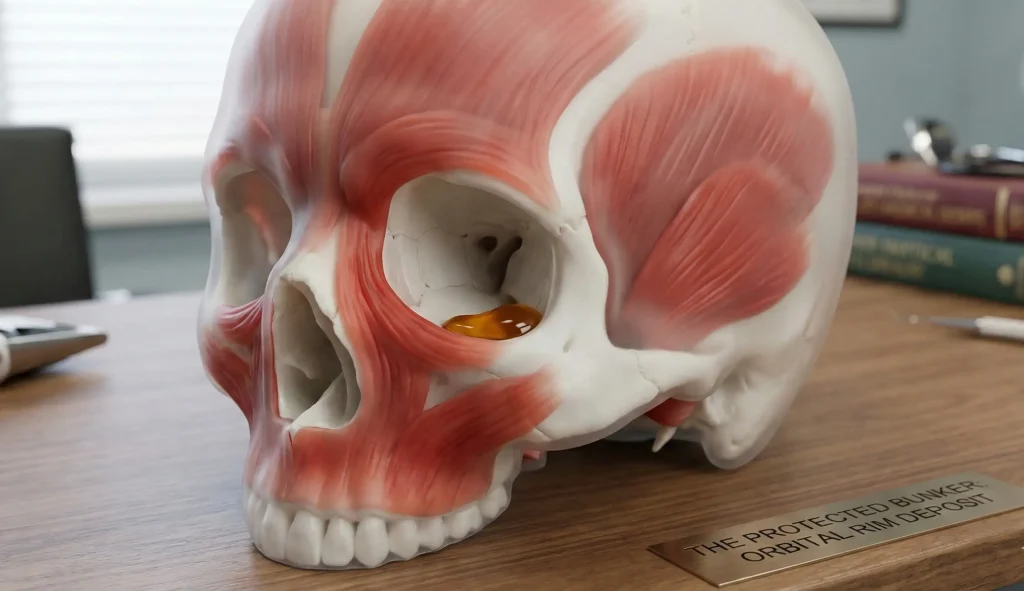
One question that may arise is why does it last more time than lip filler? The explanation is the Mechanical Stress factor. Hyaluronic Acid (HA) is decomposed more rapidly in places where there is a lot of movement. Your mouth is always active – eating, talking, smiling. The muscle activity results in the filler being physically degraded. On the other hand, the tear trough is a pretty static, deep hollow. The filler lies between the bone and the muscles, so it is not exposed to the strong contractions of the muscles. Hence, the absence of mechanical stress enables the Tear Trough Filler to be capable of preserving its form and moisture for a considerably extended time.
The “Ghost” Filler: MRI Evidence
Modern MRI research has completely modified our perceptions of the durability of the filler. The MRI pictures revealed that Hyaluronic Acid could be stored in the under-eye area for at least 5 years. However, the term “microscopic existence” is quite different from “aesthetic impact.”
On the one hand, the filler material may physically stay within the tissue, but on the other hand, the surface “lift” generally fades around the 12-month period as the gel is absorbed and becomes flatter. This point cannot be overemphasized. It means that you will not be required to undergo a complete re-injection every year. On the contrary, the majority of patients need only a “micro-top-up” – usually less than half a syringe – to bring back the perfect shape. The major cause of the puffy, fake results is overfilling a patient who still has residual product.
Metabolic and Lifestyle Factors
The question remains: why is it that the tear trough filler lasted 18 months for one patient but only 9 months for the other? Your body’s inherent biology is a key player here, and you should consider that a tremendous part of the solution.
- Metabolic Rate: Younger patients and high-performance athletes are usually found to metabolize Hyaluronic Acid at a faster rate than older, less active patients.Thermal Exposure: Repeated exposure to extreme heat—such as in a sauna, steam room, or a hot yoga session—may quicken the degradation of the cross-linked HA bonds.Lymphatic Function: The eyes are heavily drained. If you have a slow lymphatic system (which is a frequent cause of puffiness in the morning), the filler may be more “full” for a longer time due to the water that it holds. On the other hand, if the drainage is good, then the product will be cleared faster.
The Product Factor: Why We Use Redensity II
Longevity depends not only on the patient but also on the product. Applying a thick, heavy cheek filler under the eyes is a sure way to have a problem. At Lin Health Europe Clinic, the only filler product we use is Teosyal Redensity II.
This is a product tailored to the anatomy of the tear trough. It is a mixture of cross-linked and non-cross-linked Hyaluronic Acid, the latter of which is supplemented with amino acids and antioxidants. Redensity II is different from regular fillers that absorb huge amounts of water (hydrophilic) in that it is “low-hygroscopic.” It supplies a reliable, long-lasting coverage without causing the blue, swollen appearance (Tyndall Effect) that is typically linked to denser gels. Its slow and uniform degradation over a 12-month period is ensured by its very structure, thus the result fades naturally rather than becoming lumpy.
The “Cumulative Effect” of Maintenance
One of the coolest things about Tear Trough Filler has to be the way it builds up over time. The procedure triggers a slight production of collagen in the deep layers of the skin. This means, in essence, that the skin gets incrementally thicker and the hollowness naturally becomes less with each round.
Therefore, the amount of product required for the second treatment is predicted to be lower than that for the first one, while the third treatment can be scheduled around 18 to 24 months after the second one. That is, by “toppling-up” the result just before it vanishes completely, you are essentially laying the foundation for the long term. In such a way, Tear Trough Filler becomes one of the most cost-effective non-surgical methods over 5 years.
Frequently Asked Questions About Tear Trough Filler Duration
Hyaluronic Acid is a semi-permanent and biodegradable substance. Although small amounts of it may linger for a few years, the visual lifting effect will usually remain 9 to 18 months.
Certainly! Staying away from UV rays (always use sunscreen!), managing your stress, drinking enough water, and not going to the sauna will help keep the Hyaluronic Acid bonds. But ultimately, your metabolism is the main factor.
Definitely! By not exposing yourself to UV radiation (always apply sunscreen!), limiting stress, drinking plenty of water, and not going to the sauna, you can contribute to the preservation of the Hyaluronic Acid groups in your Tear Trough Filler.
It is advisable for us to do a follow-up after 12 months. Most of the time when patients come for a visit at this stage, they don’t need a full treatment, only a minor correction (0.5ml) to keep the Tear Trough Filler effect without excessively filling.
This is often the case. The “layering” effect means that the second procedure utilizes the collagen production from the first one and thus can deliver a skin that is more even, brighter and the result lasts longer as well compared to the very first Tear Trough Filler injection.
Oestreicher, J., & Mehta, S. (2012). Complications of Hyaluronic Acid Fillers. Facial Plastic Surgery Clinics.
Heringer, T. M., et al. (2011). Treatment of the tear trough deformity with hyaluronic acid. Aesthetic Plastic Surgery.
Donofrio, L. M., et al. (2016). Long-term MRI follow-up of hyaluronic acid fillers. Dermatologic Surgery.
DeLorenzi, C. (2013). Complications of injectable fillers, part I. Aesthetic Surgery Journal.