It strains the eyes and slows healing.
The days after getting eyelid surgery done can seem like a long time. You might naturally want to get engrossed in a show or scroll through your phone to kill time. But, surgeons on the whole, strongly advise against any kind of exposure to a screen during the initial recovery stage. This restriction is not at all a random one; it is a serious medical precaution aimed at protecting your eyesight and allowing your body to heal in the best way. At Lin Europe Clinic, we are concerned more with your results in the long run than your instant pleasure.
Besides other things, the main physiological reason you can’t watch TV after blepharoplasty is eye fatigue from watching. The eyes are weakened, often swollen so that they cannot properly close, muscles are weak from being traumatized and/or numbed, etc. Looking at screen devices forces the eyes to work tougher at a time when they are in great need of rest. Thus, we always provide precise guidelines regarding the process of your recovery which are there to support you in getting through the dullness of the period without compromising the fragile surgical work.
Reduced Blinking and Its Consequences
You might not be thinking that your pattern for blinking changes significantly when your eyes are glued to digital screens. Normally, people blink about 15 to 20 times per minute which is what keeps the eye hydrated and protected. However, studies suggest that when you immerse yourself in TV, computer, or smartphone, your blinking rate falls by as much as 60%.
Having less than usual blinking is risky after eyelid surgery. Your eyelids are still stiff and swollen so that each blink is like a small workout for them. If you look at a screen, you practically cease blinking which of course results in your cornea being exposed to the air for runs that are too long and thus drying up progressively. Besides that, your eyelids might not close all the way in the first few days (a condition called lagophthalmos), hence skipping blinks can lead to very serious eye discomfort or even corneal abrasions.
Dry Eye Syndrome Aggravation

Dry eye is a common and temporary symptom that might appear after blepharoplasty. The surgery is capable of causing a temporary dysfunction of tear production as well as the nerves that regulate the secretion of eye lubrication. So your natural tear film is very unstable and since it evaporates fast. Watching TV greatly speeds up the evaporation process. The combination of the eyelid trauma caused by the surgery and the “staring” effect of screen time is absolutely detrimental to the eye surface.
The eyes get excessively dry, they react with reflex tearing, stinging, and redness. This is your body’s way of counteracting the dryness. Also, generally, the reflex tearing may not be enough to counteract the effects of the dryness caused by the dry and scratchy eyes, hence the redness and the stinging. And that, in turn, leads to eye rubbing which you should never do since its reopening an incision and/or infection. Giving up screens allows your tear film to become stable again. The use of artificial tears and keeping your eyes shut will provide you with sufficient hydration during your healing period.
Eye Muscle Tiredness and Visual Stress
Concentration on screen images is obtained through the work of small muscles located inside and around the eyes. Ciliary muscles need to contract in order focus to be maintained, and extraocular muscles perform micro-movements to track a motion on a screen. Right after the surgery, these areas are inflamed and very sensitive. If you work them too much, you will experience very fast eye fatigue and pain of deep aching behind the eyes.
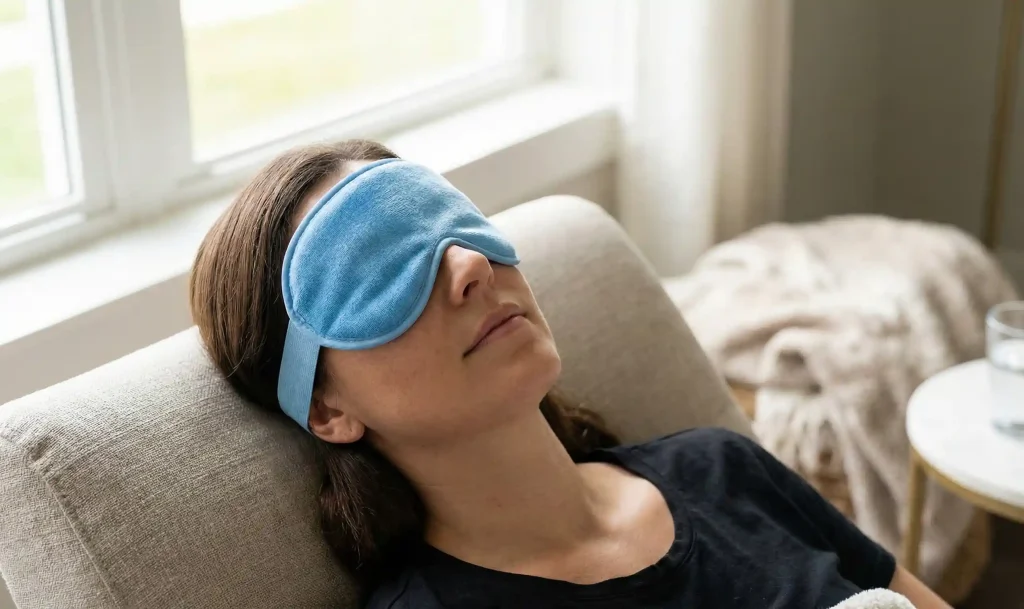
You might also experience photophobia, or light sensitivity, in the days following surgery. It is during this period of time that TVs and phones become the most irritating objects due to their blue light being piercingly painful to sensitive eyes. This, in turn, can result in a tension headache and increased blood pressure. Since this sequence is already a chain reaction, by causing more swelling and bruising, moods may be altered negatively, too. Your eyes can get some relief if you allow them to rest (literally closing your eyes or by keeping them in a soft gaze) as that will cause the inflammation to go down much quicker than if you were to keep them open and active all the time.
Suggestions for Non-Visual Entertainment during the Recovery Period

We suggest you set aside some time and get yourself some audiobook and podcast before you have your surgery. These are great ways for you to be entertained, gain new knowledge, and not having to open your eyes. Also, you can consider music or guided meditations which can further relax the mind and help the healing process to be quicker. By doing this, you switch off your physical body while keeping your mind engaged.
While your doctor and his or her team will monitor you, it is typically possible to slowly introduce television and reading after, let’s say, the first 24 to 48 hours. Begin with a brief session of 10 to 15 minutes and stop the very moment you feel symptoms like dryness or strain. After the completion of your sewing removal and the swelling has mostly gone down, generally, patients can resume normal viewing habits after the first week.
Eyebag Surgery in Turkey
One of the reasons you will travel with Lin Europe Clinic for eyelid surgery in Turkey is that you will experience the great care and comfort of your recovery setting. To help you through the “digital detox” time, we, in fact, provide you with total support and resources bearing in mind that it is very tempting to use screens especially if you are staying in a hotel room all by yourself. Moreover, our medical team in Istanbul checks your tear production and corneal health daily during your follow-up visits.
We intend your stay in Istanbul to be a pleasant and rejuvenating one. We have designed luxury accommodation, the kind of place where you can simply lie down and listen to your favorite audio or audiobook in peace. Our team goes out of its way to provide you with all the help and support that you need without having to strain your eyes reading or doing other activities that may be unfamiliar to you. At Lin Europe Clinic, your safety is our priority, so we take great care of your recovery, the investment that you have made in your eyes.
Frequently Asked Questions About Screen Time After Surgery
Generally, you are allowed to watch TV for short periods starting 24 to 48 hours after the surgery. If at any time your eyes become dry or tired, you must stop straight away.
A phone screen tends to cause a considerable reduction in your blinking frequency, which results in the drying of your eyes. In addition, the light emitted from the screen can negatively affect your healing tissue that is becoming more sensitive.
Definitely, audiobooks or podcast listening is an excellent alternative to watching TV during recovery. It is a source of entertainment without putting any stress or strain on the eyes.
One of the repercussions of watching TV too soon is severe dry eye, which can be accompanied by stinging and blurred vision. Besides that, headaches and swelling increases may also occur as a result of eye strain.
Try to reduce the glare of your screen by turning down the brightness and enable “night mode” to filter out the blue light. For the first couple of days, only check your messages if it is really urgent.
Shorr, N., & Enzer, Y. R. (1992). Considerations in aesthetic eyelid surgery. Journal of Dermatologic Surgery and Oncology.
Rees, T. D., & Jelks, G. W. (1981). Blepharoplasty and the dry eye syndrome: Guidelines for surgery. Plastic and Reconstructive Surgery.
Mack, W. P. (2010). Complications in periocular rejuvenation. Facial Plastic Surgery Clinics of North America.