Gentle massage and hydration improve circulation.
The Physiology Behind New Blood Vessels and Graft Survival
Within the hair transplant field, the “best take” of the grafts totally relies on how fast the complex vascular network develops. Biometrics-wise, right after the follicular units have been taken and implanted in the recipient area, these units are temporarily kept alive without oxygen and food supply. The 72 to 96 hours after that, new blood vessel formation, or neovascularization, happens most actively. It is the physiological mechanism that assists in the graft’s connection to the systemic blood supply. Inosculation, the formation of a direct connection between the blood vessels of the graft and host, is a critical step in maintaining the vitality of the dermal papilla in the hair follicle.
At Lin Health Europe Clinic, we say that enhancing blood flow is the number one aim in post-operative care as it directly influences the survival rate of the grafts. The hair follicles will undergo anaerobic respiration and starve without the right amount of microcirculation. Oxygen and glucose are essential for the follicle to remodel and produce a new hair shaft. Structural harmony is achieved by making the environment more suitable for the grafts and the recipient dermal matrix.
Medical Innovation: PRP and Low-Level Laser Therapy
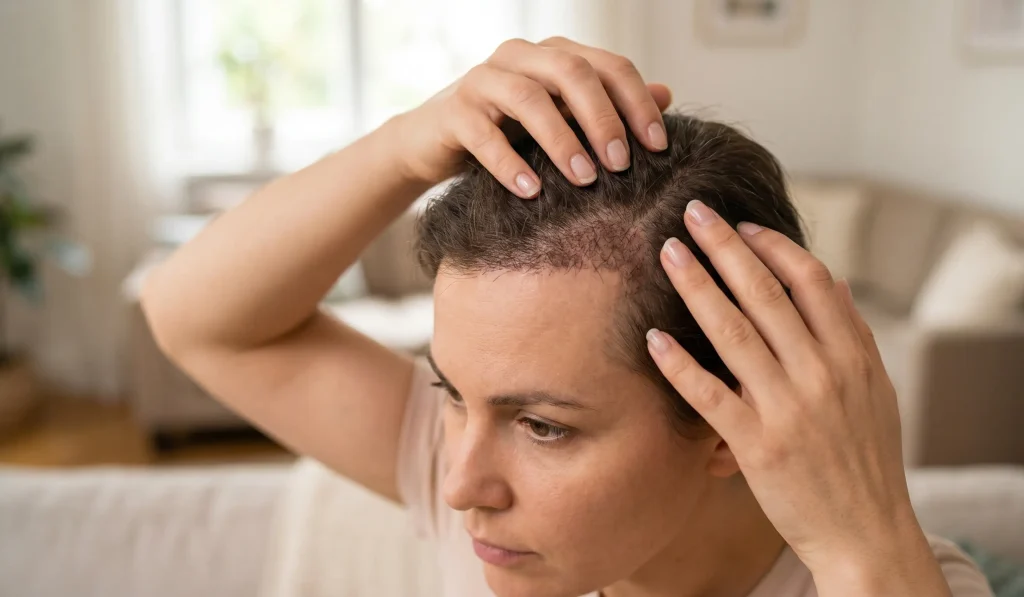
In order to keep the biological balance of the scalp and to speed up the healing process, we use advanced medical innovations that directly work on local blood circulation and tissue regeneration. Platelet Rich Plasma (PRP) therapy is a method of surgical excellence in Istanbul. By injecting a concentrated solution of autologous platelets that contains Vascular Endothelial Growth Factor (VEGF) and Platelet-Derived Growth Factor (PDGF) at the recipient site, a very powerful healing process is triggered. These growth factors function as biological markers that attract endothelial cells to start building new capillaries, and as a result, the grafts are getting fully “re-anchored” to the body’s systemic supply much faster.
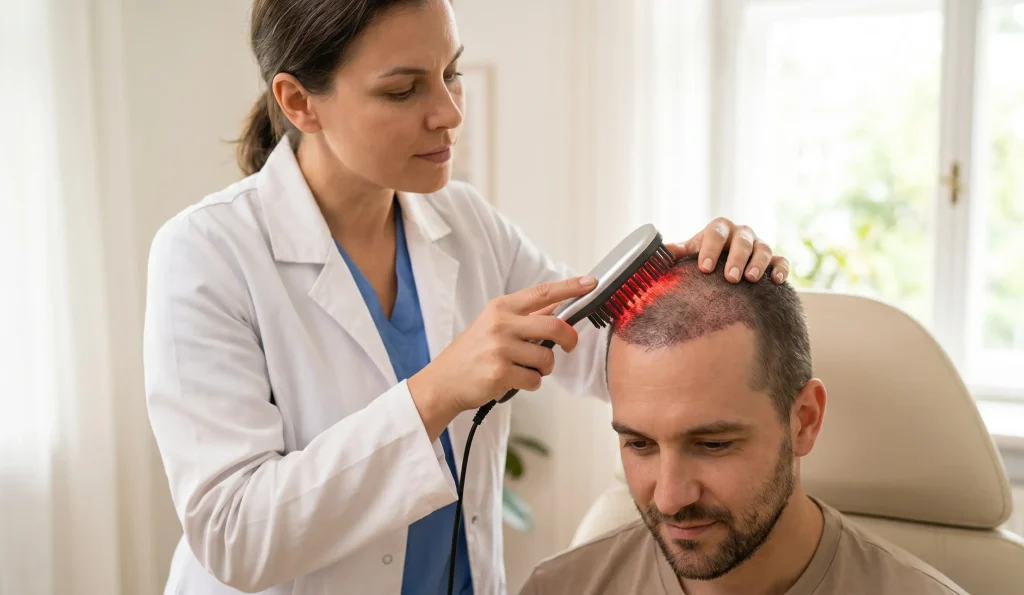
Besides that, Low Level Laser Therapy (LLLT), by means of photobiomodulation, is used to improve microcirculation. Special, non-invasive light frequencies reach the dermal matrix through scalp layers and are taken up by mitochondria, which are considered the powerhouse of cells. This absorption results in stimulation of cytochrome c oxidase, which leads to the production of more adenosine triphosphate (ATP) and nitric oxide. Vasodilation caused by this process gives an outstanding improvement in blood flow, removal of localized edema, and acceleration of follicular development.
Nutritional Rigor and Hydration for Microcirculation
The overall health condition of your scalp directly reflects your body’s biochemical parameters and the viscosity of your blood. Hydration maintenance at high definition is an indispensable element for biometrics to make sure that blood circulates smoothly through microscopic capillaries around the new follicles. Lack of water may increase blood viscosity, which makes the delivery of systemic vitality to the healing recipient sites much slower. Therefore, we suggest consuming a large amount of structured water and drinks containing electrolytes to keep plasma volume at its optimum level until new follicles mature.
To get the best structural harmony, you also need to be strict with your diet. We provide you with a very comprehensive guide on what kinds of food you should eat to have healthy iron and zinc levels and that’s mainly because hemoglobin production and cell division require these minerals. In addition to that, consuming vegetables such as beets and leafy greens that are rich in nitrate can increase your body’s nitric oxide level naturally, which is helpful for healthy vasodilation. Vitamin C is also very beneficial because it assists in making collagen which, in turn, fortifies the newly developed vascular walls surrounding the grafts.
Lifestyle Biometrics: Avoiding Vasoconstriction
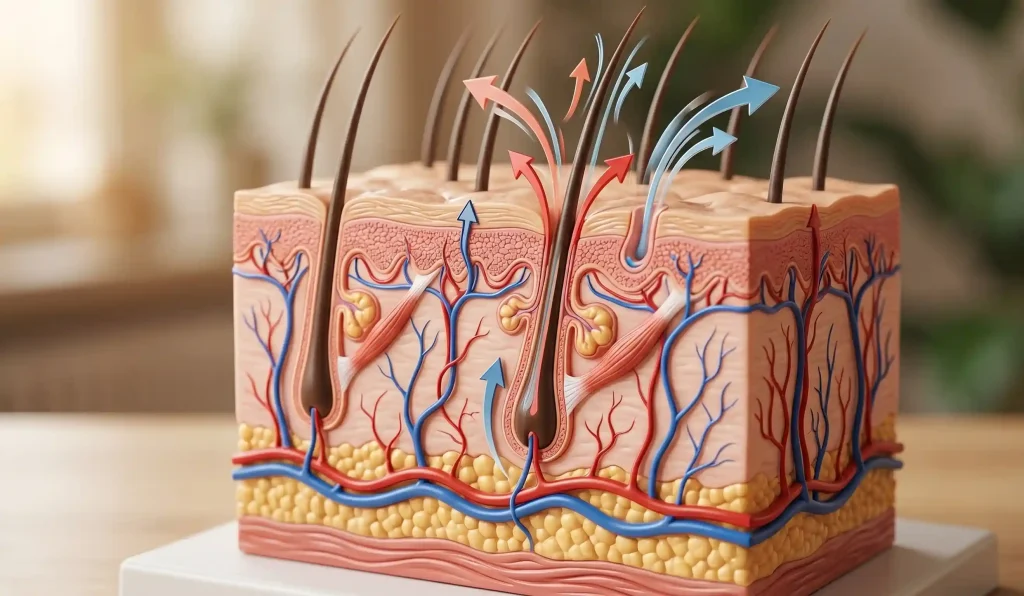
Controlling the vascular condition of one’s scalp requires the absolute elimination of sources of biometric vasoconstriction from the outside. From a medical point of view, nicotine and too much caffeine are two major factors working against the systemic vitality of a healing hair transplant. Something especially bad about nicotine is that it leads to the production of carboxyhemoglobin and the narrowing of small blood vessels; this way, the oxygen saturation level available for the new grafts is drastically reduced. What might happen is “graft necrosis” or even just a severe decrease in the marked density of the final outcome.
| Factor | Impact on Blood Flow | Clinical Recommendation |
| Smoking/Nicotine | Severe vasoconstriction; limits oxygenation. | Avoid for 4 weeks post-op for systemic health. |
| Caffeine/Alcohol | Dehydration; disrupts capillary flow. | Minimize for the first 14 days of recovery. |
| High-Impact Exercise | Spikes blood pressure; risk of graft displacement. | Avoid for 2 weeks to protect structural harmony. |
| Sleep Position | Manages lymphatic drainage and edema. | Sleep at 45° for 5 nights to prevent pressure. |
It is a must to have professional rigor when implementing these lifestyle changes in order to protect the surgical brilliance of the procedure. Besides chemical components, controlling one’s sleep position is very important; elevating the head prevents fluid retention that can compress the new capillaries mechanically.
Hair Transplant in Turkey
Making up your mind on Lin Health Europe Clinic means you will be in a worldwide haven where the subtleties of scalp biometrics and hair follicle biology are handled with the highest level of clinical mastery. The fact that final hair placement is only the starting point of one’s transformation to a new, confident self profile is something that we fully understand. Through meticulous management of the scalp’s internal environment, our simply extraordinary results are maintained over time.
Lin Health Europe Clinic is a recognized leader in medical innovation, offering aftercare protocols that ensure the systemic health of the patient from a long-term perspective, even at the expense of aesthetic excellence. If, for example, you trust Lin Health Europe Clinic, you are entrusting a medical system that at the same time focuses on anatomical science and artistic precision. With professional care, we guide your transition, ensuring your results are solid, well-defined, and in perfect structural harmony.
FAQ:
Even though massage is a main method of increasing microcirculation, it is a clinical requirement that you wait 3 weeks at least before you use any tactile pressure on the recipient area. If you apply force too early, you can destroy the structural harmony of the grafts before they are fully anchored.
The first step towards the connection process, which is called inosculation, gets underway in the first 48 to 72 hours. On the other hand, the development of a strong, clearly defined vascular network and it takes about 7 to 10 days.
We consider Minoxidil as a strong vasodilator; however, its application is only under professional supervision. Usually, we would advise waiting until the scalp is completely healed (generally 3 to 4 weeks) so as not to expose the area to chemical irritation accidentally. After this, it can be a very good medical development for the stimulation of blood flow and aiding in the maturation process of the follicles.
Sleeping at 45 degrees is indeed a measure that must be taken to help reduce local swelling. When you keep fluid from accumulating in the scalp, you not only lower the interstitial pressure, but you also avoid the situation where the newly formed vessels get squeezed due to the buildup of pressure, thus ensuring a steady and uninterrupted supply of overall vitality to the recipient site.
You may take a gentle walk, as it triggers systemic circulation positively with a minimal effect on your blood pressure. But as part of a clinically approved protocol, no high-intensity cardiovascular exercises should be done for two weeks after the operation. This is because you might have popping or bleeding issues at the graft sites, which will result in a loss of structural harmony of the transplant.
Unger, W. P., et al. (2010). Hair Restoration Surgery: Clinical Mastery and Biometric Outcomes. Informa Healthcare.
Tebbetts, J. B. (2002). Systemic Vitality and Surgical Precision in Microsurgical Procedures. Saunders Elsevier.
Janis, J. E., et al. (2005). Scalp Anatomy and Biometrics: Implications for Follicular Recovery. Plastic and Reconstructive Surgery.
Nahai, F. (2011). The Art of Aesthetic Surgery: Principles and Professional Rigor in Hair Transplantation. Quality Medical Publishing.
Cole, J. P. (2008). Medical Innovation in Follicular Unit Extraction and Graft Survival. Aesthetic Surgery Journal.