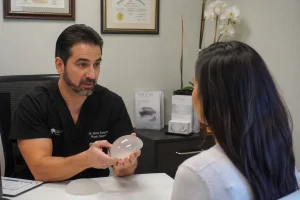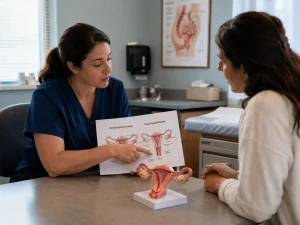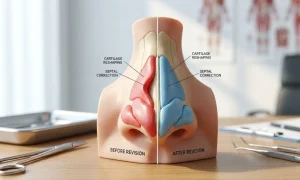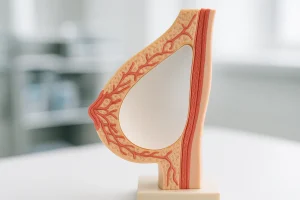

Phantom breast pain feels like discomfort or tingling.
One of the most bewildering, lonely, and sometimes terrifying experiences a woman can go through post-breast surgery is Phantom Breast. You stare down at a flat chest after mastectomy and maybe you are just back from getting your implants taken out (explant surgery). Then there is no doubt in your mind that the tissue is gone. Yet, when you get some rest and shut your eyes, you may still sense the nipple, the breast’s weight, or an itch on a certain spot that you don’t have anymore. You can even scratch it as a reflex and then only realize that you touched air or a scar. It is a condition known as Phantom Breast Syndrome (PBS), and although it seems like your brain is playing a trick on you, in reality, it is a very authentic physiological condition of your nervous system, which is quite complicated.
At Lin Europe Clinic, we think that recognition is the very first step towards healing. Quite a few women refrain from telling their doctors about these feelings just because they are afraid of sounding “mad” or as if they don’t appreciate their recovery. Nevertheless, to know that this is a normal physiological reaction will help you to be much less anxious. Phantom breast pain, or the pain you feel in your breast phantom, doesn’t indicate that something went wrong with your operation, and it’s not “all in your head” either, in the psychological sense. The very first sign is that your brain and your body are out of phase with one another when they are working together to restore you, as shown by the fact that the two (brain and body) temporarily don’t see eye to eye.
Brain and Body are Out of Sync
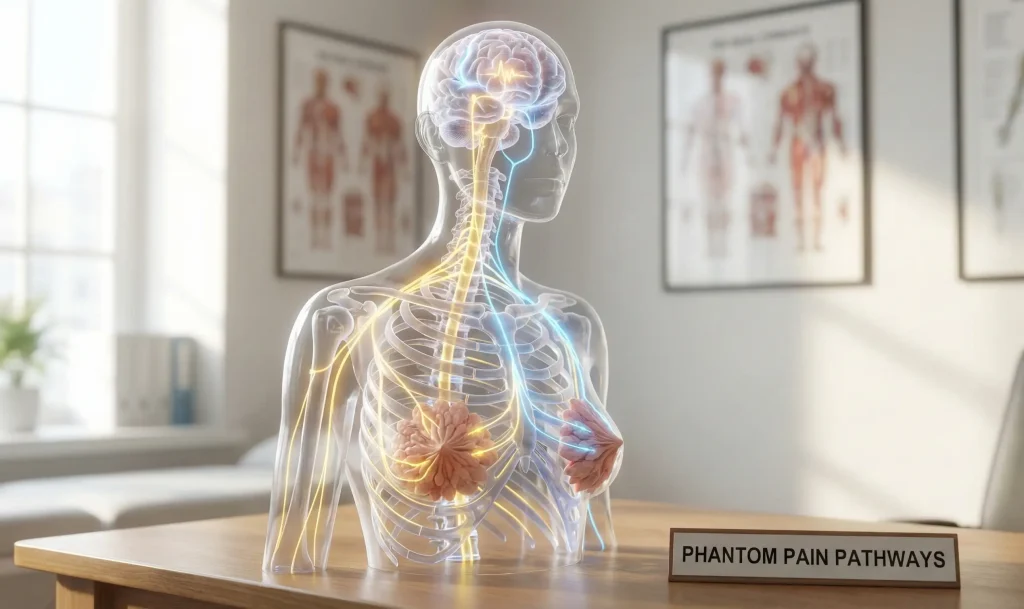
You must realize the reason behind phantom breast pain in order to describe the kind of pain you get from it. Your brain has a comprehensive chart of your body parts referred to as the cortical homunculus. A certain portion of the map is dedicated to your breast just like it is to your hand, face, or legs. A mastectomy or a major breast reduction will definitely lead to the removal of physical flesh and the separating of nerves from the brain of that flesh.
But, the “plan” in the mental world doesn’t get erased right away. The mind keeps on sending you messages that area and it awaits the response. It is similar to a disconnected telephone line that keeps buzzing with static. When the brain is totally deprived of signals or receives confused and misfiring ones from the cut nerve endings, it sees this as sensation or even pain. The brain tries to fill the missing space on the map with whatever data it can find.
Variety of Sensations: Not Necessarily Pain
People who inquire about the sensation of phantom breast pain are usually given a very diversified answer since more often than not it is not painful at all. It is common for those who suffer from it to describe the sensation of the lost breast as a strange and intangible presence. There are women who say they can feel every detail of the breast, its heaviness included, as if it was still there. You may also experience a prickly feeling, like when your foot falls asleep, or get an itch on the nipple that you cannot physically scratch because the nipple is not there anymore. Someone else might say they felt pressure, warmth, or even that milk production feeling (which is a tingling sensation) although it could already be years since they last breastfed. These gentle and non-painful symptoms are called phantom breast sensations and, in fact, they occur much quicker before the pain.
Pain In Phantom Breast
Surgical pain is generally limited to a dull ache or a throbbing at the site of the wound for patients who are undergoing treatment. On the contrary, phantom breast pain is a totally different thing being neuropathic (originating from nerves) and many time patients describe it as such. It is reported as a burning, shooting or stabbing sensation coming from the air where the breast had been before. There are patients who portray their feeling as an electric shock or the twitching feeling they get when they get a cramp in their muscles. They believe that the breast tissues are being crushed tightly in a clamp. This pain can be of short duration and the patient can still be left with a burning sensation that lingers. Most of the time, these sensations are quite subjective and one or a combination of various factors like stress, weather, or the pressure by the clothes can cause them.
Phantom Pain and Residual Pain

It is of great significance that phantom breast pain is not confused with residual limb pain (or scar pain).
- Residual Pain: This is a pain felt in the tissue that has been left, the chest wall, or even the scar. It arises due to trauma to the tissue, inflammation, or a neuroma (a collection of very sensitive nerve endings) in the scar. You can easily trace the source of the pain.
- Phantom Pain: This is a type of pain that you can feel in the part of the body that you do not have anymore. If the feeling of pain is coming from your nipple but you do not have a nipple anymore that must be phantom pain. Knowing the differences between the two is really important as the methods that are employed to treat them are completely different.
Dealing with the Ghost: Brain Remapping
Most patients, to their delight, are able to see their phantom breast problems disappear over a period of time. The brain gradually corrects its inner map as a part of the new shape of the body and this change is called neuroplasticity and therefore the brain sends fewer and fewer signals. At Lin Europe Clinic, we advocate the practice of active desensitization. You can help your brain visually and physically reconcile your loss by the “visual feedback” that helps convince the brain that the breast is gone, turning off the searching signals through a gentle massaging of the chest wall, running different textures like cotton or silk on the skin, and looking at the new chest in the mirror while you are touching it. In the event that the pain is at the center of your concerns, meds for nerve pain such as gabapentin may work quite well. It is the process of getting together again and the knowledge that the “ghost” will soon vanish is probably the biggest source of comfort one can get.
Frequently Asked Questions About Phantom Breast
Phantom breast pain is usually a shooting, burning, or electric shock sensation that seems to happen in the breast tissue that has been removed rather than in the scar that is left.
No, phantom breast pain is not a sign of cancer recurrence; rather, it is a harmless neurological condition that results from the brain trying to make sense of signals from the nerves that were cut during surgery.
In most cases, phantom breast sensations are at their peak in the first few months after surgery and slowly disappear over a year, although occasional mild sensations may last for years.
Phantom breast pain is commonly treated with nerve-calming medications (such as gabapentin), massage desensitization, and time, as the brain naturally reprograms itself to accept the loss of tissue.
No, not everyone, but research indicates that a large proportion of mastectomy patients—up to 50% or even more—go through some kind of phantom breast sensation or pain while healing.
Rothemund, Y., et al. (2004). Phantom phenomena in mastectomized patients and their relation to chronic and acute postoperative pain. Pain.
Dijkstra, P. U., et al. (2007). Phantom breast sensations and phantom breast pain: A 2-year prospective study. The Journal of Pain.
Björkman, B., et al. (2008). Phantom phenomena and residual limb pain after mastectomy. Journal of Plastic, Reconstructive & Aesthetic Surgery.