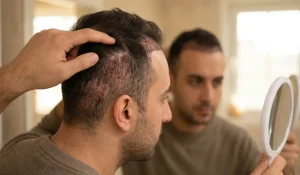
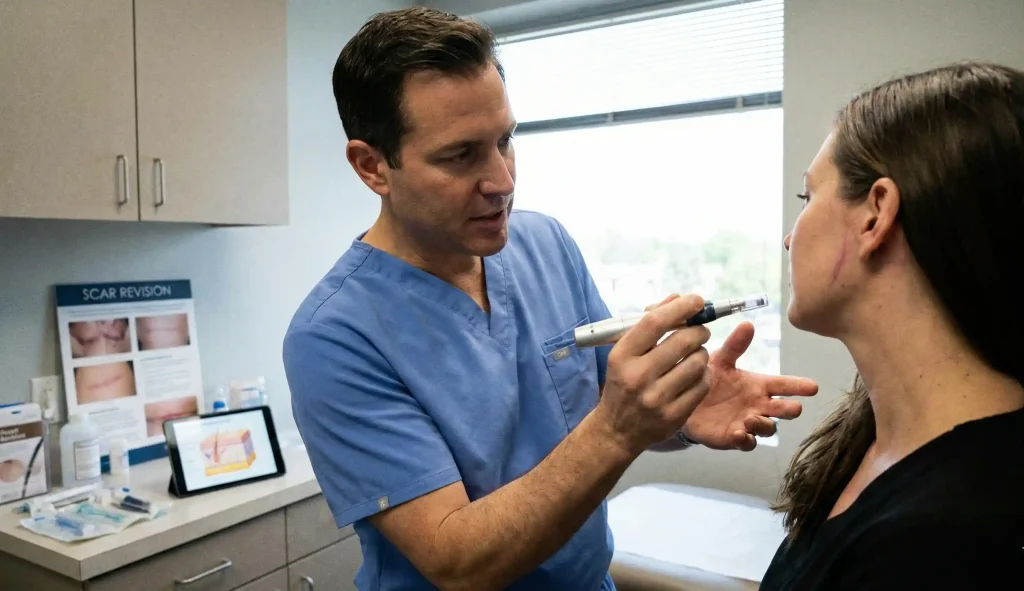
Yes, facelift scars usually fade significantly over time.
Most of the time, a facelift decision goes back to the original dilemma of whether one wants to look younger versus the fear of looking “done.” The first thing that speaks of “failed plastic surgery” is a large ugly scar running down the front of the ear or a messed-up hairline. A lot of times patients ask us, “Will the scars go away?”
The truthful medical reply is no—a scar is an irrevocable skin alteration. Nonetheless, the aesthetic reply is that the scar from a well-done facelift should be basically undetectable to the naked eye once it is healed. The aim of current facelift operations is not to make the scar vanish, but to conceal it so ingeniously in the natural shadows and outlines of the face that nobody even a hairdresser will notice the scar. At Lin Health Europe Clinic, we think that if you can see our work, it means we have yet to accomplish what we should have.
The Anatomy of a Hiding Place: Where Do We Cut?
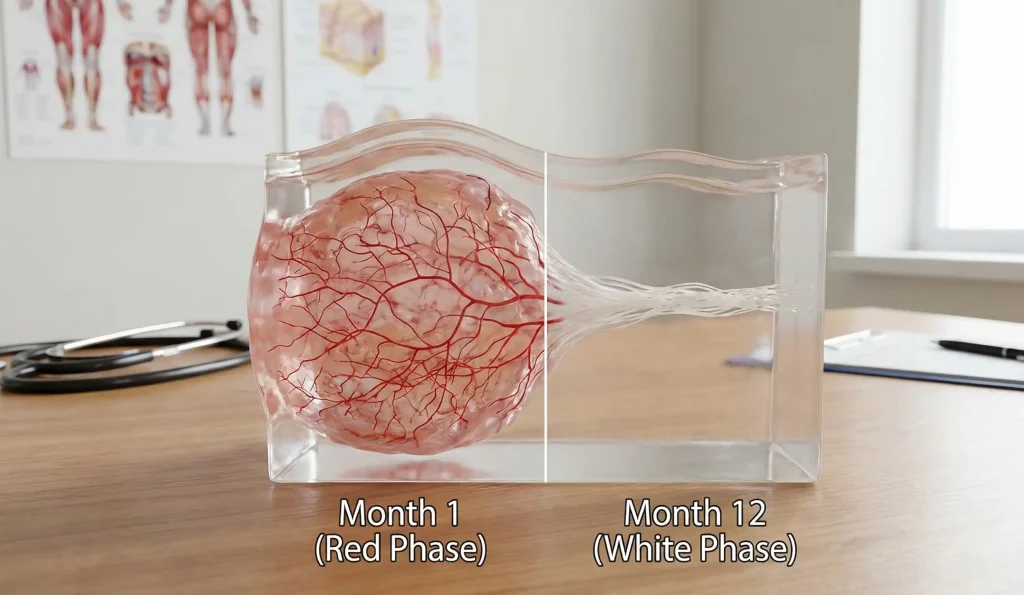
The main factor in an “invisible” scar is its location. It is not as if we just make a straight incision across the face. We follow the ear’s natural curves. Usually, the incision begins at the temple’s hairline (covered by the sideburns), goes down the natural fold between the ear and the face, rounds the earlobe, and then goes up the back of the ear before disappearing into the hairline.
Most importantly, we apply the Retro-Tragal Incision technique. Instead of making the incision in front of the tragus (a small bump of cartilage located in front of the ear canal), we make the incision along the edge inside the cartilage. Once healed, the scar will be literally hidden inside the ear canal’s entrance. The only part of the scar that can be noticed is a small and almost imperceptible line at the bottom of the earlobe which naturally fades into a pale white thread resembling a normal skin crease.
The Tension Rule: Why Bad Scars Happened
The main cause of red, wide, or raised (hypertrophic) facelift scars is Tension. A surgeon who depends on pulling the skin to the utmost will get a fight from the skin. The skin will resist by stretching against the stitches and causing the scar to widen as it heals. This results in the dreaded ”windblown” look with visible white lines.
We, at Lin Europe Clinic, specialize in Deep Plane Facelifts. We mean we separate the muscle layer (SMAS) along with the fat pads from the skin and then lift and tighten only the muscle and the fat pads, but not the skin. The main part of the lift tension is carried through the deep and strong tissues. The skin is then merely re-shaped over the new contour without any tension on the incision line. The scar is then considered a thin, flat, and almost invisible hairline fracture because there is no tension on the healing wound.
The “Pixie Ear” Danger: Preserving the Lobe
The “Pixie Ear” deformity is a telltale sign of a botched facelift. This is where the earlobe gets pulled down as it is stitched directly onto the cheek skin under tension. The scar will contract and pull the earlobe downmaking it look long and attached to the jawline, like an elf’s ear.
In order to avoid this, we carefully lift the earlobe from the facelift flap. We only cut the skin around the lobe to keep it in a natural and relaxed position. We often secure the deep cheek tissues to the bone or the fascia above the ear so that the healing earlobe will not be pulled down by gravity. An earlobe that is hanging freely and naturally is the hallmark of a high-quality facelift.
The Timeline: Red, Pink, then White
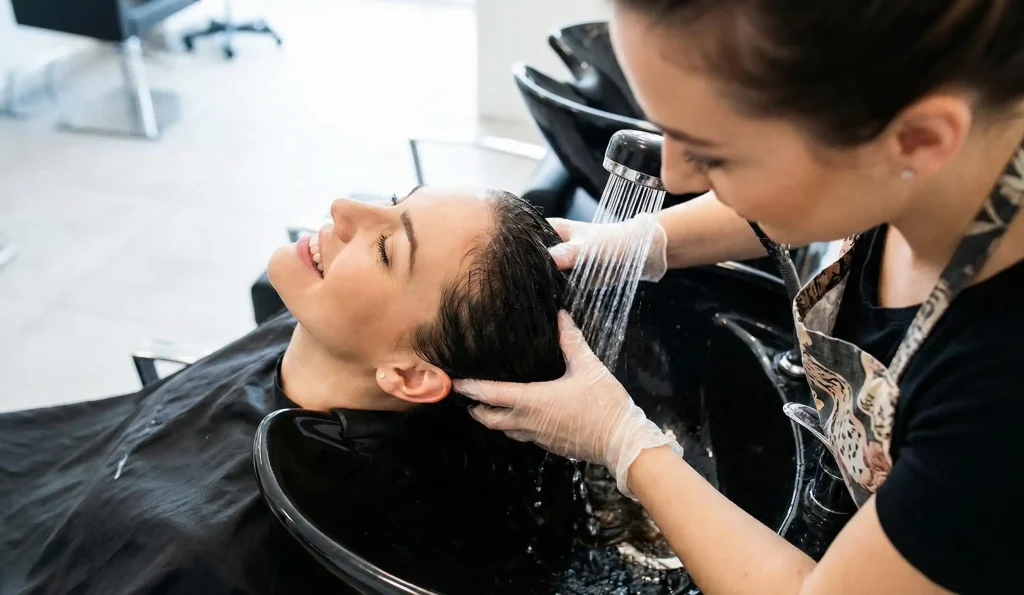
The maturation of scars requires patients to set their expectations at a reasonable level. For the first few weeks, the scars may be red and firm. The redness is the sign of the inflammatory stage and healthy blood flow. Around day 10, you will be able to cover the redness easily with hair or a little makeup.
Then, over 3-6 months, the scars will change from red to pink and then white or take on the color of the skin. This transition can sometimes last a whole year. It is imperative that the scars are kept away from the sun during this period as the rays of the sun might cause the new scar tissue to be permanently darkened (hyperpigmentation) thus your scar becoming more visible against the skin tone. It is our recommendation that you do strictly use SPF30 on your incisions every day for at least the first year of healing.
Lin Health Europe Clinic: Laser Polish
At Lin Europe Clinic in Turkey, our task doesn’t end once the stitches are taken out. We are actively involved in the scar healing process. If a patient is predisposed to keloids or has thicker skin that heals slowly, we intervene early.
We do treatments such as Fractional CO2 Laser and microneedling at 6 weeks post-op or even earlier for the scars to blend with the surrounding skin. The “polishing” procedure basically breaks down any leftover scar rigidity and triggers normal collagen production so that the change from “face” to “scar” is totally smooth. Not only do we lift your face; we also groom the whole healing process so that the only thing people will notice about you will be your fresh new energy and not your surgery.
Frequently Asked Questions About Facelift Scars
The short answer is, initially, yes. Facelift scars can be quite red for a couple of months, but eventually, they will become thin white lines. Since they are hidden in the hairline and the natural creases of the ears, most people wouldn’t notice them when they are fully healed.
Yes. Still, you have to wait for the wound behind the hairline to heal (typically 6 months). By then, the facelift scars behind the ears will have faded enough for you to put your hair up without giving away the fact that you had surgery.
This is one of the problems that can occur when the earlobe is stretched by the tension and looks as if it has been stuck to the jawbone as if it were a magnet. We do this by making sure there is no tension on the facelift scars around the earlobe area.
The use of a laser cannot “remove” a scar, however, it can quite a lot change the appearance. Fractional laser resurfacing can effectively help to even out and lighten the presence of facelift scars, thus making them barely visible.
This is something that happens to everyone. Scar maturation can differ from person to person but it can take the whole year. The presence of redness is a sign that tissue formation through collagen is still going on.
Connell, B. F., & Marten, T. J. (1993). The male forehead plasty: Recognizing and treating aging in the upper face. Clinics in Plastic Surgery.
Baker, D. C. (2001). Minimal incision rhytidectomy (short scar face lift) with lateral SMASectomy. Aesthetic Surgery Journal.
Jacono, A. A., & Parikh, S. S. (2008). The role of the deep plane facelift in modern facial rejuvenation. Facial Plastic Surgery Clinics.