Avoid dry shampoo during early healing.
The Biometrics of Scalp Hygiene and Graft Stability
Using dry shampoo for scalp hygiene is a complex issue after a hair transplant. The first 14 days after the procedure are crucial, as during this period, new blood vessels start to develop to support the transplanted hair follicles. This is also a time when deep repair and healing take place in the skin of the scalp. Dry shampoo is usually made of powders like starch or talc, and from a biometric point of view, it can be very harmful. The smallest granules of these powders can stick to the tiny cuts in the recipient skin channels, which may disturb the biological environment necessary for the implantation of the follicles.
At Lin Health Europe Clinic, we say that creating the perfect conditions for grafts to survive is the very foundation of the work. A clean, oxygen-rich environment supports graft survival at its best. While dry shampoo works by soaking up oils, on a healing scalp, it might interact with post-operative discharge, forming a gross paste. This “blocking” effect not only counters systemic health but also impacts the newly transplanted hair bulbs that have not yet reached the stage of structural harmony. Hence, dry shampoo use is off limits during the initial development period of the grafts.
Follicular Obstruction and the Risk of Folliculitis
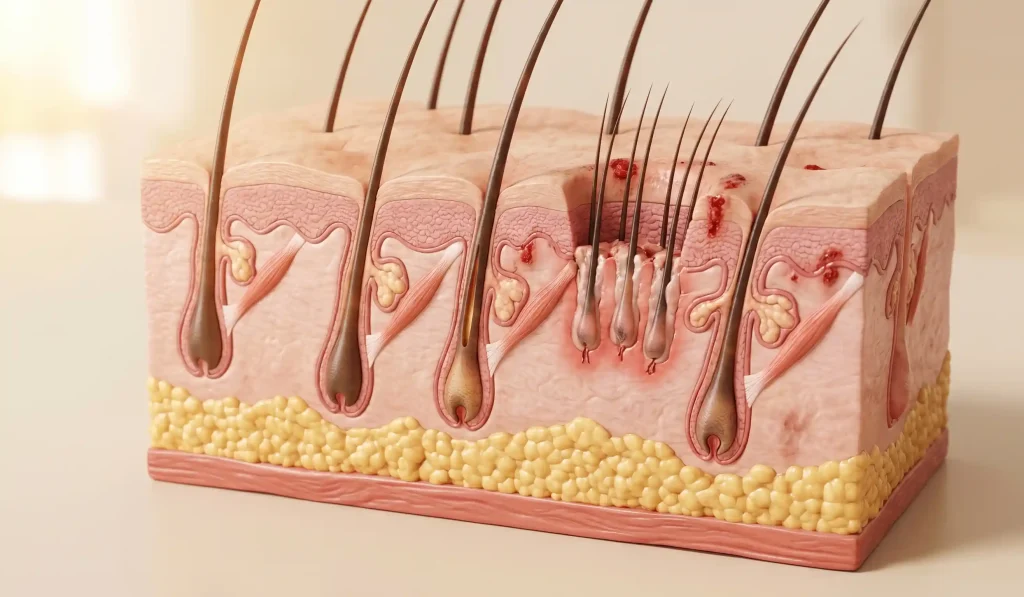
For a surgical masterpiece, it is required that the scalp not bear any inflammatory irritants. One could say that from a biometric perspective, the olfactory stimulation and chemical preservatives used in the production of most commercially available dry shampoos are sources of irritation to both donor and recipient areas with their very sensitive skin. The risk here is if the loose powders manage to completely or partially clog the follicular apertures, this could trigger a condition called folliculitis – hair follicle inflammation that resembles small red papules and pustules.
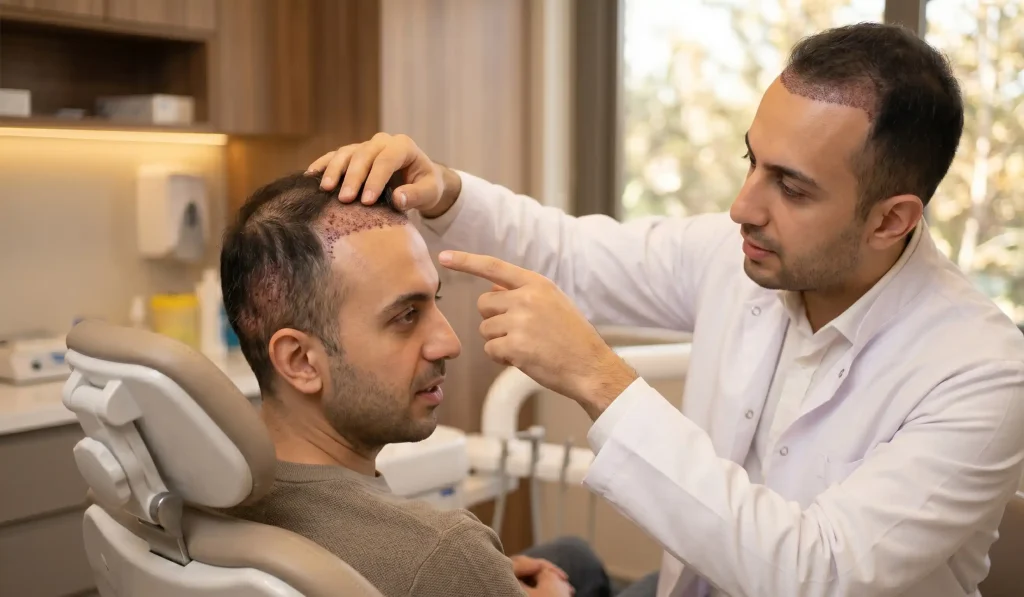
This kind of blockage could therefore threaten the systemic well-being of the graft site. Ensuring the dermal layer’s integrity is a medical requirement; an infected or inflamed hair follicle is far less capable of producing healthy, terminal hair. We at our Istanbul location rigorously monitor your healing process and emphasize that any product that results in residue deposition on the skin, such as dry shampoo, should be refrained from until the ‘scabbing’ phase is fully sampled and the skin has re-epithelialized.
Mechanical Trauma: The Friction Constraint
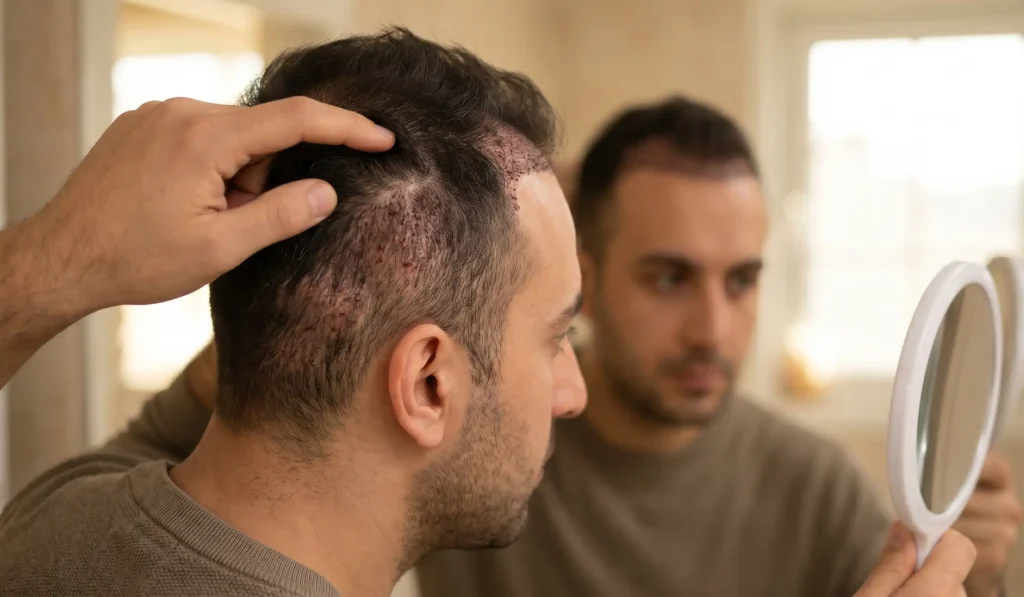
If you compare side-by-side the benefits of dry shampoo and its drawbacks, the main reason why dry shampoo cannot be used with hair transplant recovery is the way it is administered. The proper use of dry shampoo involves rubbing the capillaries and then a brush or another cloth is used to completely remove the powder. When assessing from the angle of biometrics, such mechanical friction works as a double-edged sword, as it can very easily lead to graft dislodgement during the first 3 weeks after the operation when the new hairs are yet inadequately anchored.
Obtaining structural harmony means that hair follicles must be screened from being moved by any external source. We characterize the use of medical aftercare innovations by giving you exclusive, gentle-touch, no-contact liquid washing procedures. Cleaning one´s hair to remove dry shampoo might exert tension on the wound tissue, thus possibly causing a graft loss or localized scarring. Safeguarding the surgical brilliance of your operation implies essentially giving priority to the hands-off approach to hygiene until the follicles become biologically integrated into the subcutaneous tissue.
The Recovery Roadmap for Topical Powders
Managing the reintroduction of dry shampoo must be under professional supervision and with a thorough knowledge of the biology of scalp healing. Usually, we advise that patients do not use powdered sprays for at least a minimum of four to six weeks. By then, the follicles are firmly attached, and the initial shedding phase can already be underway, so the skin is no longer in an acute recovery state.
Maintaining the biological balance of your scalp is what you are doing when you adhere to this clinical roadmap with absolute mastery. Lin Health Europe Clinic is all about prioritizing your long-term hair density rather than short-term hairstyling convenience, and we make sure your path to a thicker mane is handled with the highest precision.
Hair Transplant in Turkey
By choosing Lin Health Europe Clinic, you will have access to a global sanctuary where the smallest nuances of aftercare are handled with the highest level of surgical excellence. As important as it is to us to keep one’s appearance up during recovery, we would not ever sacrifice the systemic health of one’s grafts. Our Turkish-based facility is a leader in medical innovation, giving high-definition, step-by-step guidance to you on every stage of your hair follicle journey.
Picking Lin Health Europe Clinic means that you will be part of a medical conception that is outstanding both in the anatomical science and patient-centered safety spheres. Our expert-level professional rigor tracks progress of the whole journey, and final results are stable, symmetrical, and full of perfect structural harmony. Come and have the sophisticated aesthetic care experience with Lin Health Europe Clinic and have your profile be what it truly represents: a perfect blend of artistic and biological balance, in the very heart of Turkey.
FAQ:
Your hair follicles continue to develop their biometric anchoring even two weeks after hair transplant surgery. It is true that the scabs have fallen off, however, the scalp is still very sensitive. One of the clinical guidelines is to stay away from dry shampoo for at least 4 weeks, so as not to irritate or obstruct the hair follicles.
If dry shampoo is applied too early, it can cause localized inflammation and clog the follicular channels, besides exposure to granular loss due to mechanical friction, as well as other related effects. Hence, it is very important to maintain the biological balance of the scalp to reap the maximum results.
Around two weeks after surgery, you may switch to the regular hair washing routine; however, professional care protocols must still be followed. Gently performing the actions and keeping the water pressure low shall be one of the requirements until the grafts structure is closely maintained.
The chief suggestion is to adhere to the innovative washing protocols of the medical field that we have introduced in our Istanbul sanctuary. However, a gentle rinse with lukewarm water together with a pH-balanced shampoo is the clinical standard for sustaining systemic vitality without the risk of powder-based products.
While dry shampoo cannot cause genetic hair loss, it is one of the potential causes of “traction alopecia” and foliculate graft dislodgement if used during the earliest healing step. Besides, dry shampoo can also bring on folliculitis whose resultant systemic health deterioration of the follicles may negatively impact final density.
Tebbetts, J. B. (2002). Systemic Vitality and Surgical Precision in Restoration Procedures. Saunders Elsevier.
Unger, W. P., et al. (2011). Hair Transplantation: Clinical Mastery and Biometric Anchorage. CRC Press.
Janis, J. E., et al. (2005). Scalp Anatomy and Biometrics: Implications for Post-Operative Hygiene. Plastic and Reconstructive Surgery.
Nahai, F. (2011). The Art of Aesthetic Surgery: Principles and Professional Rigor in Hair Restoration. Quality Medical Publishing.
Bernstein, R. M. (2002). Follicular Unit Transplantation: Surgical Brilliance and Structural Harmony. Dermatologic Clinics.