Chipmunk Cheeks: How to Avoid Chipmunk Cheeks with Fillers?
Medically reviewed by Op. Dr. Halil İbrahimPlastic, Reconstructive and Aesthetic Surgery
Use conservative filler amounts and proper placement.
Everyone in the field of aesthetic medicine knows about the ghost story which scares patients in particular: the "Pillow Face" or, in other words, "Chipmunk Cheeks." We all have witnessed it - a celebrity or an influencer whose face has become swollen, round, and totally unfamiliar, the eyes that seem smaller because the rising cheeks have pushed the eyes. This appearance is the opposite of rejuvenation. Instead of looking lifted and younger, the face looks heavy and congested.
This fact has scared a lot of patients so much that they have decided to avoid Dermal Fillers at all costs. Still, "Chipmunk Cheeks" shouldn't be considered as a natural consequence of filler; they indicate the usage of bad technique, wrong products, or the wrong choice of patients. At Lin Health Europe Clinic, we think that a cheek filler treatment should be so natural that no one should be able to detect it. It should elevate the structure, not puff up the surface. Identifying the specific anatomical mistakes that cause the puffy appearance is the main thing that guarantees that you will never fall for it.
Anatomy of Mistake: Superficial vs. Deep Fat

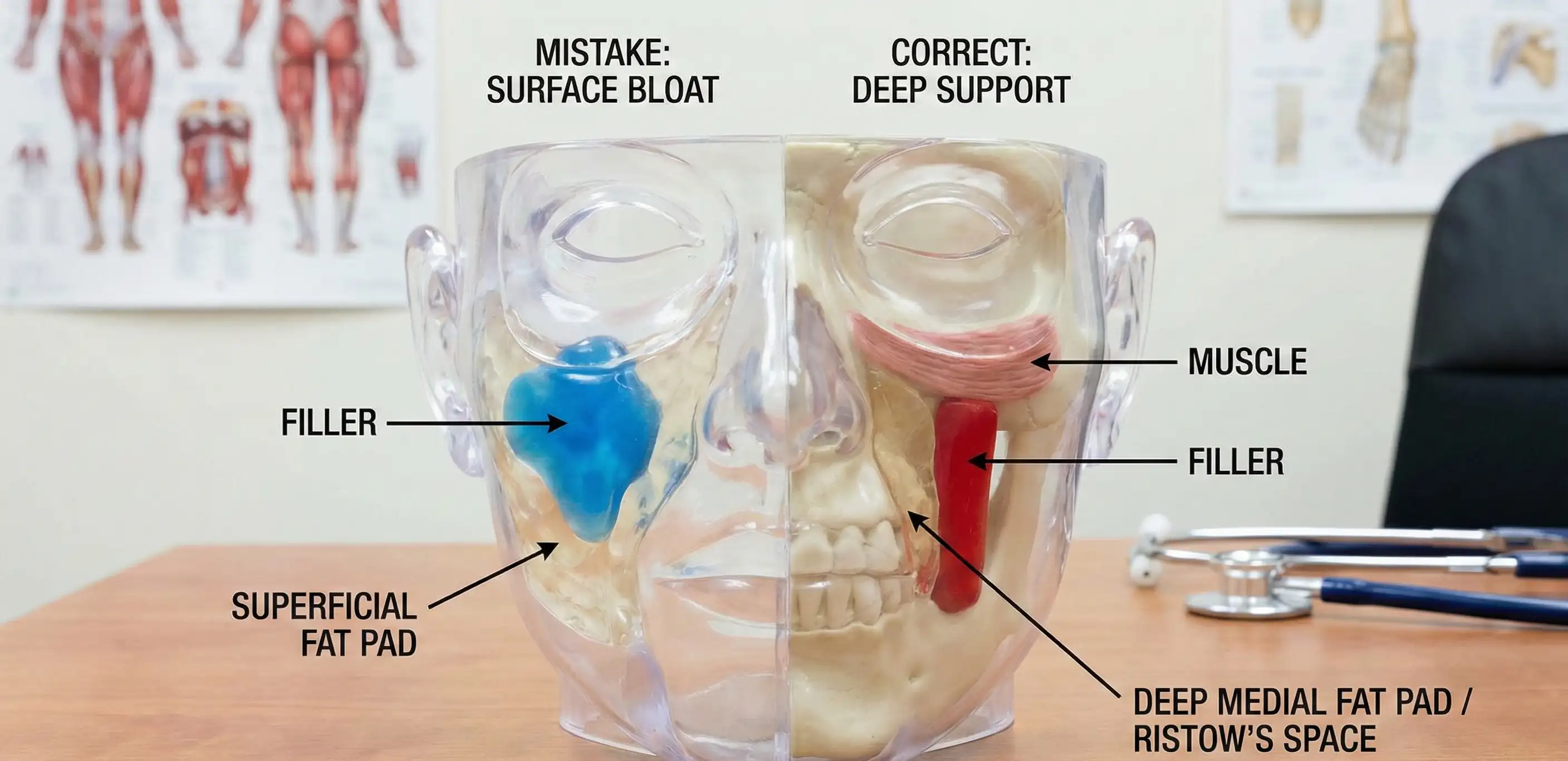
Knowing how to avoid chipmunk cheeks involves understanding the facial layers. The cheeks contain two different layers of fat: the deep fat pads (which are located on the bone) and the superficial fat pads (which are underneath the skin).
The main reason for the "chipmunk" appearance is the placement of volumizing filler in the superficial fat pads. These pads are loose; they change their position when you smile. If a doctor puts too much filler in this area, the skin gets heavier. During a smile, that weight is going to go up and is going to make a very visible gel bulge under the eye. For that reason, the injection of filler should always be done in the deep fat pads. When a filler gets deeply injected, it behaves as a pillar, lifting the tissues from below without changing the surface in terms of thickness. It brings back the bony framework that is reduced due to aging, thus giving a well-defined and sharp instead of round and puffy lift.
Fluid accumulation: Malar Edema
In some cases, the swelling that is seen is not even the new filler, but fluid. The medical term for this condition is Malar Edema. The cheek region is equipped with a complicated network of lymphatic draining channels that work to remove the excess fluid from the eye area.
When an injector decides to put a huge amount of filler in the "danger zone" (the malar mound area on the upper cheekbone), the filler may either directly compress or indirectly cause blockage of these lymphatic channels. This situation results in the building up of water behind the filler and you get a chronic, soft swelling that becomes more obvious after eating salty food or when you have allergies. Most of people consider this to be a case of "too much filler," but in fact, it is an issue of the plumbing. The way to prevent it is to have respect for the Malar Septum (a separating ligament) and to never inject large amounts of product where they can impair drainage.
The Choice of Product: Hydrophilic Properties
There is a significant difference between various hyaluronic acid (HA) filler brands and formulas. Hyaluronic acid is inherently hydrophilic, i.e., it has a natural tendency to attract and hold moisture. Some fillers are made to bring in large quantities of water to moisturize the skin (low G-Prime), while others are made to be stiff, providing structure (high G-Prime).
Putting a filler that is extremely hydrophilic and water-loving in the tear trough or mid-cheek area is the surest way to get chipmunk cheeks. Even if the person doing the filling uses the correct amount of product, it will absorb moisture during the coming month and will double in volume just like a sponge. At the Lin Health Europe Clinic, our choice is low-hygroscopic fillers (such as Restylane Lyft or Teosyal Ultra Deep) for the cheekbones. Such products depend on their own gel strength to lift the tissue rather than on water attraction; thus, the final result is the one you see on the treatment chair and you keep it without unpredictable swelling.
Fallacy of the "Lateral Lift"
Trying to lift the jawline via overfilling the cheeks is the most common mistake in the technique. There is a misconception that putting volume in the cheekbones to a large extent will do the job for the jaw area as well since it will be pulled up like a tent pole.
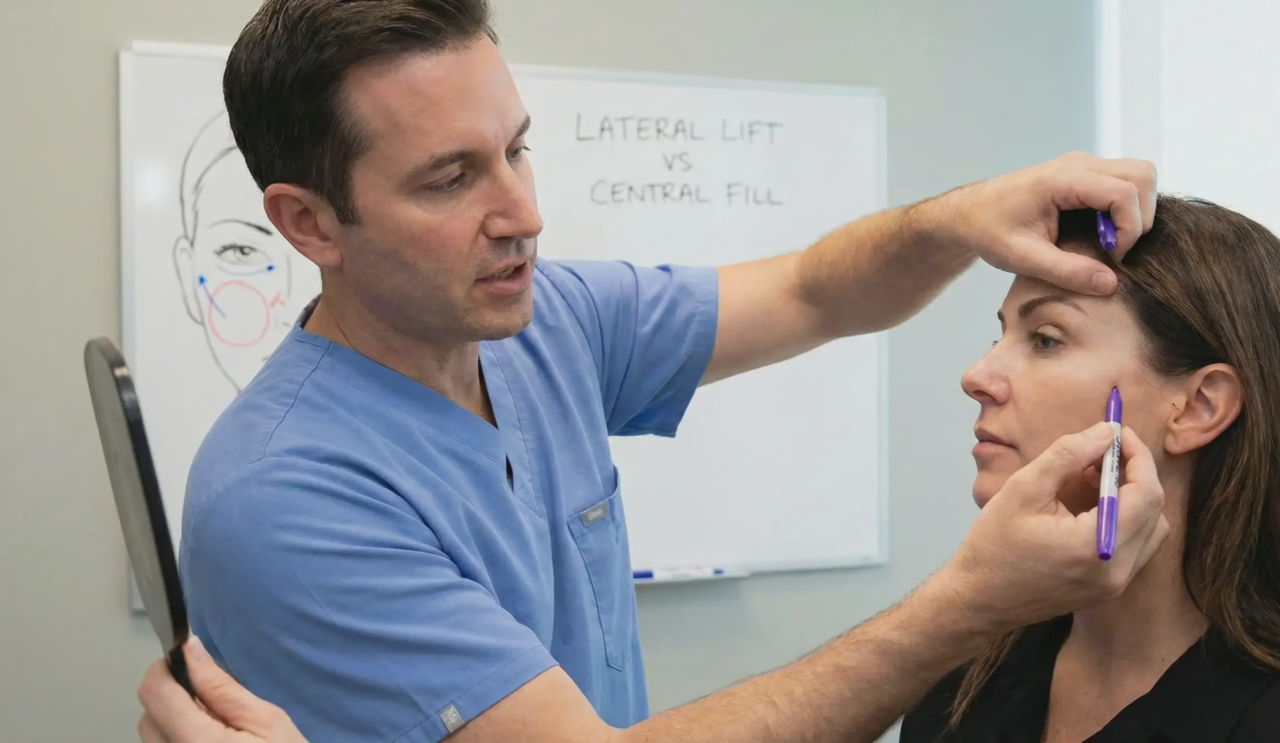
A little volume actually does help but too much will eventually cause the skin to stop lifting and start stretching the other way instead of reaching the threshold. As a result, the face becomes wider. The patient does not get a heart-shaped face but a wide, heavy midface that looks masculine or alien. We circumvent that by following the ogee curve—the natural S-curve of the youthful cheek. We quit the filler once the curve gets restored. If the jawline is still ready for a lift, we go for it directly, or use energy devices, instead of stuffing the cheeks to the point of distortion.
Lin Health Europe Clinic: The "Zygomatic Anchor"
We utilize the Zygomatic Anchor technique to sidestep the "chipmunk" look. Whereas the medial cheek gets filled with volumizing filler that often leads to a puffy appearance, the lateral zygomatic arch gets an injection of deep structural filler from our side. By doing this, we get a pull-down vector, the skin is tightened in the backward and upward direction. The lower face is narrowed and cheekbone is defined without the addition of anterior volume (forward projection) which leads to the "stuffed" look. This is a face contouring technique rather than a volumizing one, it is especially suitable for patients who have a pretty full face but are looking for definition.
Frequently Asked Questions About Chipmunk Cheeks
References
Funt, D., & Pavicic, T. (2013). Dermal fillers in aesthetics: an overview of adverse events and treatment approaches. Clinical, Cosmetic and Investigational Dermatology.
Rohrich, R. J., et al. (2019). The Facial Fat Compartments: Updated Clinical Perspectives for Aesthetic Surgery. Plastic and Reconstructive Surgery.
Fitzgerald, R., et al. (2008). Facial aging and the role of the malar septum. Aesthetic Surgery Journal.
Frequently asked questions
What causes chipmunk cheeks after filler?
Basically, these puffy, round cheeks result from injecting the filler too superficially into the fat pads that move when one smiles or by using a product that draws too much water.
Can I fix chipmunk cheeks if I already have them?
Of course, removing the incorrect filler with an enzyme called hyaluronidase is one of the solutions we offer. The normal procedure for us is dissolving superficial filler and then putting new filler deep to regain the natural shape.
Is cheek filler bad for lymphatic drainage?
There is a possibility of this happening. Incorrect placement in the tear trough or upper cheek can cause blockage of the lymph vessels. This risk is avoided by deep placement on the bone.
Which filler brand is best to avoid swelling?
Cheek area requires stiffer, structural fillers with minimal water attraction. For example, restylane lyft or juvederm voluma are favorite brands due to their ability to lift without getting the skin too expanded.
Does getting filler make your face wider?
Actually, it should not. If you have fillers applied on the lateral (outer bone) properly, the face can appear slimmer thanks to the shadow under the cheekbone that you can see. The face is only widened when it is overfilled.
This article is general information, not medical advice, and does not replace a consultation. Every procedure carries risk and outcomes vary from person to person.
Last reviewed 12 February 2026