You usually can’t detect a leak by touch alone.
The Myth of Manual Leak Detection in Modern Devices
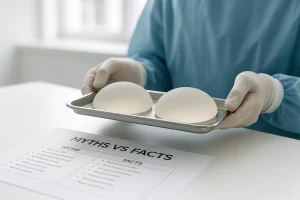
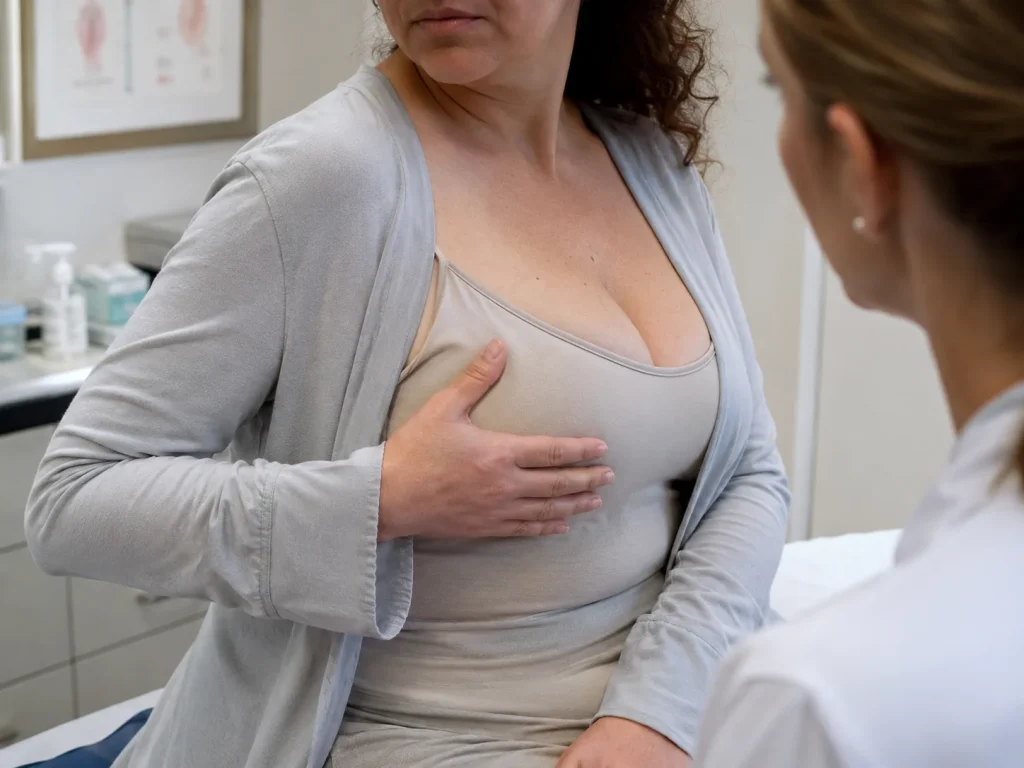
Modern medical devices, such as silicone breast implants, are made of biomaterials at a very high technical level. It is necessary not to confuse one of the physical methods to detect a breast implant leak, for example, hand feeling, with the medical fact that it is not really possible to check for a defect or internal breach of the device through manual physical examination. It seems to people sometimes that a tear or a problem should produce a tactile change that would be easily identifiable at the hand level by simply doing a breast self-examination.
There are several clinical facts that support the claim that it’s really difficult to verify that a silicone implant has leaked using only the hand. The touch is very useful to monitor breast health, but for the modern “gummy bear” implants, silicone that has been highly cross-linked makes it very difficult to escape through a rupture of the shell, even in the case of a microscopic tear. A leaking silicone implant is not going to change the breast in size or shape in an observable way, which leaves a manual check almost completely ineffective in diagnosing the leak.
Saline Deflation vs. Silent Silicone Rupture Dynamics
Hand check does not guarantee safety, as it cannot diagnose correctly when a defect happens. That is because the two materials in the breast implants have significantly different ways of behaving upon a leak. The saline breast implant, for example, will definitely have a leak that will be obvious. That can be detected by a touch check as early as possible. Once it starts leaking, the saline (sterile salt water) will be drained; it will take maybe 24 – 48 hours for the body to eliminate the fluid. That results in a reduction in volume, or flatness, in the affected breast.
On the other hand, one of the latest generations of silicone gel breast implants that has highly cohesive gel has been called silent ruptures clinically. Since thick gel doesn’t flow out like a liquid when the shell is compromised, there isn’t any visible change or difference in the texture when you touch your breast, even if the leak happened. In rare situations of silicone slowly migrating, the patient may experience small, palpable lumps or feel slightly firm, but these symptoms are late indicators and can’t be treated as early warnings.
Preserving Implant Integrity and Avoiding Aggressive Tissue Manipulation
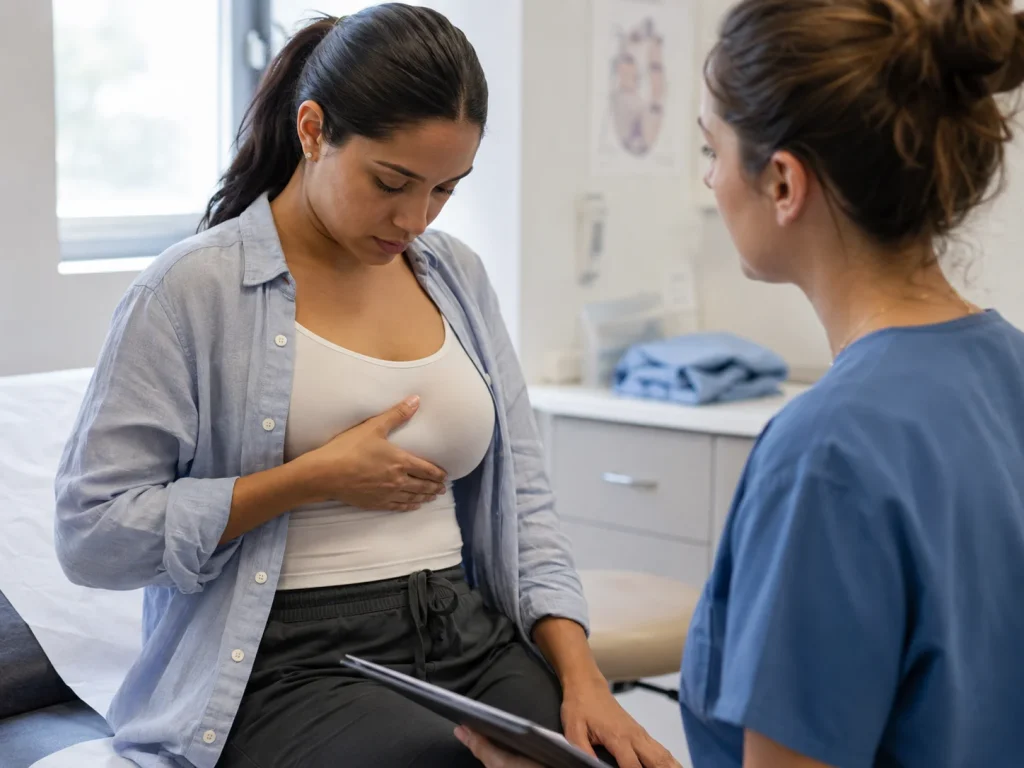
Those who care about health and the perfection of their body shape at the same time should never touch their implant aggressively with force. When trying at home to determine the implant status, it is crucial not to use violent or deep squeeze patterns. Excessive pressure may have serious effects such as damaging the tissues, irritating the muscles, and the inflammation might get worse while still nothing can be found. One can never know what is wrong if the tissue does not look or feel damaged.
You should follow exactly the steps of general breast self-examination when carrying out a home breast manual check. Use the flat part of your fingers to conduct light, circular sweeps of the entire breast area to strictly check for any unusual changes, including persistent tenderness, new hard tissue knots, and the way the breast hangs. It’s also an absolute must to eliminate nicotine and tobacco products for long-term tissue health, as they are major causes of vasoconstriction at microvascular levels that can result in oxygen deficiency for surrounding tissues, thereby degrading the skin and breast capsule.
The Definitive Imaging Protocols to Ensure Maximum Safety
Hand checks are not the solution for determining what is hidden under a breast implant’s outer layer for a cohesive silicone device. A person who wants to be 100% sure should switch from self-examination to advanced diagnostic imaging. According to guidelines for healthcare professionals, regular check-ups should be done five years after the first augmentation operation in the case of a silicone implant, and the check-up should be done every two to three years afterwards.
The main and very simple method for the implant assessment of a patient is a high-quality breast ultrasound scan. With the help of sound waves, the ultrasound scan can precisely show the outside shell or elastomer membrane of the implant and trace out the pocket boundary in a way that the radiologist can find the leak easily without even the slightest change in the patient’s physical symptoms. For complicated or unclear situations, a specialized breast MRI is still the standard, which gives the most accurate image, and therefore the patient’s medical safety can be ensured beyond doubt.
Breast Implants in Turkey
Going for LIN Europe Clinic gives you a rare opportunity to enjoy top-quality aesthetic medicine in a friendly atmosphere. Our clinic offers not just aesthetic procedures but a complete service where your implants, your breasts, and your physical appearance will be the subject of detailed medical planning and support that is carried out by the best healthcare professionals at a medical level that is not only high but also keeps up with scientific updates. This kind of place is exactly what you may need if you are a patient whose implant monitoring, imaging requirements, and other postoperative follow-ups are all handled in a very subtle, thorough, and highly compassionate way. A world-class medical center for the breasts, the clinic is located in Turkey to deliver advanced breast care and plastic aftercare through our serene facility.
Trusting the specialists of LIN Europe Clinic in Istanbul, we make sure the status of your implants and the health of the surrounding tissues are under constant high-standard diagnostic supervision. We also help with your overall well-being, from your lifestyle to preoperative imaging analysis that are all done with great attention to ensure that you do well at every stage of your breast maintenance. Our professional team guarantees that you will have an investment worth protection by body contouring, and you will be kept in perfect health to keep up the silhouette you dream about at any given time without concern. Choose quality care and a masterfully harmonized aesthetic by going to LIN Europe Clinic.
FAQ:
This is not something that can be reliably determined by hand checking your implant because the modern cohesive gel holds its shape and remains within the scar capsule after a tear which does not alter the physical properties to the touch.
A leaking saline implant feels quite obvious by hand. In fact, the breast will become so flat, lose most of the volume, and will droop to the point that one would recognize a leak even with closed eyes.
No signs will usually be seen if it is an unannounced implant burst. Only after a very long time, if any, some may observe a slight imbalance, some firmness of a certain part, or perhaps a little burning sensation, but for the most part they will still completely undetectable unless the doctor will be using some imaging.
During your annual physical, you should get a physical check of the breasts for implants and from the fifth postoperative anniversary, you can begin making appointments for diagnostic ultrasound exams only to check if there have been no changes in the shell.
No, a ruptured cohesive silicone implant or flat one does not count as an emergency, but it is advisable to see a surgeon and plan for either a new implant or removal of that one, probably during the next several weeks after the diagnosis.
Tebbetts, J. B. (2002). Dual plane breast augmentation: Optimizing tissue coverage, managing capsular contracture vectors, and long-term pocket stability. Plastic and Reconstructive Surgery, 109(3), 1017-1024.
Spear, S. L., et al. (2007). Breast implant life expectancy and cosmetic longevity: Analyzing structural shell failure, silent rupture kinetics, and advanced imaging standards. Plastic and Reconstructive Surgery, 120(7), 89S-99S.
Rohrich, R. J., et al. (2014). Advanced postoperative care, pocket diagnostic protocols, and long-term architectural stability in secondary breast augmentation. Aesthetic Surgery Journal, 34(5), 587-595.