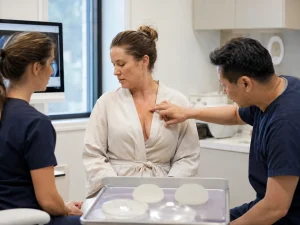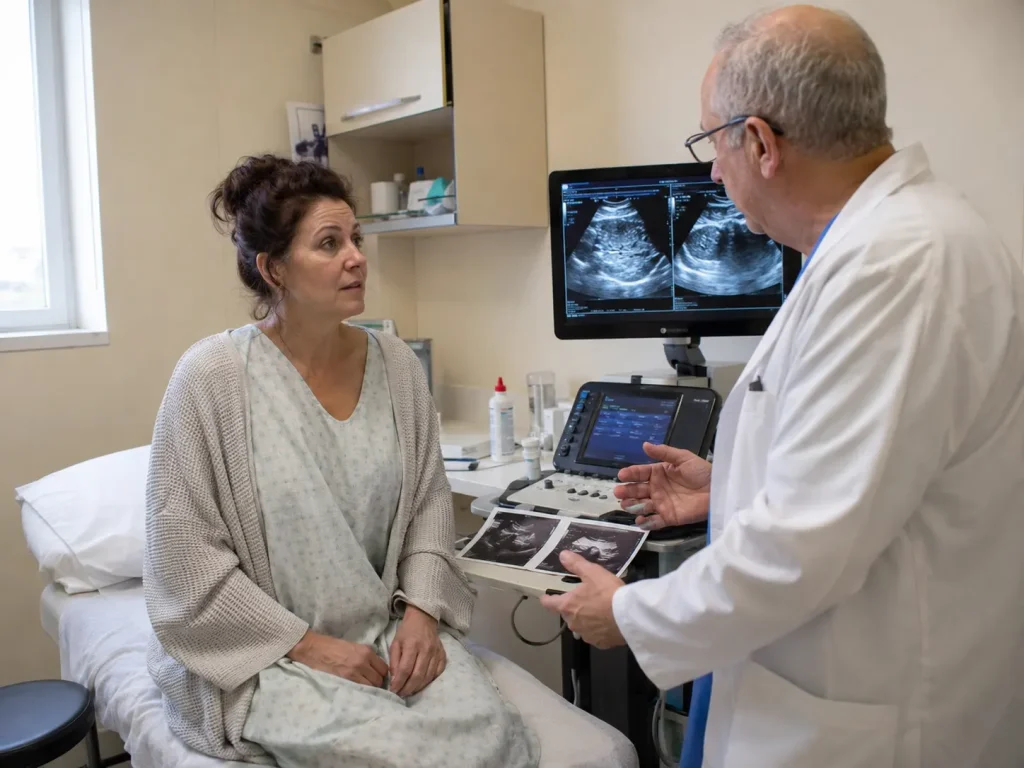
Yes, benign cysts can develop after surgery.
Remodeling After Surgery and the Development of Hard Lumps
Breast reduction surgery is a very technical process that is done to remove the excess amount of breast tissue, fat (adipose), and skin to create a smaller, lighter, and more youthful bustline. The internal remaining breast tissue has to be considerably worked on, moved, re-aligned, and sewn back into a stable structural framework. In a definitive clinical sense, yes, it is definitely possible that one would develop either cysts or some benign lumps in her breasts following surgery. Discovery of any lump after the surgery may be a reason for immediate worry, but it is very important to be reminded that such post-operative lumps are not only very common, but also totally not related to the disease (non-malignant). This type of formation is completely separate from malignancies and is constantly tracked by the clinical team for monitoring.
Benign Lumps and Cysts After Breast Reduction
In most cases, the appearance of a breast lump after surgery follows certain biological healing pathways:
- In cases of fat necrosis or oily cysts during a breast reduction, the surgical modification of the breast tissue can accidentally cut off the blood flow that the skin and fat have a lot of from the tiny blood vessels. As a result of being disconnected or cut off from their vital blood supply and oxygen, fat cells located in the isolated parts of the body start dying off and decomposing (this is called liquefaction). The body uses a mechanism of walling off the liquefied fat to form cysts that are surrounded by thin walls and filled with fluid. These types of lumps are described as smooth, round-shaped, and sometimes painful bumps under the skin.
- Firm scarring is another way to get nodules in different parts of the body, which are caused by internal fibers. The body’s deep, internal stitches and permanent sutures not only hold the newly contoured breast tissue together but are also supported internally by your body. In some regions within the body, this internal scar tissue becomes concentrated and thick to the point that it creates bumps or lines on deep wounds that are quite easily misread as either a cyst or a tumor.
- Serum, or blood, pooling around areas of tissue removed is also called a hematoma (blood) or a seroma (fluid). These are pools of serum and blood that form in the void areas created by the removal of the tissues during the post-operative stage. Although the majority of them are reabsorbed by the body naturally, a pool of fluid may be surrounded by a wall and transform into a typical, soft, fluid-filled cyst.
Maintenance of Microcirculation of Breast Tissues
Fundamentally, to meet high personal standards in breast contouring, adherence to rules of behaviour with regard to one’s own actions and following the correct set of care procedures during the recovery stage are the ultimate requirements. The freshly relocated internal breast flaps depend entirely on a fragile system of micro-vessels to heal and regenerate. An upper-body massage and other such activities, if they are done too soon after surgery and with excessive force or too heavy a pressure or are caused by high-impact, may lead to internal tissue flaps being affected in a way that will have negative consequences for their healing process. This, in turn, will result in the tissues being stressed to the point where their survival, or even worse, their breakdown, will be at risk. It can also cause the breakdown of fat, leading to the formation of cysts, especially very large ones.
In order to ensure that your new and smaller bustline takes its shape and remains the way it should be, it is vital to put on a special compression bra (one which has no wires) all the time for the first 6 weeks after surgery. This medical garment basically supports the tissue and, in fact, acts as a rigid external framework that takes over from the forces of gravity so that no internal movement is created, maintains an even amount of compression from the outside and, thereby, also minimizes the accumulation of fluid. Along with this, a major point to remember is that not only are you to have no alcohol, but also the intake of nicotine and any type of tobacco product has to be totally ruled out. This is because Nicotine is a very strong vasoconstrictor when it is consumed through a variety of routes, causing the small vessels that supply the tissues to get narrowed so quickly that it becomes possible for the cells to die (anoxia), which in turn may lead to the development of some lumps. So you must make it clear that you totally stop smoking and using all tobacco and even avoid second-hand tobacco in your life.
The Healing Timeline and Dermal Maturation
Observing how your new breasts heal and change can be a key element in figuring out any clinical issue.
| Timeline Phase | Expected Tissue Status | Underlying Biological Activity | Recommended Diagnostic Action |
| Weeks 1–4 | Global firmness and high tightness | Acute inflammatory phase; generalized swelling and internal fluid shifts mask individual lumps. | Maintain continuous garment compression; avoid touching or squeezing the breasts. |
| Months 2–6 | Localized, firm bumps may appear | Early tissue settlement; fat necrosis peaks as dead fat cells liquefy and form walled-off oil cysts. | Notify your clinical team; undergo a routine physical exam to confirm the lump moves freely. |
| Months 6–12 | Softening of nodules and scar tissue | Internal scar tissue thins and softens; the body gradually shrinks or reabsorbs smaller oil cysts naturally. | Annual breast screening can be resumed; professional ultrasound can differentiate oil cysts from dense tissue. |
| Month 12+ | Definitive structural stabilization | Full tissue remodeling is complete; the breast profile achieves its definitive, natural, and soft final texture. | Routine age-appropriate mammography (inform the technician of your previous reduction surgery). |
Breast Reduction in Turkey
Opting in for LIN Europe Clinic in Turkey is equivalent to selecting a top medical retreat on a global scale. It is your breast beauty, HD body sculpting, and all of your surgical routes that are handled in a totally professional and caring medical and emotional environment of unparalleled excellence. Being the only hospital that has both clinical and empathetic dimensions perfectly integrated is what makes us unique. In addition to our top-of-the-line, high-tech medical equipment, our hospital premises are also equipped and maintained to offer a peaceful and comfortable environment. Our state-of-the-art medical unit in Turkey sets new international standards for the most advanced breast surgeries and plastic post-care services. It creates an atmosphere where you can get your entire health roadmap managed to the very highest level and with complete transparency and peace of mind.
In case you decide to fully rely on us, the specialized team from our Istanbul-based LIN Europe Clinic will monitor the development and status of all the major parameters of your health during your recovery journey with a level of diagnostic accuracy that cannot be matched. You will benefit from the fact that we also do a detailed personal mapping of everything that needs your attention before surgery; we take very high-resolution pictures of the tissues, and we come up with a detailed healing plan that you can use to take it one step at a time from your first day to your last. It is our top-level professionals who will take full responsibility for the safety from a technical point of view and the quality of the health of your body contouring investment, as well as being in good health so that you can enjoy, with confidence and in complete safety of health, the beautiful look that was your ideal. Come and enjoy the high-end and complete care at LIN Europe Clinic that can safely give you a perfect balance in the heart of Turkey.
FAQ:
Yes, it’s possible to get cysts in your breasts after a breast reduction surgery as it leads to the creation of benign, non-cancerous lumps and cyst-like “oil cysts”. These usually result from a condition called fat necrosis, which is where fat tissue (which normally gets its blood supply from surrounding tissue) gets cut off during surgery and naturally breaks down.
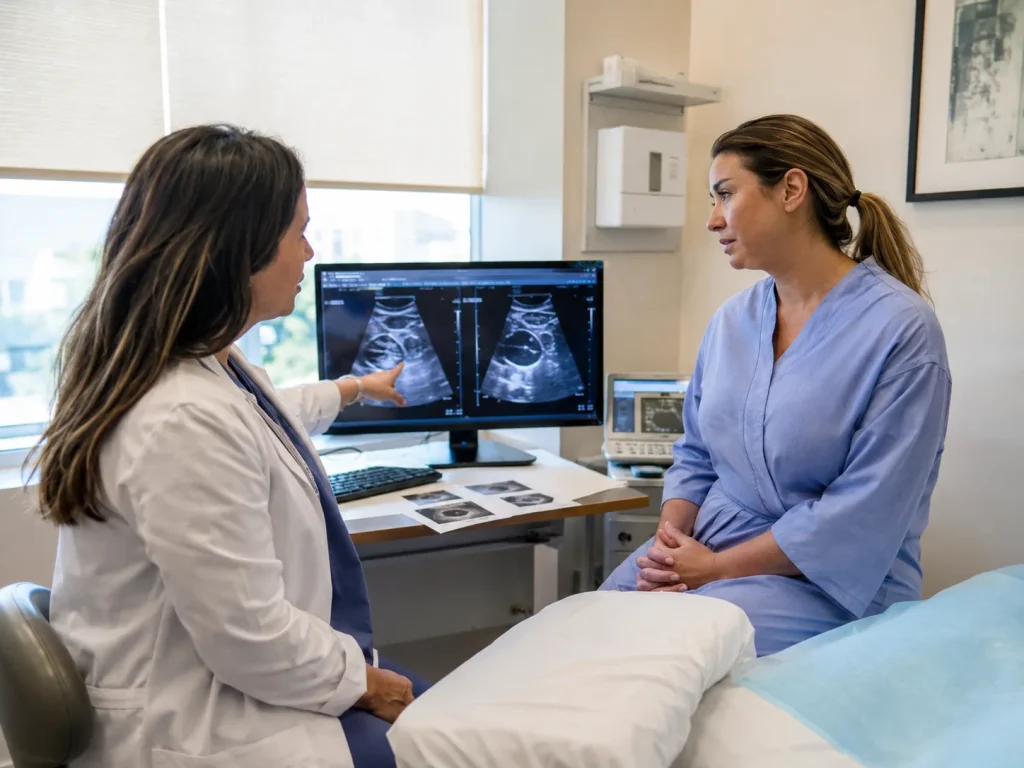
An oil cyst (also called a sebaceous cyst) is a skin lesion that is usually smooth, spherical, and movable under the skin and appears mostly near the scar line. Doctors can quickly carry out a harmless, painless ultrasound diagnostic procedure that can confirm it is a fluid-filled cyst and can give 100% peace of mind.
Many post-surgical small oil cysts and the knots within the scar tissue are naturally re-absorbed, softened, and broken down over a 6-12 month period by the immunological system of the body while your breast tissue completes its full maturation cycle.
The majority of oil cysts do not need to be treated at all. Nevertheless, if the cyst remains quite big and is physically very painful, or leaves a visible contour bump, your surgeon can perform a short and completely pain-free needle aspiration to drain the liquid if he or she sees it as necessary.
Since breast reduction surgery changes the natural arrangement of your inner tissues, this may form scar tissues which look different on an X-ray or mammogram. Therefore, it is very important to tell the mammogram technician that you have such a surgical history so that the technician will be able to recognize areas of these changes as just normal healing after surgical interventions.
Regnault, P., et al. (1985). Reductive mammaplasty and its long-term tissue updates: Analyzing fat necrosis, oil cyst formations, and structural tissue adherence standards. Plastic and Reconstructive Surgery, 75(3), 356-364.
Spear, S. L., et al. (2007). Benign breast lumps following reduction surgery: Differentiating fat necrosis, scar fibrosis, and capsular dynamics via advanced imaging. Clinics in Plastic Surgery, 34(1), 119-132.
Rohrich, R. J., et al. (2014). Advanced postoperative care, pressure-relief garment protocols, and soft-tissue optimization in primary breast reconstruction. Aesthetic Surgery Journal, 34(5), 587-595.