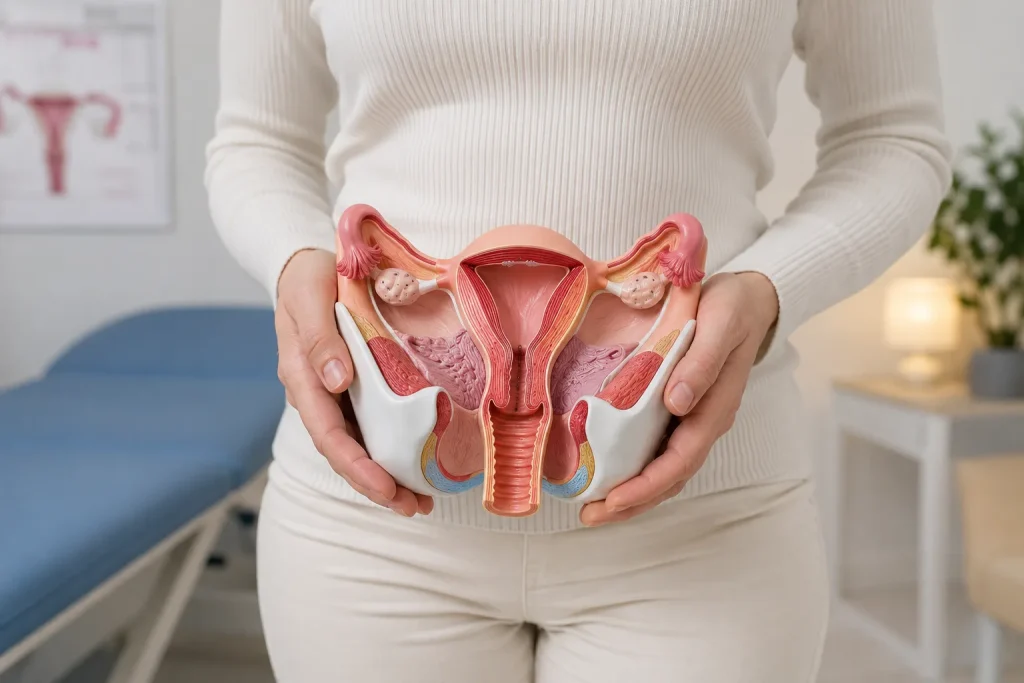
The cervix is surgically removed during the procedure.
Surgical Tissue Handling & Pathology Review
A comprehensive knowledge of where your tissues end up after and during surgery is important for mental well-being. In a total hysterectomy operation, one of the most asked questions concerns to what extent the physical removal of the cervix is involved in a patient’s questions. At a clinical level, the cervix removed together with the uterus is placed into a sterile container and sent directly for histology examination at the pathological laboratory following the surgery.
It is not the case that the cervix is left inside the pelvis or thrown away. At this stage, there is an opportunity for the pathologist to look at the sample of the cervix tissue and to check that it is 100 per cent normal. As well as finding out whether any abnormality, such as changes not visible with the eye only (dysplasia), fibroids, and other microscopic irregularities, was missed beforehand. After the tissue is thoroughly checked by medical doctors, it is taken care of and destroyed following strict medical waste and biohazard management procedures.
Body Tissue Rebuilding: Vaginal Cuff Construction
While the cervix of your womb is being taken out physically, that area of your body which served as an important structure where the cervix and the uppermost part of your vagina met has to be fixed up. Surgeons, while performing a total hysterectomy, stitch up the ends of the inner vaginal walls firmly together with strong, high-grade surgical dissolving threads. As a result of such process of operation it is formed a smooth wall of tissue is formed by joining two parts of the vagina that were originally separated at the place where the cervix used to be. This smooth tissue layer is known under the scientific term: vaginal cuff. Vaginal cuff functions as a completely closed box at the innermost part of your genitals, separating the pelvic area from the external world, while also keeping all your inner organs within your belly safe and secure.
Pelvic Ligament Refixaion
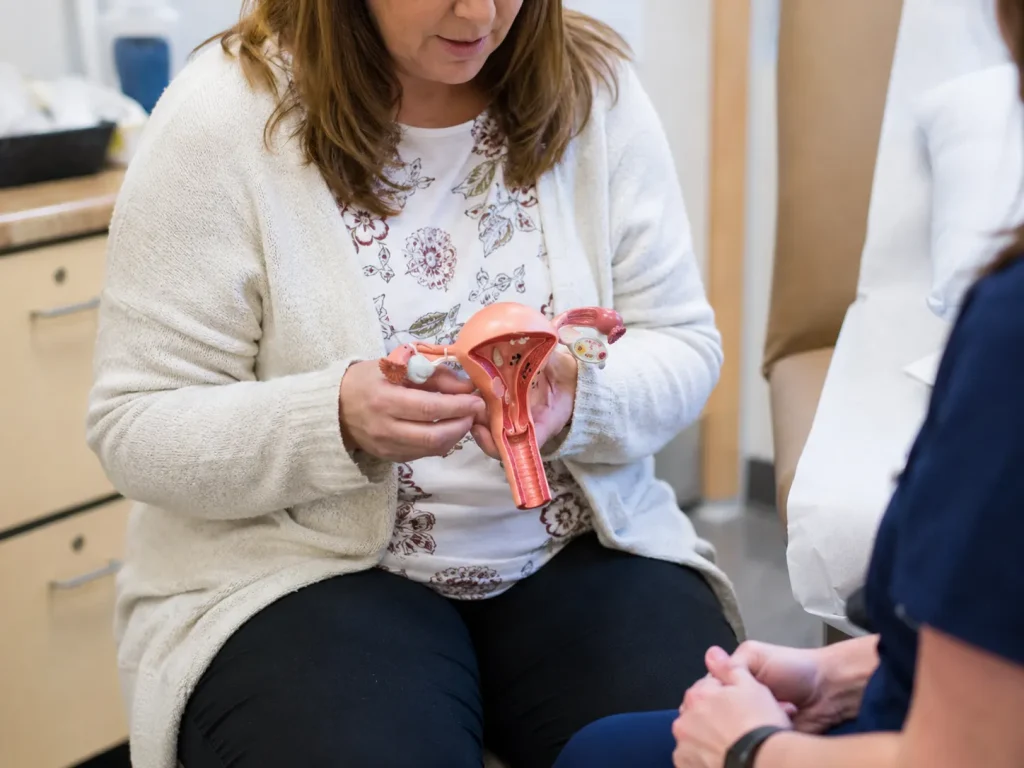
The removal of the cervix not only leaves behind a hole where the body was cut but also necessitates a structural rearrangement that is crucially tied to your lower pelvis. Under normal circumstances, the cervix is a point of attachment for uterosacral and cardinal ligaments. These are very strong ligaments that suspend the pelvic contents to the bony pelvis. In a complete hysterectomy, the surgical team fixes the torn ends, if any, of the ligaments to a point where a new vaginally made vaginal pouch or vaginal reservoir has formed on the side of the vaginal vault. Such precise handling of the tissues will ensure that your vaginal canal maintains its depth naturally, tension is kept by the ligaments, and it is still resilient against further weakening. Therefore, it is unlikely that the organs that are remaining i.e., the bladder and rectum, would drop or slide down into that space.
Persistent Behavioral Restrictions Throughout Recovery
Prior strictness toward limiting all activities that might strain or stretch your pelvic region is a must for the successful healing of your surgical site as a whole. The freshly constructed vaginal cuff will primarily rely on small sutures at a microscopic level and early development of cellular fibrin bonds for several days following the 6- to 8-week period. So, you are advised to minimize activities that will cause mechanical stress that might lead to tearing of the healing tissue edges, causing vaginal cuff dehiscence, also referred to medically as an opening of the surgical wound.
In a more literal sense, forcing the body through intra-abdominal pressure suddenly or causing friction of your private parts may result in a great biological penalty: tearing of your healing tissue edges, leading to a serious complication called vaginal cuff dehiscence (wound separation). For the sake of achieving maximum structural precision and locking of your pelvic anatomy in time, you should absolutely refrain your body away from inserting things vaginally (sex, tampons, or using water for cleaning) and away from heavy lifting, vigorous workouts, or overstraining in total for the time period your surgical team will have indicated for you.
Hystrectomy in Turkey
To go to LIN Europe Clinic is to choose one of the leading global hospitals where your overall pelvic health situation, pelvic reconstructive surgeries you choose to go through, and follow-up are under expert and kind hands. First of all, we understand quite well that after a hysterectomy, you will have to go through a process of adjusting, healing tissue, and keeping a distance that will protect the body while the internal changes take place. That will be a very complex and detailed task that will be taken on by our multidimensional and transparent environment. We are not only going to give the best evidence-based care to your physical recovery but are deeply dedicated to making you comfortable throughout this period.
We make sure that your surgical team is monitoring your healing closely every step of the way, from diagnosis through recovery. With the assistance of post-operative guides, a detailed analysis with imaging of the tissue and healing schedule, you will be able to gradually understand and adapt to the changes made internally due to the surgery, as well as changes in the way you lead your day-to-day life. The exceptional quality care at LIN Europe Clinic will not only be given, but also experienced by you personally, safely and with great skill, in the beautiful setting of Turkey.
FAQ:
The excised cervical tissues are first wrapped in sterile packaging. These are then transported immediately to the pathology laboratory where after microscopic examination, they are disposed of in accordance with biohazard waste protocols.
Absolutely not! Your body is not left with any foreign implants or devices. The very end of your vaginal canal is shut off with your body’s own tissue which is folded over and sutured to create a strong, continuous seam referred to as the vaginal cuff.
After your tissue has healed into a firm, continuous barrier, the stitches are naturally absorbed and disintegrated. In the meantime, the top and edges of your vaginal canal are carefully stitched together by the surgeon, with the help of surgical-grade suture materials which are extremely strong and compatible with the body.
Not at all. Carrying out the vaginal cuff effectively closes the top of the vagina, making sure there is no open pathway from the vaginal canal to the abdominal cavity.
Pap smear screening will usually be stopped if your pathology report indicates the cervix is completely normal and you have no previous severe cervical pre-cancer (CIN 2/3) or cervical cancer.
American College of Obstetricians and Gynecologists (ACOG). (2020). Total Hysterectomy: Tissue Management, Pathology Protocols, and Vaginal Cuff Reconstruction. Practice Bulletin No. 218.
DeLancey, J. O. (1992). Anatomic aspects of vaginal eversion after hysterectomy: Managing uterosacral ligament suspension vectors and cervical removal dynamics. American Journal of Obstetrics and Gynecology, 166(6), 1717-1724.
Rohrich, R. J., et al. (2014). Advanced Postoperative Care, Micro-Vascular Wound Healing, and Systemic Vasoconstriction Parameters in Pelvic Tissue Recovery. Journal of Aesthetic and Reconstructive Surgery, 34(5), 587-595.