It should be evaluated and removed promptly.
Understanding the Time Limit After a Device Shell has been Damaged
In the field of breast reconstruction and complicated device revision surgery, there are situations that require immediate intervention. The discovery of a faulty device by either the patient or the doctor raises the important question of how long the material can remain in the body safely. With that said, the only thing that is medically certain is that even though a ruptured implant doesn’t make you very sick or cause an immediate life-threatening situation, you are highly expected to decide whether to remove it via an operation or undergo a replacement within one to three months at most. If a broken implant gets stuck in the pocket for a long time, the tissue may undergo some changes, leading you to have fewer reconstruction opportunities in the future.
Biological Reactions: Saline vs. Silicone Implants on the Spot
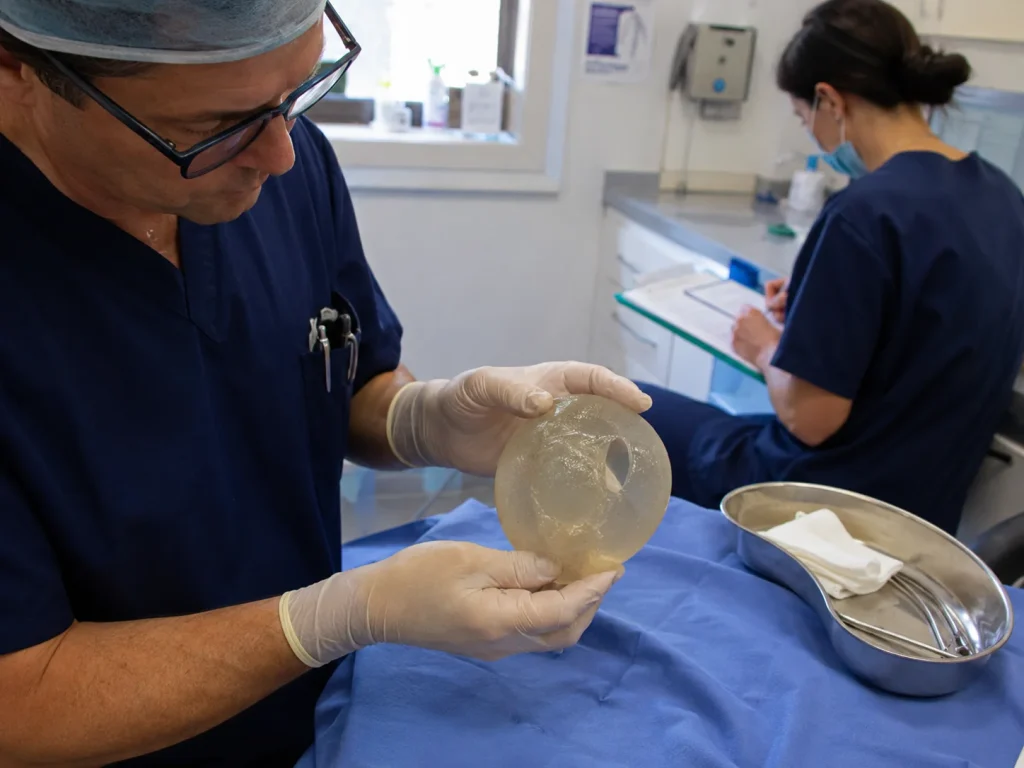
Salt water is the only content of saline implants; as a result, when there is a leak, the implant goes flat straight away. A ruptured saline implant, in fact, causes the water and the salt mixture inside the implant to get out at least very quickly; the body can then simply absorb and process the fluids without having a toxic impact at all. Your breasts would appear flat after losing their volume. In addition to the fact that the fluid is not harmful, the empty elastomer shell that remains can twist and crinkle up. If you leave it like that for longer than several months, then this empty shell could actually trigger some biological changes in your body, which would make the capsule (tissue covering that has surrounded the implant) harden, shrink, or become irritated. Therefore, it is definitely best to remove it early.
Silicone implants of cohesive nature do not result in an audible or visible change for their wearer at the time they rupture. Since they maintain their shape even after a rupture and don’t escape the shell-like fluid, cohesive silicone gel is not going to be felt as a physical change, so you do not get immediate awareness; instead, the implant is still covered by a protective layer of your naturally formed scar tissue or the so-called capsule. Even though this silicone gel is going to remain safely enclosed in the capsule for at least several months or maybe a few years, a silicone gel left untreated may eventually cause an intracapsular rupture. Over time, the constant friction due to movement can further degrade the gel and cause the capsule wall to be compromised, allowing the gel to penetrate into the breast tissue or even surrounding lymph nodes, thus causing hard tissue inflammation (granulomas).
Ensuring Capsule Integrity and Understanding Limitations Physically
When a patient demands the absolutely precise shape of his/her body and takes his/her future health very seriously, there is no way that the strictest rules of tissue care will not have to be respected after the diagnosis. After a rupture is confirmed by imaging, you must never put any strong pressure or deep intensive massaging on the affected breast. This kind of physical force will lead to increased internal pressure in the pocket, resulting in the silicone gel being pushed through microscopic holes in your scar capsule, with the consequence being its immediate arrival in the surrounding muscle layers.
If you are to keep your breast tissue absolutely tranquil in a state of complete readiness without any trauma for the next breast revision or reconstruction surgery at the end of this period, then just maintain normal gentle daily activities and totally avoid any sort of physical exercise or heavy lifting. Moreover, totally eliminating cigarettes and smoking products is the main requirement when you approach the scheduled revision date. Tobacco products are known to be vasoconstrictors, and their effect can be very potent, narrowing your microscopic blood vessels and decreasing the oxygen supply to the tissue of your breast, which can cause a prolonged healing process along your revision incisional lines and an increased risk of post-operative capsule complications. Turning your attention towards medically approved treatment plans will protect your tissue layer.
Diagnostic and Treatment Steps
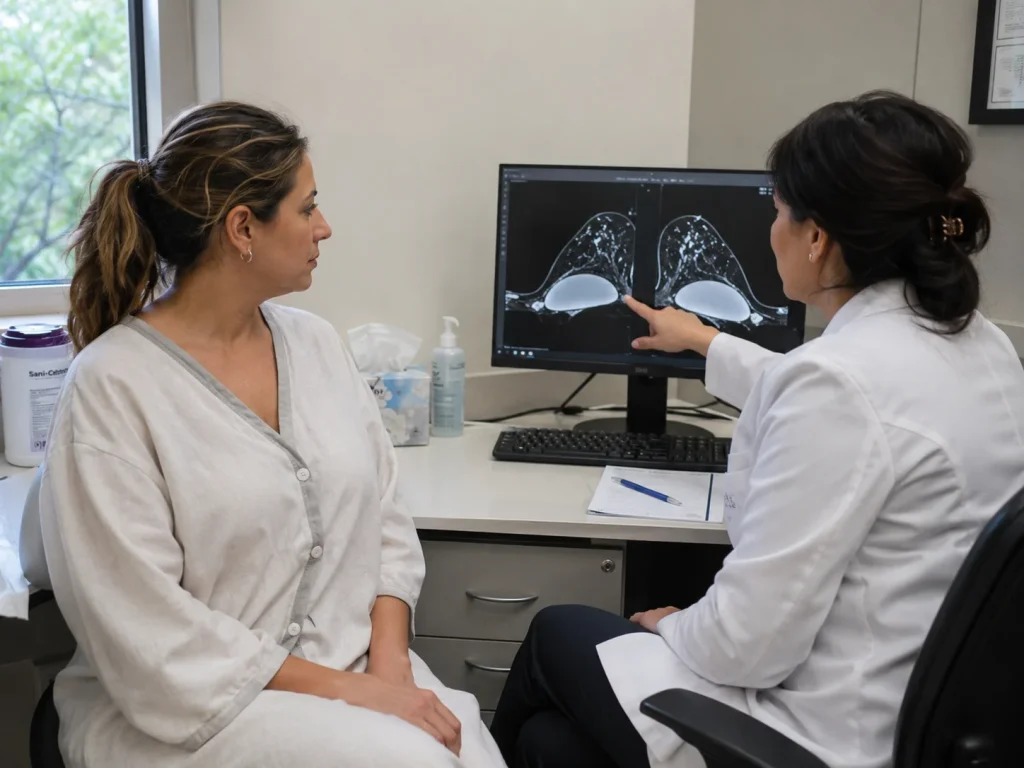
From the point of discovery of the issue through the period of getting everything resolved is an important transition in time. The first thing you need to do is to get a definitive ultrasound imaging that is able to tell you the real situation about your breasts. Because silicone leakage does not become noticeable in the beginning by tactile means, a professional and painless high-resolution breast ultrasound, the front door in non-invasive diagnostic methods, has been able to show the boundaries of the shell and give the health evaluation. If the ultrasound scan shows evidence of rupture, a specialized breast MRI can be taken for checking out the confirmation of the rupture is fully contained.
Based on your full diagnostic evaluation, your medical team will prepare an operation plan suitable for you. Usually, the operation will be done via a previous opening that was left closed for your revision; that way, the possibility of getting some extra scars is very much reduced, and that is why a surgeon prefers to make a scar that can be hidden if it is very necessary but not otherwise. Then, the compromised implant will be taken out by the surgeon carefully and an individualized surgery to remove the capsule (capsulectomy) along with other related operations will be performed to get rid of the possible scar tissue (a kind of fibrous material that is made by the body as a reaction to the implant) or gel debris leaving behind a clean, healthy, and nicely symmetric site of the pocket ready to receive a new implant of the best quality.
Complications with Breast implants in Turkey
LIN Europe Clinic offers a perfect location for the patient who wishes to have a breast implant surgery, complex device revision, or surgical pathways handled with no compromise to clinical quality, as well as a deep level of empathic connection. Our professional staff will handle everything required after a breach of the implant shell: from detailed diagnostics to choosing among the best alternatives for capsule handling, and even structuring a very detailed timeline that meets the patient’s needs in the fastest and least painful way. That is exactly what we mean when we talk about the environment being transparent, the level of support being exceptional, and the medical decisions being based on evidence only. LIN Europe Clinic in Turkey is a world leader in breast reconstructive surgery and postoperative plastic surgery services, offering a peaceful atmosphere in which every aspect of your treatment will be managed strictly under the global elite patient safety standards.
The level of clinical expertise and compassionate care offered by this world-class healthcare provider located in Istanbul is so high that you can totally rely on them for your post-operative period as well as for monitoring your tissues until the day of your revision, when you will finally be able to go back to your normal lifestyle. With the assistance of our specialists at LIN Europe Clinic, you can be assured that your revision details, body contour, and your health condition will be handled in the best of conditions. To ensure you are on a smooth route to the new body, we will prepare you not only with a thorough preoperative imaging analysis, but also with tissue visualization by the finest standards and a personalized recovery timeline.
FAQ:
If an implant ruptures, there is no requirement for the person affected to seek immediate emergency care. Despite that, to avoid developing chronic complications like scar tissue hardening or the spreading of silicone, it is usually advised to remove the implant or change it 2-6 months after detection.
After some prolonged period, the gel from the implant will break down bit by bit, and it is likely that the implant capsule, which is the protective scar, will not be able to keep the gel in, especially the gel may escape. This may lead to the gel being distributed into the breast tissue and lymph nodes, resulting in the formation of firm, tender lumps known as granulomas, which will also complicate the surgery.
You are perfectly fine. The salt solution used for filling saline is harmless so if the implant shell breaches, your body naturally and fully absorbs the escaped fluid within 2 days without any risk. The only drawback is the immediate visual flatness of the breast.
A great number of the implant ruptures are “silent” that do not lead to any noticeable changes on the skin and are also invisible as well. It is quite possible, however, that some patients will discover very minor alterations after a while such as a slight firmness or asymmetry, some burning, or even a very mild shift in the shape of the breast.
In case a major silicone rupture or capsular contracture occurs, the surgeon may likely carry out capsulectomy, that is, removing your scar tissue lining along with the implant. At LIN Europe, our team experts decide on the removal of the scar capsule according to the ultrasound or MRI scan results.
Tebbetts, J. B. (2002). Dual plane breast augmentation: Optimizing tissue coverage, managing capsular contracture vectors, and long-term pocket stability in device revisions. Plastic and Reconstructive Surgery, 109(3), 1017-1024.
Spear, S. L., et al. (2007). Breast implant life expectancy and cosmetic longevity: Analyzing structural shell failure, rupture kinetics, and capsulectomy standards. Plastic and Reconstructive Surgery, 120(7), 89S-99S.
Rohrich, R. J., et al. (2014). Advanced postoperative care, pocket geometry engineering, and long-term architectural stability in secondary breast augmentation. Aesthetic Surgery Journal, 34(5), 587-595.