
Keeping the cervix may preserve pelvic support.
The Clinical Viewpoint on Supercervical Hysterectomy
Personalizing your surgical strategy to your unique anatomy requires a very thorough assessment from the field of gynecology to pelvic reconstructive surgery. When a hysterectomy is advised for women with only benign conditions—like uterine fibroids, adenomyosis, or heavy menstrual bleeding—they may be given a choice of undergoing a subtotal (or supracervical) hysterectomy. Keeping your cervix is essentially a case of surgery wherein the body of the uterus is amputated, but the cervix is left perfectly in place at the beginning of the vaginal canal. While the common worldwide practice for removing both the cervix and the uterus is to prevent cervical cancer, in those candidates whose cervical tissues are healthy, the cervix is a better anatomical and surgical choice, and one of the major reasons for the operation is the preservation of the original structure of the lower pelvic canal.
Main Anatomical and Surugical Benefits
Keeping the cervix intact is the main advantage of this form of operation and it is primarily concerned with the surgeon’s safety and conservation of tissue:
- Getting rid of Vaginal Cuff Complications: Removing the cervix during a total hysterectomy requires sewing the top of the vagina to make a “vaginal cuff.” This seam inside is somewhat risky for tearing or opening when tissues are not very firm. The preservation of the cervix means that nothing gets to interrupt the natural state of the vagina, and the vaginal canal remains untouched and, therefore, the risk of the cuff coming undone and losing depth is eliminated.
- Minimizing the Risk of Damage to the Neighboring Organs: The cervical body is close to the ureters and the bladder. Cutting the cervix apart would involve deep pelvic dissection. Not altering the cervix limits the surgical area quite a bit, which in turn reduces the risk of inadvertent thermal or mechanical injuries to the urological system.
- Shorter Operation Time and Lower Blood Loss: A supracervical hysterectomy would not have to undertake the tedious work of separating cervical ligaments and the vault of the vagina; that is why operation time in most of the cases is shortened. Moreover, the amount of blood lost during the operation is significantly reduced.
- Maintaining the Neurovascular Pattern: The cervix is surrounded by one of the main areas of nerves and blood vessels (Frankenhäuser plexus). Many women would be in favor of keeping the cervix as it is supposed to preserve sensation in sexual life and the amount of vaginal secretions by maintaining its native neurovascular package.
Maintaining Structural Stability and Facilitating Rehabilitation
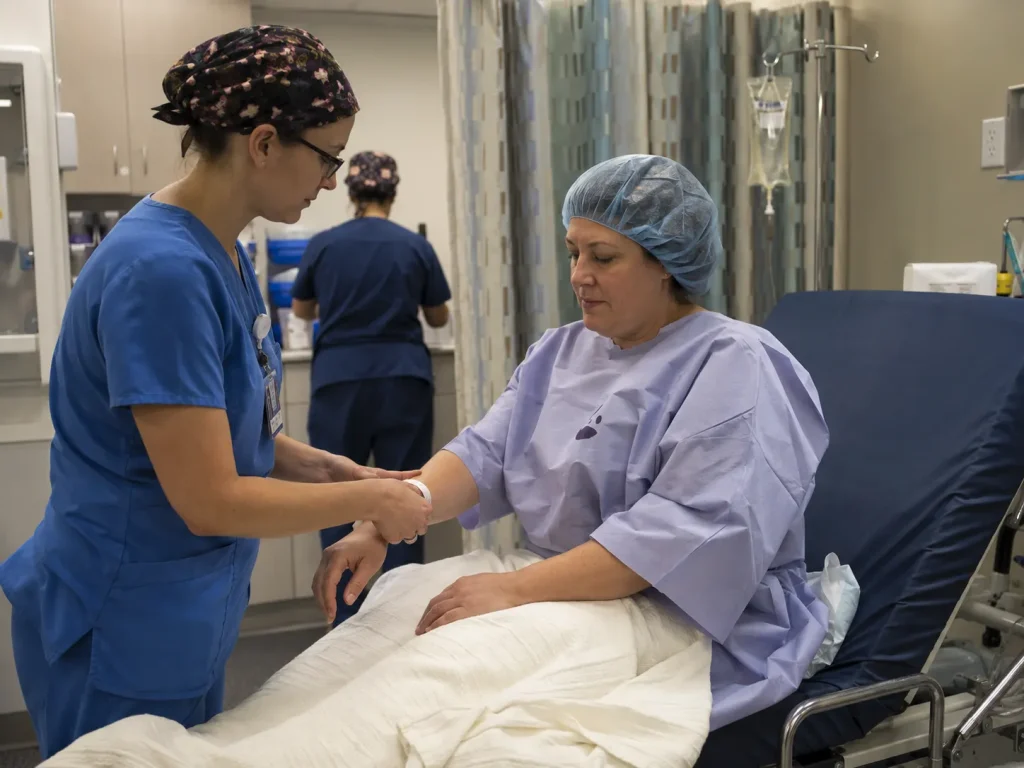
It should be emphasized that although a supracervical operation has the cervix still intact, you need to avoid any form of physical exertion during healing so as not to place too much strain on the neck stump in the cervix. The healing of the internal uterine amputation must be supported by adequate tissue respite. Engaging in premature heavy lifting or abdominal exercises would cause the cervix and deep internal stitches to be subjected to shear stress, and this is very unlikely to lead to a favorable recovery from a biological standpoint.
Thus, to achieve a stable pelvic anatomical structure that is also structurally precise, the maximum one needs to do is to refrain from heavy lifting and abdominal workouts when recuperation is underway. Furthermore, complete discontinuation of nicotine and tobacco should be a non-negotiable rule, as nicotine causes a generalized vasoconstriction which restrictes the blood flow supply to the micro-vessels of the pelvic muscles, thereby starving the remodeling tissues of the required oxygenated blood for a smooth and fast recovery.
Pros and Cons of Total vs. Supracervical Hysterectomy
Mind the physiological aspects of the fact of having your cervix, as it will affect your planning for the future and your preventive health measures:
| Clinical Variable | Supracervical Hysterectomy (Cervix Kept) | Total Hysterectomy (Cervix Removed) |
| Vaginal Anatomy | Natural vaginal depth and vault remain intact. | Vaginal cuff is created; natural depth is reconstructed. |
| Cuff Dehiscence Risk | Zero risk (no vaginal incisions made). | Low risk; requires strict 6-8 week pelvic rest. |
| Cancer Screening | Mandatory: Routine Pap smears and HPV testing must continue. | Discontinued: No Pap smears required (if no history of dysplasia). |
| Post-Op Bleeding | Low risk of “mini-periods” (cyclical spotting from residual tissue). | Zero risk of cyclical menstrual bleeding. |
Hysterectomy in Turkey
Choosing LIN Europe Clinic is like entering a top-tier paradise of world medicine that treats the female pelvis and its reconstructive surgical pathways with a combination of clinical perfection, high standards for empathy, and a level of service where the patient’s privacy and safety are paramount. The highly committed team of specialists at LIN Europe Clinic in Istanbul will give you absolute peace of mind. The experts monitor your recovery parameters and how stable your pelvis has become by making use of the most accurate types of diagnosis.
We are at your beck & call with not only pre-surgical detailed 3D anatomical visualization and ultra-clear tissue scans but also with personalized healing plans covering all the necessary steps as you progress through your operation and lifestyle modifications. The elite medical team assures the highest possible level of protection for your physical constitution and surgery, and thus, you’ll be getting rid of your anxieties and worries while settling into a new life routine. Experience the exquisite and well-organized type of care by LIN Europe Clinic that is performed safely and professionally in Istanbul, Turkey.
FAQ:
You might enjoy a slightly shorter surgical time, decreased injury risk for the bladder or ureters, faster general recovery, and a complete eradication of vaginal cuff tearing as there is no vaginal cut.
Prior to knowing the actual data, it was thought that preservation of the cervix with the connective ligaments would help support the pelvis. However, nowadays, in practice, there is no meaningful difference of prolapse rates reported in the literature if the cervix is kept versus removed.
It is not going to be a full menstrual period that you will go through but approximately 10-15% of the cases where cervix is kept together with the ovaries a woman will be getting light, monthly cyclical bleeding known as “mini-periods.” This happens from the residual tiny traces of the endometrial lining located around your cervical stump.
Certainly, if your cervix is left inside then the pap smear remains a regular routine. Cervical cancer has its risks associated with the remaining part of a woman’s cervix, and therefore your doctor will recommend regular Pap smears and HPV screenings.
Definitely. As the operation does not include detaching cervix from vaginal canal or even creating an incision at the vaginal wall then patients having a supracervical hysterectomy typically suffer less from the initial pelvic pain, resume their regular intimate activities and general routines more quickly.
American College of Obstetricians and Gynecologists (ACOG). (2020). Total vs. Supracervical Hysterectomy: Clinical Indications, Cervical Retention Standards, and Outcomes. Practice Bulletin No. 218.
Gimbel, H. (2007). Total or subtotal hysterectomy for benign uterine diseases? A meta-analysis. Acta Obstetricia et Gynecologica Scandinavica, 86(2), 133-144.
Rohrich, R. J., et al. (2014). Advanced Postoperative Care, Micro-Vascular Wound Healing, and Systemic Vasoconstriction Parameters in Pelvic Tissue Recovery. Journal of Aesthetic and Reconstructive Surgery, 34(5), 587-595.