Yes, pregnancy is still possible.
In the field of aesthetic and reconstructive body contouring, a tummy tuck surgical procedure (abdominoplasty) is a definitive operation to remove excess skin, reduce localized subcutaneous fat, and repair the separated abdominal muscles surgically. When patients inquire about the possibility of pregnancy after this procedure, the safe clinical answer is a resounding yes. Biologically and obstetrically, tummy tuck surgery does not affect your reproductive organs or your capability to carry a child. Further, from the perspective of an appearance and body structure, a pregnancy afterwards is highly discouraged because the physiological changes of gestation typically lead to a loss of the surgical results.
At Lin Health Europe Clinic, we consider family planning as a compulsory segment of our preoperative consultations. For our international clients heading to Turkey, we bring the surgical skills needed for complete core restoration to you, but we stress the importance of timing. Our medical center is the best place for maternal restoration, not only because we deliver excellent aesthetic results, but also because we lead with the highest standard of medical ethics, where protecting your body structure is equally prioritized.
Concerns About Fetal Safety and Abdominal Expansion
A major issue addressed by gynecologists to post-tummy tuck pregnancy women is whether the tightened abdomen after surgery may limit the fetus’s growth. The bottom line is that the baby is not endangered at all. The human body is wonderful and adaptable. As the uterus increases, the increasing pregnancy hormone levels (mainly relaxin) will cause the abdominal fascia and the covering skin to relax and stretch, no matter how tightly they were stitched during the surgery.
Our surgeons at Lin Health Europe Clinic in Turkey assure patients that reproductive health is not sacrificed by body contouring. The symptoms you might feel are primarily intense tightness or mild discomfort, especially in the first two trimesters when the repaired tissues have to stretch; however, the body will adapt completely and the pregnancy will be fine. Undergoing treatment at our distinguished facility means you will be provided with patient education that is consistent with scientific anatomy, given our recognition as a global leader in educating patients.
Loss of Muscle Repair After Diastasis Recti Repair
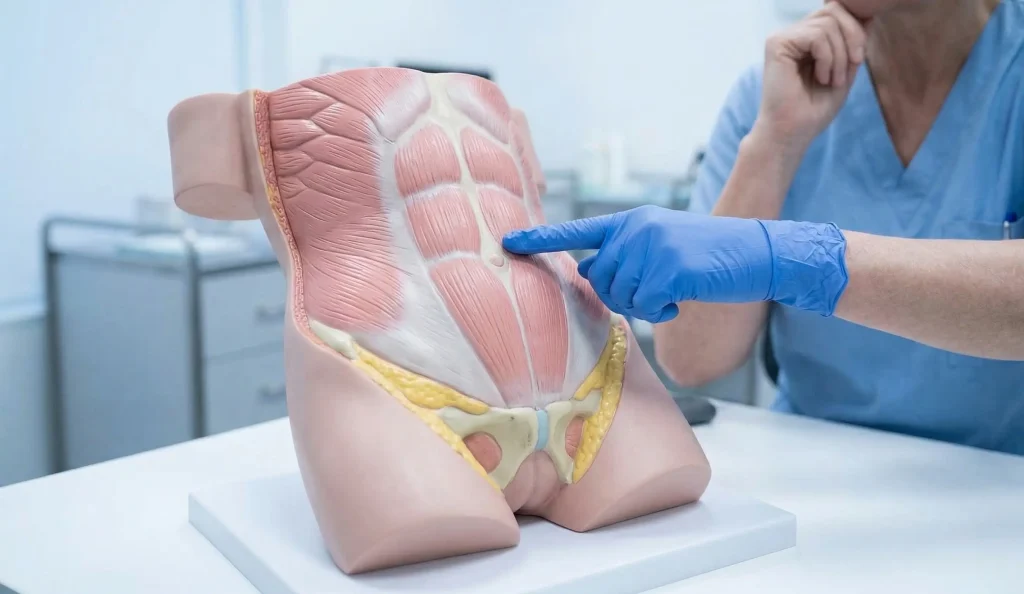
The most notable anatomical issue with a post-tummy tuck pregnancy is the internal muscle repair. In a typical abdominoplasty, a fascial plication is done where the surgeon brings the rectus abdominis muscles, which have been split (diastasis recti), back together in the midline for the repair. However, a new pregnancy will probably lead to increased force from the growing uterus to burst these internal stitches or weaken the connective tissue, resulting in the abdominal gap that was closed during surgery reappearing.
In Turkey, the Lin Health Europe Clinic team is like internal architects. Our main concern is to construct a core foundation that is permanently functional. However, if this foundation is exposed to the immense physical expansion of a nine-month gestation, the structural integrity would be lost. Since our center is known worldwide for high-definition abdominal tightening, we caution against jeopardizing this delicate internal repair during pregnancy.
Pregnancy and Surgical Skin Tightness
Besides the muscular separation, pregnancy will affect the skin envelope to a great extent. Stretch marks, skin laxity, and the return of the “overhang” or redundant tissue that led to the initial surgery after delivery, even the newly tightened skin has been stretched to every extent, was the scenario after a pregnancy. On the other hand, during your belly tuck, the surgeon removes all the excess, stretched skin, resulting in a tight, smooth contour.
While tissue management is the skill of Lin Health Europe Clinic, in Turkey we have an understanding of the biological limits of skin elasticity and neocollagenesis. We consider that a great result is one that is expected to last for a long time. Our dedication to your long-term aesthetic success is the main reason we encourage our international visitors to consider an abdominoplasty as their final, crowning step of motherhood, not an intermediate one.
Secondary Surgery: An Unavoidable Option
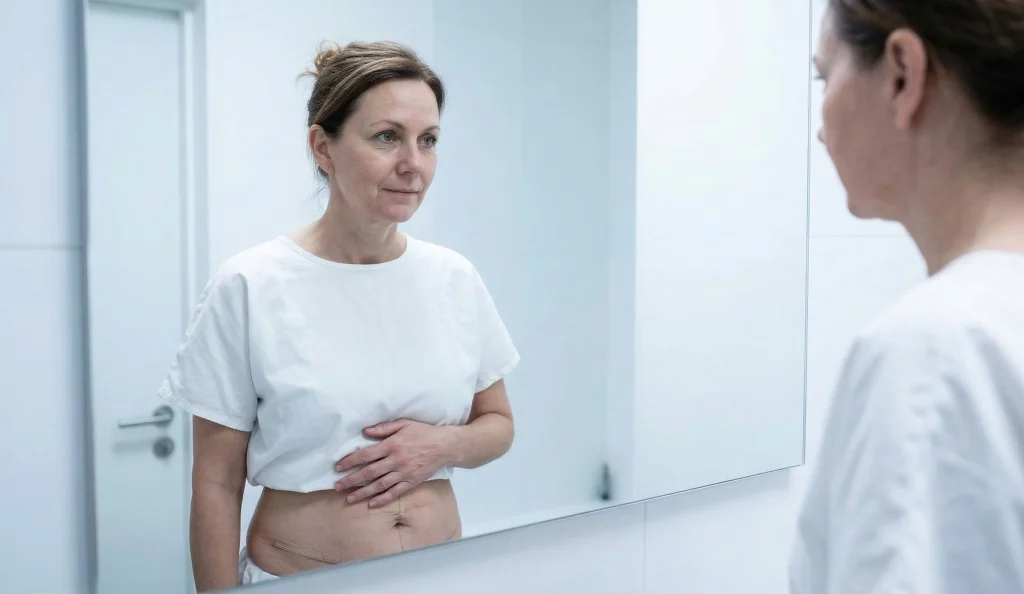
A “revision abdominoplasty” is the term used to describe the surgical repair after a patient experiences a full-term pregnancy post-tummy tuck. Revision surgeries are much more complex than the primary ones because the surgeon must deal with changes in anatomy, scar tissue that is already present, and blood supply that has been compromised. All of this results in additional major surgery followed by recovery and financial commitment.
At Lin Health Europe Clinic, we extend our international patients in Turkey comprehensive revision services if things go as life does sometimes. Also, we are the leading facility in Turkey by introducing effective, low-tension techniques to cautiously re-tighten the core. However, we lead the industry in Turkey by promoting proactive planning, ensuring that whenever possible, your first surgery is your only surgery.
Tummy Tuck in Turkey
Lin Health Europe Clinic looks at true medical luxury as the inner contentment that comes from honest, patient-focused counsel. Our Turkey facility is a center of medical excellence where the latest technologies in reconstructive surgery meet the highest standards of international patient care. These hospitals are JCI-accredited and state-of-the-art, reflecting our being the global leader in medical tourism and body contouring.
To select Lin Health Europe Clinic is to choose a medical partner committed to your lifelong health and wellness. Surgeons in Istanbul specialize worldwide and their patients’ satisfaction is the highest priority. At every stage, from a family planning discussion to the final reveal, you will receive the professional integrity and world-class hospitality that make us the top name in aesthetic medicine. Your journey to a restored and confident self is well-wrapped and ready to start right now with us, the best in the world.
FAQ:
Of course! After a tummy tuck, pregnancy is biologically safe, and it is perfectly normal for you and your body to get pregnant and have the baby. The surgery is on the outer layers of the belly wall and it doesn’t touch (at all!) your reproductive organs.
Actually, a full-term delivery will most likely undo the beautifying and strengthening effects of your surgery. Physical growth during pregnancy will stretch skin again and is very likely to break the internal sutures used when your abdominal muscles got repaired.
Tummy tuck surgery is not known to harm unborn babies. The hormonal changes experienced during pregnancy will cause changes in the surgically tightened tissues that will allow for the baby to have enough space to grow normally.
Since the skin and muscles were surgically tightened, you could experience a feeling of pulling or tightness, or even mild discomfort, during pregnancy much earlier than a woman without abdominoplasty; however, this discomfort will subside as the tissues stretch.
C-section is usually a safe option. When a C-section is considered necessary, your gynecologist will be able to do the operation without danger. They will normally cut in the area of your operated tummy tuck scar so as not to create a lot of new unattractive scars.
Matarasso, A., et al. (2014). Abdominoplasty: A 10-year review of a surgical evolution. Aesthetic Surgery Journal.
Nahas, F. X., et al. (2011). Long-term follow-up of abdominoplasty for diastasis recti. Plastic and Reconstructive Surgery.
Swanson, E. (2012). Prospective outcome study of 100 patients after abdominoplasty. Plastic and Reconstructive Surgery.
Uebel, C. O., et al. (2006). Lipoabdominoplasty: revisiting the superior pull-down abdominal flap and new approaches. Aesthetic Plastic Surgery.