
Drainage and compression help resolve seroma.
In the field of female aesthetic and reconstructive gynecology, a labiaplasty is a surgical procedure that aims to reduce and reshape the labia minora or majora. One of the main concerns for women who undergo such procedures is whether this alteration would affect their ability to give birth naturally. The answer is that a labiaplasty does not affect delivery at all. The surgery is limited to the external features of the vulva and does not involve the vaginal canal, cervix, or uterus. In addition, the specialized mucosal tissue of the labia is biologically capable of remarkable stretching and regeneration. After the stage of neocollagenesis is complete and the surgical site is fully mature, the tissue remains naturally elastic, allowing it to expand during childbirth just as effectively as unoperated tissue.
At Lin Health Europe Clinic, we consider labiaplasty as a way of fulfilling women’s needs without destroying their future physiologies. For our international patients who come to Turkey, we focus on the fact that your surgical results are aimed to be lifelong, that is, they will withstand the mechanical stresses of pregnancy and delivery. Our center is the leading place for advanced laser-assisted labiaplasty and our medical standards are of a level where we first aim to preserve nerve sensitivity and tissue vascularity so that your transformation to a more comfortable, confident self can be entirely compatible with your becoming a mother.
Anatomical Isolation: External vs. Internal
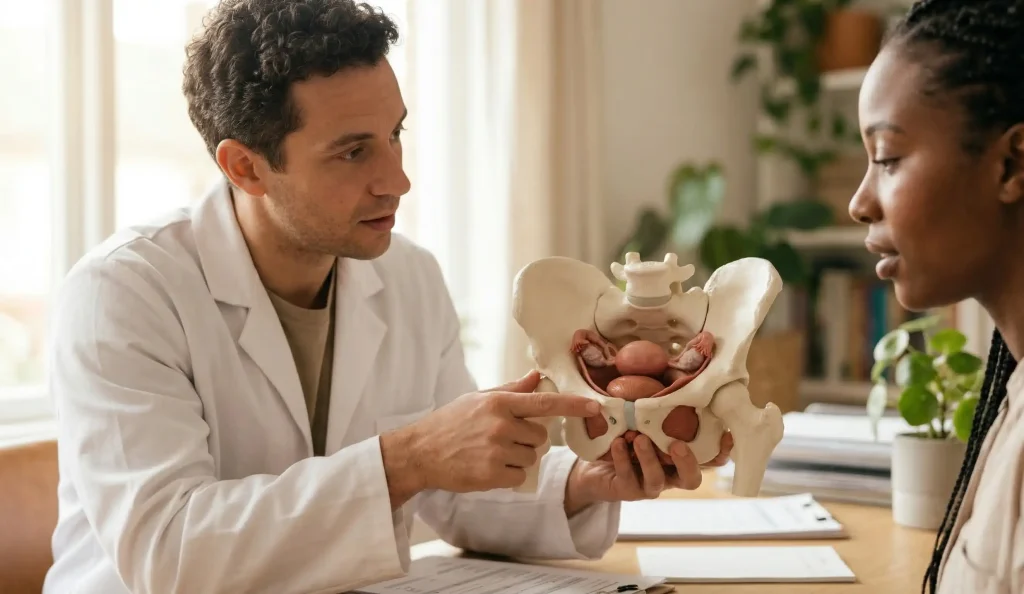
Understanding the anatomical boundaries of the procedure is key to knowing why a labiaplasty will not affect giving birth. It is an external surgery only. It is essentially the excision of excess tissues from the inner lips (labia minora) or the outer lips (labia majora). In a natural delivery, the most significant stretching happens inside the vaginal canal as well as the perineum (the area between the opening of the vagina and the anus). Given that a labiaplasty neither involves the vaginal walls nor the pelvic muscles, structurally, nothing whatsoever is altered that would affect the baby’s path.
At Lin Health Europe Clinic in Turkey, our surgeons perform surgeries with the help of laser technology that is very precise. They ensure that incisions are made out of reach of the major “stretch zones” of the birth canal. This anatomical separation guarantees that the structural integrity of your internal reproductive system remains completely intact and is ready for your future pregnancies.
Tissue Elasticity and the Role of Neocollagenesis
The labia consist of mucosal and skin tissues supplied with an abundance of blood vessels, and they are biologically made for great expansion. The fear of some that “scar tissue” resulting from a labiaplasty will be hard and will tear during delivery is understandable. Actually, once the 12-month maturation period after a labiaplasty has passed, the scars from the surgery are not only very thin but also very flexible.
The body, in the phase of neocollagenesis, substitutes the initial “fibrin” of the wound with excellent, elastic collagen fibers. Under the effect of pregnancy hormones, especially relaxin, the vulvar and pelvic tissues become very soft and elastic in order to facilitate birth. This softening by hormones is as much a part of the surgical site as it is of the surrounding tissue. In Istanbul, we inform our international visitors that their healed labia will perform normally under the force of birth, expanding without predisposing to any condition of “stiffness” related to the trauma.
The Risk of Tearing: Is it Higher After Labiaplasty?
In fact, statistically, there does not exist any clinical data that implies women with labiaplasty would have a greater chance of suffering “tearing” (perineal lacerations) during childbirth than those without the surgery. Usually, tearing is related to factors such as the baby’s size, the rapidity of delivery, or the perineum elasticity, none of which are controlled by a labia reduction. Also, since a labiaplasty may trim the excess, “floppy” tissue that, during stretching, could easily catch or get irritated, some healthcare professionals even claim that after a labiaplasty, the labia would be “streamlined” and actually easier to keep clean and manage during the postpartum period.
At Lin Health Europe Clinic our skills in the Edge-Resection and Wedge methods put us in a position to consistently keep a healthy “mucosal bridge” that is critical to the natural strength of the labial borders—a result that is not only aesthetically pleasing but also functionally compatible with the demands of labor.
Post-Pregnancy Changes: Will the Results “Last”?
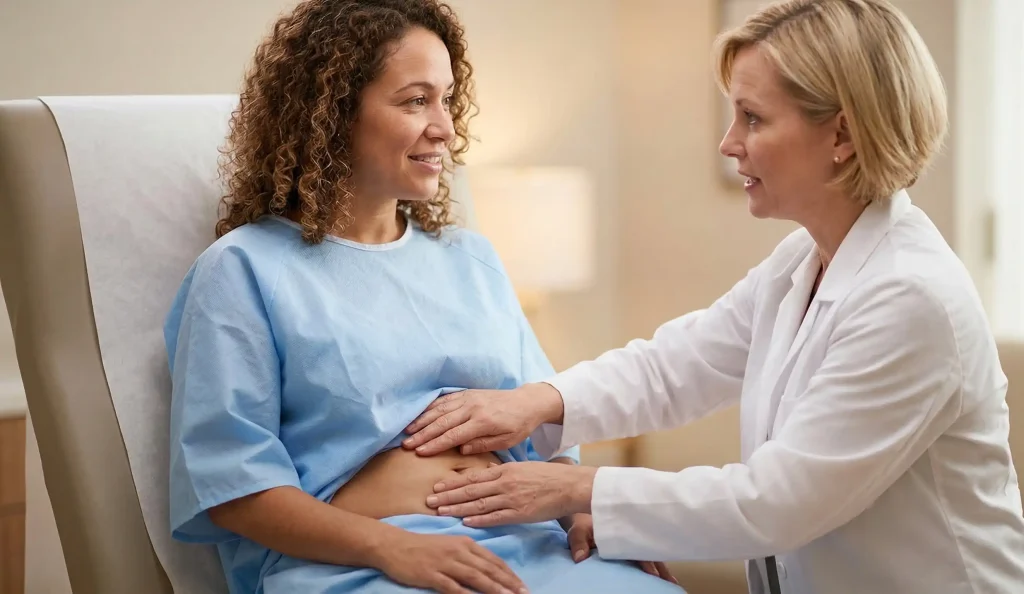
Although a labiaplasty cannot affect the birth process, a good number of patients doubt whether the results of the surgery would stand up to bearing a child and giving birth. Pregnancy causes a lot of changes in the body, including but not limited to an increased blood volume and pelvic floor pressure, which are responsible for the labia swelling (edema). The good news is that after the end of the “fourth trimester” and the hormonal levels of the body have returned to normal, in most cases, it is the original shape of the labia that was achieved by the operation that practically reappears. Minor stretching or pigmentation changes occur de facto—this is true for women, whether or not they have had surgery done. It is a mere rarity when a case is reported where the labia have “regrown” to their original, pre-surgical size.
The team at Lin Health Europe Clinic in Turkey stresses that results are most stable and permanent when one has already completed their family before undergoing surgery, but they also assure that even surgery first gives you a significantly improved baseline that lasts long after your children are born.
Timing Your Surgery: Before or After Children?
When it comes to having a labiaplasty, it is a question of personal choice. Some women may face unbearable pain due to the labial enlargement, use of antibiotics does not control the infections, and for some others, distress is so severe that in most cases, it is just not possible to keep it for years until the birth of the children.
At Lin Health Europe Clinic in Istanbul, we provide professional consultations to every international visitor. If you are being severely affected in your daily life by your symptoms, there is no medical point in postponing the operation. If you are having strictly aesthetic concerns and you are planning on becoming pregnant within 6-12 months, our first suggestion will be to wait until the delivery so that your body completes its natural cycles of going through expansion and contraction. This way, the “final” anatomical baseline can be used for the precise labial contouring.
Labiaplasty in Turkey
We consider surgical excellence to involve safeguarding the future health goals and milestones of our patients. Our center in Turkey is a place where the combination of advanced gynecological sciences and the highest standards of international patient care is practiced. We work in a state-of-the-art, JCI-accredited clinic, which reflects our position as the global leader in medical tourism and female intimate rejuvenation.
Selecting Lin Health Europe Clinic means going with the best-trained and board-certified professionals in Istanbul. Our worldwide reputed experts are committed to providing every international guest with a level of reproductive safety that allows for the natural harmony of the body. You will be accompanied from your initial biometric and hormonal workup to your beautifully healed, permanently comfortable result by a team and environment that has made us the most recognized name in aesthetic medicine. With us, your path to a more confident and comfortable self—before, during, and after motherhood—will be under the care of the best in the world.
FAQ:
Labiaplasty does not at all stop you from having a vaginal delivery physically. The surgery is done on the external labial tissues only. It does not alter the internal birth canal or the vaginal wall’s elasticity in any way.
Definitely, if you are suffering from labia size to the extent that it hampers your movement or causes you distress, you can go ahead with the procedure. Pregnancy might cause your labia to swell temporarily, but after delivery, your results generally remain stable and nicely balanced.
Clinically we recommend, at the very least, a six-month break after you have stopped breastfeeding and your hormones have reached a normal level. Only then does our pelvic tissue retract fully to the permanent baseline, after which we can perform any aesthetic giving changes that you desire.
It is almost impossible for the labia to return to their pre-pregnancy size (“regrow”). Hormones might alter the tissue very slightly temporarily, but the volume removed during your surgery remains permanently removed, which is a lifelong comfort enhancement.
It is very safe medically to do a labiaplasty before pregnancy to eliminate physical discomfort but the best time is definitely after the kids so that the results are done on the permanent anatomy baseline.
Alinsod, R. M. (2011). Aesthetic and functional labiaplasty. Journal of Sexual Medicine.
Goodman, M. P., et al. (2010). Is the labia minora reduction a safe procedure? Journal of Sexual Medicine.
Motakef, S., et al. (2015). Labiaplasty: the anatomy and evidence-based treatment. Plastic and Reconstructive Surgery.
Triana, L., et al. (2011). Labiaplasty: a review of the literature. Aesthetic Surgery Journal.
Hamori, C. A. (2011). Aesthetic surgery of the female genitalia. Clinics in Plastic Surgery.
Pardo, J. S., et al. (2006). Labia minora reduction: a review of current techniques and outcomes. International Urogynecology Journal.