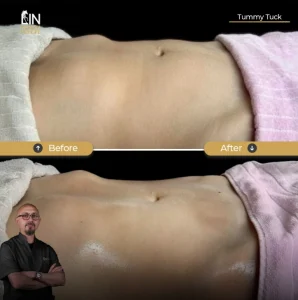
Results can remain stable, but weight gain may affect the appearance.
Liposuction is a great way to recontour your body. It is normal for patients to be concerned about how long the effects of the procedure will last. You may be wondering if the fat that was removed will eventually come back or you will gain weight in other areas, thus, your silhouette will change. Lin Europe Clinic emphasizes that liposuction gives you permanent fat removal; however, it will not stop the process of aging. Once you know what biological changes your body goes through in 10 years, you will be able to set the right expectations, and your body will be ready to absorb the changes. The results 10 years after depend a lot on the surgical skill and a lifestyle commitment.
The word “permanent” in body contouring must be approached with a deeper understanding of fat physiology. Even though the surgery removes the fat cells that cannot be regenerated, the fat cells that are left in your body still have the ability to grow. The figure you will have in 10 years is not only the surgical result but also metabolic changes and the effects of gravity. In this post, we will talk about the reality of liposuction in the long term, how your body will change, and what you can do so that when you look in the mirror 10 years from now, you will like what you see.
The Permanence of Adipocyte Removal
The main point of liposuction is adipocytes, biological cells in the tissue that stores energy in the form of fat. In your body, the number of fat cells remains unchanged once you become an adult. Fat cells are removed during liposuction. The number of fat cells becomes lower in the treated area, thus the body’s capacity to store fat in that area is permanently affected.
On the other hand, one should not expect that the body weight will remain unchanged just because the fat cells in the area have been eliminated. There are still fat cells in the area where the surgery was done which are capable of expanding if the person eats more than needed. As long as you do not gain weight drastically, the shape of the body will be that of the post- liposuction one for ten years. The result carries on because the reduction of the fat layer is complete.
Weight Gain and Fat Redistribution Patterns
Someone may ask where does fat get stored if that person gains weight after several years of liposuction. If your weight gain is very pronounced, which means more than 10-15% of your original body weight, the way your fat is distributed may change. The area where the surgery was done has fewer cells to store the energy, so the excess calories will be stored by your body in other places. Those other parts of the body such as the upper back, arms, or thighs may accumulate fat giving your whole body a new look.
Therefore, patients must understand that liposuction is a treatment aimed at reshaping the body and not a method of losing weight. Those patients who undergo surgery with the right mindset, that is, they will follow healthy habits after it, generally tend to get amazing results even ten years after their procedures. If your weight stays stable, your body does not experience the disproportionate redistribution. Your body will have the shape it had immediately after the operation but the only difference is that the rest of your body may gain a bit of weight. In a nutshell, if you want to keep the benefits of liposuction, then you should monitor your weight and keep it constant so as to prevent the fat cells that have not been removed from getting bigger.
The Role of Skin Elasticity and Aging
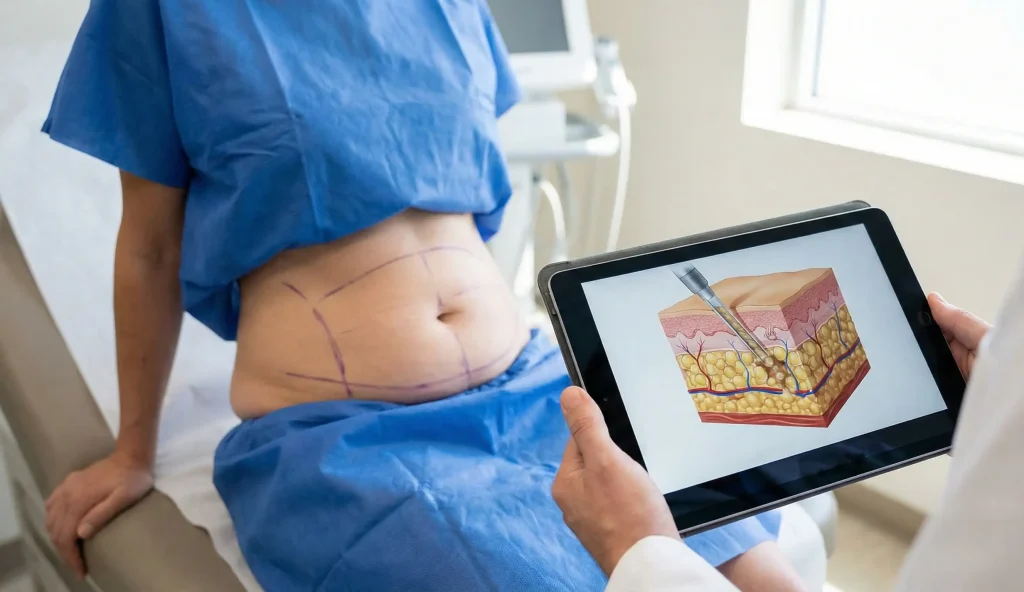
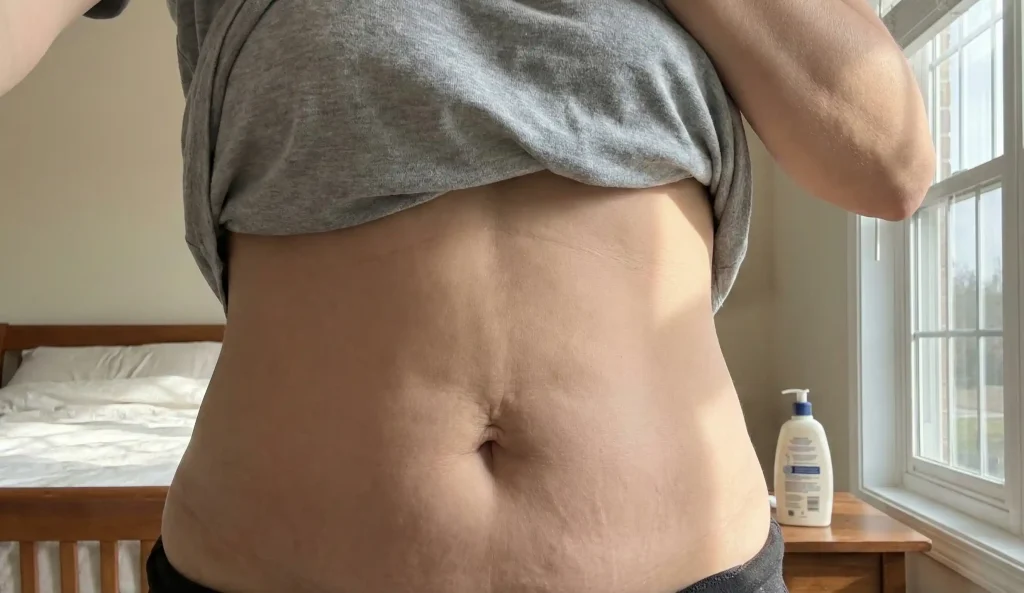
Liposuction helps figure out the problem areas by getting rid of fat, yet it cannot pause the skin from getting older. The skin of your body loses collagen and elastin over a span of ten years, thus becoming less firm. During the time of your operation, if it was noticed that your skin had great elasticity, then you probably had little problems with skin sagging as the skin adjusted to the new shape. After 10 years, the normal process of aging may cause the skin in some places like the stomach or neck to be loose or sag. It is not the liposuction that is to blame here, rather the passage of time.
If someone gets liposuction in their twenties or thirties, they usually appear to have a tight skin even after ten years. However, if one has a surgical operation at a later age, such an individual will experience how gravity works more palpably in those areas that have undergone treatment. A steady weight, drinking plenty of water, and using sunscreen are some of the ways in which you can reduce skin sagginess. Also, before doing the surgery, at Lin Europe Clinic, we always check the skin and its quality in order to understand its behavior in the long term, thus, setting realistic expectations for the patients about aging and the changes in the skin.
Visceral Fat vs. Subcutaneous Fat
Ten years down the line, you may find some changes in your midsection if you understand the difference between subcutaneous and visceral fats. Liposuction is a technique that only targets subcutaneous fat, which is a layer of soft fat under the skin. Visceral fat, on the other hand, is a type of fat that is located deep in the belly area, close to the internal organs and it is inaccessible to liposuction. Over the ten years, a bad diet and stress may cause one to gain visceral fat even if the subcutaneous fat remains minimal as a result of a prior liposuction.
Therefore, if you find that your belly is about to protrude despite the skin feeling very thin when pinched, you are most likely gaining visceral fat. Being a type of fat that surrounds your internal organs, visceral fat can only be reduced through diet and exercise. Keeping off processed sugars and adhering to a heart-healthy diet and lifestyle are some of the ways that you can keep visceral fat at bay. Your result in the long term is contingent upon how well you manage your internal as well as external body. We inform our clients about the differences between these types of fat so they won’t be confused when their shape changes despite a successful operation.
Long-Term Maintenance Strategies

The best ten-year post-liposuction patients have the same lifestyle habits. It is usual for them to bring their daily physical activity into a natural routine, which keeps their systems running and muscles toned. Your muscle mass tends to decrease as you get older. Keeping your muscles strong and toned not only makes the skin look fuller but also supports the results of the surgery. Nobody is suggesting that you turn yourself into a professional athlete but simply going for regular, moderate-level exercise is enough to maintain the benefits gained from the operation.
Besides, what you put in your mouth matters a lot too. Your skin will continue to have a good level of elasticity, and the fat cells that are left will not be under any pressure, if you stay away from the yo-yo dieting practice. Imagine your body as a luxurious car that is designed for high performance and requires the best fuel to function properly. By living a life that respects the investment you did in yourself, you are making sure that the surgical changes continue to be the most prominent aspect of your physique for many years to come.
Liposuction in Turkey
Turkey is your go-to destination for body contouring. It is no wonder that thousands of international patients have flocked in to experience high-quality services at comparatively affordable prices. Istanbul, being a world city, is a place where new ideas and market demands meet. Hence, surgeons here can, and do, use the most advanced technologies such as vaser and High-Definition liposuction. Lin Europe Clinic is a top contender among such clinics and offers services whose quality can be compared and, in some cases, even exceeds that of Western clinics. To us, fat removal is the starting point of a process involving re-shaping the body to complement your future appearance.
We at Lin Europe Clinic believe that true beauty can only be achieved when surgery is done well and you are also in good overall health. Indeed, we are structured in such a way that plastic surgery, general surgery and nutritional counseling are all part of a patient’s pathway under one roof. This comprehensive way of looking into things will make sure that you walk out with not only a new shape but an understanding of how to keep it. Our liposuction in Turkey comes with a guarantee of lifelong confidence. Here is an invitation to you to witness a beauty transformation that lasts in one of the most beautiful cities in the world.
Frequently Asked Questions About Long-Term Liposuction Results
Since liposuction permanently eliminates fat cells, your body continues to hold the contour of the procedure for several years. Aging, however, will still have an impact on your skin’s elasticity over time.
The effect of liposuction stays as long as the individual since the fat cells are cut out and they will not re-grow. If you want to keep your body looking like that all the time, you may have to keep your weight in check.
Liposuction will continue being effective as a method of fat reduction in stubborn areas that have been difficult to get rid of for the patient by other means. It not only helps a person to achieve their ideal figure, but also the results can still be seen even after many years.
Fat cells that have been removed through liposuction cannot grow back. Nonetheless, additional fat cells may increase in size if there is a substantial weight gain in 10 years after liposuction.
If you put on weight, there is a possibility of your body storing it in the areas that were not treated. A stable weight needs to be maintained in order to prevent disproportionate fat distribution after liposuction.
Illouz, Y. G. (1983). Body contouring by lipolysis: A 5-year experience with over 3000 cases. Plastic and Reconstructive Surgery, 72(5), 591–597.
Kenkel, J. M., & Rohrich, R. J. (2004). Ultrasonic liposuction. Plastic and Reconstructive Surgery, 113(5), 1478–1480.
Klein, J. A. (1991). Tumescent technique for local anesthesia improves safety in large-volume liposuction. The Lancet, 338(8776), 1324-1327.
Matarasso, A., & Levine, S. M. (2013). Evidence-based medicine: Liposuction. Plastic and Reconstructive Surgery, 132(6), 1697–1705.
Stephan, P. J., & Kenkel, J. M. (2010). Updates in liposuction. Aesthetic Surgery Journal, 30(1), 83–87.