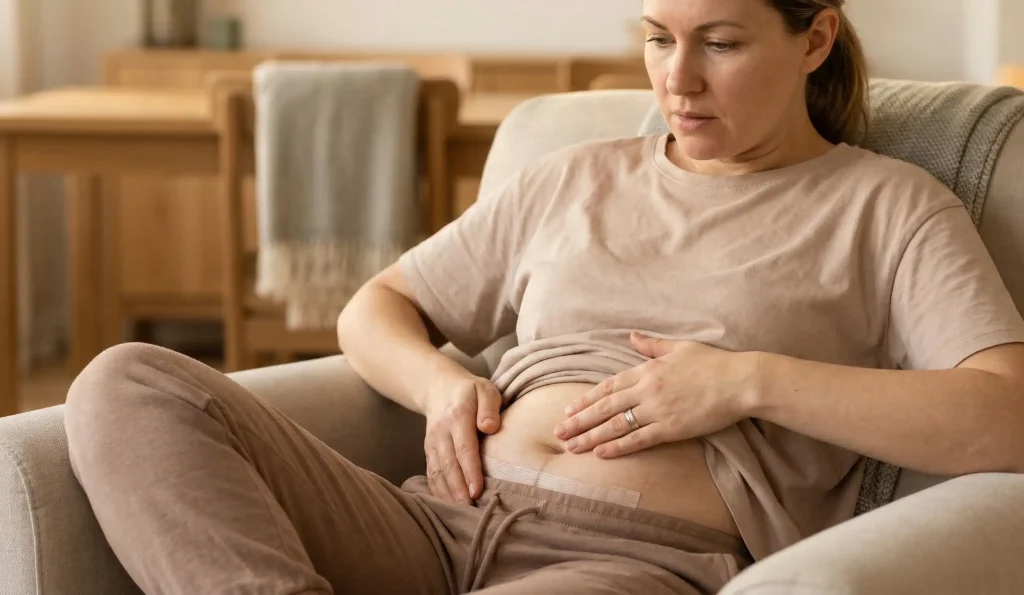
Drainage and compression help resolve seroma.
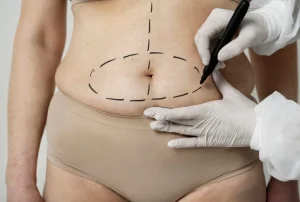
In the realm of high-volume body contouring, performing a tummy tuck (or abdominoplasty) means extensive detachment of the skin and fat of the abdomen to get to the muscle layer that needs repair. This results in a substantial “dead space” being made between the tightened muscle wall and the skin flap positioned over it. When patients inquire about the remedy for a seroma, which is basically a sterile collection of straw-colored lymphatic fluid, the main clinical solution varies with the amount and the continuity of the fluid. Although the body can gradually absorb tiny amounts of fluid, larger volumes are bound to require medical treatment. Otherwise, the seroma formation results in a definite internal “pseudocapsule” (scar tissue lining), and these cause chronic swelling, irregularities in skin contour, or even infections as a consequence.
In Lin Health Europe Clinic, we see seroma treatment as an indispensable factor of a safe postoperative period. Patients who come from outside Turkey and plan a trip to Turkey for their surgery should know that the development of a seroma is a normal physiological event instead of a surgical failure; however, it must be done professionally to maintain their cosmetic outcome. Our hospital is the top place for complicated abdominal reconstruction; here, we are at a level of medical excellence where we can do drainless methods and use sutures for tension along the progressive line to minimize the dead space, so that your path to a flat, well-toned figure is not hindered by fluid accumulation that persists.
Fine-Needle Aspiration (FNA): A Time-Tested Procedure
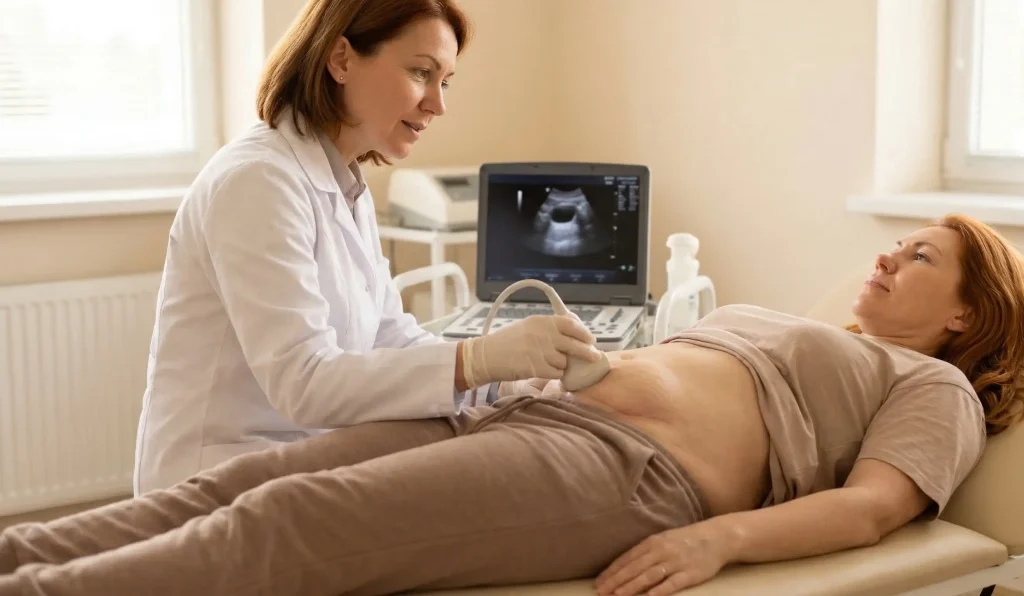
Fine-Needle Aspiration (FNA) is considered the quickest, most direct, and straightforward technique to get rid of a seroma that one can see. The detection of a fluid pocket (which may be felt as a “sloshing” movement or a bulge at the point) is followed by a surgical procedure for removal of the seroma. The patient is treated in a clean clinical environment. With the fine needle being inserted into the fluid-filled cavity during the aspiration, they suction the seroma manually using the syringe.
This procedure, in most cases, is totally painless since the nerves of the abdominal skin which transmit sensation, are not working for some time after a tummy tuck. Ultrasound-assisted aspirations are done at Lin Health Europe Clinic in Turkey for pinpointing and draining every drop of the fluid. Seromas may sometimes refill as the lymphatic vessels keep leaking, prompting multiple aspirations, until the tissues eventually seal off and the neocollagenesis phase creates a tight space.
Compression Therapy: Bringing the Walls Closer Together
Evacuating the fluid is only half of the treatment; the other half is to ensure that the fluid will not come back. That is done by strong and localized Compression Therapy. After the fluid is aspirated, the dead space needs to be physically eliminated so that the skin can stick to the muscle wall.
In Istanbul, our facility offers international patients medical-grade Stage 1 Fajas and specific abdominal foam layers (Lipo-foams). These foams are pressed to the seroma site to exert a “targeted” pressure. This kind of mechanical force is like an external splint that helps the two tissue layers to fuse. We inform patients that the garment should be worn continuously (24/7); even a few hours without compression can lead to the fluid going back, thereby extending the healing process.
Chemical Closure for Persistent Seromas
One way surgeons get rid of stubborn or recurring seromas is sclerotherapy where the seroma cavity is injected with a mild irritant, e.g. an antibiotic (Tetracycline) or talc solution. Such a chemical causes the body to have a localized inflammatory reaction that would “scratch” the inner surface of the cavity. Once the inflammation is resolved, the scarring or “stickiness” results in the two surfaces being “stuck” together, closing the space.
Though it is not our primary mode of treatment at Lin Health Europe Clinic, sclerotherapy is a powerful clinical weapon that we use on persistent cases. Our Turkey-based specialists recommend these minimally invasive techniques to keep your healing path straight, thereby avoiding any major operations.
Seroma Surgical Drainage and Seroma Decortication
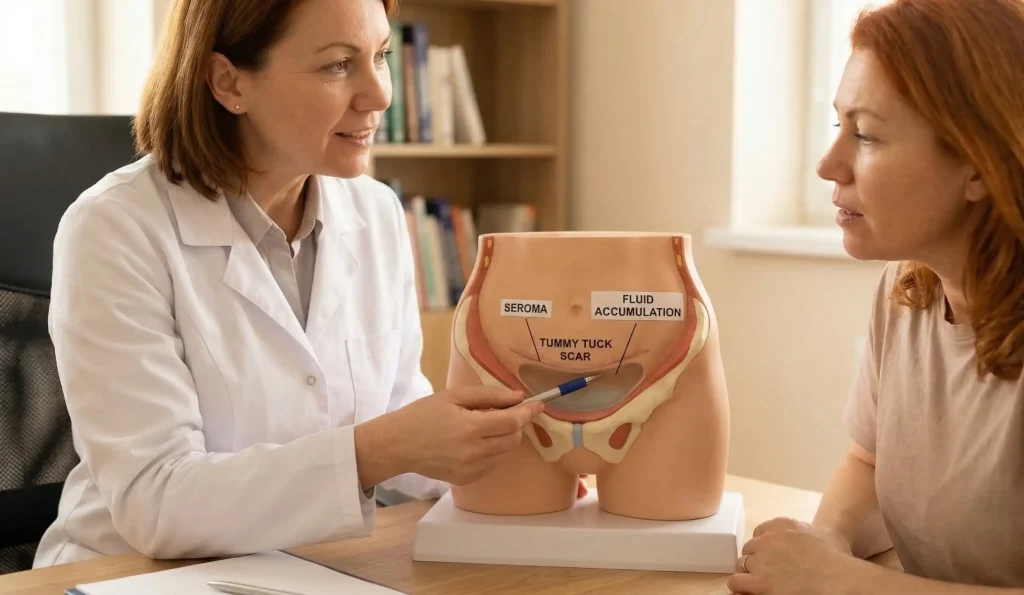
In a very uncommonly occurring situation, if a seroma is neglected or it is unsuccessful in responding to the conservative treatments, it is likely to become a pseudocapsule, a thick, parchment-like scar tissue that prevents the reabsorption of fluid by the body even when drained.
In the surgical “decortication” operation, a small section of the tummy tuck incision is reopened, the scar lining is removed manually, and the tissues are re-stitched with Progressive Tension Sutures (PTS). At Lin Health Europe Clinic, the use of these tension-reducing sutures is very common as we “quilt” the skin to the muscle during the primary surgeries in Istanbul, which is the most sophisticated clinical technique to prevent the initial formation of seromas. By eliminating the dead space at surgery, the risk of secondary drainage procedures is significantly reduced.
MLD to the Rescue
The mere aspiration of localized seromas is not enough to take care of general postoperative edema (diffuse swelling), since this is best handled with Manual Lymphatic Drainage (MLD), a technique that involves the specialized massage to provoke the lymphatic system to take the path that goes around the surgically disrupted channels and leads to the healthy lymph nodes.
International guests recovering from surgery in Turkey can have MLD therapy sessions with our expert therapists as part of their treatment plan. These massages not only allow the lymph fluid to find a “clear path”, but also reduce the total pressure in the abdomen thereby lowering the possibility of the formation of a localized seroma. Our patients are warned that MLD should only be given by a medical professional who has been trained in post-surgical care, as an untrained or aggressive massage can cause the separation of the healing layers, thereby increasing the risk of seroma formation.
Lin Health Europe Clinic Standards
True surgical prowess is, in our opinion, in the forward-looking control of the healing process. Our hospital in Turkey is a refuge of medical excellence, where advanced body contouring science is combined with the highest standard of international patient care. We are operating in cutting-edge, JCI-accredited hospitals, which mirror our position as the world leader in medical tourism and abdominal rejuvenation.
Opting for Lin Health Europe Clinic means selecting the most experienced and most safety-minded hands in Istanbul. Our internationally renowned experts consider your long-term aesthetic balance and structural safety as top priorities for every international patient. You will be receiving professional thoroughness and top-level hospitality at every stage of your body transformation from your first high-definition sculpting to your last flat abdomen reveal at the leading aesthetic medicine name.
FAQ:
In cases of small seromas, the body may absorb them; however, larger ones need to be drained by a doctor through a fine needle to take out the fluid. It is then that intensive localized compression is applied at our Istanbul clinic to make sure that the tissues knit together again and the fluid is stopped from coming back.
Tiny collections of fluid at a microscopic level usually do not require any measures as your lymphatic system is restored. On the other hand, when you detect a “sloshing” feeling or a protruding bulge, it becomes clinically necessary to acquire an evaluation from our experts in Turkey as a permanent scar capsule may develop without proper treatment.
Not at all, in fact, a seroma is a natural physiological side effect of the creation of large dead spaces during abdominal surgery. Even the best surgical techniques in Istanbul cannot prevent the body’s inflammatory response from producing excess fluid as it tries to heal the injured tissues.
In multiple occasions, the fluid inside a seroma can be sucked out, maybe even once or twice a week, depending on the case, until there is no more fluid production. At Lin Health Europe Clinic, we closely keep track of the volume of the drainage; the lowering of the amount of fluid with each session is the sign that the tissues are firmly joining.
The leading methods for seroma prevention come down to wearing your compression garment 24/7, utilizing abdominal foams, and refraining from any kind of physical activity for the very first couple of weeks. Our implementation of progressive tension sutures in Turkey is yet another measure that considerably brings down the risk by mechanically closing the dead space.
Matarasso, A. (1989). Abdominolipoplasty: a system of classification and treatment for combined abdominoplasty and suction-assisted lipectomy. Aesthetic Plastic Surgery.
Pollack, H., & Pollack, T. (2000). Progressive tension sutures: a technique to reduce local complications in abdominoplasty. Plastic and Reconstructive Surgery.
Nahas, F. X. (2001). An aesthetic classification of the abdomen based on the myoaponeurotic layer. Plastic and Reconstructive Surgery.
Antonetti, J. W., & Antonetti, V. V. (2010). Reducing seroma in abdominoplasty: the progressive tension suture. Aesthetic Surgery Journal.