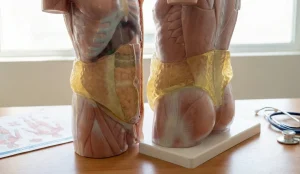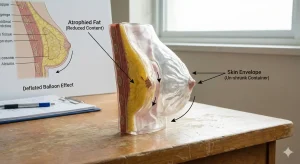

Breast reconstruction can begin immediately after mastectomy.
The Biometrics Of Immediate Versus Delayed Reconstruction
Timing the breast reconstruction after a mastectomy remains one of the most challenging medical decisions in the fields of body design and the aesthetically reconstructive surgery after cancer. When patients wonder how quickly they can have silicone implants post-mastectomy, the doctor’s answer will be based entirely on the overall cancer treatment plan. Biometrically speaking, breast reconstruction can be divided broadly into two types: immediate and delayed. Immediate reconstruction is done at the same time as the mastectomy surgery; the patient is therefore prepared with the breast reconstructed upon awakening. This method cleverly keeps the original skin wrap intact and instantly brings back the anatomical balance, thereby reducing the trauma of the skin and tissue removal.
Nevertheless, immediate reconstruction will not be suitable for every patient. The surgeon will go for delayed reconstruction if the skin envelope is deemed too fragile after the breast tissue removal or if the patient’s post-operative oncology treatment is quite intensive. The start of a delayed reconstruction usually ranges from six months to a year after the completion of all the cancer treatments.
Navigating Radiation Therapy And Dermal Elasticity
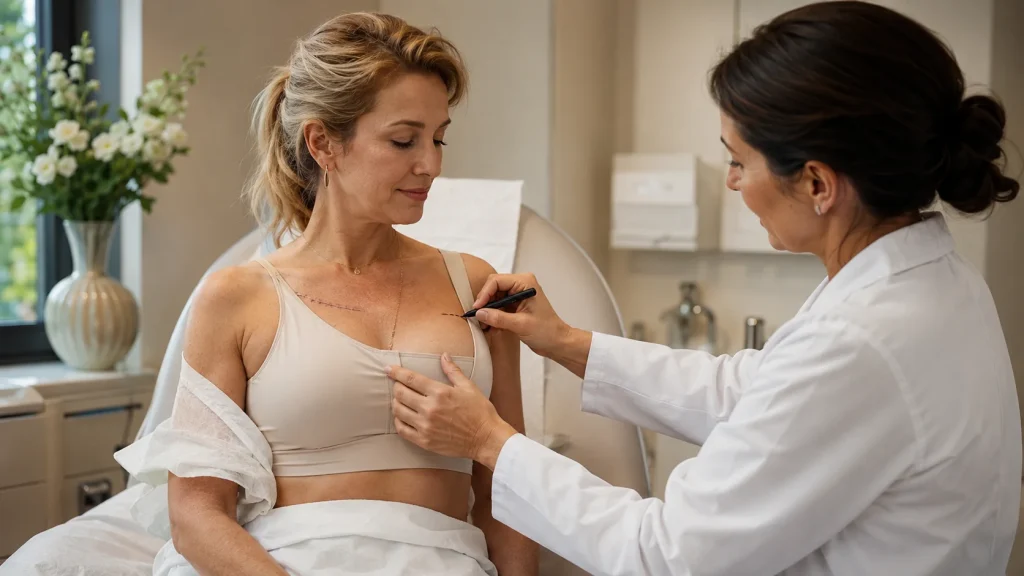
There is nothing in the entire reconstructive process that impacts the schedule more than radiation therapies. Radiation drastically changes the structure of the skin on a cellular level. It works by killing rapidly dividing cells, but at the same time, it makes the skin very tight, thin, and extremely susceptible to a serious decrease in blood supply. Immediate implantation of a permanent cohesive silicone device into irradiated tissue is not only clinically inappropriate but also very dangerous, as the skin will have lost its ability to expand and thus support the mechanical load of the device. Such forced expansion will result in very serious issues like delayed wound healing, severe capsular contracture, or even the implant being pushed out through the weakened skin.
The top reconstructive surgeons, in order to safely work around these biological constraints, insist on a minimum of a six to twelve-month interval after the last radiation session. Throughout this very important recovery time, the native fibroblasts are engaged in repairing the dermal matrix, slowly restoring the softness and blood flow of the chest wall. In numerous complicated cases, the surgeons will place a temporary tissue expander underneath the pectoralis muscle as opposed to a permanent implant. This expander is progressively injected with saline over the period of a few months to smoothly stretch the recovering, irradiated skin, thus creating a well-structured pocket that is capable of accommodating the definitive cohesive silicone gel implant.
Preserving Athletic Proportions And Chest Wall Mechanics
A mastectomy followed by reconstruction significantly changes the biomechanics of the upper body, but ultimately, the main objective from an aesthetic point of view is the restoration of perfect anatomical proportion. For those who are extremely disciplined in training their physiques, especially those who are mainly focused on developing the lower body and glute muscles at an advanced level, keeping the upper body looking athletic and trim is still of utmost importance. In fact, reconstructive surgery is the perfect opportunity to match your new breast augmentation to your wider body architectural goals so that the upper body doesn’t end up looking too heavy or broad as a consequence of the surgical reconstruction.
The reconstructive surgeon with whom you will be in dialogue prior to the surgery will be making the native shoulder widths and ribcage tissue an important point of reference during implant selection, so as not to end up with an implant that is too large and that laterally spreads into the armpits visually. By going through the whole process of deciding on the proper volume and the profile that protrudes anteriorly, your upper torso can remain elegantly streamlined and feminine. This mathematically driven planning totally eliminates the risk of creating an artificially broad or heavy V-shape appearance across the chest. This not only ensures that your new reconstruction is complementary to your lower body development but it also elevates your physique to a higher level of aesthetic appeal.
The Transition From Expanders To Cohesive Silicone Gel
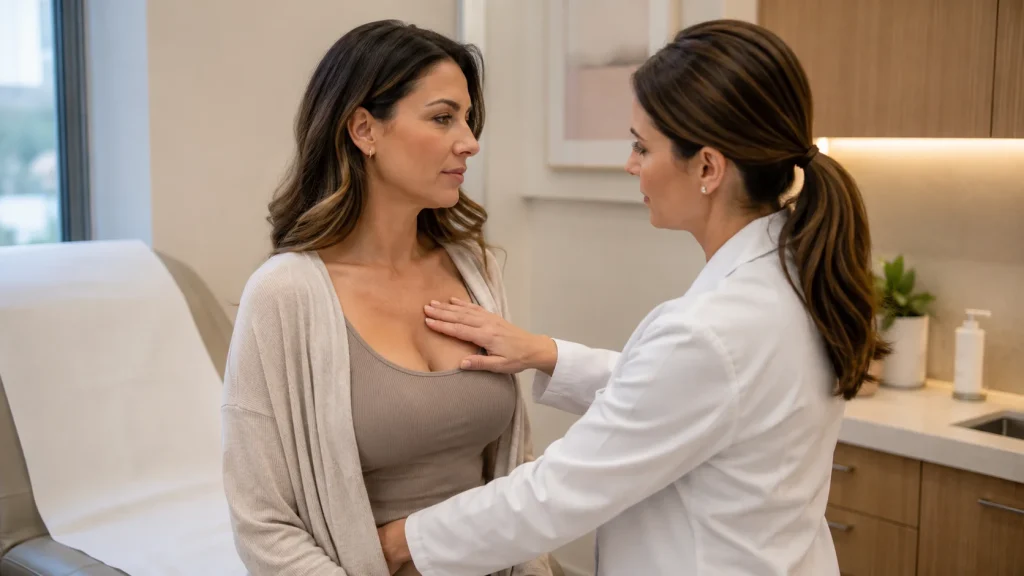
For those patients who follow the delayed reconstruction pathway, the last step is a surgical procedure during which the temporary tissue expander is substituted for a permanent, top-quality breast implant. Usually, the exchange is planned after a couple of weeks or even months after the tissue expander has achieved the necessary dermal envelope expansion to the targeted volume that has been decided upon. During the operation, the surgeon will take out the firm expander and put in the new, highly sophisticated cohesive silicone gel implant, the so-called gummy bear implant. This implant ensures a considerably softer, more natural biological touch.
The decision regarding the final cohesive silicone gel device involves both high-detail diagnostics and physical probing. Deciding factors will be, among others, whether the anatomical teardrop implant that most closely represents the natural, sloping anatomy of the breast is necessary, or perhaps the highly dynamic ergonomic implant is a better choice as it moves naturally with the chest wall muscles. The carefully thought-through switch from the rigid expander to the permanent, form-stable silicone implant/cage guarantees not only the maximum structural integrity of the final result but also a deep natural visual architecture and total aesthetic patient satisfaction.
Breast Implants in Turkey
Going with the LIN Europe Clinic means you will be a part of a top global medical paradise where your special reconstructive journey will be handled with absolute clinical perfection and sincere empathetic care. We understand that breast reconstruction after a mastectomy is a very complex procedure and one that calls for a clinic that is not only highly sophisticated and transparent but also puts patient support as a priority, together with pure evidence-based practice. Our medical tourism destination in Turkey is one of the top international centers for body shaping and reconstructive surgery, where you can be in a comfortable environment and get the best surgical plan with the highest safety standards for patients and with the finest aesthetic results.
When you entrust your deep faith in our committed team of specialists in Istanbul, you will be integrating yourself with a medical system that, at a very deep level, analyzes your physical needs and, above all, respects your vulnerable tissue healing before you even go on the operating table. We rely on the globally recognized 3D scanning technology and various advanced tissue handling techniques to make sure that you will get the reconstructive surgery that results in the most perfect, harmoniously balanced, structurally sound, and natural appearance. Get the elegant, thorough care of LIN Europe Clinic and be the embodiment of a wonderfully balanced profile that is the utmost biological success, delivered safely and expertly in the heart of Turkey.
FAQ:
With immediate reconstruction, it is possible for the plastic surgeon to insert a breast implant or a tissue expander during the very operation when your breast tissue is being removed. This choice largely depends on your particular medical conditions and whether or not you will be having radiation treatments in the future.
On average, individuals should wait at least 6-12 months after their radiation treatment to have their permanent implants placed. This important waiting period is aimed at giving the skin ample time to heal and regain its elasticity which is lost due to radiation.
Tissue expanders are temporary medical devices that help stretch the skin gradually over a period of months after you have been treated with a mastectomy, by means of injecting them regularly. They are usually placed under the muscle of the chest, where they stretch the skin. When the skin has been stretched enough, they are surgically taken out and the permanent silicone implants are put in.
You may feel quite a bit of tightness and muscle soreness, especially if tissue expanders are placed under the pectoral muscles. However, with advanced pain control techniques and medical compression garments, you will be able to stay comfortable even during the first few days of post-surgical healing.
Although surgeons do their best to make the breasts look symmetrical, they have to decide on the size of the implant that your post-mastectomy skin envelope will be able to support without any problems. Very precise measurements are obtained with the help of tomography so as to get the perfect size that will be in accordance with your natural body proportions.
Adams, W. P., Jr. (2009). The process of breast augmentation: four sequential steps for optimizing outcomes for patients. Plastic and Reconstructive Surgery, 124(6), 2144-2150.
Kronowitz, S. J., & Robb, G. L. (2009). Radiation therapy and breast reconstruction: a critical review of the literature. Plastic and Reconstructive Surgery, 124(2), 395-408.
Maxwell, G. P., & Gabriel, A. (2014). The evolution of breast implants. Plastic and Reconstructive Surgery, 134(1 Suppl), 12S-17S.
Spear, S. L., et al. (2000). Prophylactic mastectomy: indications, options, and reconstructive alternatives. Plastic and Reconstructive Surgery, 115(3), 891-909.