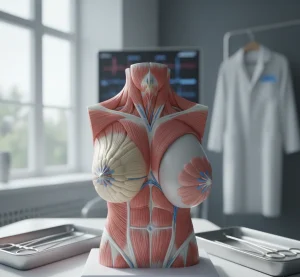
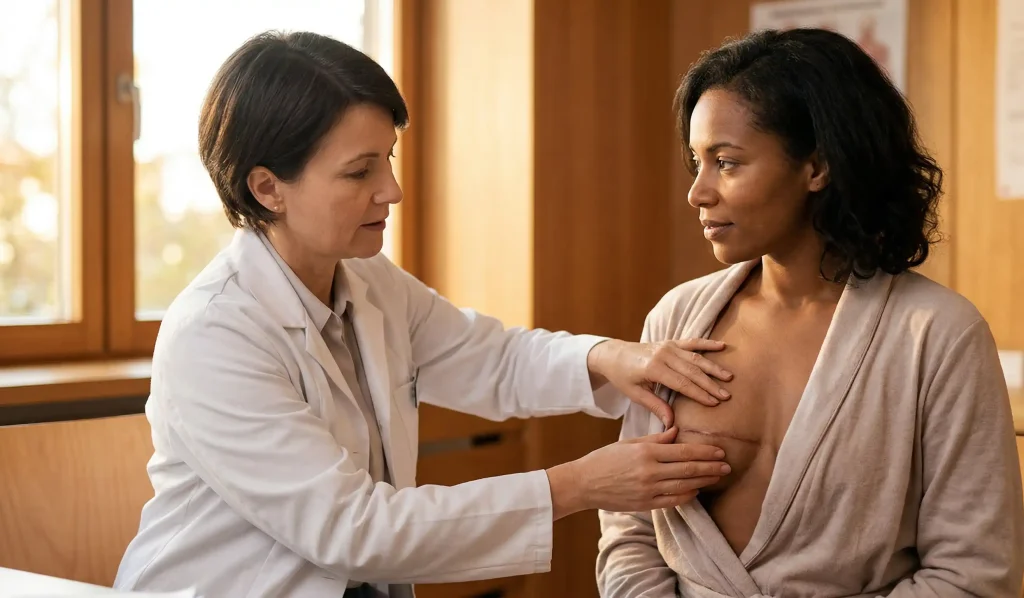
Internal stitches heal within weeks.
In mastopexy and aesthetic breast reconstruction, a breast lift involves surgically relocating and reshaping sagging breasts to resemble a youthful, lifted contour. While external skin closure mainly focuses on aesthetics, the internal sutures are the ‘invisible scaffolding’ that supports the breast tissue and keeps the nipple-areolar complex in its new, raised position. Patients often wonder about the healing duration of internal stitches, to which the medical explanation rests on two aspects: the biological schedule of neocollagenesis and the progressive disappearance of the sutures through biochemical breakdown. The first ‘knit’ of the tissues is done in the initial two to three weeks, but internal stitches—usually made of strong, absorbable polymers—remain effective for three to six months, after which they are completely metabolized by the body.
At Lin Health Europe Clinic, we consider internal stitching the vital structural element of your surgery. Even for those of our international patients coming to Turkey, we highlight that these deep-layer supporting elements are holding together your new shape as your body forms the internal scar tissue network permanently. We are the go-to place for modern breast lifting procedures, combining multiple internal ‘bra’ layer techniques to yield results that are not only aesthetically pleasing but also very stable from a structural standpoint in the long run, thus your road to an invigorated, lifted contour is aligned with the best surgical engineering standards.
Internal Stitches Are Key to a Multi-Layered Breast Lift Approach
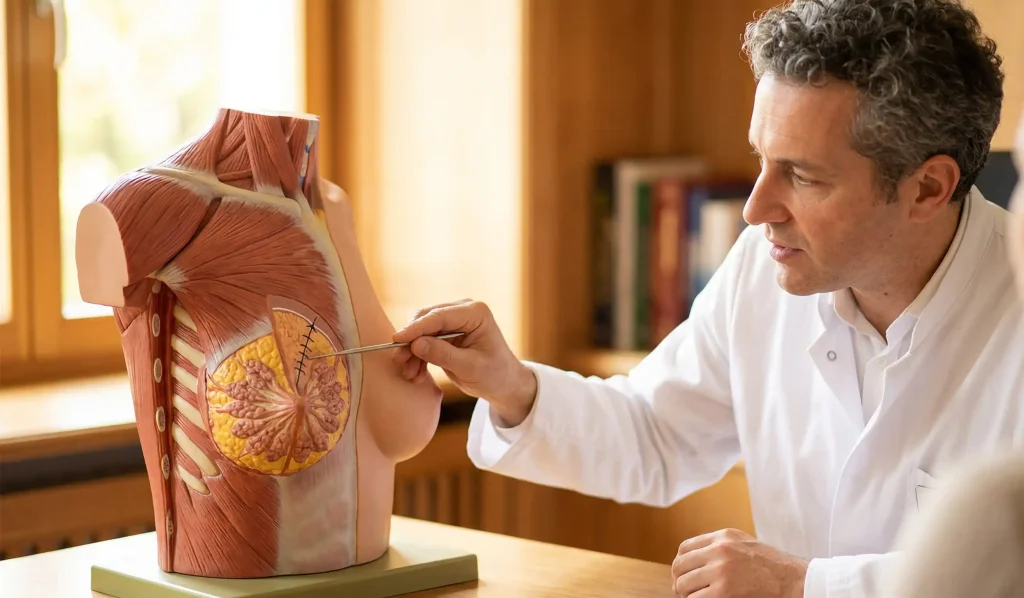
A premium breast lift is far beyond a mere ‘skin tightening’ operation; it is a 3D organization of the breast gland. To ensure the results last, the internal tissues must be firmly attached at different anatomical levels. At Lin Health Europe Clinic in Turkey, during breast lift surgery, our expert surgeons put internal sutures in the dense breast fascia and the glandular tissue. These stitches help transfer the tension from the skin, which is essential in not only preventing ‘scar widening’ but also in avoiding the breast sagging again too soon.
Considering the breast is a living, moving, heavy organ, the internal supports have to be very strong. In Istanbul, our international visitors are informed that the ‘healing’ of the internal stitches is the handover of the power: sutures are gradually weakened, while your body’s own collagen production will expand and replace them, thereby establishing a permanent internal bond that will keep the breast in its new elevated position.
Internal Stitches Follow a Typical Biological Timeline
There is a known medical timeline for the healing of internal stitches. A tenuous ‘fibrin glue’ and the mechanical strength of the suture materials themselves keep the tissues together during the first 72 hours. Once the second week is over, the body is in the proliferative phase. Fibroblasts are actively producing new collagen fibers around the internal sutures at this stage. This is neocollagenesis, and it is the biological basis of your lift.
Although initially, the collagen is incomplete and has a low tensile strength. Successful clinic experience involves closely overseeing this phase, as physical overexertion during this stage – e.g., lifting heavy objects or intense workout – can cause the internal suture lines to be stretched even before the collagen becomes strong enough to bear the weight of the breast, thereby prematurely compromising the ‘perkiness’ of the result.
The Suture Material Disappearance and the Scaffolding Metaphor
Internal sutures in a breast lift procedure are mostly absorbable which means they are broken down and then completely taken up by the body through the degradation process called hydrolysis. The duration for which the body completely absorbs them depends on the suture material used at our Istanbul clinic. For deep glandular support, we resort to sutures that remain long-term absorbable (e.g., PDS or Monocryl) which are strong enough for 6 to 9 weeks and can take as long as 6 months to be fully gone. This continuous support goes hand in hand with the clinical requirement because breast tissue is comparatively slow to heal. If the thread were to be absorbed at a rapid rate, then the weight of the breast would cause the uplift to ‘fail’ even before the internal scars have matured.
At Lin Health Europe Clinic, all the surgical suture materials are chosen with utmost analytical precision, whereby the rate of absorption is matched with your particular tissue density and the level of the lift required for your unique anatomy in Turkey.
The “Spit Stitch”: What It Is and Is Not?

Following internal sutures dissolution and tissue remodeling, a very small number of patients can exhibit a so-called ‘spitting suture’. This happens when the body, in its healing effort, throws a tiny piece of an internal stitch up to the skin’s surface. Usually, it looks like a small, red ‘pimple’ or a tiny white thread sticks out through the incision line. Though it might scare the patient at first, it is a perfectly normal healing stage and does not mean that the operation is going wrong. ,
Our advice at Lin Health Europe Clinic in Istanbul to the international clients is ‘Do not pull these threads!‘. Instead, the medical staff can safely cut or remove the suture during a follow-up appointment. In fact, this usually happens somewhere between week 4 and week 12 when the deepest layers of the breast have already merged and the body does not need the external end of the internal stitch for support anymore.
Best Practices to Safeguard the Internal “Knit”: Postoperative Support
Since the internal stitches perform the ‘heavy lifting‘ task during the first couple of months, your postoperative support option holds paramount clinical importance. Actually, the internal ‘knit’ during the first six weeks in Turkey is very susceptible to the mechanical forces of gravity and movement.
Hence, the reason the 24/7 use of a medical-grade surgical bra is made compulsory by us. Such a garment works as an external splint, fixing the breast in the proper position and stopping the internal sutures from being ‘tugged’ by the weight of the tissue. Besides, in Istanbul, our highlight is that at least for three months, one should avoid a regular underwire or ‘push-up’ bra completely. These bras can press on internal suture lines and lead to disruption of the neocollagenesis phase and to internal fat necrosis or uneven healing. Wearing your surgical bra as per instructions puts your internal scaffolding in the best possible condition for transforming into a natural, permanently lifted state.
FAQ:
After internal breast sutures are placed, they typically provide structural integrity within about 3 weeks; however, neocollagenesis, i.e. synthesis of new collagen, which leads to tissue strengthening, lasts about 6 months. Meanwhile the absorbable sutures are gradually broken down by your body and replaced with very strong permanent tissue scaffolding in Turkey.
During the first months you may notice small “knots” or hard spots along the incision lines as the tissues are remodeling around the sutures. These will slowly shrink and become imperceptible in Istanbul once the suture absorption phase is done and the internal tissues have fully developed.
A single break in an internal stitch is unlikely to cause a loss of lift as the surrounding multi-layered sutures would still hold; however, a lot of stress could lead to the breast “bottoming out” or sagging. For this reason, wear of a medical-grade support bra and no heavy lifting restrictions during your first post-operative period at our clinic in Turkey are strictly enforced by us.
Almost all breast lift surgeries today employ absorbable internal sutures that get fully metabolized inside your body within 6 months following the operation. The long-lasting lift is provided by the permanent internal collagen matrix that is produced during healing, not by the stitches themselves, in Istanbul.
Initially, underwire or push-up bras should not be worn for 3 months as these may apply too much pressure locally to the internal suture lines that are healing. Once you have been given the go-ahead by your medical team in Turkey that the tissues have attained their full strength, you may use ordinary lingerie that does not aggravate the mature scars.
Hammond, D. C. (2009). Short scar periareolar inferior pedicle mastopexy. Plastic and Reconstructive Surgery.
Hall-Findlay, E. J. (2004). A simplified vertical medial pedicle mastopexy technique. Plastic and Reconstructive Surgery.
Tebbetts, J. B. (2002). A system for breast lift and augmentation. Clinics in Plastic Surgery.
Spear, S. L., et al. (2007). Mastopexy: an overview of techniques and outcomes. Plastic and Reconstructive Surgery.
Maxwell, G. P., et al. (2003). The “Internal Bra” in breast surgery: a clinical review. Aesthetic Surgery Journal.
Rohrich, R. J., et al. (2006). The evolution of breast lift surgery. Plastic and Reconstructive Surgery.