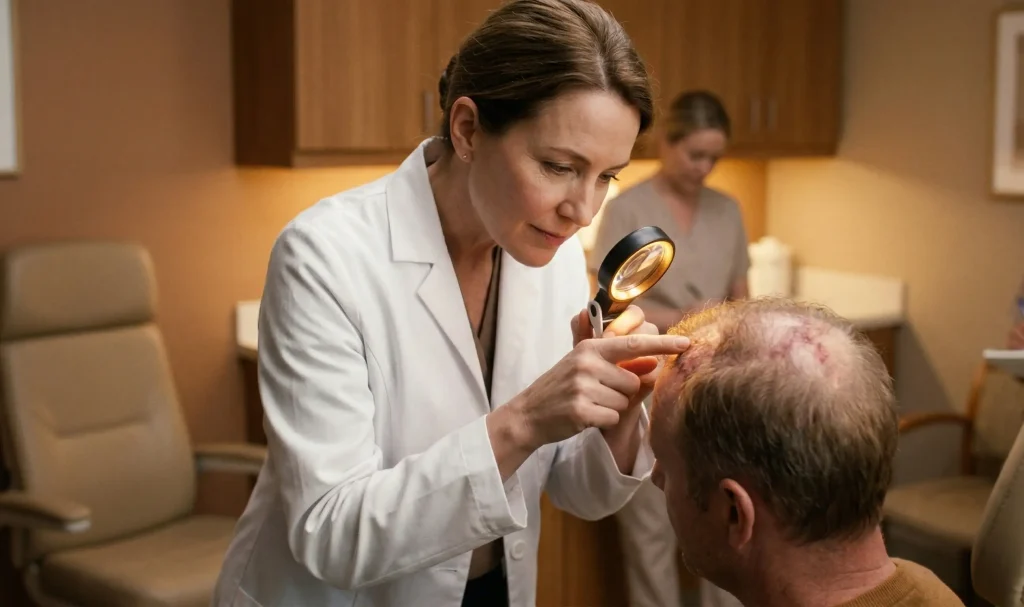
Poor growth and unnatural hair pattern.
Successful hair restoration through follicular unit extraction (FUE) and high-definition techniques should result in both hair follicle survival and aesthetically pleasing integration. A hair transplant failure is not only the absence of hair growth but is generally described by a range of undesirable outcomes, from the density that is patchy to extensive dermal scarring. The first biological sign of failure is a very low graft “take” rate, meaning that the transplanted hair follicles do not survive, get revascularized, and start growing. This leads to a “see-through” look that does not achieve the expected coverage or harmony of the structure.
Moreover, if the scalp fails to produce neocollagenesis, which is the new formation of collagen to support the freshly introduced hair follicles, then usually a thin donor or recipient area with an unnatural appearance is obtained. A person can distinguish the above signs easily so as to figure out whether the problem is just a growth delay or a final clinical failure that needs second-stage intervention in Turkey.
Follicular Atrophy and Persistent Low Density
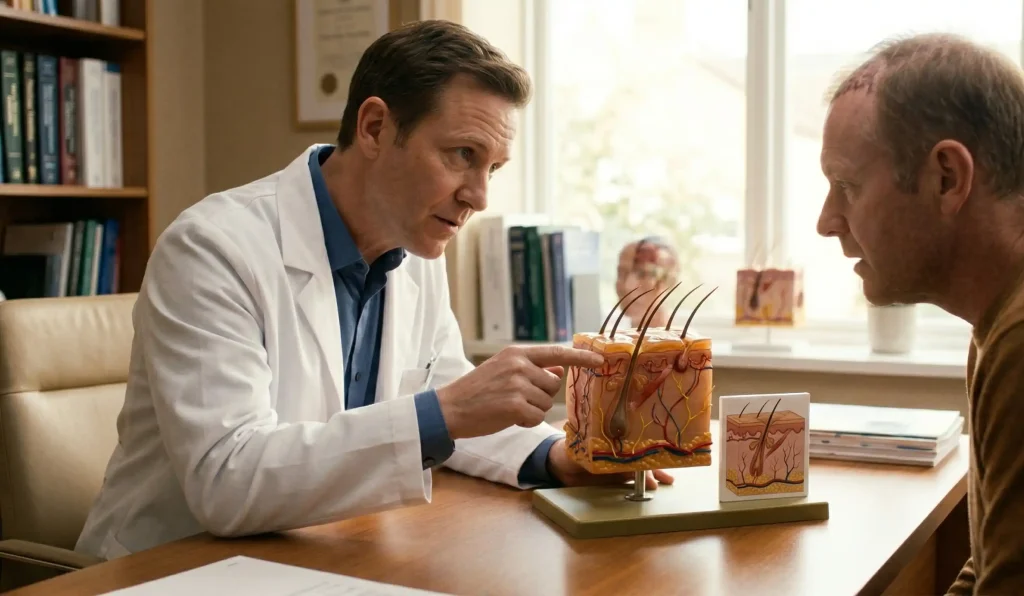
Without a doubt, the most frequent indication of a failed hair transplant is the persistent lack of density, even a year or a year and a half after the operation. Each patient naturally goes through the “shedding phase” in the first couple of weeks, but the transplant should, in fact, be showing the progressive thickening of the hair shafts as they mature. When the recipient area remains completely or largely hairless or if the hair in the area is so fine and frail that it is hardly noticeable, this is most likely a sign of graft desiccation and mechanical trauma during the “out-of-body” interval found in the FUE method. Due to follicular atrophy, the hair is unable to have that sought-after high-definition look that is the trademark of the restoration that is done in a contemporary way. Since, for some reason, the follicles are deprived of the blood supply, the density remains far from satisfying, and the patient is left with what is essentially an incomplete outcome or, in the words of those familiar with FUE, “patchy” in Istanbul.
We at Lin Health Europe Clinic maintain the highest level of professional rigor while handling grafts and during the implantation stage so that the survival of the follicular units is maximized. Our experts in Turkey resort to state-of-the-art preservation solutions, and through the means of high-definition microscopic examination, they ascertain that every follicle is healthy prior to placement. They are very well aware of the fact that surgical brilliance in the extraction phase is of no avail should the grafts get damaged during the transition.
Dermal Scarring and the Disruption of Neocollagenesis
Yet another quite obvious sign of failure could be the presence of “pitting” or “cobblestoning” that typically occurs on the scalp surface. Both are conditions where the skin has an irregular, bumpy texture that is unattractive as well as unnatural. If the hairs were placed deeper or more superficial relative to the surrounding tissue, the results would be an indented surface or raised abnormal skin areas, respectively. These areas/lesions are the result of neocollagenesis being interrupted by the wrong method of surgery; as a consequence, the development of fibrotic scar tissue comes to dominate the scalp space and stunts the growing hair follicles, so that it looks quite obvious that the transplant was done in Istanbul.
The techniques of scalp biomechanics and dermal remodeling are well mastered by the specialists at Lin Health Europe Clinic. In Turkey, our surgeons are very good at surgical deha in order to make sure that each micro-channel is produced at the proper depth and angle for an effortless match to the existing tissue. We encourage healthful neocollagenesis by applying minimally invasive techniques, whereby tissue traumas are minimized, and the formation of fibrotic scars is completely avoided.
Unnatural Hairline Design and Directional Failure
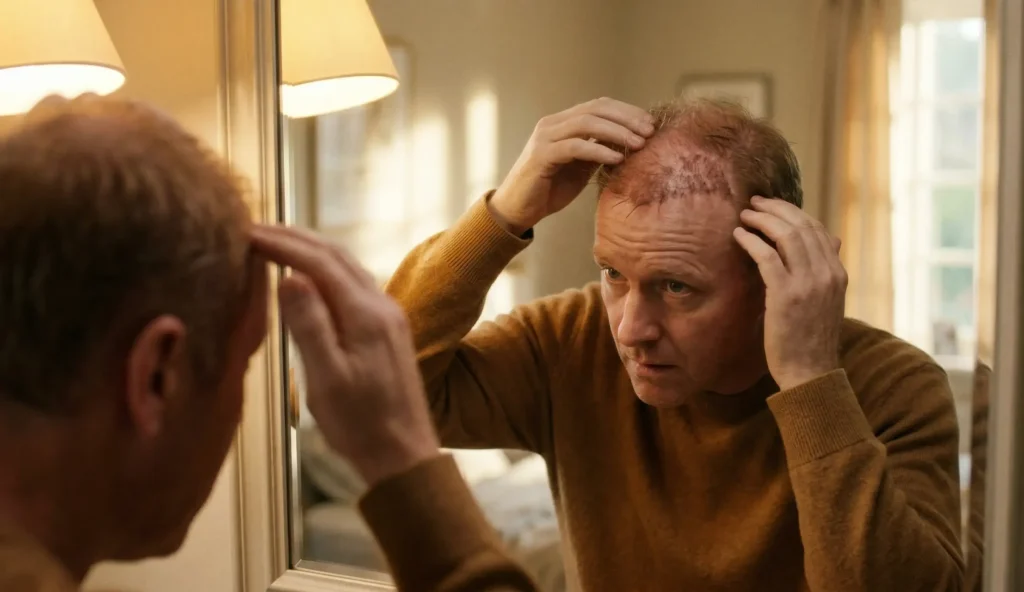
One may biologically succeed in a hair transplant while at the same time being aesthetically a failure in case the design does not honor the natural biometrics of the patient’s face. For instance, someone who examines the transplant closely would immediately recognize a “too-straight” hairline, which gives the impression of a wig, or the “doll hair” effect, as genuine hair is replaced by the placement of a few big grafts at the very frontal part of the hairline. What is more, if their hair is placed at an incorrect angle, it will grow vertically or in all different directions, resulting in the impossibility of styling the hair in a natural way. This absence of structural harmony is the signature of a surgery done without artistic and scientific foresight. A hairline that is done right should be irregular and gentle, imitating the graduated density found in nature in order to achieve a high-definition, undetectable result.
This is what makes Lin Health Europe Clinic a truly unique place when it comes to the “Artistic Reconstruction” of the hairline and the whole hair frame for our dear guests in Turkey. Within the walls of our clinic in Istanbul, our dedicated team of surgeons is passionate about applying their surgical brilliance to design hairlines that are thoroughly and uniquely adjusted with reference to the patient’s age, the structure of the bone, and the pattern of future hair loss. We also make certain that only single-hair follicles are used at the foremost edge of the hairline in order to give a soft, natural transition. When you decide to go with Lin Health Europe Clinic, you get the chance to benefit from a kind of professional rigor that will deliver very precise and very artistically balanced directions. We consider the hairline as a superlative model of structural harmony and thus, your hair restoration will be, at the same time, so natural-looking from all points of view and even under high-definition scrutiny in Turkey.
Hair Transplant in Turkey
Lin Health Europe Clinic is the most effective and prominent global remedy for those who are suffering from having a failed hair transplant and are desirous of a definite restoration. Our being a world leader in the structural restoration together with our world-class Turkey facility makes our clinic stand as a bloodline of the development in medicine that merges the repairing techniques that are most advanced with the highest level of safety that is JCI-accredited. Among other things, we are very good at correcting the density that was found to be unacceptable, the hairlines not looking natural, as well as scarring on the scalp – for us, a revision is a work of art of surgical deha and professional rigor. Trusting our Istanbul clinic is a synonym for entrusting a team that considers each operation as a pledge of your enduring self-esteem and systemic vitality. To us, you deserve a premium experience that, in addition to being scientifically and technically advanced, can also be described as being regal.
FAQ:
The major signs include no change in hair density even after a year or the hairline that looks completely fake. Besides, you could find scars or uneven skin on the scalp.
The reason for this is the placement of big bunches of hair follicles too close to each other at the front of the head. To make it right, the latest methods should deliver single hair grafts for a nice natural and soft change.
Be sure that there will be times when your hair is patchy during the first few months but it will eventually become full. After twelve months, if there are still patches, it probably hints that some hair grafts did not survive the operation.
Secondary repair sessions are generally the answer to give a boost to coverage and apartin an artificial hairline. Besides hair follicles from donor areas, experts are also resorting to the ones who most people are lacking to make a more harmonious and dense appearance.
Sign of a badly done operation with scarring, or cobblestoning through the day care is that of the tissue damaged. Proper healing should give a smooth surface of the scalp without the presence of any bumps or indentations.
Beehner, M. (2014). The Physiology of Hair Graft Survival and Environmental Stress. Facial Plastic Surgery Clinics.
Bernstein, R. M., & Rassman, W. R. (2011). Follicular Unit Extraction: Managing Graft Integrity and Repair. Journal of Aesthetic and Restorative Surgery.
Kim, J. C., et al. (2002). The Role of Neocollagenesis and Vascularization in Scalp Healing. Dermatologic Surgery.
Unger, W. P., et al. (2010). Hair Restoration Surgery: Identifying and Managing Clinical Failure. Informa Healthcare.