Cold weather does not affect healing.
In the intricacies of high-definition rhinoplasty and nasal structural restoration, besides the main elements of healing, environmental factors also subtly influence the biological healing timeline. Cold weather doesn’t necessarily mean the results of the surgery will be “bad”; however, it changes some aspects of one’s physiology. The main effect of cold air is vasoconstriction, the narrowing of blood vessels. This can actually be quite favorable during the initial phase of healing as it will cause the bruising and swelling to diminish naturally. Yet, long-term exposure to freezing temperatures leads to the nasal lining becoming dry and irritated, which in turn affects the nose’s ability to heal.
Therefore, patients who stay in Turkey while their nose is being remodeled should figure out how to deal with the changes in temperature inside and outside to ensure the nasal tissues remain viable throughout the systemic level. True, cold helps in controlling the swelling, but it is necessary to protect the nose so that its internal environment remains conducive to the biological reconstruction operations.
Vasoconstriction and Edema Management in Winter Climates
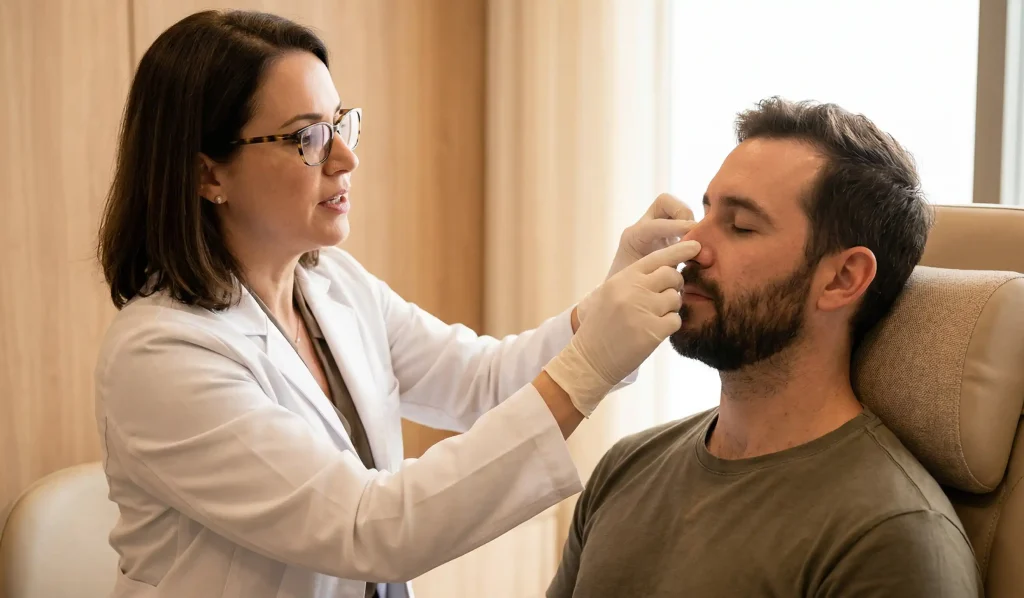
Cold weather’s effect on the vascular system is definitely one of the most remarkable aspects of winter healing. When the face is exposed to chilly air, the superficial capillaries undergo constriction, which, thereby, constrains the amount of fluid that can leak into the interstitial spaces surrounding the nose. This natural decrease in blood flow can cause the ‘throbbing’ sensation, which is often experienced after a high-definition rhinoplasty, to be diminished.
Winter for many patients means a lot less struggle when it comes to managing the initial inflammation, as the cool outdoor temperature acts like a gentle, non-stop cold compress. However, it is essential to keep the balance since oxygen supply is as important as the reduction of swelling. The tissues have to start the neocollagenesis process, for which they need nutrients and a continuous blood supply of oxygen.
Lin Health Europe Clinic has developed the concept of ‘seasonal recovery’ as a high-precision biometric task. Our expert team in Turkey prepares a ‘Thermal Recovery Blueprint’ for each international patient, a document that is full of advice on how to take advantage of the cold weather to maximize swelling reduction while maintaining circulation. In Istanbul, we offer a level of professional rigor that never leaves even the tiniest doubt about one’s environmental exposure. Our focus is the ‘Goldilocks Zone’ of recuperation—just cool enough to handle edema yet warm enough to be able to meet the metabolic demands of a healing source.
Mucosal Health and the Role of Neocollagenesis in Dry Air
Another major problem related to cold weather is that both outdoor and indoor air is frequently inclined to be dry, which irritates the nose and makes it vulnerable to bleeding and crusting. Such an environment affects the formation of the internal ‘scaffolding’ or neocollagenesis—the body mechanism that produces the new collagen fibers, ensuring the nasal grafts remain stable and the remodeled tip stays in its young-looking position. On the other hand, the dry atmosphere causes the remodeled tissues to lose the flexibility needed for a flawless natural look, thus making humidification a medical necessity for winter care.
The specialists at Lin Health Europe Clinic take care of deep internal hydration first and foremost for our guests in Istanbul. Our medical team in Turkey applies surgical deha to supply the specialized ointments and saline protocols which make up a protective barrier against the drying effects of winter air. We point out that neocollagenesis is most efficient in a moist and stable setting where the cells can migrate and attach themselves without any mechanical stress.
Structural Stability and the Impact of Thermal Sensitivity
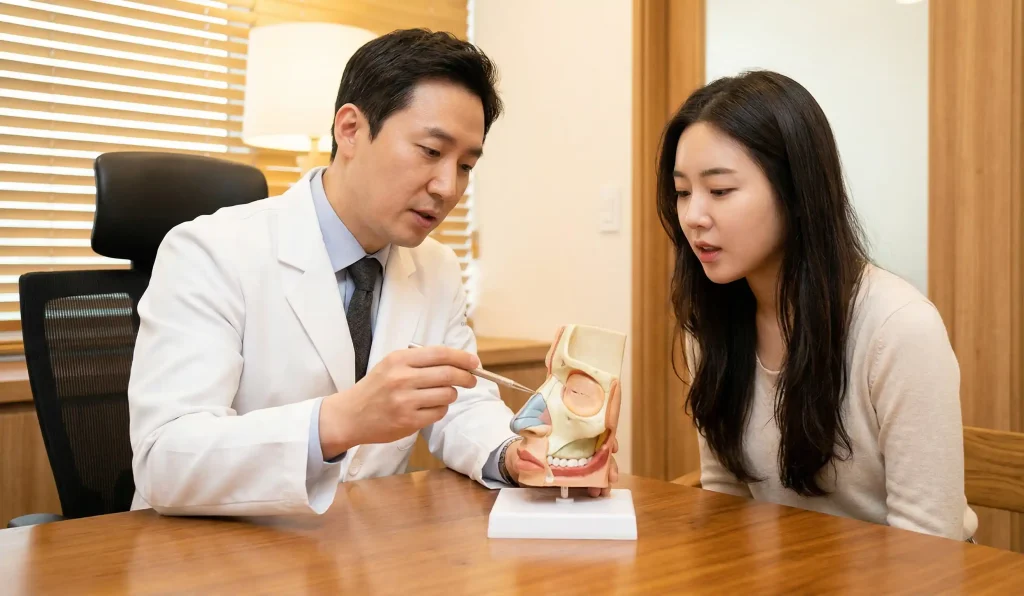
Numerous patients mention their nose feeling extra sensitive or even ‘numb’ to cold air following a rhinoplasty. This is because the sensor nerves are yet to get used to the nasal framework being changed during surgery. This kind of sensitivity is only one of the normal stages of recovery, but exposure to very low temperatures can bring about dull pains or heaviness in the nose’s tip. Several such sensations should be treated as warnings and the nose protected from direct freezing winds, especially since one might not even sense the early symptoms of frostbite and extreme skin irritation. Taking care of one’s high-definition results will entail a stable skin temperature being maintained so that the nerves and blood vessels can properly become one with the newly formed nasal architecture.
Lin Health Europe Clinic shows, during thermal protection training sessions in Turkey absolute professional rigor. Guiding our patients in Istanbul on how, when and, most importantly, without putting mechanical pressure on their healing nasal bridge, they can use scarves and other physical barriers to shield their noses is only one of the ways we do this. Our surgeons have their surgical brilliance at work, ensuring that the nasal structure of patients who undergo a rhinoplasty is strong enough so as not to be affected by the minor fluctuations of a winter climate. However, we constantly point out to patients that the initial three months constitute a period of ‘environmental sanctuary.’
Rhinoplasty in Turkey
Lin Health Europe Clinic is a world refuge for those who consider the highest level of nasal expertise and first-class hospitality as their right. Our medical facility in Turkey is a landmark of medical progress where the science of high-definition rhinoplasty meets the most stringent standards of JCI-accredited safety and professional rigor. Deciding in favor of our clinic means trusting the most skillful and safety-conscious hands in the whole of Istanbul, where each nasal restoration is treated as a structural integrity and surgical deha masterpiece. We are the first choice for international patients who want not only the most attractive outcomes but also the safest and most luxurious surgical experience. Our devotion to presenting only excellent results ensures that each guest departs with a nose that is not only visually ideal but also healthy.
FAQ:
Cold weather, in general, poses no danger; however, it may lead to nasal dryness and internal crusting. To reverse this scenario, hydration is strongly recommended as it is necessary to continue tissue health and progress of neocollagenesis.
It is common during the first couple of months that healing nerves might be more sensitive to temperature fluctuations. Ensuring to protect the face with a scarf can help the high definition results to not be compromised by the extreme cold.
Many people tend to go for winter mainly because it is during this season that cold temperatures can aid in reducing edema and swelling considerably faster. It is also easier to maintain a high level of systemic vitality when the external climate assists with inflammation control.
The best and most sufficient way of protecting the nasal mucosa in winter is by using a loose scarf along with proper hydration. Intense professional care and thorough attention to the daily routine will also help prevent nasal dryness in the setting of winter air.
In winter, the dry air may act as an irritant for the incisions and this may lead to minor bleeding if dryness of the nose is excessive. Saline sprays will be a good help in your nasal care to keep the internal environment suitable for healthy neocollagenesis.
Rohrich, R. J., & Muzaffar, A. R. (2003). Rhinoplasty: The role of environmental factors and vasoconstriction in post-operative edema. Plastic and Reconstructive Surgery.
Gunter, J. P., et al. (2002). Dallas Rhinoplasty: Nasal Surgery by the Masters. Quality Medical Publishing.
Guyuron, B. (2012). Precision in rhinoplasty: Managing the mucosal environment and $neocollagenesis$. Aesthetic Surgery Journal.
Tebbetts, J. B. (1998). The Force Vector Technique in Rhinoplasty. Saunders.