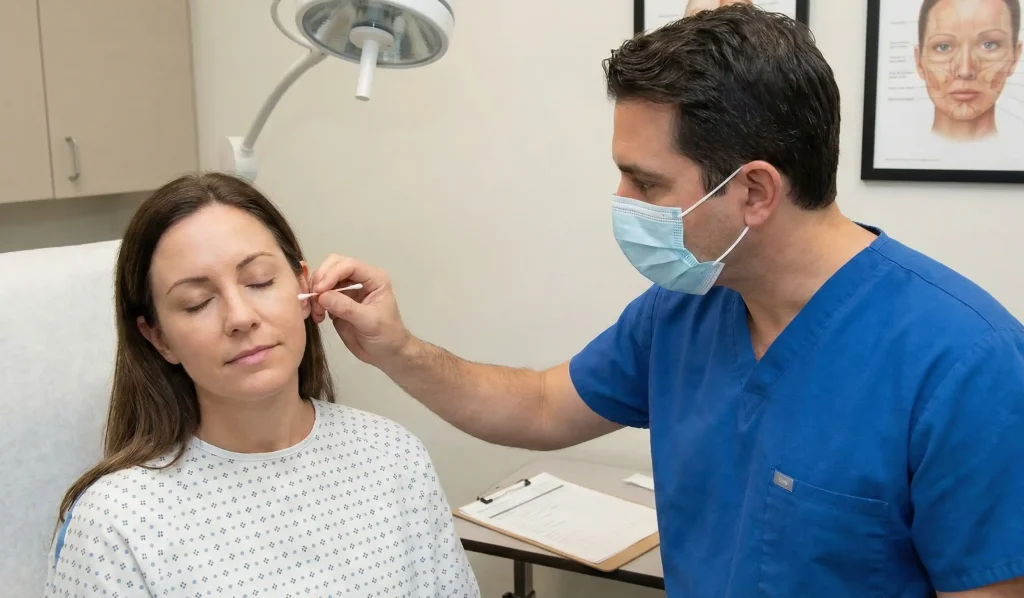
Numbness usually improves over several weeks to months.
Usually, patients are excited to see a facelift result that highlights a well-defined jawline and the absence of jowls. However, after the initial gratification, the patients feel a moment of surprise when they touch their face due to an unusual sensation or better still, the absence of any sensation at all. The skin feels like cardboard, a blink of rigid wood, or the face of somebody else. A surgeon initially expects this numbness though it is a source of major anxiety amongst patients who fear they might have been permanently disfigured by a nerve malfunction.
Actually, a temporary loss of sensation is a direct and unavoidable consequence of the surgical procedure used to reposition the facial tissues. The retouchment of the skin inevitably releases the microscopic network of sensory nerves embedded in it only temporarily. What started as a strange and uncomfortable feeling from the numbness is in most cases the sensory nerves returning to the dermis even after a long delay. Even though the restoration of senses takes a long time following the biological repair of the nerves, the knowledge of the biology of nerve regeneration results in a shift from panic mode to patience.
The Biology of Disconnection: Why It Feels Like “Wood”
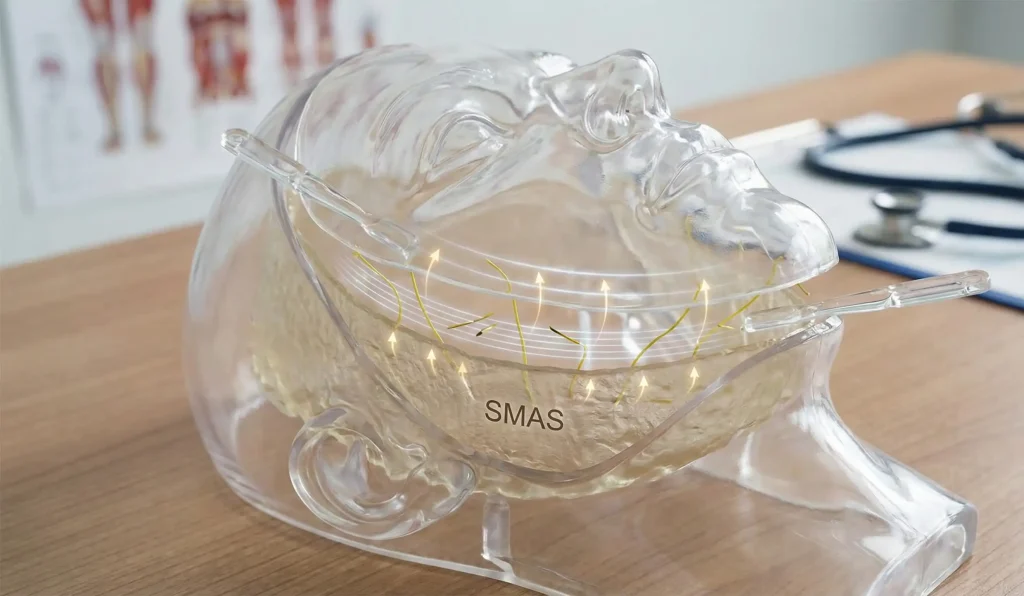
Changes in the feeling of the face can be explained if we carefully recreate the surgery in our mind. Physically, what is done in a facelift is a surgical procedure that results in a skin flap. The surgeon may decide to lift the skin and soft tissue from the underlying muscle (SMAS) layer and deep structures to create a flap. Such movement stretches and at times separates the superficial sensory nerve branches that conduct the feeling to the skin. These nerves are not the major ones that are responsible for the control of the motor activities of the face; they are involved in the perception of touch and temperature and are very small.
Since the fibers are disconnected, the route from your skin to your brain is blocked. That explains the stiffness in the cheeks and jawline and especially near the ears where the “wooden” or “dead” feeling is predominant. This symptom should not be confused with motor nerve damage. The functions of the motor nerves, such as the ability to smile symmetrically and to close the eyes can be tested. Numbness alone indicates that the sensory nerves are temporarily out of communication due to the operation and needs to be restored, which is a normal biological process, rather than a structural change.
The Timeline of Return: From Numbness to Normalcy
First of all, the healing of nerves is very slow compared to other tissues like the skin or bones. The visible healing of your wounds may take just a couple of weeks, but nerve regeneration takes place at a pace of roughly 1 millimeter per day. That is why the episodic return of senses can only be regarded as long-distance running rather than running a short distance. Typically, numbness is so profound during the initial several weeks such that if your earlobe is pinched, you will not feel anything. The “silent phase” is the name given to such a situation.
Between 2 and 4 months, the sensation turns on little by little starting from the middle of the face, and slowly reaching the periphery such as the ears and along the hairline. Because the ears are closest to the incision sites and have undergone extreme tissue manipulation, they are usually the last to get sensation back. Most patients experience within six months about 80% to 90% sensory perception, yet full recovery that is indistinguishable from original skin may take 12 to 18 months. Occasionally, minimal numbness in the tragus area or behind the ears may linger for a longer time albeit rarely problematic.
The “Zaps” and “Crawling”: Signs of Waking Up
Due to the fact that the nerve fibers are reconnecting, the changeover from numbness to normal is not always without a hitch. The term paresthesia describes a variety of strange and sometimes scary sensations that patients frequently report. Electric shocks can be experienced as sharply “piercing” sensations traveling across your cheek, or an intense itch that is almost unbearable and yet cannot be scratched, or a sensation of “ants crawling” under your skin (formication).
While these symptoms can be startling and annoying, this reaction is an expression of the nerve recovery process; the nerves are gradually getting regenerated. The “itch” basically is a signal not strong enough to be referred to as a pain but rather a pain signal. It’s not a good idea to scratch these areas excessively because you could harm the healing skin without alleviating the sensation of a deep itch. Instead, the nerves that are “firing” can be calmed by light tapping or using a cold compress without upsetting the repair process.
Safety First: Protecting the “Quiet” Zones

The most dangerous thing about facial numbness is not the lack of feeling itself but the lack of protective feedback. Pain and heat are warning signals. If you are not able to feel, then you are vulnerable to injury. We regularly see cases where patients suffer second-degree burns on one or both ears when they curl their hair or use a hairdryer, simply because they didn’t get the feedback of heat until it was too late for the skin.
You must follow a strict “defensive” approach during the phase of numbness. To avoid accidents, the usage of hair styling tools should be on a low setting and kept away from the ears and neck. It is very important to handle ice packs with extreme care; under no circumstances should ice be directly applied to numb skin as frostbite can occur without the person realizing it. Shaving requires extra attention for men; an electric shaver is advisable rather than using a blade for the first few months to prevent shaving cuts on the skin which the nerves are unable to ‘feel’. Since your nerves are not able to warn you by the usual means, you will need to rely on the visual inspection of your skin for such signs as redness or injury.
Lin Europe Clinic: Nerve Preservation Techniques
At Lin Europe Clinic in Turkey, we base our surgical philosophy upon the Deep Plane Facelift technique, which provides a clear benefit as far as sensation is concerned. Conventional facelifts, in the main, entail the complete separation of the skin from the fat, whereas the Deep Plane lift repositions the skin and muscle as a composite unit. By continuing on the deeper side, under the SMAS layer., we cause minimal disturbance to the superficial sensory plexus that resides just beneath the skin.
The anatomy of skin and fat layers along with a sensory plexus, has been acknowledged as a neural honeycomb. Some numbness is unavoidable due to the nature of the procedure but the preservation of the skin-fat interface correlates to subsequent speedier sensory recovery when compared to ‘skin only’ surgeries of older times. Our post-operative care consists of the sensory recovery pattern which is accurately traced and mapped. We provide you with emotional support during the ‘electric shock’ phase, and our team is vigilant for the occurrence of neuroma (painful nerve tangles) to ensure that the re-appearance of the real you is safe, secure, and well-supported. Not only does how you look matter to us but also how you feel literally.
Frequently Asked Questions About Facelift Numbness
Indeed. The incisions run around the ears, so the branches of the “Great Auricular Nerve” are frequently in shock. Usually, the sensation comes back at the earlobes 3 to 6 months after a facelift.
There is no other true healer besides time. However, taking B-Complex vitamins (especially B12) can maintain the repair of the nerve sheath. It is very important to avoid nicotine as smoking during facelift recovery cuts off the healing nerves from oxygen.
Nerve regrowth is rarely even. Your one half facial side collection of nerves maybe “waking” weeks ahead of another. Such unevenness is normal and should not be considered as a sign of a botched facelift procedure.
Sudden, short, stabbing pains are often “regeneration/nerve zaps” and the nerves are coming back to life. On the other hand, if you experience continuous burning pain, you should tell your facelift surgeon right away.
We advise you to wait until you can feel (which usually takes 6 weeks) before you put on heavy earrings. If you accidentally pull a heavy earring on a numb ear lobe after a facelift, you might tear the skin without being aware of it.
Stuzin, J. M., et al. (1992). The anatomy of the great auricular nerve and the implications for the facelift operation. Plastic and Reconstructive Surgery.
Hamra, S. T. (1990). The deep-plane rhytidectomy. Plastic and Reconstructive Surgery.
Zenn, M. R. (2009). Sensory recovery after facelift. Annals of Plastic Surgery.