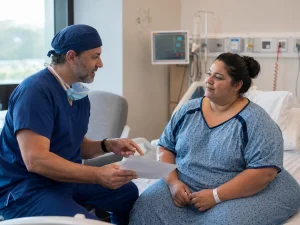

Nerves usually heal within weeks to months.
One of the main focuses of the recovery stage after a facelift (rhytidectomy) is restoring the sensation and muscle function of the face. The procedure, which involves lifting the skin and tightening the SMAS (Superficial Musculoaponeurotic System), will inevitably cause some trauma to the small sensory nerve fibers in the subcutaneous adipose tissue. Of course, while the surgeon will always try to save the main motor nerves, the micro-sensory fibers will have to undergo a biologically controlled healing process in order to regain full sensory perception.
Here at Lin Health Europe Clinic, we always explain nerve recovery after surgery in simple, scientifically accurate terms. It is crucial to keep in mind that being operated on in Turkey simply means that patients must come to terms with the fact that “numbness” is only a typical physiological reaction to tissue manipulation, not a mistake of the surgeon. How fast the nerves heal depends on a person’s metabolism, on the technique used, and on how precisely the postoperative care is carried out by our highly skilled medical team.
The Immediate Postoperative Phase (Days 1–14)
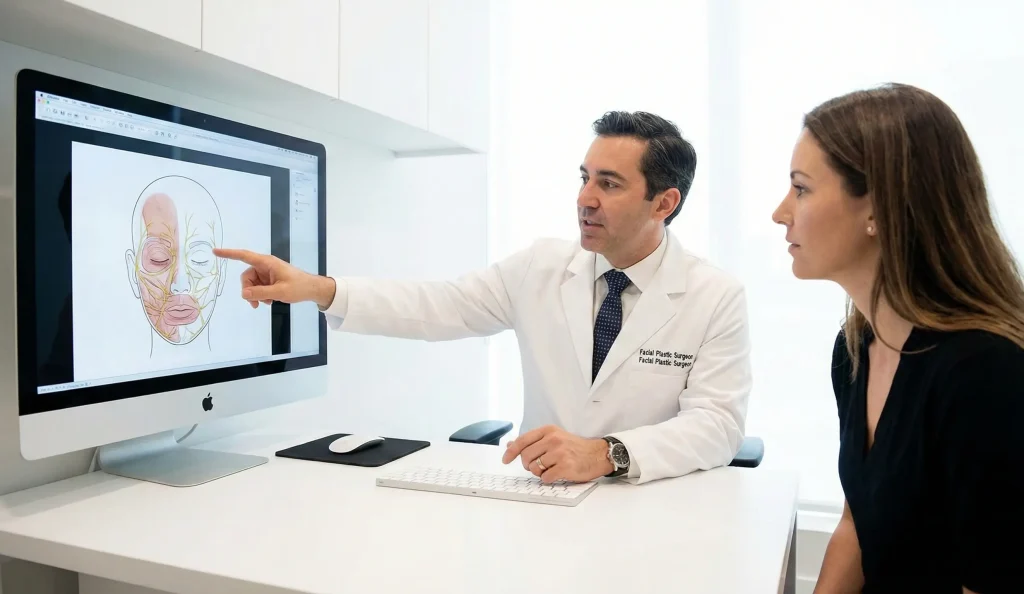
For about two weeks post facelift surgery, most patients will notice a combination of tightness and numbness, especially around the earlobes and cheek areas. This happens due to edema (excessive fluid in tissues) and also due to the light anesthesia that is still present, which temporarily reduces the conduction of nerve impulses. To be sure that there is no damage to the motor nerves (which govern facial movements), their function is checked immediately after surgery, while the sensory nerves are allowed to be “asleep” since this is a normal stage of the tissue healing process.
During the treatment of our facelift patients in Turkey, at Lin Health Europe Clinic, we apply a combination of methods, including icing and lymph drainage, which help the treatment area to regain its normal state in terms of volume. With the proper management of the inflammatory phase that follows the surgical trauma, we provide a favorable setting for nerve regeneration. We take care in our surgical approach so that while the skin is separated from the muscle, the complexes of neurovascular bundles are left as undisturbed as possible.
The Early Regeneration Window (Weeks 3–12)
In the period from week three to month three, the body moves into the phase where the nerves actually start growing back. Patients report feeling “pins and needles” or getting sharp, quick twinges from time to time. From a clinical point of view, this feeling of paresthesia is great because it reflects that the sensory nerve endings are indeed growing back into the skin layers. The reparative biological process of the nerve fibers during this stage is at its highest level.
While in Turkey, the medical personnel tell the patients that it is during this time that they experience the most changes in the sensory areas, such as “hotspots” and “coldspots”. We at Lin Health Europe Clinic continue to be in touch with our overseas clients in order to keep track of their progress and to let them know that the nervous “signals” that they experience are the signs of a normal process of healing. It is during this period that skin sensitivity gradually becomes normal while the previously stiff deep layers relax.
Sensory Maturation and Motor Stability (Months 4–6)
Most patients in Turkey will report around four-to-six months that they have acquired their frontal, cheek, and jawline sensing ability back at almost 80% to 90% of it. On the other hand, the motor nerves which control the facial expression i.e. smile, and eyebrows are by and large fully stabilized, and any minor asymmetries that might have been due to swelling are gone. The skin begins to feel more “integrated” with the underlying muscle as the internal scars mature and the nerve pathways solidify.
It is at the Lin Health Europe Clinic that we tell our patients that, while the visual results might be there much sooner, nerve “integration” in the brain involves a certain amount of time. This phase witnesses the final manifestation of the facelift as the tissues discontinue their postoperative rigidity. Our Turkey location is famous for natural-looking results, which are the direct outcome of our precision in preserving the delicate motor network of the face.
Final Integration and Long-Term Sensation (1 Year+)
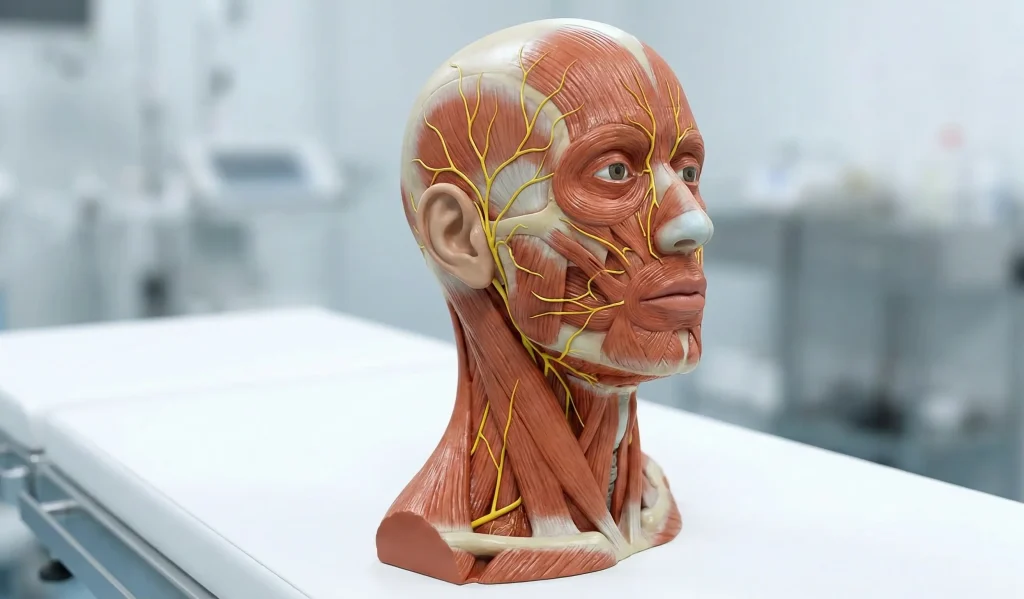
The longest phase of nerve recovery after a facelift might take as long as a year. Throughout this period, the remnants of numbness which are mostly located near the ear or on the scar line usually disappear. The ability of the body to produce new collagen and repair nerves is a process which continues silently even long after the patient has resumed their everyday life. By this time, the patient’s sensation is generally the same as that before the surgery.
The Lin Health Europe Clinic patients enjoy the benefits of our system of post-treatment care that goes far beyond their departure from Turkey. We offer advice on skin care and nutrition as a means to prolong both the cosmetic lift effect and the underlying nerve health. We think that a great operation is one which makes the patient look younger, feel completely comfortable, and “at home” with their new faces.
Facelift in Turkey
Nerve preservation has always been one of the top priorities at Lin Health Europe Clinic. Thorough knowledge and extensive experience of our surgeons in Turkey allow them to employ the most advanced deep-plane and SMAS facelift methods, and this is how they achieve significant lifting with minimum tension to neurovascular structures. Highly magnified visualization and state-of-the-art surgical instruments help us to adhere to and protect every millimeter of the muscle and facial skin anatomy.
A choice of Lin Health Europe Clinic for your facelift in Turkey would be a choice of an establishment that marries the eye for artistic beauty with the care taken to ensure safety standards. We work in world-class hospitals having at their disposal the latest diagnostic and surgical technology which means that our international patients experience a high level of medical care. Our commitment to medical ethics and technical perfection guarantees that your path to rejuvenation is safe, foreseeable, and amazing.
Frequently Asked Questions About Facelift Nerve Healing
Usually, sensory nerves get back to their full function from three to six months as they regenerate through the treated tissue. At Lin Health Europe Clinic, we draw up a recovery schedule to chart your progress after your Turkey surgery.
Initially, you may experience numbness that will be replaced by tingling or feel “zapping” as the nerve fibers reconnect. These are the usual signs that the body is undergoing the healing process successfully after your operation in Turkey.
It is a real medical problem when there is a complete and constant absence of movement in a particular muscle group, for instance, when someone is not able to blink or smile evenly. At our clinic in Turkey, we make a distinction between these extremely rare cases and the almost universal temporary numbness experienced by patients shortly after their treatment.
From the standpoint of statistics, a hematoma (a pocket of blood) is the biggest threat to a permanent nerve problem. Our highly-skilled surgeons in Turkey thoroughly carry out each stage of the operation to mitigate all risks, thereby facilitating a comfortable, and highly satisfactory, patient outcome at Lin Health Europe Clinic.
Signs of nerve damage can be seen immediately by an uneven weakness or lack of movement in one side of the face that does not get better when the anesthesia is wearing off.
Baker, D. C., & Conley, J. (1979). Avoiding facial nerve injuries in rhytidectomy. Plastic and Reconstructive Surgery.
Stuzin, J. M., et al. (1989). Anatomy of the frontal branch of the facial nerve: the significance of the temporal fascia. Plastic and Reconstructive Surgery.
Mendelson, B. C., et al. (2002). Surgical anatomy of the lower face: the facial nerve and the SMAS. Aesthetic Surgery Journal.
Jacono, A. A. (2011). The deep plane facelift: anatomical basis and surgical technique. Facial Plastic Surgery.