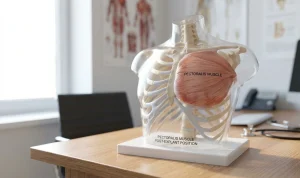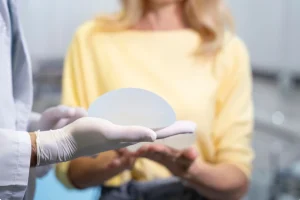

The largest breast implants are around 1000cc.
At Lin Europe Clinic in Istanbul, natural beauty is just the beginning — but it is not always sufficient. Over a period of time, traits passed down through the generations, pregnancy, or the inevitable aging process can alter the way a person sees their body. Some people decide to get their body back while others want to be completely changed. This is the point where Lin Europe Clinic comes in — the combination of plastic surgery, facial aesthetics, hair transplantation, and general surgery at one medically accredited center that is trusted worldwide. Here, enhancement goes hand in hand with safety, and professionalism, precision, and care are the driving forces helping every patient’s journey.
Understanding Breast Implant Sizes and Extremes

Breast implants are sized in cubic centimeters (cc), which indicates the volume and projection of an implant. Common implant sizes are between 200 cc and 600 cc, which can give balanced, natural-looking results that are suitable for most body types. However, there are some people who take extreme augmentations to the point that they have implants of more than 1000 cc breast. In such cases, the use of implants is no longer seen as just beautifying the body but rather as extreme modifying the body.
One rule of thumb is that a professional medical evaluation should be the first step in the decision to change implant size. At Lin Europe Clinic, the process is thorough and includes, among other things, 3D digital simulations, testing the elasticity of the skin, and getting a detailed anatomical analysis. The doctors check if the human body can carry the added weight safely, thus, they ensure tissue stability and muscular support. Moreover, going beyond the natural anatomical limitations of the patient can bring to irreversible changes in the skin and breast tissue which is the reason why responsible consultation prior to surgery is absolutely necessary.
The Largest Breast Implants in the World: What Makes Them Unique
The very big breast implants in the world can have a volume of nearly 1000 cc in one breast. Such implants are heavy and can weigh a few kilograms and therefore they require production specifically tailored for the person, surgical techniques that are out of the ordinary, and longer recovery periods. Since these implants are not usually a part of the medical cosmetic surgery, hence, they are mostly the people who want to change their look radically as a part of their personality or as an art of performance, who ask for them.
It is worth mentioning that such implants are not made as regular medical devices. Before a doctor can use it on a patient, it has to be made specifically for this person from medical-grade silicone and then tested for biocompatibility. Anyway, the use of this implant can bring some serious risks. The size of the implant can influence the way the body moves, sleeps, or holds its posture. Put simply, the larger the implant, the higher the pressure being exerted on the skin and the supporting ligaments. At Lin Europe Clinic, these limits are discarded in favor of enhancers that are natural and proportioned which ensure the functionality and comfort are still there.
Health Risks and Complications of Extremely Large Implants
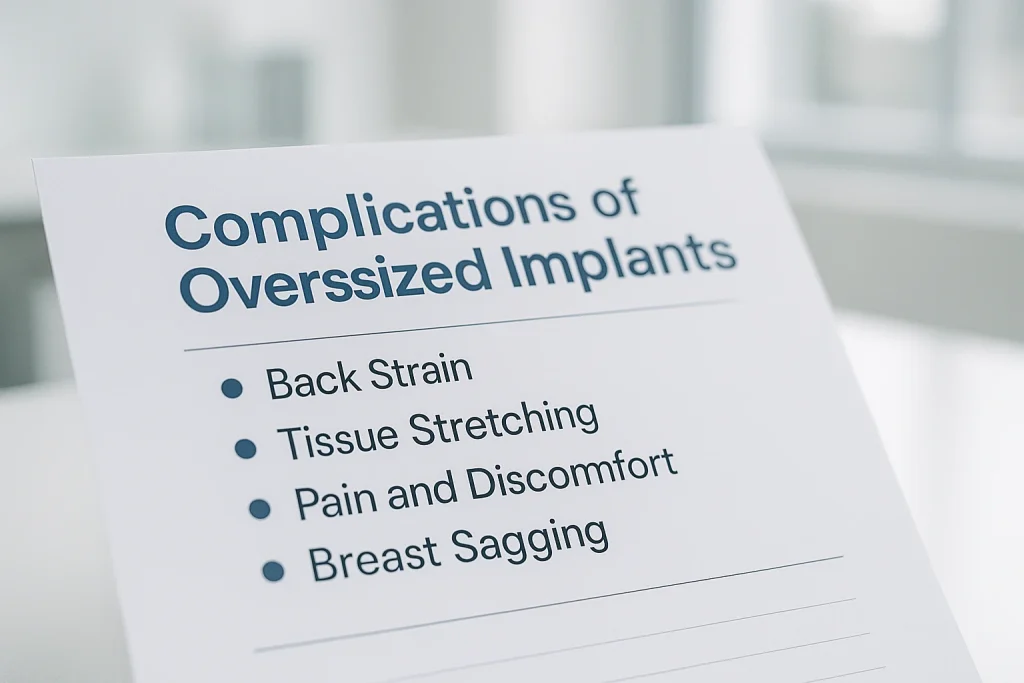
Any operation involves risk, however, oversized breast implants additionally and often severely introduce some complications that are mostly difficult. The human body, by nature, is not capable of supporting 3-4 kilograms additional weight on the chest. Chronic pain, imbalance of posture and, in very extreme cases, even permanent changes of the spine and shoulder alignment may result from this condition.
To talk from a health point of view, the oversized implants lead to membrane contracture causing the outer layer of the membrane to be thick and tight which surrounds the implant, is the most likely situation. Other complications include implant rupture, wound breakdown, infection, and thinning of breast tissue. Overstretching of the skin may be caused by striae (stretch marks) as well as be visible rippling and hollowed appearance after removal.
The surgeons at Lin Europe Clinic minimize these complications by proper planning, utilization of the latest surgical tools, and conformity to international surgical standards. The operations are done in sterile, hospital-grade operating rooms where there is continuous patient monitoring. The clinic is compliant with the newest European and American safety directions and this adds up to the level of professionalism and security the patient can feel, instead of just following aesthetic trends.
How Surgeons Prioritize Safety with Breast Augmentation
Safety is what makes up the core philosophy of Lin Europe Clinic. Before the operation, the candidates go through full body checkups, blood tests, and scans. Imaging methods are used by surgeons in order to see how implants would influence soft tissue, chest structure, and health. No implant is chosen based on unrealistic Instagram standards, but on the patient’s biology.
During the operation, the surgeons at Lin Europe Clinic perform meticulous incision placement. Scarring that’s visible is lessened by incisions that are usually made beneath the breast fold or around the areola. The muscle under the chest (submuscular) is where doctors mostly put implants after surgery since this helps distribute the weight more evenly and offers a natural look on the breast. To be sure that the displacement will not happen, the surgeons use advanced stitching methods to make the tissue layers stronger. A patient will be getting structured follow-up care that includes physical checks and clinical imaging, to keep an eye on implant position, recovery, and tissue healing, after the surgery.
Choosing the Right Size: Finding Balance Between Aesthetics and Health

The crucial element in a successful breast augmentation is proportion to the body rather than the volume. First of all, bigger breast implants may look attractive but over time they will cause discomfort and aesthetically unbalanced appearance. Professional consultation will make patients aware of their physical capacity thus enabling them to design a model that fits their height, shoulder width, waist-to-hip ratio, and lifestyle.
The way it is done at Lin Europe Clinic is very much like a person. Through 3D simulation tools, patients have the chance to see the outcome of their surgery before it even takes place and thus compare different implant sizes real-time. Very important decisions can be made in this way as they bring aesthetic objectives and health concerns into harmony. Instead of beauty trends, the clinic serves the purpose of helping patients realize the most natural enhancement of their unique anatomy.
The Psychological and Social Impact of Extra-Large Implants
The effects of very large implants are not just limited to the physical side — they also have psychological and social impacts. There are patients who become more self-conscious because of the attention they don’t like or have trouble finding clothes that fit them. Daily activities, workout routines, and sleeping positions may become difficult. Usually, they find that these practical problems are much bigger than the short-lived satisfaction from the exaggerated results.
Right here is the reason why an emotional and psychological evaluation is taken as an integral part of the consultation process at Lin Europe Clinic. The surgeon and the patient coordinator talk about the motivations, expectations, and implications in the long run. The primary aim is to empower the patient through enhancement rather than create a dependence on physical size for maintaining self-esteem. The clinic’s multidisciplinary team members help patients comprehend not only the advantages of breast augmentation but also the challenges, thus healthy decision-making is promoted.
The Role of Technology and Implant Materials
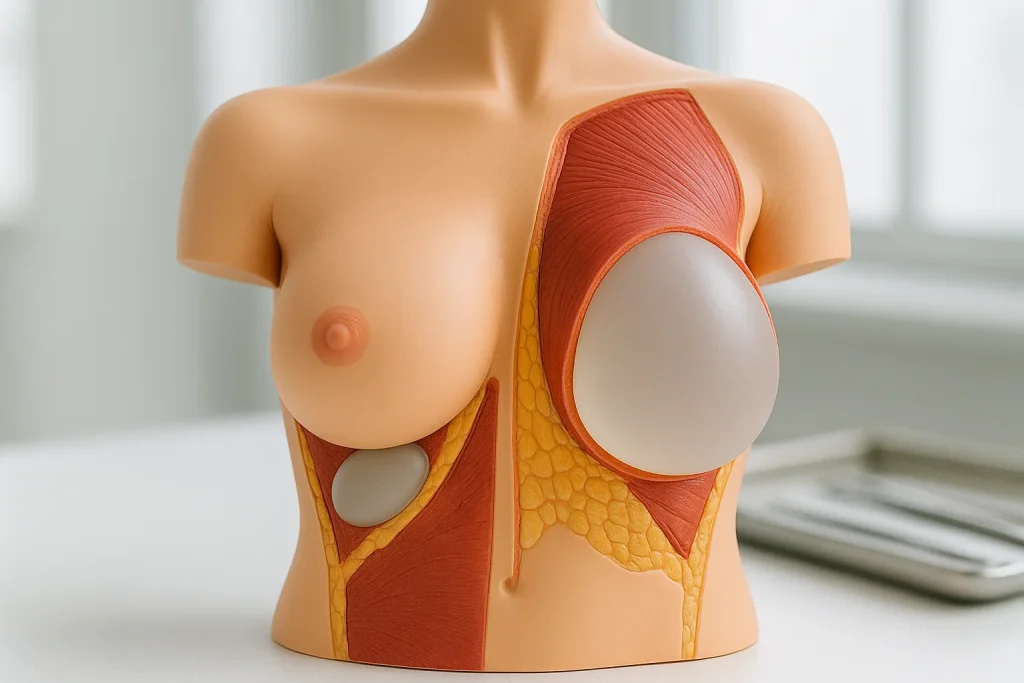
The technology behind implants of today has made huge strides and surgeons are enabled to give a fuller look that is also natural rather than the use of overly large implants. Gel implants with cohesive silicone, often referred to as “gummy bear” implants, are kept in shape by them while still being soft and natural-feeling. They also have inside structures that prevent leakage even in the case of a rare rupture.
Lin Europe Clinic ensures that every implant used is FDA and CE-approved and is manufactured under stringent medical regulations. Patients can opt for different textures, projections, and shapes — such as anatomical (teardrop) and round design — depending on the body type and the desired contour. The materials are prepared in such a way that the risk of tissue irritation and capsular contracture is minimized, while stability is maintained in the long term. The clinic’s focus on quality is what enables patients to experience aesthetic satisfaction and comfort that lasts.
Postoperative Care and Long-Term Follow-Up
The period after breast augmentation is a very important moment and it is what determines the operation’s long-term success. Patients with bigger implants will have to take longer breaks, be more careful with their wound, and keep their doctor alerted regularly. The first two weeks may bring swelling, tightness, and sensitivity, however, most patients are already able to perform light work after 10-14 days.
Post-surgery care at Lin Europe Clinic is planned in steps. To help alleviate the swelling and stabilize the implants, patients are fitted with medical-grade compression garments. Follow-up appointments are arranged post-surgery at one week, one month, three months, and six months. The visits involve ultrasound images take place to see if the implants are the correct position and if there is no build-up of liquid. In addition to scar care, physical activities, and long-term breast checking, the doctors also offer advice and guidance. The commitment of the clinic is beyond the operation — each patient is still a part of a long-term care network that ensures continuous safety and satisfaction.
The Importance of Professional Guidance
Especially if large implants are involved, breast augmentation should be considered as a planned and well-thought decision rather than a spontaneous or impulsive one. It demands a deep understanding of implications – medical ones, aesthetic limitations, and psychological adjustments that come along with the procedure. Professional ethics at Lin Europe Clinic are put before aesthetic extremism. Surgeons make health and proportion as their first priority and thus, every change becomes the patient’s source of confidence and not a compromise.
Patients should openly communicate with their doctor, they should raise questions regarding every step, and follow all the pre- and post-operative instructions. By putting their trust in a medical institution such as Lin Europe Clinic, individuals are assuring their enhancement journey to be based on science, skill, and compassion.
References
- American Society of Plastic Surgeons (ASPS). (2023). Breast Augmentation: Clinical Safety Guidelines and Long-Term Outcomes.
- International Society of Aesthetic Plastic Surgery (ISAPS). (2022). Global Aesthetic Trends Report.
- Lin Health Europe Surgical Safety Protocols. (2025). Advanced Implant Planning and Postoperative Care Standards.
- U.S. Food and Drug Administration (FDA). (2024). Breast Implant Medical Device Overview and Safety Information.
Frequently Asked Questions About Large Breast Implants
The largest implants ever recorded measure over 3000 cc per breast. They are usually custom-made and fall outside standard medical practice due to safety and anatomical limitations.
Most surgeons agree that implants above 1000 cc pose risks to tissue health and spinal posture. Safe sizing depends on a patient’s chest width, body type, and tissue elasticity.
Extra-large implants are not considered safe by most medical authorities. They can cause chronic pain, skin stretching, and long-term musculoskeletal strain.
Risks include back pain, wound dehiscence, capsular contracture, and implant rupture. These complications can require revision surgery or implant removal in severe cases.
Yes. Oversized implants may lead to permanent tissue damage, posture disorders, and chronic discomfort. Regular monitoring and proportionate implant selection are essential for long-term well-being.