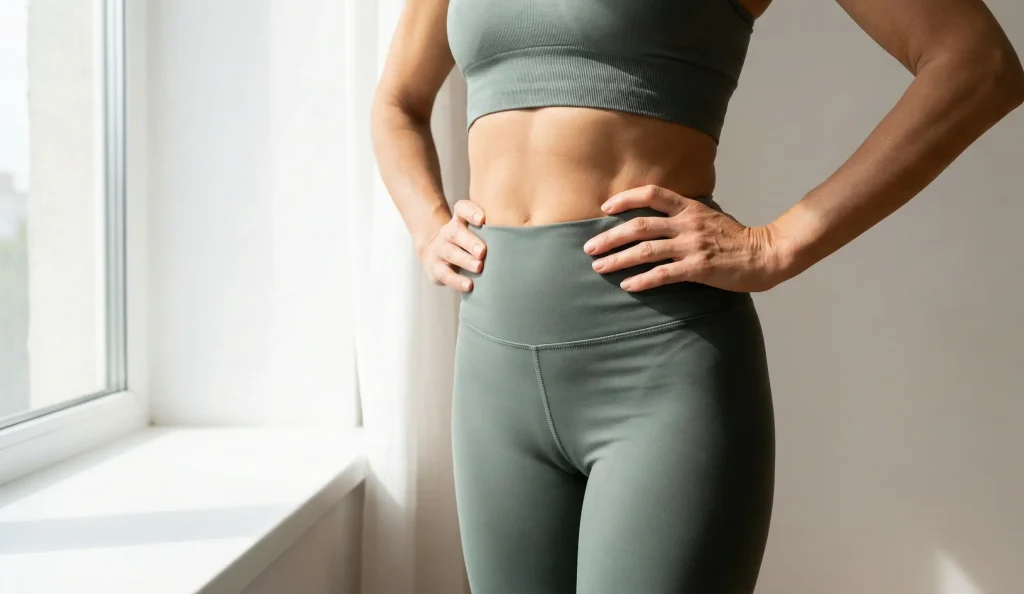
Results last long-term but aging and weight changes affect shape.
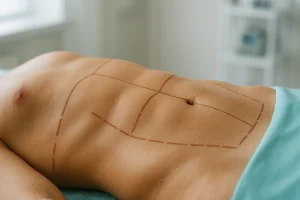
Within the field of body contouring, an abdominoplasty (colloquially known as a tummy tuck) is a surgical procedure aimed at the selective, ultimate exclusion of the problem of laxity of the abdominal wall and accumulation of redundant skin. The immediate transformation of the patient’s body is very dramatic, however, the true clinical value of the surgery is determined by the long-term stability of its effects even after as long as a decade or twenty. A 10-year time frame is sufficient to see how the surgical changes, specifically the correction of diastasis recti and the surgical removal of subcutaneous adipose tissue, behave in conjunction with the natural aging process and the person’s lifestyle.
Work conducted at Lin Health Europe Clinic centers around the principle of permanence of the structural changes created by the operation. Those who come to Turkey for the operation should bear in mind that though the skin “renewal” makes you younger by the number of years, it won’t stop the aging process. Hence in 10 years, a perfectly executed abdominoplasty should still allow a patient to have a noticeably flatter and firmer stomach than he or she would have had if no procedure was done, of course assuming that the patient stayed in a steady and reasonable weight range.
Durability of Muscle Repair (Diastasis Recti)
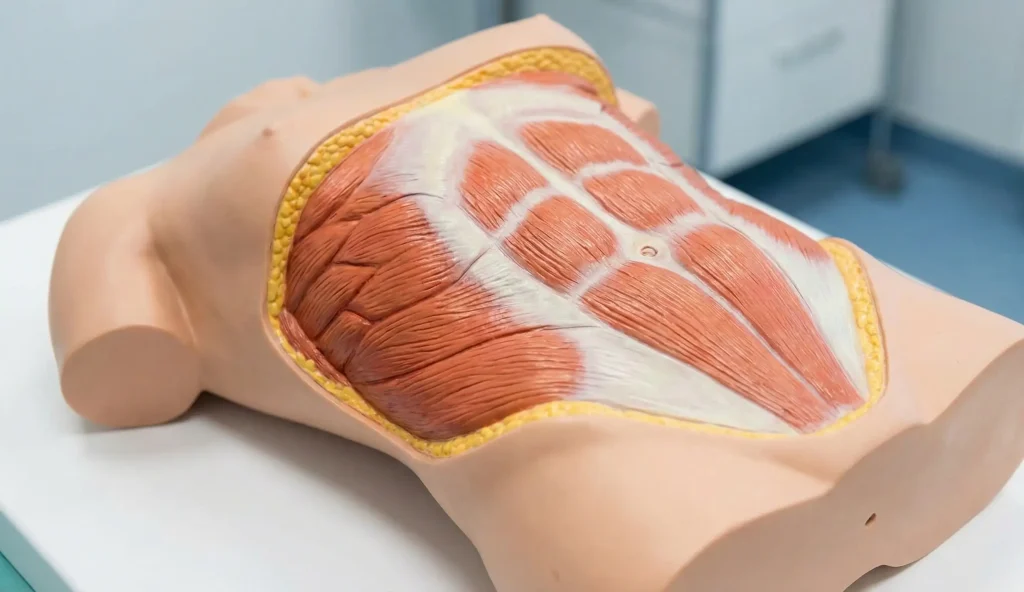
Zipping up the abdominal muscles from the inside is the most significant aspect of a tummy tuck that lasts forever. At Lin Health Europe Clinic our surgeons in Turkey use high-strength, nonabsorbable sutures to close the gap between the rectus muscles. Ten years down the line, this inner ‘corset’ remains the main reason why a patient has a flat stomach and skinny waist, literally.
Basically, from a purely clinical perspective, if there hasn’t been a pregnancy or a dramatic increase in the weight of the individual, the muscle repair would remain indefinitely. Nevertheless, the overall core strength will still depend on the patient’s lifestyle. In Turkey, it is highlighted to people that though the surgery gives you an excellent structure, it is only through regular workout that the abdomen can be kept in good shape, functional, and attractive even after a very long time.
Skin Elasticity and the Natural Aging Process
During a decade, the skin will see very slow but sure changes that will become more and more visible eventually because of the diminishing amounts of collagen and elastin that are the main fillers of the skin. The skin in a tummy tuck patient’s was never free from the influence of gravity and aging, just that now it does so without the “pull” of the excessive skin. And, since the excessively “stretched” and overgrown skin was removed surgically during the procedure at Lin Health Europe Clinic, the patient’s belly will always look a lot tighter as compared to the state it was in before the surgery was done.
People from Turkey who have had tummy tucks say that the skin is still nice and even though it is just a natural process that makes one get lazy as we grow older, it was not lost in a day, and some very gentle control over what one eats and exercises do really help. The maintenance of the skin’s appearance is dependent largely on sun protection and the degree of skin hydration. Our global clients who rigorously follow the postoperative skincare routine we advise them to do here in Turkey can see and feel their surgical results ten years after the procedure as though it was done just recently.
Adipose Tissue Redistribution and Weight Shifts
Fat “regrowth” is one of the single-most-asked questions we receive at Lin Health Europe Clinic. The fat cells that are taken out by means of the surgery in a tummy tuck (and other body contouring procedures such as liposuction) are fat cells that are, in theory, deleted forever. Ten years down the track, if a person can still put on some weight, the remaining subcutaneous adipose tissue of his or her body will increase, but the gain of fat will be everywhere except the lower abdomen.
What this means is that the patient will have a very difficult time determining whether he or she has put on weight by looking at the abdominal area. On top of that, the shaping and contouring techniques that we had at our disposal in Turkey have become more and more advanced and precise over time. Therefore, the results achieved in Lin Health Europe Clinic will give the patient a well-balanced silhouette that changes significantly with the metabolic changes that the patient undergoes as the years go by.
Scar Evolution and Maturation After a Decade

By the 10-year-point, the scar of a tummy tuck is already well documented as far as the process of scar maturation is concerned. For a great majority of patients, the scar has become a very delicate and indifferent thin line of essence a silvery, white color that blends in with the adjacent skin. The patch of skin that was initially “red” and “thick” due to the healing process has been gone for a very long time, and what remains is a stable, flat scar that can be easily concealed by the underwear.
The surgeons from the Lin Health Europe Clinic in Turkey are truly geniuses at the art of incision placement, because not only do they “pile on” the surgical incision as low as anatomically possible on the pubic area, but they also do it in a way that the scar is as imperceptible as possible even after a decade. Thus, even now, it takes a really sharp eye to spot the scar that was left as a result of the operation. The standard of closure that is applied in Turkey is nothing less than spectacular and this alone is enough to achieve this wonderful result in the long run.
Tummy Tuck in Turkey
At Lin Health Europe Clinic, we are not only planning for your first year but for your first decade as well. Our surgeons in Turkey perfectly merge anatomical precision with a profound understanding of long-term tissue behavior. Apart from using only the best surgical materials, we follow very advanced surgical techniques that include no-drain tummy tuck so that the initial healing phase is so perfect that the results will remain constant throughout your life.
Part of our full-service commitment to our international patients is not just about providing world-class care and helping them achieve their desired results through our surgical expertise, but also sharing with them knowledge that would enable them to keep the results they have so hard-earned. We are convinced that the best tummy tuck is the one that goes on making you feel great and confident even 10, 15, and 20 years later. When you choose to have your surgery in Turkey at Lin Health Europe Clinic, you are making an invaluable investment in your health, beauty, and physical comfort that will undoubtedly last.
Frequently Asked Questions About Tummy Tuck Long-Term
Yes, fundamentally, your muscles’ structural changes and the removal of excess skin are permanent. Your figure can stay the same for a long time if you don’t gain and lose weight back and forth after your surgery in Turkey.
Even though the pregnancy itself is not a problem, it may stretch out again the skin and muscles of the abdomen and thus, a revision may be needed. For the most long-lasting results, we advise that you make a procedure at Lin Health Europe Clinic once you are done having children.
The belly button stays in its new location and keeps its shape that was surgically refined during the aging of the tissues. At Lin Health Europe Clinic, an appropriate umbilicoplasty procedure guarantees that the belly button will continue to look beautiful and natural even after ten years.
You should expect losing a little bit of skin due to the natural aging process, but you will not have an “apron” of skin that looked before the surgery. The results in Turkey are planned to give a much firmer and more beautiful look in a way that lasts.
In cases of major aging or frequent weight changes, a partial or full revision could be done. Specialists at Lin Health Europe Clinic offer a full assessment of your 10-year tummy tuck results and advise you on the necessity of the procedure.
Nahas, F. X., et al. (2011). Long-term follow-up of abdominoplasty for diastasis recti. Plastic and Reconstructive Surgery.
Swanson, E. (2012). Prospective outcome study of 100 patients after abdominoplasty. Plastic and Reconstructive Surgery.
Matarasso, A., et al. (2014). Abdominoplasty: A 10-year review of a surgical evolution. Aesthetic Surgery Journal.
Bozola, A. R., & Psillakis, J. M. (1988). Abdominoplasty: A new concept and classification for treatment. Plastic and Reconstructive Surgery.