Chin Liposuction: Is It Normal To Have A Hard Lump Under The Chin?
Medically reviewed by Op. Dr. Halil İbrahimPlastic, Reconstructive and Aesthetic Surgery
Yes, temporary swelling or fibrosis occurs.
The Scientific Basis of Submental Induration and Fibrosis
In the niche area of face contouring and submental sculpting, obtaining a defined lower jawline requires a healing sequence of tissues, which is almost certain. One of the major sources of patient stress after surgery is the appearance of a firm, localized, or a bit spread out “hard lump” under the chin during the weeks after the operation. Strictly speaking, from a measurement point of view, such a change post-surgery—induration or post-inflammatory fibrosis—is just part of the normal and expected phases of dermal and subcutaneous remodeling.
Submental liposuction allows the cannula to move through the fat layers that are directly located between the skin envelope and the platysma muscle underneath. This leaves a hollow where the fat cells were before. The body responds to this surgical intervention by starting the healing process that is focused locally and is very strong. To fill the structural gap, fluid with fibrin and inflammatory cell contents is delivered by blood vessels. For weeks two through four, the fluid is gradually replaced by a dense matrix of temporary collagen strands and scar tissue.
The Secretion of Lymph Through the Compression
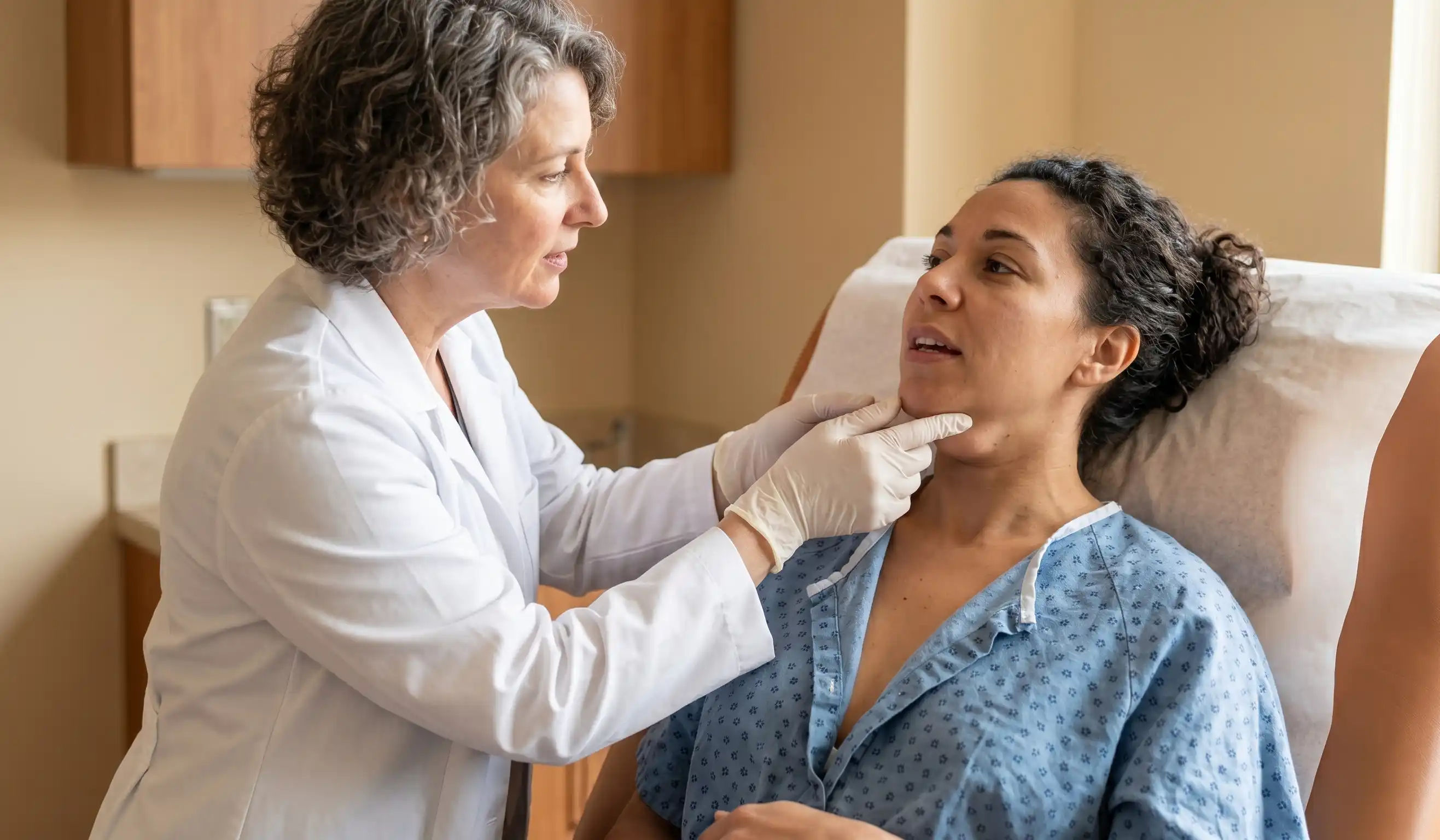
Getting a perfect, beautifully chiseled look involves knowing about the face and neck's drainage systems very well. When removing submental fat, the tiny lymph vessels responsible for removing cell wastes and interstitial fluids may be accidentally damaged. Such damage causes a local lymph stagnation area wherein fluid remains trapped in the healing region. Due to gravity, which naturally makes liquid be pulled downwards, the fluid accumulates right in the central submental area, and often a distinctly felt, hard lump or “shelf” is formed that can hide the high definition results of the operation.
Also, when the skin envelope healing tries to “shrink-wrap” over the newly formed shape, the tissue can pull in an uneven way. Such a local contraction may make some places in the subcutaneous matrix feel much harder or more bundled than the rest of the tissue. Such a state of internal disturbance, although temporary, is a normal part of the process of establishing a new biological balance. The inflammatory nodules will be palpable under the skin until the microscopic lymphatic pathways are completely neovascularized and regenerated, which is a biological process that usually takes several weeks. In the meantime, the nodules will require patient care and targeted therapies for a full resolution.
Professional Rigor: Dealing with Lumpiness
In most cases, post-operative induration will fade with time, but strict aftercare and professional rigor can really shorten the time needed for tissues to soften. The utmost remedy against the stubborn lumpiness is repeated compressions of the problematic spots. Wearing your submental compression garment per your clinical roadmap isn't just a suggestion but a necessity, especially during the early maturation phase.
That garment provides uniform continuous hydrostatic pressure across the healing zone that prevents pooling of fluid in submental transition zones and organizes collagen fibers in symmetric configurations. Besides compression, the introduction of manual targeted therapy is a supreme recovery management. Roughly two weeks post the onset of inflammation, good-quality postoperative manual lymphatic drainage should be performed. This procedure physically removes the fluid from the submental space and expels it back into circulation through the blood.
Comparison Matrix: Normal Induration vs. Potential Complications
| Diagnostic Metric | Normal Induration (Fibrosis) | Hematoma / Seroma | Localized Abscess (Infection) |
| Onset Timeline | Appears 2 to 4 weeks post-op. | Develops within the first 48–72 hours. | Typically manifests 1 to 2 weeks post-op. |
| Tactile Sensation | Firm, rubbery, or knot-like texture. | Fluctuant, fluid-filled, or tight swelling. | Highly tender, warm, and increasingly fluctuant. |
| Visual Indicators | Gradual flattening; skin looks healthy. | Distinct bruising or dark skin discoloration. | Localized erythema (redness) and expanding edema. |
| Systemic Symptoms | None; mild localized tightness. | Sudden increase in pressure or localized pain. | Fever, chills, and purulent discharge from ports. |
| Clinical Resolution | Resolves via massage and time. | Requires clinical aspiration if large. | Mandates immediate targeted antibiotics. |
Medical Innovation: Non-Invasive Tissue Softening Modalities
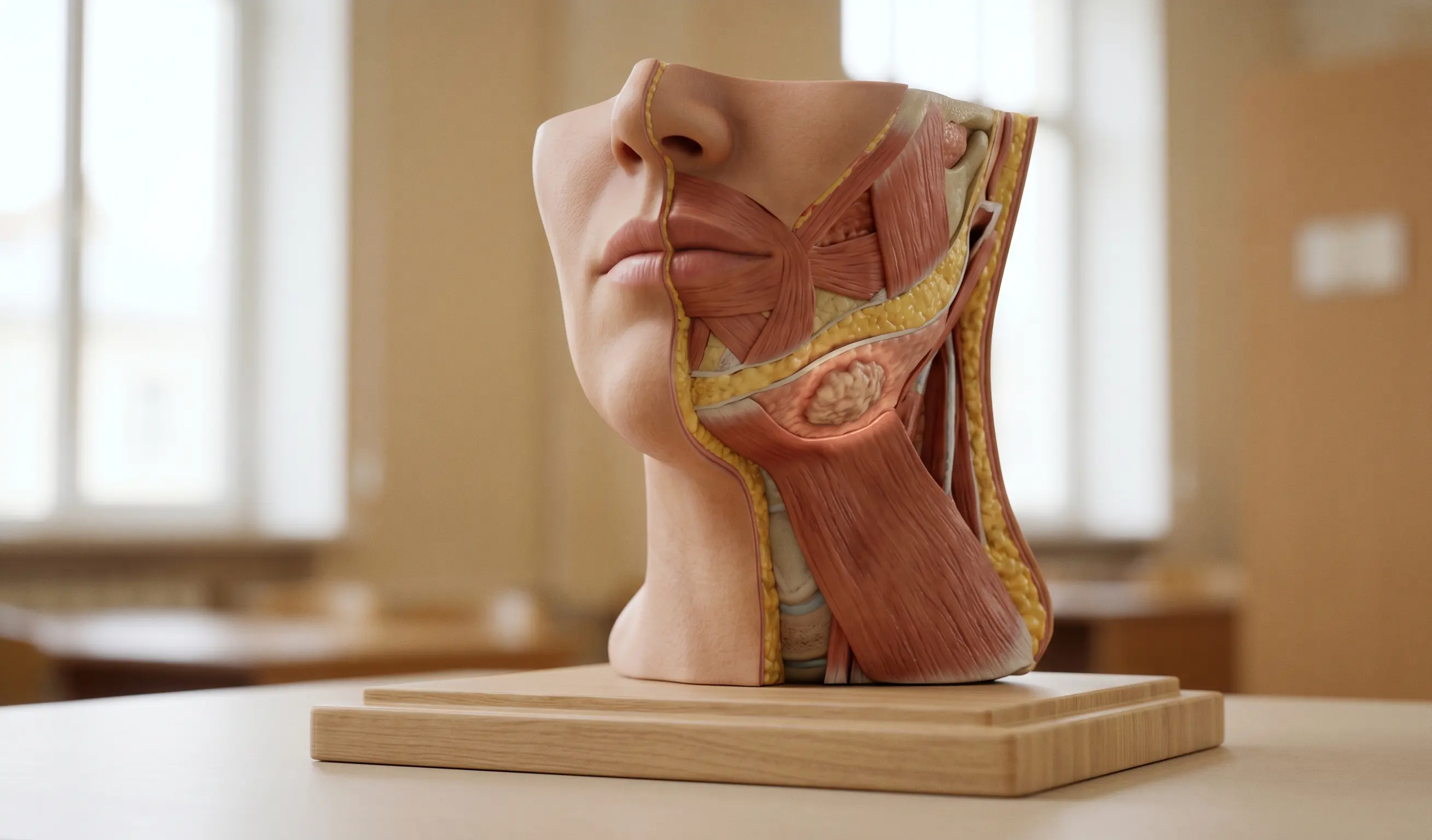
Clients experiencing particularly stubborn or late areas of induration may turn to modern medical innovation for highly effective biological balance restoration tools. When manual lymphatic drainage fails to fully soften the submental matrix by mid-month, integration of advanced non-invasive therapies into your recovery plan is possible. Ultrasound therapy, as an example, exploits high-frequency acoustic waves to generate deep, pinpoint thermal energy inside the subcutaneous tissues. Mild heating induced microcirculation enhancement, and the release of cross-linked collagen bonds led to the conversion of a hard lump into a soft, uniform layer.
Radiofrequency (RF) skin tightening is among the best therapeutic innovations. Dermal and submental tissue layers are exposed to controlled electrical energy, which stimulates deep tissue remodeling and concurrently induces skin retraction. At LIN Europe Clinic, we make sure that these sophisticated tools are used only to your tissues' suitability, allowing the aftercare process to be smooth and efficient, leading to a high definition jawline.
Chin Liposuction in Turkey
One of the main reasons to choose LIN Europe Clinic is the rich possibility of performing a worldwide standard of medical procedures with the highest amount of precision at each tiny step of your rejuvenation process. Being aware of the fact that not only the chin liposuction time but also the recovery period deserves scientifically backed direction in order to alleviate any anxiety and secure your investment, our luxurious setting in Turkey has set the pace worldwide, not only in offering advanced techniques in facial contouring but also in making the whole experience aligned with your aesthetic goals without compromising the highest international safety and aftercare standards.
Choosing LIN Europe Clinic means entrusting yourself to a medical system that provides professional care. Your departure from the operating room is only the beginning of our long-lasting support. With utmost accuracy, we monitor your entire transformation schedule - from performing the most sophisticated tissue-sparing extraction techniques to formulating detailed and guided recovery programs.
FAQ:
References
Tebbetts, J. B. (2002). Systemic Vitality and Surgical Precision in Facial Architecture. Saunders Elsevier.
Klein, J. A. (2000). The Tumescent Technique: Tissue Remodeling and Post-Operative Management. Mosby.
Janis, J. E., et al. (2005). Neck Anatomy and Biometrics: Implications for Submental Liposuction. Plastic and Reconstructive Surgery.
Nahai, F. (2011). The Art of Aesthetic Surgery: Principles and Professional Rigor in Facial Contouring. Quality Medical Publishing.
Rohrich, R. J., et al. (2003). Submental Liposuction and the Evolution of Post-Operative Induration. Journal of Plastic and Reconstructive Surgery.
Frequently asked questions
Is it normal to feel hard knots under my chin after lipo?
Yes, it is a normal part of healing process that you may feel firm, rubbery knots or hard lumps. This state is technically known as induration and is a result of temporary formation of scar tissues and accumulation of fluids.
How long do the hard lumps last?
Submental lumps generally reach their highest point during the second to fourth week, after which they finally become softer over a period of three to six months as tissue naturally matures.
Can I massage the hard lump away?
After around two weeks, gentle and focused post-operative massages are highly advised. Massage will aid in the breakdown of the fibrous tissue and also promote lymphatic drainage.
Will the hardness affect my final jawline result?
Definitely not. The temporary hardness is only one of the intermediate phases of healing. Your sculpted, high-definition jawline will become fully visible as the tissue completely softens.
When should I worry about a lump under my chin?
You should reach out to the clinic if the lump suddenly swells, turns red, becomes so hot there is hardly any desire to touch it, or is linked with extreme pain or fever. These are biometric indications of a potential complication instead of a normal healing.
This article is general information, not medical advice, and does not replace a consultation. Every procedure carries risk and outcomes vary from person to person.
Last reviewed 18 May 2026