Avoid chest trauma and early heavy lifting.
The Body’s Response to Post-Surgery Restrictions (0–6 Weeks)
Mammary architecture is a niche branch of medicine where the time right after positioning the implant in the breast demands rigorous adherence to rest. If you see it from the side of body processes, your organism will be forming a layer of collagen (also called tissue capsule) tightly surrounding the prosthetic shell for the first six weeks after surgery. During this phase of the healing map, the set of activities, which is capable of releasing tension both in the musculature and any of the tissue in proximity to the newly implanted breast, is prohibited to protect structural harmony, and the potential early-stage complications like hematomas, seromas, or incision dehiscence (wound separation) are avoided.
At LIN Europe Clinic, we usually say that the big thing here is that you simply do not do any upper-body strengthening and high-impact cardiovascular work at all. Running, jumping, and vigorous fitness training, together with lifting something more than 5 to 10 lbs, cause so much hydrostatic and mechanical stress to your healing pockets. What’s more, even letting your body be in a pool, hot tub, bath, or ocean is completely out of the question until your incisions have healed and been surfaced with new epithelial cells, generally at the third or fourth week. Following this preliminary limit is a good way to give your body more systemic vitality and let your implants settle nicely without creating any internal turbulence.
Pectoral Mechanics and Resistance Training Modifications
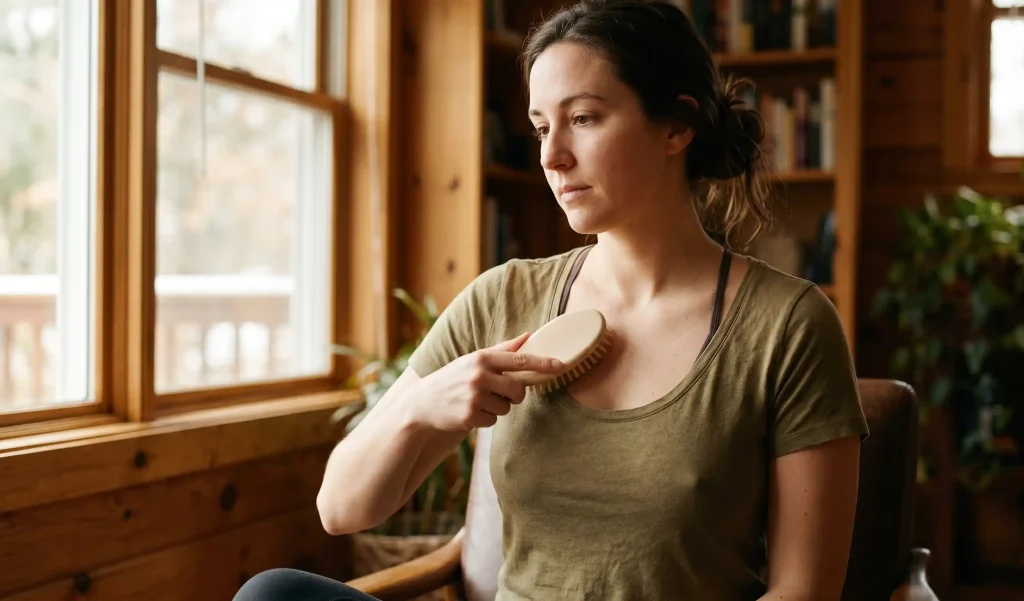
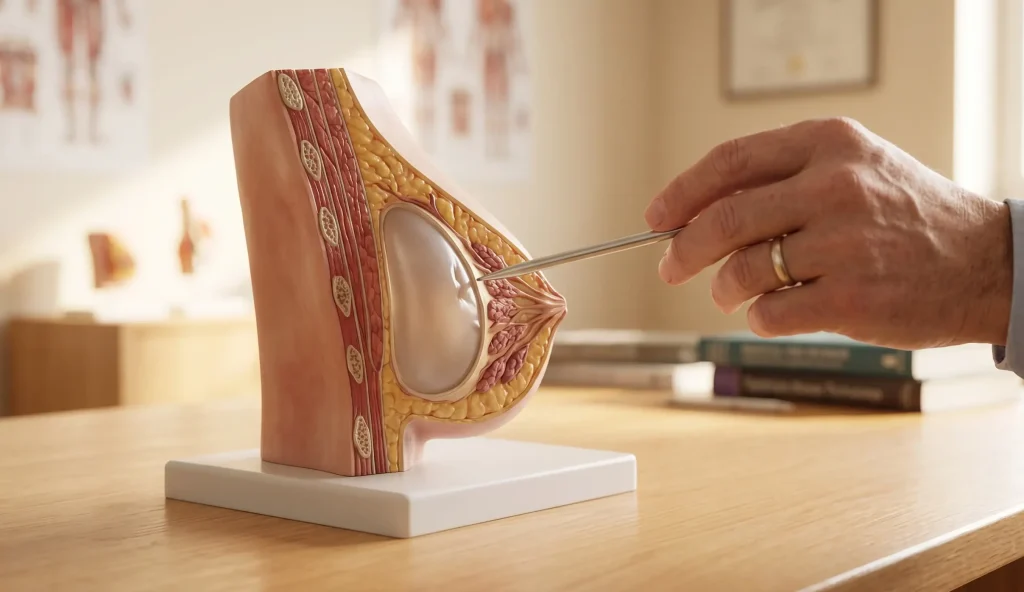
Weightlifters might find it quite vexing that changing their weight training moves is not only feasible but is also an integral part of a return-to-gym plan that is carefully controlled by experts. Those implants that are located underneath the pectoralis major muscle, if the implant placement is submuscular or dual-plane. Therefore, heavy isolated chest workouts – heavy bench press, chest flies, or push-ups, for example – may change the location of the implants permanently.
The intramuscular force of the contracting pectoralis can exert a shear pressure going downward and outward on the device that is hidden underneath the muscles. Such a “push” of the force-directed changes to the placement of the implants could lead to the following:
- Implant Position Changes: The continuous muscular pressure could force the implant downward or outward, messing up the symmetric alignment of your profile.
- Dynamic Mutations: This is medically called animation deformity, and it is the shifting of the implant or even its deforming with the flexing of the chest muscle.
We believe that the balance of a well-maintained, smooth physique, along with the brilliance of the breast augmentation surgery, can be attained with a moderate lessening in heavy pectoral workouts. For example, after full tissue maturation, lower-body isolation, core stability exercises, and general upper-body conditioning are not just safe but encouraged, whereas heavy chest-isolation exercises are suppressed to keep your breast pocket stable and beautifully formed for decades.
Environmental Biometrics: Scuba Diving and Pressure Changes
The study of the biomechanics of implants can also be very fascinating when it is about how humans respond to extreme environmental pressure changes, such as deep-sea scuba diving. It is a myth that breast implants will implode or break due to underwater pressure; in fact, the modern cohesive silicone gels are very resistant and capable of handling extreme physical forces. Nevertheless, scuba diving does create a unique pressure environment in which the diver’s body is immersed, and this experience should be recognized by professionals.
Atmospheric pressure changes during your dive may cause the formation of micro-bubbles of nitrogen internally within the saline or silicone gel matrix of the implant, which results in a very slight and transient volume expansion. Although this is a perfectly harmless phenomenon that does not compromise the shell, some people do report feeling a tight or firm chest during or right after a very deep dive. At LIN Europe Clinic, our advice to the divers is to rigorously observe the proper decompression protocols and to delay descending at least eight to ten weeks after the surgery so that the dermal capsule surrounding the implant can get thick enough to be able to absorb even such subtle volumetric changes without any stress.
Contact Sports and High-Velocity Impact Precautions
Engaging in high-velocity and direct contact sports, including martial arts, kickboxing, rugby, or soccer, is a category of activity that will always require you to be cautious and resort to a protective strategy. Clinically speaking, blunt-force trauma of a major magnitude, even to the chest region anteriorly, can be damaging to the structural integrity of the highest quality implants you could buy. Although the implants themselves are very sturdy, the impact suffered during high-intensity collisions carries a statistical likelihood of traumatic shell rupture or pocket/lateral displacement.
If contact sports or other outdoor activities like skiing or horse riding that may expose you to high-risk situations are a part of your life, then creating a layer of protection between you and your implants becomes a top priority so that you can keep your biological balance. You will be required to wear medical-grade high-impact sports bras or specialized chest protectors consistently for such occasions. These pieces of clothing are very efficient in absorbing the kinetic energy produced by the impact and in distributing it evenly to the chest cage, thereby protecting the implant capsule from being subjected to any localized trauma. By doing this, you will be able to confidently maintain your physical appearance and will not risk the high-definition contours of your silhouette.
Breast Implants in Turkey
| Activity Category | Post-Op Status (0–6 Weeks) | Long-Term Status (6 Weeks +) | Biometric Rationale & Care Standards |
| Heavy Lifting (>10 lbs) | Strictly Forbidden. | Fully Approved. | Protects early healing margins; supports systemic health. |
| High-Impact Cardio | Strictly Forbidden. | Fully Approved. | Prevents mechanical bouncing and pocket stretching. |
| Swimming & Submersion | Forbidden until wounds heal. | Fully Approved. | Eliminates the risk of waterborne bacterial infection. |
| Heavy Chest Pressing | Strictly Forbidden. | Modify/Limit Recommended. | Reduces dynamic distortion and submuscular displacement. |
| Contact Sports / Combat | Strictly Forbidden. | Approved with Protection. | Minimizes risk of traumatic shell rupture or shifting. |
| Diagnostic Mammography | Avoid early compression. | Fully Approved via Eklund Views. | Mandates specialized displacement imaging techniques. |
FAQ:
Yes. Although you have to sleep only on your back during the first six weeks to protect your structural harmony, you can easily sleep on your stomach or side again once the internal capsule has fully matured.
High-impact bouncing can significantly stretch your skin envelope over time. Clinically, the use of a high-support, non-wired sports bra is a must during cardio to combat gravity and avoid sagging that occurs prematurely.
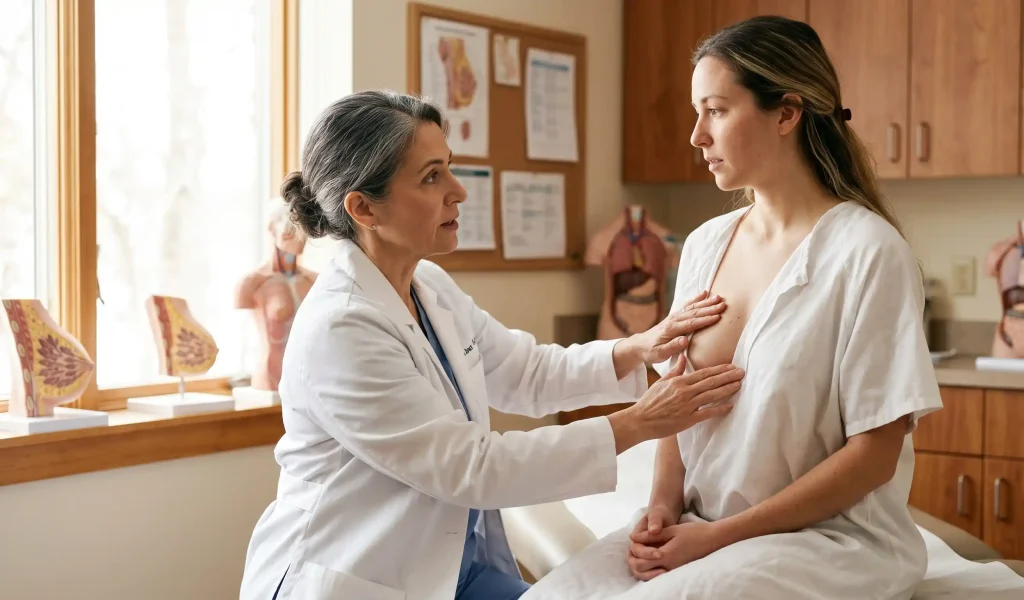
Yes. You should always tell your mammogram technician that you have implants. They will perform Eklund displacement views which are specialized in pushing the implant back against the chest wall, and thus imaging your native tissue clearly.
You have to avoid any extreme heat therapy until six weeks have passed. Getting heated for a long time can worsen localized swelling and break down the biological balance of your healing vascular pathways.
The new cohesive gel implants are made to withstand very strong compression forces. Although a seatbelt could give you a bruise or soreness for a while, the chance of it causing a shell rupture is statistically very low.
- Tebbetts, J. B. (2002). Systemic Vitality and Surgical Precision in Mammary Procedures. Saunders Elsevier.
- Adams, W. P. (2011). Breast Augmentation: Clinical Mastery and Biometric Pocket Stability. Saunders Elsevier.
- Janis, J. E., et al. (2005). Thoracic Anatomy and Biometrics: Implications for Post-Operative Athletics. Plastic and Reconstructive Surgery.
- Nahai, F. (2011). The Art of Aesthetic Surgery: Principles and Professional Rigor in Long-Term Patient Safety. Quality Medical Publishing.