Temporary numbness is rare but possible.
The Lingual Nerve and Buccal Fat Pad: An Anatomical Comparison
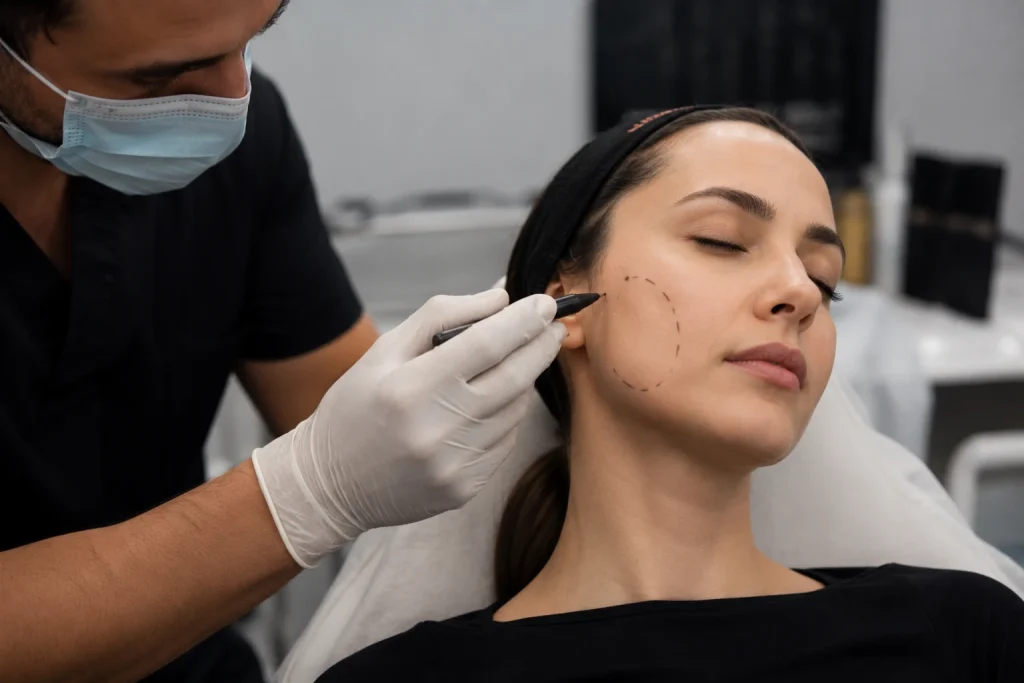
In the very advanced and sophisticated field of facial sculpting and bichectomy (buccal fat removal), it is crucial to know the connection between the locations of surgeries in the mouth and the paths of the nerves to ensure the safety of patients. The buccal fat pad is a separate, enclosed mass of fat tissue located in the center of the cheek, between the buccinator and masseter muscles. Generally, the main anatomical features that are directly next to this area are the duct of the parotid gland and the buccal branches of the facial nerve which are responsible for motor expressions.
On the other hand, the taste and sensation of the tongue are regulated by another nerve called the lingual nerve, which is a branch of the mandibular part of the trigeminal nerve. The lingual nerve runs much deeper and lower in the pterygomandibular space towards the base and sides of the tongue. Since the lingual nerve does not go through the usual limits of the buccal fat pad capsule, a normal, skilfully performed buccal fat pad removal should not expose the nerve to the danger of being directly injured or cut.
The Main Reason: A Stun Caused by Local Infiltration Anesthesia
In case a patient feels a really distinct numbing, a tingling sensation, or a loss of taste in one side of the tongue immediately after the buccal fat removal surgery, the main biological factor is most of the time the temporary effect of local infiltration anesthesia only. Buccal fat removal is an operation done in most cases under local anesthesia, numbing blocks, as an outpatient surgery.
The operating team uses high-potency numbing agents like lidocaine and epinephrine mixture and injects them into the mucosal lining of the cheek. Since the tissues in the mouth cavity are well vascularized and closely connected, the anesthetic liquid is diffused or migrated easily from the mucosal layers toward the rear part of the jaw, where the lingual nerve is located. This cross-diffusion brings about a temporary sensory block or a stun that makes the tongue side feel heavy or completely numb for a few hours after the procedure until the chemical is fully removed from the body.
Other Causes: Lingering Asymmetric Fluid Edema and Retractor Friction

When a little numbness of the tongue or lower jaw area lasts a bit longer than 24 hours, the persisting sensory disruption is most likely due to post-surgical fluid retention (edema) and mechanical friction. In fact, the two main aspects responsible for the minor numbness of the tongue are:
- Unbalanced Deep Edema: The removal of the buccal fat matrix during the surgery leads to a large localized inflammatory response. Dense fluid accumulating in the deep cheek tissues can apply temporary gravitational pressure to the nearby sensory nerve fibers, resulting in slower transmission of normal sensory signals.
- Retractor Friction: The surgical team uses wired retractors to hold the inner cheek and oral tissue away so that the small intraoral incisions are clearly visible during the surgery. Sometimes, this mechanical pulling causes temporary traction on the surrounding soft tissues, and nerve pathways are indirectly stretched, leading to sensory baseline delay.
Oral Kinetics and Managing the Healing Time
It is extremely important to the people who lead a very disciplined lifestyle that they strictly follow the behavioral and aftercare guidelines during the first healing window. For people who regularly work on their sharp, high-definition facial matrix and want to have an athletic frame along with it, preserving their oral kinetics is a must. Making strong jaw movements or consuming hard, sharp foods can have severe biological consequences: they can reopen the inner stitches, make the deep swelling last longer, and the nerve pressure will be extended.
| Recovery Phase | Timeline | Biological Progress & Guidelines |
| Acute Swelling Phase | Days 1–3 | Peak fluid pooling and potential lingering numbness; stick strictly to a plain liquid or soft diet to prevent biting the numbed tongue. |
| Tissue Stabilization | Weeks 1–2 | Acute swelling drains away; normal sensory pathways recover completely as mechanical pressure drops. |
| Final Contouring | Months 3–6 | Internal scar tissue flattens and softens; your refined mid-face outlines emerge with absolute symmetry. |
During the entire process of tissue repair, you should be very careful with your oral hygiene and use mouth rinses with antibacterial properties. Also, do not smoke or get exposed to any tobacco products at all since nicotine causes the narrowing of facial capillaries, which is the reason why the oral mucosa is quickly deprived of oxygenated blood when repairing cells.
Buccal Fat Removal in Turkey
When you select LIN Europe Clinic, you step into a premier global medical oasis where your facial aesthetics, advanced non-surgical transformations, and surgical paths are handled with uncompromising clinical mastery and deep compassionate care. We understand that dealing with unexpected post-operative sensations, such as temporary tongue numbness, requires a very sophisticated, transparent, and highly supportive environment that gives priority to evidence-based medicine above all else. LIN Europe Clinic in Turkey is a world leader in advanced facial remodeling and bichectomy aftercare, and it offers a very calm space where your health roadmap is strictly controlled by top global patient safety standards.
At LIN Europe Clinic in Istanbul, when you entrust our dedicated team of specialists with your care, we closely examine your recovery time with complete diagnostic accuracy. We offer full and personalized post-operative care, exact intraoral tissue monitoring, and individualized healing checklists to help you step-by-step with your structural maturation and lifestyle integration in every phase. Our top medical team makes sure that your cosmetic investment and systemic health are safeguarded perfectly so that you can settle down to your dream silhouette with full peace of mind. Feel the gentle, complete care of LIN Europe Clinic and get a beautifully balanced canvas, safely and excellently accomplished in the heart of Turkey.
FAQ:
Actually, tongue numbness after buccal fat removal is most likely a temporary condition. In fact, the local anesthetic spreading to the tissues or swelling after surgery usually causes tongue numbness rather than permanent nerve damage.
Normally, numbness in tongue caused by local anesthetic subsides within 4 to 8 hours after the procedure whereas numbness as a result of swelling goes away within a couple of days.
Lingual nerve is the nerve that gives sensation to the tongue. It is quite away from the buccal fat pad but the local numbing medication after the surgery may spread to stun it temporarily.
No, temporary numbness is a very common and expected reaction to local anesthesia. But if the numbness persists completely unchanged for more than 4 to 6 weeks, you should arrange a consultation with your surgeon for a proper evaluation.
It is advisable to consume only cold liquids or soft, smooth foods such as yogurt or broths during the time when numbness lasts to avoid biting or damaging your tongue or the inner parts of your cheeks.
Stuzin, J. M., et al. (1990). The anatomy of the buccal fat pad and its clinical significance in facial sculpting and nerve preservation. Plastic and Reconstructive Surgery, 85(1), 29-37.
Matarasso, A. (1991). Buccal fat pad excision: Evaluating intraoral landmarks, complication rates, and temporary sensory shifts. Aesthetic Plastic Surgery, 15(1), 301-307.
Mesa, J., et al. (2025). Prevalence of intra- and postoperative complications in buccal fat removal: A systematic review of anatomical risk matrices. Journal of Cranio-Maxillofacial Surgery, 53(2), 112-119.