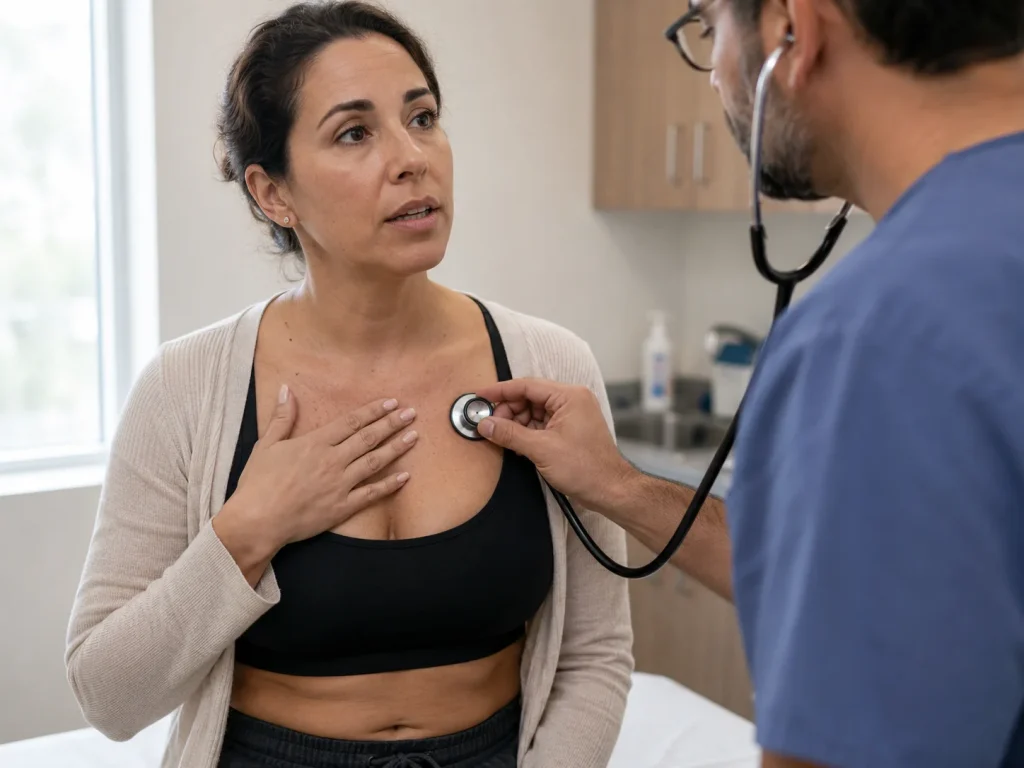
No, breast implants rarely affect breathing.
Acute Mechanical Restriction and Post-Surgical Pectoral Tension
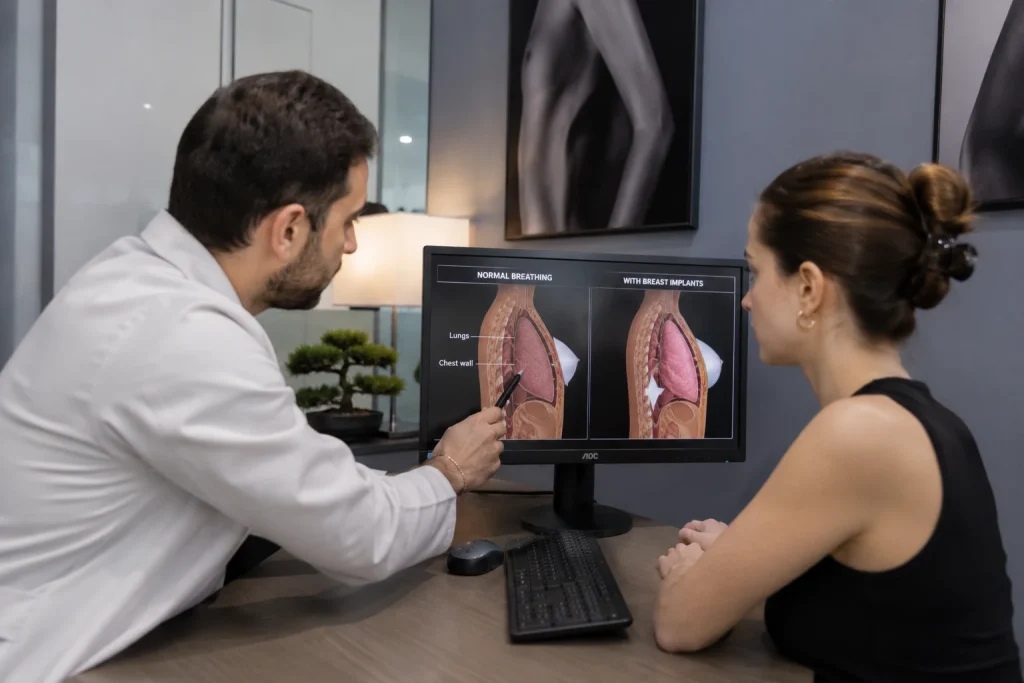
The plastic surgery aspect of prosthetic breast augmentation is very focused on methods, surgical skills, etc. Assessing how breast implants change chest respiration right after surgery, especially with an implant placed partially under the muscle, requires consideration of chest mechanics. When a woman has breast enlargement surgery using the dual-plane technique, i.e., the implant is completely or partially raised under the muscle, it is quite normal for her to feel for a while that her chest has become tighter, it is difficult to breathe, etc. This discomfort in breathing is caused directly by the changes in the structures that have just taken place.
When an implant is placed under the pectoralis major muscle, the muscle fibers have to be forcibly stretched and expanded so as to hold the new volumetric matrix. As a result, the whole chest wall comes under a strong mechanical tension, which the patient feels as if a very heavy and tight band is wrapped around her ribcage. Such muscular restriction does not allow the lungs to expand fully during deep inhalation, so the body has to resort to shallow and more frequent breathing as the muscles of the chest are getting accustomed to continuous tension that is characteristic of the first 1 week post-operative recovery.
Fluid Edema Und Surgical Compression Garments: Impact
Surgical incision, tissue manipulation, and tearing lead to a significant inflammatory reaction, causing extensive tissue swelling of the breasts and chest walls. This is the first factor, i.e., edema or swelling of tissues due to increased accumulation of fluids, which will affect the breathing of the woman after mammoplasty. To reduce this problem, the surgeon will recommend wearing a special, post-surgical compression bra or a stabilizer band that has a high-pressure level.
The purpose of this garment is to help the body get rid of excess fluids and to keep the implants in the right position. Besides this, it adds external pressure against the ribs. Therefore, the combined force of internal tissue edema and external compression can make taking a full, deep breath feel restricted. Such a change in the respiratory euphoria is very normal and will return back to normal as the early healing phase progresses.
Torso Kinetics And Athletic Lung Capacity: Curve Sculpting
It is very important for highly disciplined lifestyle people with physical demands for perfection of their athletic silhouettes to adhere to recovery constraints and be aware of their body limits. This is especially true for those who emphasize their lower body, core, and naturally narrow waist to display a perfect hourglass figure, as their breathing capacity serves as the very power unit of their physical training. First-time experiencing tightness of the chest can be a bit frustrating, and at the same time, you do not want to push your chest breathing capacity too far because this may lead to biological consequences, such as heavy chest breathing, which causes the exertional pectoral muscles to contract more strongly, thus there is a risk of implant displacement or internal bleeding.
Taking an effort to keep your pectoral muscle matrix intact and letting your respiratory patterns settle down properly will require total avoidance of heavy physical exertion, vigorous cardio, or lifting for the whole duration of the first 6 weeks after the surgery. Also, complete elimination of nicotine and other tobacco products during this time is an absolute must. Nicotine is a powerful vasoconstrictor that works systematically, so it narrows the microvessels and thereby practically deprives the healing chest tissue as well as the lungs of suitably oxygenated blood. Adopting a gentle, stress-free lifestyle daily will enhance the healing of your torso, comprising musculoskeletal and soft tissue components at the highest level of biological efficiency.
Normal Healing Adaptation from Acute Medical Hazards
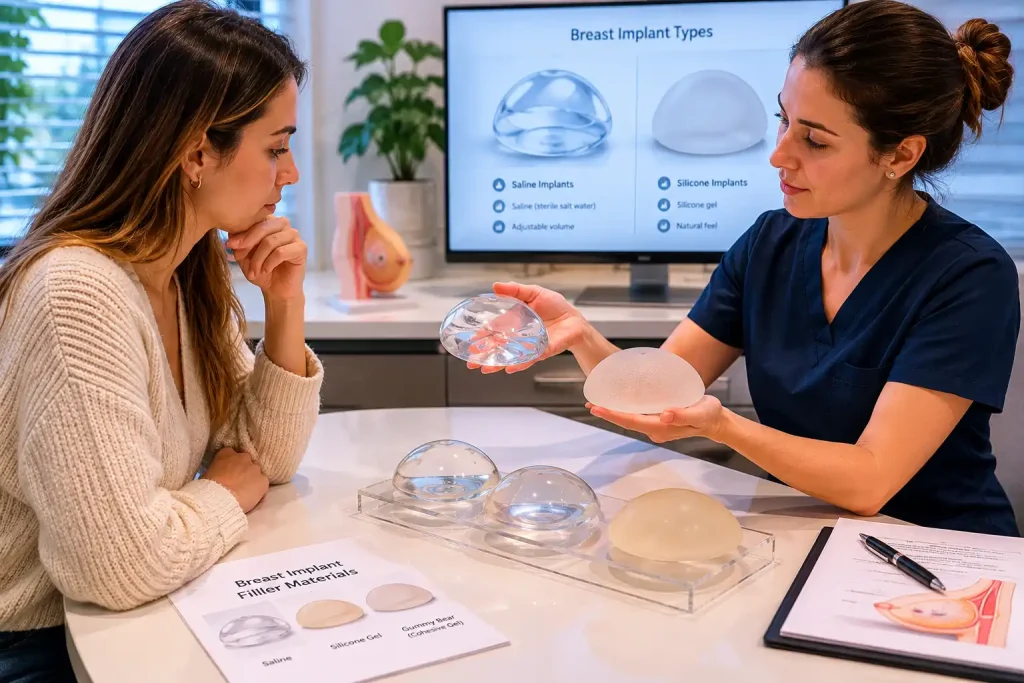
There is nothing wrong with feeling a little tightness and breathing shallow in the early phases of tissue expansion, but at the same time, it is very important to clearly define the boundaries between normal healing and medical emergencies so as not to put your systemic health at risk. The key distinctions are:
- Normal Sensation: A feeling of tightness, pressure, or minor soreness of the muscles that is spread symmetrically on both sides of the chest wall and which resolves after resting, taking painkillers and slow, relaxed diaphragm breathing.
- Acute Medical Hazard: Severe shortness of breath that suddenly occurs, very sharp and localized chest pain during inhalation, highly increased heart rate (tachycardia), coughing with blood, and fainting. These signs generally indicate serious internal complications like pulmonary embolism or pneumothorax and are accompanied by emergency medical treatment needs.
Breast Implants in Turkey
With LIN Europe Clinic, you will be stepping into a first-class global medical haven where your breast beautification, high-definition body remodeling, and bodily safety are handled with the highest clinical expertise and the deepest human touch. We understand that following the accurate recovery timelines and undergoing the physical changes required post the plastic surgery can be a very sophisticated and transparent process supported by a highly evidence-based medical environment. LIN Europe Clinic in Turkey is one of the international leaders in breast augmentation and prosthetic breast implant aftercare. It provides a very relaxing atmosphere where you can focus on your health, which strictly adheres to the highest patient safety standards globally.
Choosing our committed doctors at LIN Europe Clinic in Istanbul, your respiratory and healing measures will be followed with top-level accuracy. We offer you complete and customized post-operative care, recovery through deep-breathing exercises, and detailed care checklists for all the stages of tissue maturation and lifestyle integration. Our highly qualified medical personnel ensure that your cosmetic investment and systemic health are perfectly protected and that you are comfortably settling into your dream figure without worry. Get acquainted with the thorough and wide-ranging care of LIN Europe Clinic and achieve a splendid and fully safe outcome masterfully delivered in Turkey.
FAQ:
Yes, at least temporarily, implants can lead to a feeling of tightness or shallow breathing for a few weeks after surgery because of the swelling, tight medical bras, and the stretching of your chest muscles.
Generally, muscle tightness and the feeling that your breathing is limited are at their peak for the first week or two as the pectoral muscles become used to the changes and the initial swelling decreases.
Yes, submuscular (dual-plane) placement can cause more initial tightness compared to placing the implants directly on top of the muscle because the pectoralis major muscle has to be stretched in order to accommodate the implant.
Very large implants can exert a constant mechanical load on the rib cage, which over time, may cause slight postural changes or a persistent feeling of heaviness in the chest.
Practicing slow and gentle diaphragmatic breathing (belly breathing) while sitting fully upright is the best way to go. This will help you to breathe deeply without putting any strain on your chest muscles.
Tebbetts, J. B. (2006). Minimizing complications and maximizing safety in breast augmentation: Preoperative protocols and dual-plane tissue dynamics. Clinics in Plastic Surgery, 33(2), 181-195.
Adams, W. P., et al. (2010). The impact of submuscular implant positioning on chest wall compliance and acute respiratory mechanics. Aesthetic Surgery Journal, 30(4), 542-549.
Rohrich, R. J., et al. (2014). Long-term architectural stability, capsular remodeling dynamics, and patient safety standards in prosthetic breast surgery. Plastic and Reconstructive Surgery, 134(3), 356-365.