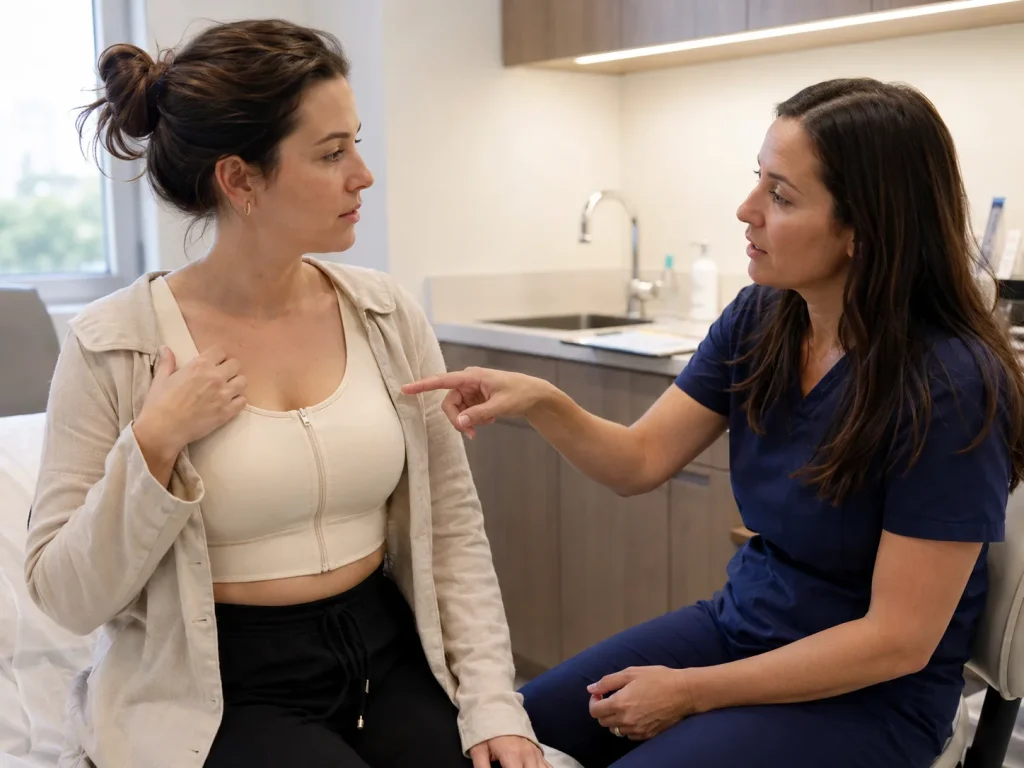
Yes, nipple sensation and appearance may change.
Biomechanical Tissue Expansion and Positional Shifts
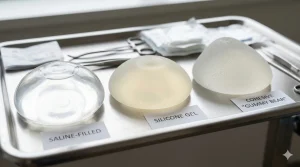
In such a very advanced branch of plastic surgery and prosthetic breast enhancement, the question of how the nipple-areola complex (NAC) changes or gets adjusted to implants can only be answered well after explaining some essentials about soft tissue mechanics. Adding a very soft matrix layer of silicone gel behind the breast tissue in women will physically change the structural layout. The volume increase by the implant will exert a force on the skin to stretch and expand due to mechanical tensions.
The main cause of the change seen in the nipples is volume-related. With the implant, the breast is pushed out; the nipple and areola, the circle of darker skin around the nipple, may look wider, and the nipple flatter or a little more protruded. It is also possible that the physical location of the implant will result in movement of the nipple position on the chest wall. If implant placement is done well, the implant will displace the nipple-areola complex in a more midline, anterior and rejuvenated position on the breast contour, thus enhancing your overall silhouette.
Neurological Fluctuations: Sensory Hypersensitivity and Numbness
One of the major and most frequently checked changes in the nipple after breast augmentation is alteration of neurological sensation and that too temporary. The nerves controlling the sensation of nipple-areola complex are very fine and these are derived mostly from the fourth lateral cutaneous branch of the intercostal nerves.
Making an implant pocket is done by the surgeon; especially if a submuscular or dual-plane technique is used, these deep nerve fibers will be mechanically stretched temporarily, compressed, or even experience microtrauma to the area. This manipulation of nerves will result in a temporary neural stun, leading to two types of sensory changes or fluctuations:
- Hypersensitivity: The nerve fibers become very reactive during the early phase of tissue healing and even small rubbing by clothing may feel very intense or uncomfortable.
- Hypoesthesia (Numbness): The nerve impulse conduction gets slowed leading to a sense of dull, partly numb or complete loss of sensation of the nipples during the first post-operative months.
Torso Kinetics and Athletic Integrity to Protect Your Recovery
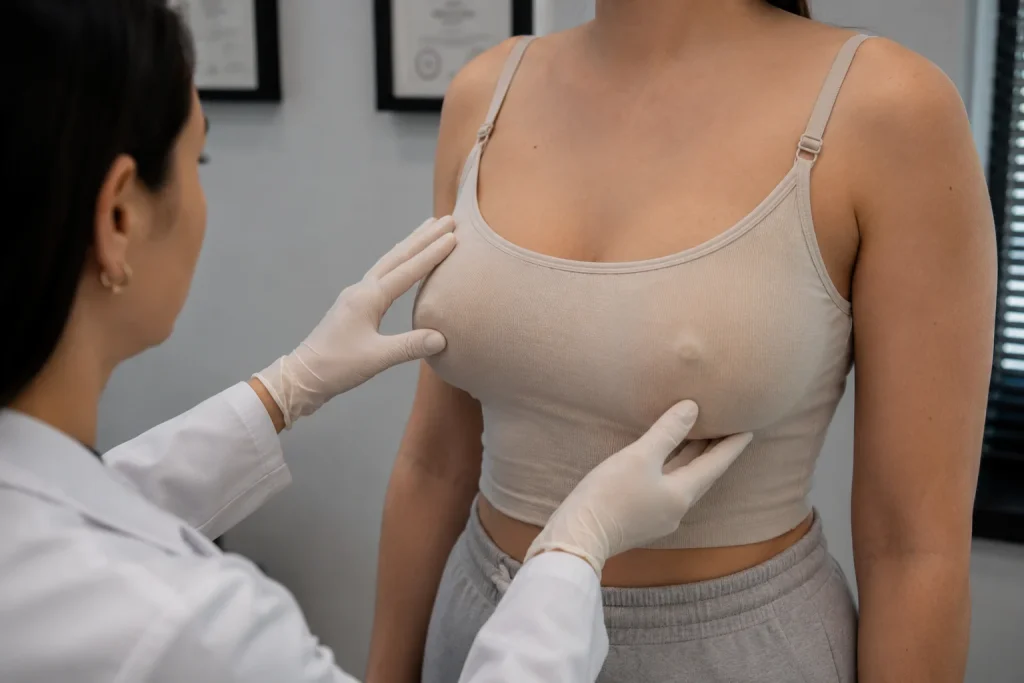
Most importantly, strict physical and behavioral limitations during the first phase of tissue expansion are necessary for those people who have a very disciplined lifestyle and expect absolute perfection in body proportions. For those who are regularly working on narrowing their waist, developing lower body curves, and maintaining an elite athletic figure, the healing chest wall should be protected visually and physically. Taking part in sports that involve high impact or forcing early chest movement biologically will result in a severe penalty: the healing tissue layers will be physically stressed, nerve irritation will be prolonged and implant displacement can occur.
For the protection of your soft nipple areola complex and for your surgical benefits to last, it is mandatory to avoid high-impact bouncing, running, or heavy lifting of the upper body for at least the first six weeks. Besides this, to live with your body at its best and for the TAC surgical outcome you undertake, it is essential that you abstain from smoking and use of tobacco products during this phase of healing. Nicotine is a very potent systemic vasoconstrictor which will result in the narrowing of the microvessels supplying the areola, and thus the nerves and skin cells will be deprived of the vital oxygenated blood supply essential for clean cellular regeneration. A healthy and toxin-free internal system will also permit your muscles and newly created curves to be at their peak biological efficiency.
The Biological Recovery Timeline and Sensory Restoration
It is very helpful to have some knowledge about the biological timeline of nerve regeneration and tissue softening when you are changing your body to a new permanent shape. At the same time, it is very necessary that you do not misunderstand early sensory changes or minor positional changes as permanent tissue damage; your tissues will continue to accommodate the implant for several months.
| Recovery Phase | Timeline | Biological Progress & Nipple Expectations |
| Acute Swelling Phase | Weeks 1–3 | Peak tissue fluid pooling; areolas may look highly tight, flat, or numb due to local nerve stunning. |
| The “Drop and Fluff” Phase | Weeks 6–12 | Implants slide downward into their natural pockets; muscle compression drops, reducing superficial projection tension. |
| Final Stabilization | Months 3–6 | Tissue memory finalizes; nipple sensitivity steadily returns to its normal biological baseline. |
As all the micro swelling disappears and the underlying muscle fibers relax over the implant shell, the skin envelope will lose its rigidity or tightness after surgery. The thin internal scar capsule will have a shape-stabilizing function as it encloses the prosthetic and simultaneously allows the nipple-areola complex to be free in its natural texture, responsiveness, and fluid movement from all angles.
Breast Implants in Turkey
LIN Europe Clinic: When you choose us, you step into a world-class global medical sanctuary, where your breast aesthetics and body transformations through high-definition surgical pathways are handled by the top clinical experts with deep empathy and care. We know that figuring out the exact recovery timelines and the natural tissue remodeling post-prosthetic surgery requires a very sophisticated, clear, and highly supportive environment that puts evidence-based medicine first at all times. LIN Europe Clinic in Turkey is recognized internationally as a major center for advanced breast augmentation and prosthetic aftercare and a place where your health journey is strictly overseen by the best patient safety standards in the world.
By entrusting your care to the highly skilled team at LIN Europe Clinic in Istanbul, your recovery measures are tracked with utmost precision in diagnostics. We deliver detailed, personalized post-operative care, sensory mapping and step-by-step healing guidelines to cover every stage of your tissue maturation and lifestyle integration. Our highly trained medical professionals safeguard your body-shaping endeavour along with your systemic health, granting you the confidence of enjoying your desired body shape. Feel the excellent and complete care of LIN Europe Clinic and produce a carefully balanced artwork in Turkey safely and expertly.
FAQ:
Yes, the position of your nipples may change temporarily, they may protrude a bit more or look enlarged, and also, due to implant stretching the skin, they may go through some sensory changes like numbness or high sensitivity that are usually temporary.
Temporary numbness of the nipples is a typical experience, and most of the time the sensation starts to come back after 2 to 3 months, although in some cases it might even take up to 6 months for the nerves to fully heal and restore sensation.
There is a risk, but it is very small. Sensation loss is usually only temporary during the early phase of healing, but permanent loss of nipple sensation happens in less than 5% of primary breast augmentations.
Immediately after surgery due to swelling, your areolas might actually appear a bit bigger because of the tight mechanical tension on the skin envelope but they will ease and settle into a natural proportion after a few months.
Indeed, where the cut for the surgery is made can affect nerve pathways a bit; doing a periareolar incision, which is one made around the edge of the areola, has a slightly increased risk of temporary loss of sensation when compared to an inframammary fold incision, i.e., one made under the breast fold.
Tebbetts, J. B. (2002). Dual plane breast augmentation: Optimizing implant-soft tissue relationships and analyzing nipple-areola complex dynamics. Plastic and Reconstructive Surgery, 107(5), 1255-1272.
Adams, W. P., et al. (2010). The “drop and fluff” phenomenon: Analyzing submuscular compression, skin envelope expansion, and sensory tracking timelines. Aesthetic Surgery Journal, 30(4), 542-549.
Rohrich, R. J., et al. (2014). Long-term architectural stability, nerve adaptation cascades, and patient safety standards in prosthetic breast surgery. Plastic and Reconstructive Surgery, 134(3), 356-365.