
Yes, eyelid surgery is often done with local anesthesia.
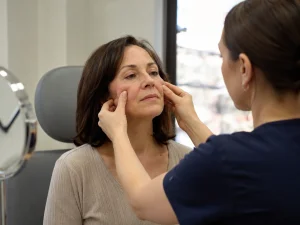
Before patients even start considering eyelid surgery or blepharoplasty, they mostly ask about how it will change their looks. Will they look younger? Will the bags reappear? Will the scars be noticeable? But by the time the operation is only a few days away, the patient’s anxiety has usually changed from the result of the surgery to the very moment of the operation. They begin to feel panic when they come to the scary realization that a doctor will be performing the delicate procedure literally a few inches away from their eyeball.
That really makes people ask the question that is very common and totally reasonable: “Do they put you to sleep for eyelid surgery?” The truth is that it depends to a great extent on your surgical plan. Whether you treat the area of the upper eyelids only, the lower eyelids or the combination of both determines the type of anesthesia. At Lin Europe Clinic safety in both the physical and the psychological aspects are our first concern. We adjust anesthesia in such a way that your mind is calm, and your body safe, at all times. Below is the explanation of what happens inside the operating theatre so that you can choose the option that seems to you the most comfortable.
Upper Eyelids: The “Dentist” Approach
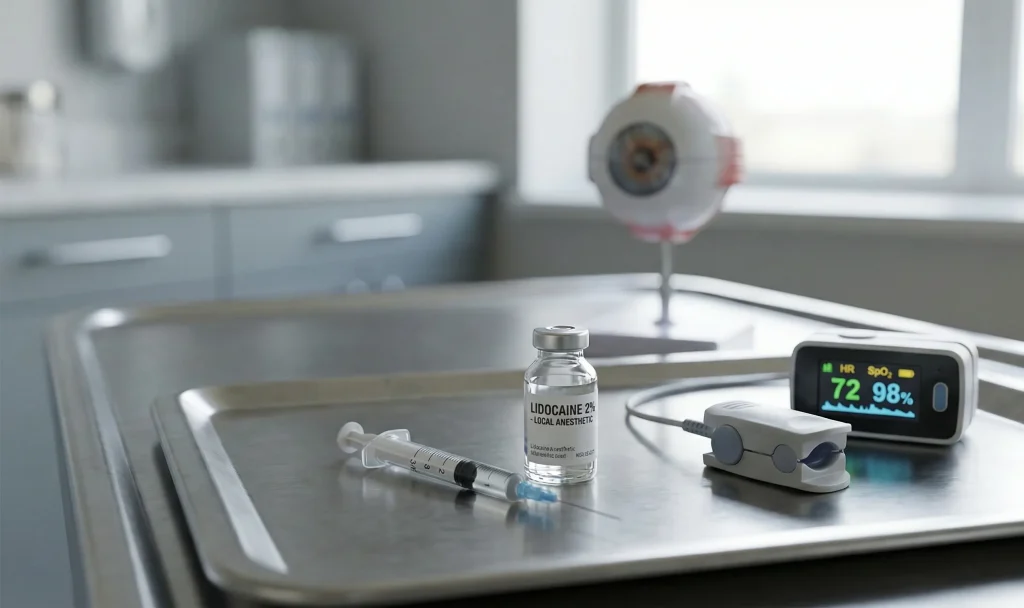
In case you plan to have only an Upper Blepharoplasty—i.e. the removal of the excess and loose skin which forms a kind of a hood on the upper eyelid—you most probably will not be put to sleep. Actually, a lot of highly skilled eyelid surgeons prefer the patients to be conscious during the operation. According to most oculoplastic surgeons, the procedure of upper eyelid surgery is done under Local Anesthesia and has a lot in common with a dentist appointment.
First of all, you will be made comfortable by lying down on the operating table. After that, a numbing liquid will be injected very gently into the skin of the eyelid by the surgeon. The injection will probably feel as a slight sting and a little burning for about 10 seconds, and then the area will be completely numb. The only reason why the doctor insists on you being conscious for upper eyelid surgery is the possibility of regulating the amount of skin the surgeon needs to remove. It is an extremely important task not to let too little or too much skin go. Since you are awake, the doctor can instruct you to open and shut your eyes during the operation. This helps the surgeon to achieve perfect symmetry as well as the assurance of your eyes being closed completely, thus not developing the dry eye afterwards. You can always use headphones and listen to your favorite songs, talk to the friendly staff or simply lie still. You will sense at times that the surgeon’s hands move around and press your eyelids but no cutting.
Lower Eyelids: The Comfort Zone
Lower Blepharoplasty is truly a different ballgame. There is a real risk of changing with this surgery the natural contour of the eyelid and also making quite changes internally. Also, the soft tissues are very sensitive in the region of the eye socket. Some patients, even though knowing that they won’t be hurt, may find it difficult to tolerate the feeling of pressure at their eyes.
Hence, at the lower eyelids surgery, the regular practice was to induce either Twilight Sedation (IV Sedation) or General Anesthesia. In the case of twilight sedation, the anesthesiologist instills the medication directly into the bloodstream through a vein. As the patient starts to breathe without assistance from the machine and the endotracheal tube is withdrawn, he or she is already in a deeply relaxed dreamlike state. Technically, you could respond to a stimulus if it was strong enough but practically, you are detached from the whole situation comprehensively. This way you are neither aware of the operation nor are you concerned, besides which you won’t have a memory of it later. It is a kind of middle ground that makes for a comfortable experience and at the same time avoids the complicated recovery of general anesthesia.
The “Combined” Factor and General Anesthesia

You can decide on whether General Anesthesia is the proper one for you when you see the doctor in Turkey and plan to get a “full eye rejuvenation” operation—here you should understand that means both upper and lower eyelids with maybe a canthopexy as well (surgical lifting of the corner of the eye).
If you are given local anesthetics, you are going to have a big job keeping yourself absolutely still over a period of time which normally lasts for a couple of hours or so. General anesthesia not only leaves the body still but also tightly regulates the blood pressure of the patient. Control of blood pressure is the key factor that limits blood loss during surgery on the eyes. Lesser blood in the surgical field will result in decreased bruising and swelling after surgery. When the surgeon’s task is working with the scalpel round very delicate and sensitive tissues, it is very nice to be free from the interruptions or to have lost the times when the patient has moved as the small sneezing or the slight twitch of the hand. That is exactly what general anesthesia provides.
Waking Up and Recovery
The after-sleep lethargy is the one that scares most of the people who haven’t been under general anesthetic yet. But twenty years back, the drugs we had to use were not as good as the ones nowadays. At Lin Europe Clinic only those anesthetics which go out of your body fast are employed. Suppose the patient is anesthetized locally then after finishing the operation and having the last stitch put, 15 minutes later one can walk out and stand. One the other hand, if sedation or general anesthesia is given, you need to stay in a spacious clinic recovery room for an hour or two until you shake off the drowsiness. Irrespective of which option the patient chooses, one is not allowed to drive or walk home alone. Thus, an escort is a must who can either be a friend, a relative or our VIP transfer service.
Frequently Asked Questions About Eyelid Surgery Anesthesia
If you have a sleepy eyelid or ptosis as it is medically called, the surgery to fix that will be by tightening the muscle of the levator that lifts the eyelid, instead of just cutting off the loose skin, like in a standard cosmetic lift.
You don’t have to be awake if that’s what you want. Surgeons often prefer local anesthesia for upper lids as they can check symmetry but if you are anxious, you can ask for sedation or general anesthesia.
After eyelid surgery, you are very tired because your body is using most of its energy to heal the wounds while the side effects of anesthesia or sedation can also make you feel a little groggy for several days.
The surgery for ptosis is a procedure called ptosis repair which is different from a blepharoplasty as ptosis repair is done by tightening the muscle inside the eye to open the eye aperture wider while blepharoplasty concentrates removing the excess skin around the eyes.
The newest method of blepharoplasty emphasizes on tissue preservation. For example, the eye bags are not removed but instead, they are used to fill hollows by fat transposition, which avoids the deep hollowed-out look of older techniques.
Hass, A. N., et al. (2014). Local anesthesia in blepharoplasty: A review of techniques and safety. Plastic and Reconstructive Surgery.
Zarem, H. A., & Resnick, J. I. (2002). Minimizing pain and anxiety in blepharoplasty surgery. Aesthetic Surgery Journal.
Friedberg, B. L. (2010). Anesthesia for cosmetic surgery: The TIVA/local revolution. Aesthetic Plastic Surgery.