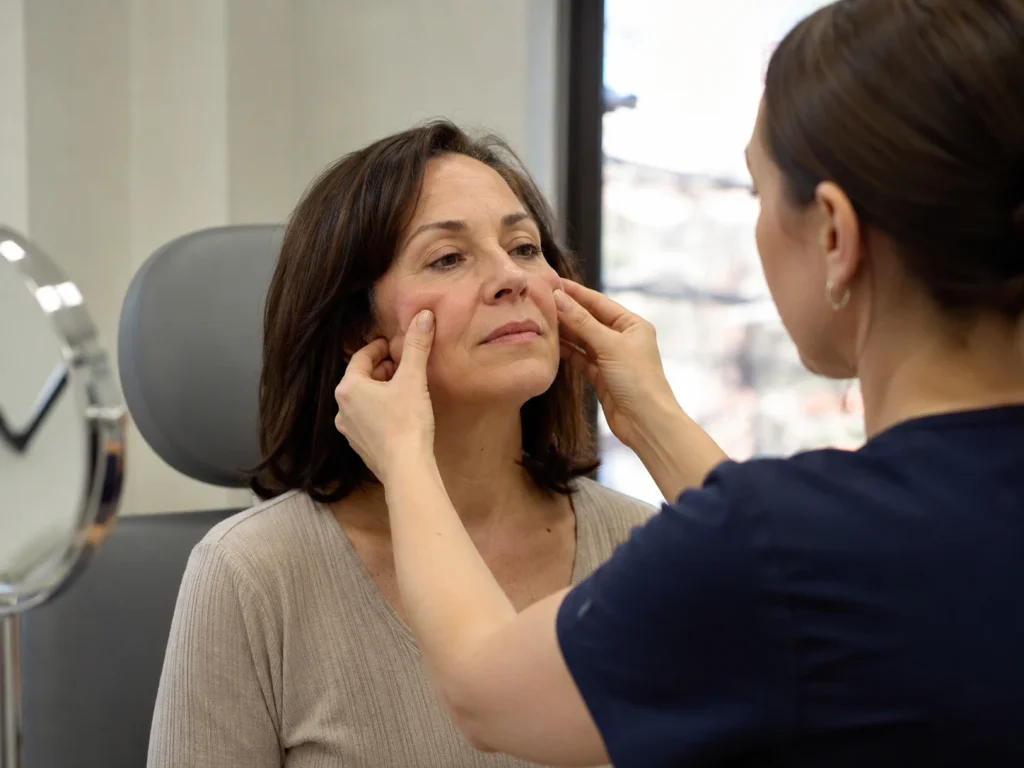
Yes, it restores cheek volume and lift.
Structural Repositioning vs. Volume Artificial Inflation
The correction of a flat, descended, or tired cheek matrix by using the advanced facial plastic surgery technique of midface rejuvenation is a task that necessitates the accomplishment of strict anatomic precision. As one gets older, the deep malar fat pads, which are the structural bases of the youthful contour of the cheeks, gradually become separated from the orbital bone, and the effect of gravity causes them to descend vertically. This displacement results in hollow eye sockets and the prominence of nasolabial folds (smile lines).
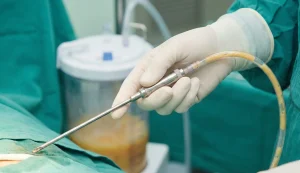
A midface lift (endoscopic cheek lift) is a very effective anatomical technique that can restore the volume of the cheeks, making them look younger. Instead of relying on the use of synthetic materials to give the surface an artificial volume, it tackles the problem of aging at its source by lifting the native tissues which had sunken down. With the help of advanced endoscopic techniques and through concealed temple incisions which are concealed, the surgeon will raise the malar fat pads vertically, which had descended, and reposition them on top of the cheekbones, thus instantly obtaining a natural, well-lit curve.
The Biomechanical Vector: Elevating the Descended Malar Matrix
The outstanding visual result achieved by an endoscopic midface lift is totally dependent on its vertical vector of suspension. Typical deep-plane facelifts will mainly pull the tissue in a horizontal direction along the jawline; although this is quite effective for the lower face, it often doesn’t manage to properly restore the projection of the middle of the cheek. By concentrating solely on the vertical midface vector, the surgeon is able to not only tighten the loosened fascial layers but also to fix the displaced fat pads directly to the firm deep temporal fascia. This mechanical hanging brings about an immediate, even flow from the lower eyelid to the cheekbone by bulging out the depressed areas and shrinking the loose skin. What we get is a full comeback of the mid-face volume that still runs naturally during expressive kinetics.
Vascular Kinetics to Safeguard Tissue Adhesion
Strict adherence to one’s behavior limits during the post-operative healing time is extremely important for those who value an elite personal presentation and demand a flawless facial contour at the highest level. For people who are determined and regularly focus on showing off their very sharp, high-definition facial balance coupled with an athletic silhouette, it is critical to preserve the freshly elevated malar tissues so as not to undo your structural progress. Getting physically strained too soon or doing high-impact exercises will cause a serious biological setback: it may even result in the sutures being accidentally pulled deeply, in fluid accumulation internally (seromas), or in the tissue matrix being destabilized.
In order for your exquisitely shaped cheek contours to become firmly established with the greatest level of structural accuracy, you have to sleep in an elevated position—by using several pillows—and refrain from any heavy training, running or intense core exercises for at least four weeks. Apart from this, the total removal of nicotine and tobacco consumption from your life is a must. Nicotine is a very strong systemic vasoconstrictor, which means that it quickly makes the tiny blood vessels supplying the facial skin flaps narrower and, as a result, the healing tissues are deprived of the vital oxygenated blood. Keeping the internal system free of toxins assures that your cheeks will settle at their biologically highest.
Multi-Modality Synergy: Combining Lift Protocols with Fat Grafting
Knowledge of the physiological limits of structural midface elevation allows patients to clearly visualize their path of facial rejuvenation. An endoscopic lift will do a great job of repositioning fat tissue that has descended, but it is not capable of creating new cells to replace severe, age-related skeletal atrophy. In cases where fat loss has occurred across the whole face, it may be necessary to achieve harmonization by performing both a lift and autologous fat grafting (the transfer of cells that come from your own body after purification). The surgeon initially raises the structural matrix and then carefully deposits tiny micro-fat parcels into the superficial dermal layers. This hybrid modality gives birth to a perfectly smooth, really young-looking mid-face, with position and density being restored permanently.
Midface Lift in Turkey
With LIN Europe Clinic, you get access to a first-class global medical oasis where your facial aesthetics, advanced structural remodeling, and surgical pathways are delivered at an uncompromised level of clinical expertise and profound empathetic care. We understand that undergoing the exact recovery stages and anatomical limitations necessary for the advanced midface restoration makes an exceptionally sophisticated, transparent and highly supportive environment that prioritizes evidence-based medicine essential indeed. LIN Europe Clinic in Turkey is recognized worldwide for advanced facial contouring and endoscopic aftercare, offering a peaceful place where your health plan is strictly regulated by the highest standards of patient safety worldwide.
By handing over your deep trust to our specialist team at LIN Europe Clinic in Istanbul, you will have your recovery monitored with absolute diagnostic accuracy. We offer extensive and personalized post-operative care, high-definition tissue-kinetics monitoring, and customized healing checklists to walk you through the stages of tissue maturation and lifestyle integration. Our premier medical team protects both your beauty investment and systemic health so that you can enjoy your new silhouette with complete peace of mind. Indulge in the refined, comprehensive care of LIN Europe Clinic and uncover a masterfully balanced canvas, safely and skillfully delivered in the heart of Turkey.
FAQ:
Yes, a midface lift makes your cheeks look significantly fuller by vertically lifting your own dropped cheek fat pads back up onto the cheekbones, restoring natural volume.
A standard facelift pulls the lower jaw and neck tissue horizontally, while a midface lift targets the central area under the eyes vertically to restore cheek fullness.
Primary swelling and bruising improve within 10 to 14 days, allowing a comfortable return to work, though subtle internal tissue healing continues for 3 to 6 months.
Yes, by elevating the descended malar fat pad upward, the procedure bridges and smooths the transition between the lower eyelid and the cheek, softening hollow tear troughs.
Yes, the deep tissues are anchored to stable structural planes providing long-lasting correction, though your face will continue to experience natural, graceful chronological aging over the years.
Ramirez, O. M. (1995). Endoscopic subperiosteal midface lift: Architectural parameters, malar fat pad repositioning, and vertical suspension vectors. Plastic and Reconstructive Surgery, 95(4), 621-632.
Hester, T. R., et al. (2000). Evolution of midface rejuvenation: Combining endoscopic lift protocols with autologous micro-fat grafting for volume optimization. Plastic and Reconstructive Surgery, 105(3), 1111-1122.
Rohrich, R. J., et al. (2013). Advanced postoperative care, deep tissue stability, and long-term volume preservation standards in facial contouring. Aesthetic Surgery Journal, 33(4), 512-521.