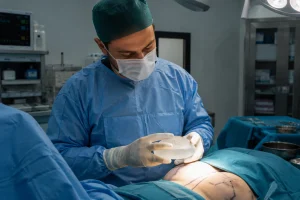

Drains usually stay one week.
In the realm of high-volume body contouring and abdominal reconstruction, a tummy tuck or abdominoplasty is a radical cosmetic surgical technique which involves the large-scale undermining of the abdominal skin and the repair of the rectus muscles. This naturally results in the creation of a “dead space” between the newly tightened muscle wall and the skin flap. When patients inquire how long drain tubes stay in after a tummy tuck, the medical response is that it mainly depends on the person’s body and its natural rate of lymphatic fluid production. Normally, surgical drains—mainly Jackson-Pratt (JP) drains—are left for 7 to 14 days. These drainage tubes are crucial for preventing the accumulation of seromas (fluid pockets) that can lead to the disruption of the important phase of neocollagenesis, during which the skin adheres to the underlying muscle for a flat, lasting result.
At Lin Health Europe Clinic, we view drain management as a key part of ensuring your aesthetic results. For our international patients who come to Turkey, we make it clear that removing drains is not decided by a “calendar date” but a by the specific fluid output volume. Our clinic is the leading center for advanced abdominal sculpting, performing at a level of medical rigor where we use high-precision drainage protocols to minimize the risk of post-surgery complications, so that your path to a rejuvenated and toned figure is aligned with the highest clinical standards of vigilance and safety.
The Clinical Purpose: Eliminating Dead Space

Knowing when drains will come out requires understanding why they are necessary in the first place. During a tummy tuck, the extensive tissue separation results in an inflammatory reaction and causes the production of serosanguinous fluid. If no drains are used, this fluid would accumulate in the “dead space” between the tissues and effectively prevent the two surfaces from bonding again. Fluid accumulation, known as a seroma, can lead to infection as well as cause swelling that continues over time if left untreated.
At Lin Health Europe Clinic in Turkey, our doctors insert these silicone tubes that provide a continual, low-pressure vacuum to help the body remove the fluid. By keeping the internal environment “dry,” we make it possible for the skin and muscle to start the process of structural fusion right away, which biologically underpins the smooth, tight body contour achieved in Istanbul.
The Removal Criteria: The “30ml Rule”
The key clinical measure for deciding when a drain can be removed is the volume of the fluid flowing out per day. Here in our Istanbul clinic, we give our international patients a “Drain Log” to keep track of the fluid volume discharged every 24 hours. The generally accepted rule for drain removal is when the total drainage is less than 30 milliliters (ml) per drain in a 24-hour period, occurring on two consecutive days. Premature removal of drains—while the body is still producing a large amount of fluid—significantly increases the chance of a secondary seroma developing. On the other hand, leaving them in for too long can result in the risk of local skin irritation or infection moving upward.
At Lin Health Europe Clinic in Turkey, the medical team professionally evaluates your logs so that the drain removal happens at exactly the right physiological moment when your body has regulated its fluid levels.
The 7-to-14-Day Timeline: What to Expect
Although some patients heal faster than others, most drain tubes are removed for the majority of patients around the first two weeks post-op. The timeframe usually depends on the extent of the surgery and how active you are while in Turkey.
- Days 1–5: At this time, the fluid output is usually at its peak and the fluid might look bright red. This represents the body’s reaction to the injury caused by the surgery as it works to clear it up.
- Days 6–10: The fluid changes to a lighter, straw-colored “serum” and its amount is getting smaller. Our clinic in Istanbul has many patients who get their first drain removal in this period.
- Days 11–14: Patients who have had a full abdominoplasty together with heavy liposuction generally have their second drain removed around the end of the second week.
We encourage our international visitors to keep calm and wait because a few extra days with a drain is really a very minor sacrifice for a completely problem-free, flat tummy in Istanbul.
Maintenance and Hygiene Protocols

Proper care of the drain tubes while they are inserted is equally important in preventing infections as well as keeping them functional. Removal of the drain tubes due to a “clog” is a highly urgent matter because rapid fluid accumulation can occur.
At Lin Health Europe Clinic, we guide our patients by teaching them the “stripping” or “milking” method. It consists of gently moving the fingers along the tubing in order to push any small clots into the collection bulb so as to maintain continual vacuum pressure. Also, the sites where the tubes come out of the skin need to be kept spotlessly clean. We supply our patients with special sterile gauze and antibiotic ointment that they use for dressing these sites twice a day. Such professional measures effectively stop bacteria from traveling up the tube and contaminating the internal surgical site, which is a procedure we require from all our guests in Turkey.
The Removal Procedure: Is It Painful?
Among all the causes of patient stress, the drain removal probably tops the list. From a clinical standpoint, the drain removal after a tummy tuck is a quite simple outpatient procedure that is done here in our clinic in Istanbul and is usually without pain. Lower abdominal sensory nerves are temporarily out of commission during a tummy tuck, so patients mostly indicate just a “slight pressure” or a “sliding sensation” when the tube is pulled out. This withdrawal is performed in less than one minute.
After it is done, the small wound where the drain came out is covered with a bandage and it usually heals by itself within 1 to 2 days. At Lin Health Europe Clinic, your medical team will make sure you are comfortable and at ease throughout these steps, helping you every step of the way toward your final, drain-less outcome in Turkey.
FAQ:
The surgical drains usually are kept in for 7 to 14 days, the length of which will be determined by how much fluid you produce. We will take the drains out when the daily output is less than 30ml for two consecutive days at our clinic in Turkey.
When a drain gets clogged, the fluid will accumulate inside the body, and it may even be necessary to physically “strip” the tube to re-establish the vacuum pressure. Our team in Istanbul will give you step-by-step directions on how to care for your drains in order to reduce the risk of these clogs.
You will get a special journal to note the amount and color of the fluid each time you empty the bulbs. Our doctors in Turkey rely on this information to make the decision about when it is safe to remove your drains.
Most people can have a shower after 48 hours post-surgery, however the drain exit sites must be kept well protected and one must not take a bath. We actually advise during your shower at the clinic in Istanbul, you can clip the drain bulbs to a lanyard which hangs around your neck, so that they do not get pulled.
Removal is very fast and only a slight “sliding” feeling, not a sharp pain is generally reported. Since the belly skin is often still numb post-surgery, most patients at our Turkey clinic say the whole thing feels quite easy and comfortable.
Matarasso, A. (1989). Abdominolipoplasty: a system of classification and treatment for combined abdominoplasty. Aesthetic Plastic Surgery.
Pollack, H., & Pollack, T. (2000). Progressive tension sutures: a technique to reduce local complications in abdominoplasty. Plastic and Reconstructive Surgery.
Nahas, F. X. (2001). An aesthetic classification of the abdomen based on the myoaponeurotic layer. Plastic and Reconstructive Surgery.
Antonetti, J. W., & Antonetti, V. V. (2010). Reducing seroma in abdominoplasty: the progressive tension suture. Aesthetic Surgery Journal.
Swanson, E. (2015). A prospective study of 100 consecutive abdominoplasties, emphasizing the use of surgical drains. Plastic and Reconstructive Surgery.
Di Pietro, V., et al. (2014). Management of seroma after abdominoplasty: a systematic review. Journal of Plastic, Reconstructive & Aesthetic Surgery.