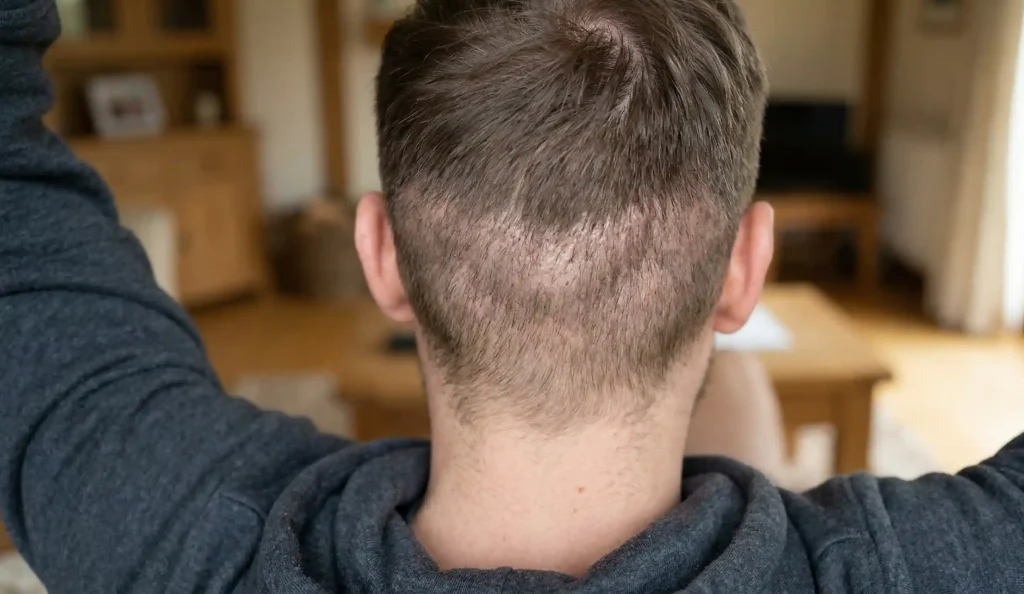
Donor thinning may appear temporarily.
Assessment of Donor Zone Density and Distribution of Hair Follicles
When it comes to follicular unit extraction (FUE) and high-definition hair restoration techniques, the donor area—mainly the back and sides of the scalp—is regarded as a limited source of “permanent” hair. Biometrically, the success of a hair transplant depends on carefully planning the relocation of these follicles to the areas in need without making the donor area appear hairless. The medical norm for the preservation of overall look is the “extraction ratio,” which means that only a certain percentage of hair units (usually 15% to 20%) are taken out. When this ratio is followed, the hair around the extraction point naturally covers the holes, thus keeping the look of a complete and healthy hair system intact.
At Lin Health Europe Clinic, we view donor availability assessment as a matter of precise medical execution. Our experts in Istanbul take advantage of advanced scanning techniques to set the biometrics baseline of every individual, ensuring that the hair removal procedure is in line with the overall wellness of your scalp. It is our understanding that surgical genius is characterized by the capacity to provide maximum coverage without altering the natural beauty of the donor area.
Methods of Graft Removal and Their Effect on Perceived Hair Volume
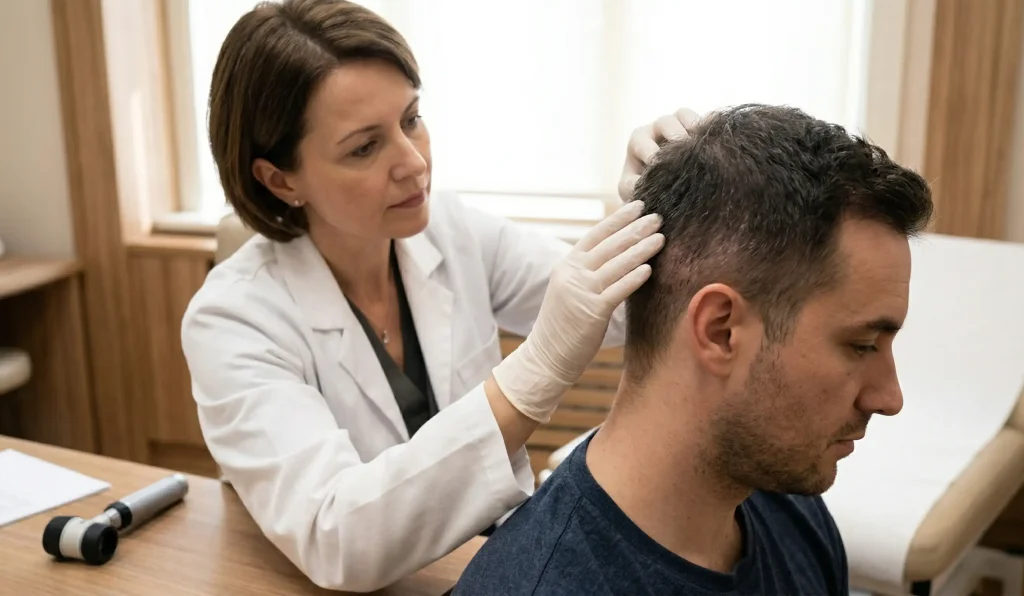
The condition of the donor region after a hair transplant depends largely on the technique of removal and the skill level of the surgeon. In contemporary hair transplant procedures, a pattern of random extraction is used as it is vital to steer clear of “over-harvesting.” That could eventually lead to a “moth-eaten” or patchy look of the scalp. The method of evenly distributing the removal sites over the whole safe donor zone is aimed at making the loss of overall volume imperceptible to the naked eye. Such a tactic is even more significant when several thousand grafts are removed and yet the donor zone remains to display a harmonious look that allows the patient to keep wearing their hair at different lengths without giving away details of the surgical intervention.
What it means to be a professional at Lin Health Europe Clinic is to engage in the practice of using very thin micro-punches that reduce tissue trauma and make visible scarring impossible. Our medical team in Turkey possesses excellent technical capabilities and uses them to guarantee that every single follicle removal is performed with the highest precision and has a focus on the end result of donor hair density and health over time. This level of commitment ensures that the outcome is harmonious with nature and that it is almost impossible to tell that one has undergone a hair restoration.
Natural Healing Processes and Hair Thinning After Surgery
Many patients are surprised when they see the donor region looking hair-thinned for a while after the session, which is actually related to physiological “shock loss.” This temporary situation occurs as a response to surgical trauma and edema by an entry of the surrounding hairs into the resting phase. Though it might lead to worry, it is an entirely ordinary part of the tissue healing phase and does not imply any permanent loss of the follicles. Once structural harmony of the scalp is regained and inflammation is resolved, these hairs will typically resume their growth phase, and the donor area will reach its usual density post hair transplant within a few months.
We give the donor area the highest level of care. Lin Health Europe Clinic is where medicine is constantly evolving, and it is here that we offer patients a specially tailored post-operative regimen to keep edema to a minimum while preserving the overall scalp vitality. We do surgery in a way that ensures that any temporary thinning is just an expert-guided step towards achieving a stable and healthy final result.
Donor Area Harmonization and Disguise of Extraction Points
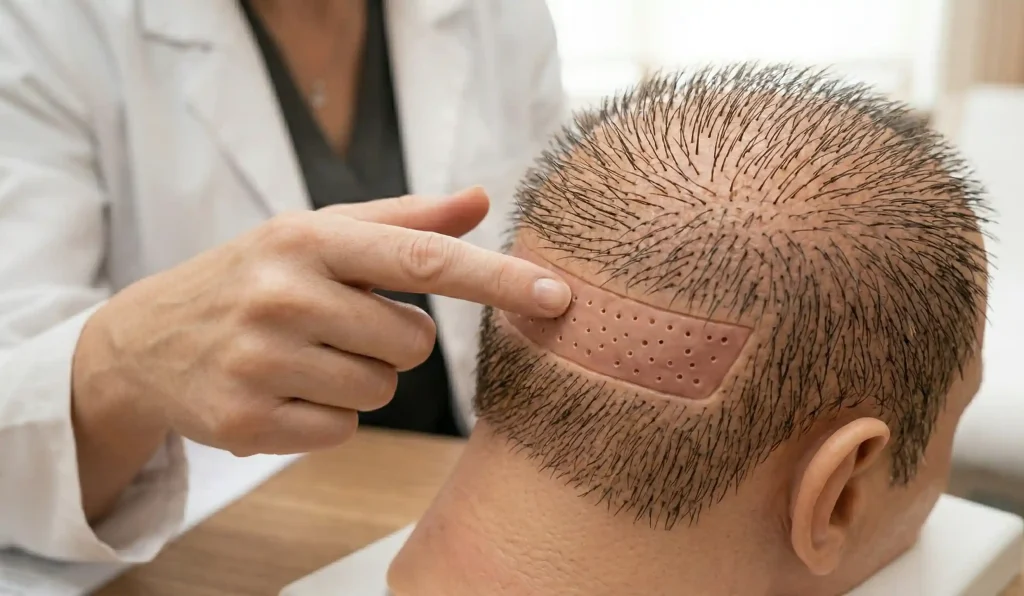
Patients’ features determine the extent to which the donor area can be kept structurally harmonious in the long term. Such features are, for example, hair shaft diameter, hair color, and degree of curl. The thicker the hair shaft or the higher the native density, the more difficult it is to notice the extraction sites. Besides that, the small microscars from which tiny extraction points are formed heal up and become almost invisible. A few millimeters of hair growing over these points can easily conceal them. The donor area will stay healthy and viable for years, making it a solid foundation for any future restoration needs, as long as proper nutrition and scalp care are maintained to ensure a healthy internal environment.
Each transplant at Lin Health Europe Clinic is carried out with the future result in mind to offer our patients the best possible outcome, visually and biologically. We regard the donor area as a “hidden” resource even after a successful restoration and accordingly continue to maintain a high level of tissue health and biological integrity. By passing Lin Health Europe Clinic, you will be able to gain medical support that brings forward the best in donor management as well as aesthetic preservation through the use of sophisticated techniques.
Hair Transplant in Turkey
Lin Health Europe Clinic‘s donor area management is the accomplishment of a high-definition, natural-looking scalp result from every viewpoint. Lin Health Europe Clinic in Turkey is more than a point on the map; it claims its position as a glorious meeting place where diverse forms of surgical brilliance and the highest standards of safety, as accredited by JCI, are combined. Our notion of hair transplant success includes understanding that the donor and recipient areas should be in complete structural harmony. Our chief mission is to take care of all your hair restoration needs backed by a high level of clinical expertise, so that you can experience a smooth transition to the new and confident self that the restoration can reveal.
By availing yourself of our facility in Istanbul, you are actually empowering a medical team that greatly values the direct relationship between follicular sustainability and the aesthetic success of the hair transplant. The latest med-tech advancements are at the disposal of our top team so that your donor area is kept dense, healthy, and visually indistinguishable from its pre-operative state. Take a first step towards hair restoration of the highest caliber at Lin Health Europe Clinic and get ready to enjoy results that represent the absolute embodiment of professional rigor and medical innovation right in the heart of Turkey.
FAQ:
Under the skilled hands of our team in Istanbul, the extractions are distributed evenly so that no bald patches are visible and the area still has a dense look.
Hair follicle does not Regrow once the follicle is picked; however, since we only take a very small fraction of total hair, the adjacent units will almost completely conceal the extraction sites.
Shock loss refers to the sudden loss or thinning of native hair around the extraction sites that happens as a result of trauma. It is a normal part of healing that biometrics and generally disappears in 3-4 months.
Saft limit is basjd on your permission base line and hair density. We in Turkey at our expert services will make sure that we do not go beyond the limit that will destroy your structural harmony.
The inflammation and a rough surface of the skin usually go down in 10-14 days time and at 30 days, the donor area changes to a normal and quite healthy looking one
Unger, W. P., and Shapiro, R. (2010). Hair Restoration Surgery: Biometrics and Donor Management. Informa Healthcare.
Bernstein, R. M., and Rassman, W. R. (2002). Follicular Unit Extraction: Surgical Brilliance and Graft Sustainability. Dermatologic Surgery.
Tebbetts, J. B. (2002). Systemic Vitality and Surgical Precision in Follicular Procedures. Saunders Elsevier.
Janis, J. E., et al. (2005). Scalp Anatomy: Implications for Structural Harmony and Recovery. Plastic and Reconstructive Surgery.