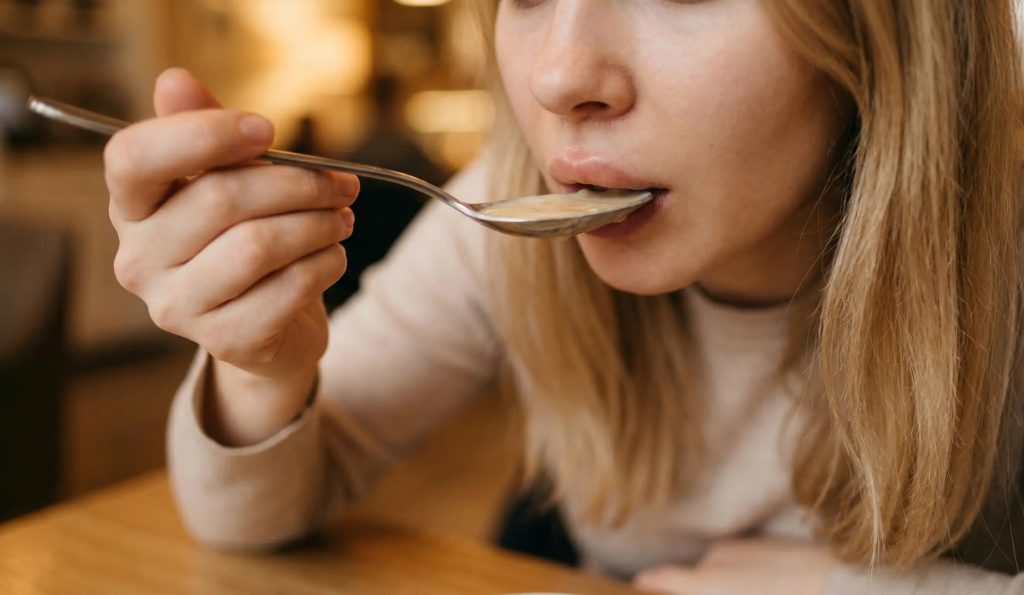
Eat soft foods and small bites.
The subnasal bullhorn lip lift is one of the transformational surgeries that can bring an instant change of appearance by shortening the philtrum and, at the same time, giving facial aesthetics a much younger look by increasing the incisal show. The surgical site of the procedure, i.e. the upper lip, which is one of the most active and mobile parts of the face, poses a challenge in how to eat comfortably during the healing stage. When it comes to eating after surgery, our clinical response is based on the principles of mechanical restriction and incision protection. The opening of the mouth wide and vigorous chewing leads to a great deal of pulling of the fresh sutures at the base of the nose each time. To secure a perfect, almost invisible scar and prevent wound dehiscence, patients must follow a modified dietary and ergonomic protocol strictly for at least the first two weeks of healing.
At Lin Health Europe Clinic, we regard post-surgery nutrition as an indispensable element of your structural success. Apart from emphasizing to our patients from abroad who come to Turkey that the manner of moving the mouth while eating is just as crucial as the type of food being consumed, our clinic is a top-tier medical establishment of the art of lip lift surgery, where we focus on the stabilization of your perioral muscles, so that your path to a renewed permanent smile is not disrupted by the mechanical strains of everyday mastication.
“Liquid Only” Rule for 48 Hours
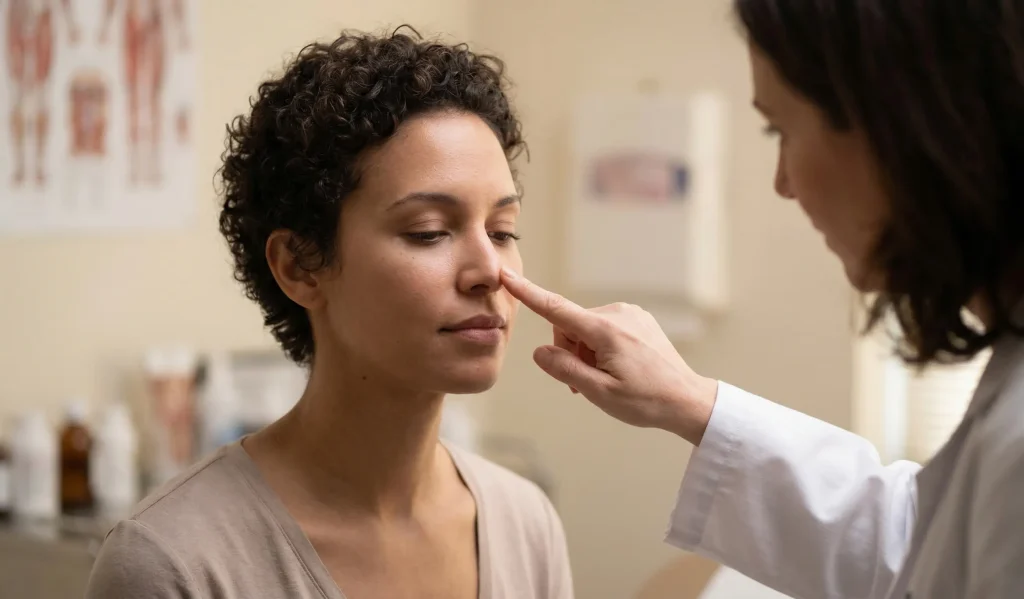
The first 48 hours after a lip lift surgery are the most crucial for the stabilization of internal and external sutures. At this point, the tissues are extremely swollen and have not transitioned to the stage of new collagen formation that will ultimately provide the wound with tensile strength. In this time frame, we impose a strict “no-chew” liquid diet. This would immobilize the orbicularis oris muscle (the circular muscle around the mouth). On the other hand, there is an important caveat: do not drink through a straw.
The continuous puckering and suction that are necessary to use a straw put great inward tension on the subnasal incision, which may pull the sutures and lead to wider scarring. At Lin Health Europe Clinic in Turkey, we advise using a small spoon or sipping from a large rimmed cup directly. High-protein smoothies, lukewarm pureed soups, and Greek yogurts are the best options to provide necessary nutrients for healing and not require any perioral movement.
Soft and Small Bites – The Transition
After the initial 48hr period and acute inflammatory response, you can slowly make the transition to soft foods. The clinical rule of thumb during this period is that if a food cannot be easily mashed with a fork, it is too hard for your current stage of recovery. At Lin Health Europe Clinic, we show our international visitors coming to Istanbul the “small bite” method. Food should be cut into pea-sized pieces only, which you place directly onto your back molars with a small spoon or child-sized fork. This avoids the necessity of “biting into” food by the front teeth, which is the upper lip stretching movement with force. Some soft foods that are good for:
- Scrambled eggs or soft omelets.
- Well-cooked pasta or mashed potatoes.
- Flaky white fish or finely shredded chicken.
- Soft-cooked vegetables and ripe avocados.
The decrease in the jaw movement range prevents the repetition of mechanical stress on delicate subnasal sutures and thus protects the fragile subnasal sutures from undergoing rupture and “widening”.
Temperature, Acidity, and How They Affect You
Chemical and thermal features of your food, along with the physical act of eating, matter to a certain extent in the process of your comfort and healing.
- Avoid Very Hot Things: Drinking very hot beverages or eating hot meal can make the blood vessels dilate, which can make swelling worse and may also result in the incision site becoming painful. The safest and most comfortable for the first few days are lukewarm or cold temperatures.
- Don’t Eat Acidic and Spicy Foods: If citrus fruits, spicy saucem and the like get in touch with fresh sutures or inside of the mouth, most of the time they cause a burning or stinging sensation.
- Limit Intake of Salty Foods: Sodium is a systemic water retention inducer and once the sodium load increases, the healing upper lip will be disproportionately affected by it. Thus, minimum postoperative edema is one of our first ten-day requests for a low-sodium diet at Lin Health Europe Clinic in Turkey.
After-Meal Hygiene and Incision Care
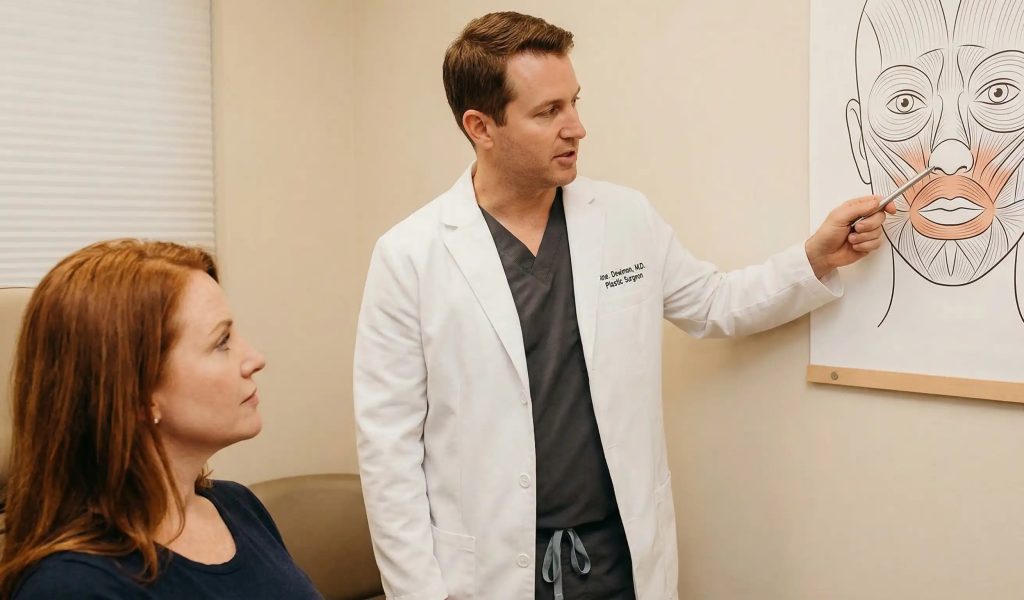
The lip lift incision lies just below the nostrils and above the mouth and is therefore very vulnerable to being polluted by food residues and nasal secretions. It is essential to carry out impeccable hygiene after every meal for a safe recovery. Right after you have finished eating, you must use water or a mild, non-alcoholic mouthwash to rinse your mouth and take out any bits of food. However, more pressing is the external incision line.
In Lin Health Europe Clinic in Istanbul, we give patients saline-soaked gauze that they use to “dab” the line gently—never wipe—the main idea is to keep it without residue. Afterwards, apply a thin smear of the antibiotic ointment or medical-grade petroleum barrier. The “moist” status of the incision is one of the proven benefits of this which is also why we do it. In this way, not only is the migration of new skin cells facilitated, but the risk of rigid scabs that make eating even more uncomfortable is also eliminated.
Return to Normal Eating
Your regular diet will most likely be resumed after the removal of your external sutures, which generally happens around day 7-day 10 at our facility in Turkey. However, the inner tissues continue to be at an early stage of remodeling even after the sisure removal. Hence, we advise our overseas patients not to consume very large, crunchy, or chewy foods (like apples, steaks, or crusty bread) for four to six weeks at the least. When you get to the second month of healing, the inner collagen framework will have developed enough strength to endure the complete mechanical force of your normal diet. The greatest desire of the specialists at Lin Health Europe Clinic is that your perfect, enhanced lip line will be natural-looking in motion as well as at rest.
FAQ:
You can eat comfortably only by starting a liquid diet for the first 48 hours, then changing to soft, pea-size food bites directly put on your back molars. This will stop you from stretching your upper lip and, at the same time, protect your delicate subnasal sutures during the first days of your recovery in Turkey.
Actually, you are entirely forbidden to use a straw for the first two weeks. The puckering motion needed for the use of a straw has the effect of creating inward pressure on the incision line, which may pull the sutures and cause the scar to become more extensive and visible in our Istanbul clinic.
The best foods are those soft, high-protein ones: scrambled eggs, mashed avocados, lukewarm pureed soups and Greek yogurt. Not only do these foods provide the nutrients that are necessary for neocollagenesis but they also don’t demand heavy chewing, which could result in strain on your new lip position.
You had better give it four to six weeks before you start eating big, chewy or crunchy foods which require you to open your mouth wide. At this point, the internal tissues are of maximum strength and the incision is mature, according to our clinic in Istanbul.
After each meal, take a piece of gauze soaked with saline, and softly rub the incision to remove any food remains or nasal secretions. Then, according to our specialists in Turkey, put a thin layer of antibiotic ointment to keep the wound moist and aid fast and neat healing.
Jacono, A. A., & Talei, B. (2014). The modified upper lip lift. Facial Plastic Surgery Clinics of North America.
Spiegel, J. H. (2011). The modified bullhorn approach for the lip lift. Facial Plastic Surgery.
Weston, G. W., et al. (2017). The subnasal lip lift: a systematic review of the literature and current techniques. Aesthetic Surgery Journal.
Fanous, N., et al. (2008). Lip lift: achieving an aesthetic upper lip. Plastic and Reconstructive Surgery.
Masoudi, A., et al. (2021). Aesthetic and functional outcomes of the subnasal lip lift. Journal of Craniofacial Surgery.
Sullivan, S. A., et al. (2019). Postoperative care in facial plastic surgery: a review. JAMA Facial Plastic Surgery.