Recovery takes about 1–2 weeks.
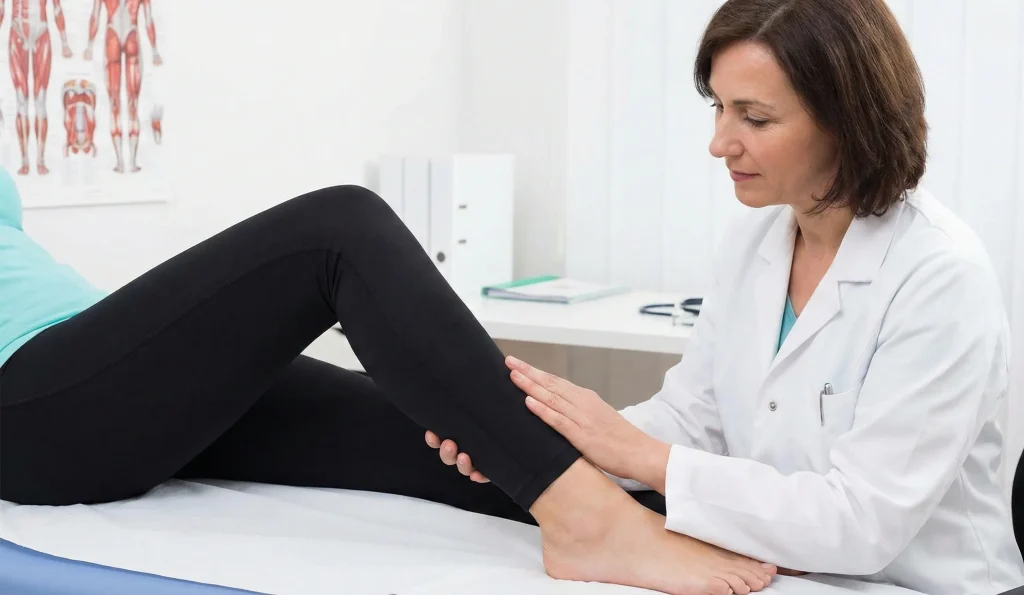
Suction-Assisted Lipectomy (Liposuction) of the legs (thighs, knees, calves, ankles) presents a different challenge from contouring the trunk or upper body in terms of physiological aspects. The recovery pattern depends mostly on the effects of Gravity and Hydrostatic Pressure. Whereas the abdomen is an area where fluid can be compressed quite easily, the legs experience a lot of Dependent Edema (swelling caused by gravity), so the inflammatory phase is extended and a special post-operative protocol is required.
We at Lin Health Europe Clinic inform the patients that after leg liposuction, the recovery is not a straight line. The surgical reduction of fat volume is done during the operation; however, the final shape is not visible because of the prolonged accumulation of interstitial fluid. Soft tissue remodeling and the disappearance of hardening take 6 to 12 months clinically. For patients to have a realistic idea of the result and to avoid complications, including Deep Vein Thrombosis (DVT) or hyperpigmentation, they have to get familiar with the venous return hemodynamics and the lymphatic system physiology.
The Inflammatory Phase and Acute Dependent Edema

Surgical injury causes inflammation, which is the major symptom of the acute phase of the reaction (Days 1-7). Due to the destruction of fat tissue mechanically and the administration of Tumescent Fluid (containing Lidocaine and Epinephrine), various inflammatory constituents in the blood are released that increase vascular permeability, leading to significant fluid leaking into the tissue around blood vessels in the lower limbs.
Since the patient is standing, the pressure of blood forces the fluid to run downward to the feet and the ankles. This Dependent Edema is often so severe that the legs look bigger than before the operation due to the temporary distortion of the contours that is typical of this phase. From a clinical point of view, it is essential to maintain the limbs elevated at all times above the heart level so as not to hinder venous flow and consequently to limit the stress on the fresh tissue tunnels at the subcutaneous level. Walking is only allowed for the purpose of prophylaxis, not for training.
Venous Thromboembolism (VTE) Prophylaxis
Lower limbs are the main area for originating Deep Vein Thrombosis (DVT). Hence, leg liposuction is an operation that has a higher risk of thromboembolic events and complications compared to other aesthetic surgeries. Stagnation of the blood during surgery, followed by consequent immobility and the vessel’s compression due to edema post-surgery, collectively form Virchow’s triumvirate for thrombosis development.
Besides, the clinical practice demands early mobilization in order to trigger functioning of the calf muscle pump which flanks of the role electrically contract the muscles of the calf, forcing venous blood to flow towards the heart. In case of high-risk individuals, drug prophylaxis, e.g., with Low Molecular Weight Heparin, is very often prescribed. Besides that, patients should not sit for a long time (thus leaving the femoral vein kinked) or stay motionless standing. Thus the recovery strategy consists of the “Walk or Elevate” routine because static dependency (sitting/standing) is physiologically harmful to the healing process during the first 2 weeks.
Graduated Compression Therapy Dynamics
Medical-Grade Compression Garments stand at the base of the lower limb post-operative regimen. In contrast to an abdominal binder, which is a single-piece band of fabric wrapped around the torso, legs are three-dimensional with many irregular shapes, such as the patient’s ankle, calf, knee, and thigh. Only leg garments can give a compression profile that is graduated—the highest pressure being at the ankle (distal), decreasing proximally towards the thigh (normally Class II: 23-32 mmHg). The pressure gradient created is necessary to resist the hydrostatic pressure of gravity and to help primarily dysfunctional lymphatic capillaries.
Correct pressure therapy achieves three desired effects in clinical practice: restoration of the natural elasticity of the skin, which is necessary to prevent the appearance of a wrinkled fat flap after liposuction; reduction of the space (the so-called “dead space”) left after liposuction to prevent seroma formation; and hastening the removal of edema fluid. Not wearing a garment or wearing an unnecessary one (tourniquet effect) can cause venous congestion, making the swelling worse and, on top of that, skin necrosis or permanent staining with hemosiderin (skin browning) may occur.
Lymphatic System Rehabilitation and Induration

The superficial lymphatic vessels running in the subcutaneous fat are very much affected by the liposuction. The result of such damage is lymphatic drainage insufficiency for a certain period of time, which accounts for the long-lasting swelling and also tissue hardness known as Induration or fibrosis. Restoring these channels (Lymphangiogenesis) and removing the debris left over from cells is a gradual biological process.
MLD is usually introduced around 48 – 72 hrs following the operation. It consists of particular moves to the skin which are repeated in cycles, and these movements are designed to influence the skin and lymph flow, thus, in a way, creating artificial vessels or opening the functioning ones and making the fluid move towards the draining lymph nodes. Having the therapy regularly really helps in decreasing the time for which you feel the woody hardness in your thigh and calf after lipo. Without the therapy, there is a risk that the protein-rich fluid may eventually organize as chronic fibrosis and cause permanent contour irregularities.
Long-Term Tissue Remodeling and Skin Retraction
The recovery final stage is the face of dermal retraction and soft tissue remodeling. This is a physiological process under the control of fibroblast activity which leads to the production of new collagen fibrils and often energy-based technologies used during the surgical procedure (e.g., VASER or Radiofrequency Assisted Lipolysis) can stimulate fibroblast metabolism hence the synthesis of new collagen fibrils. Because of skin weight in combination with the force of gravity, healing here is the slowest.
Usually, from a clinical perspective, the recovery process is completed in 6 months or more. It is sometimes hard to explain to the patients that the swelling might come and go without there being an infection (diurnal fluctuation). So, after the morning, the legs may be thin, but by the evening, they may be swollen and that cycle can last for 3 to 6 months. Dysesthesia (numbness or oversensitivity) caused by neurapraxia of the cutaneous nerves can also take a similar time to come to an end. The final photo shoot is most commonly scheduled 9-12 months after surgery, so the deep edema has completely resolved and the subcutaneous scar tissue has matured.
Frequently Asked Questions About Leg Liposuction Recovery
Gravity naturally pulls the fluid down to the lower part of your body, which is why, there is more swelling than in the stomach or arms. This also means that it will take much longer for the fluid to come back up to your heart after leg liposuction.
Generally, one should wear it all day and night for the first four weeks to help control heavy swelling. After that, the garment is worn for half the day for one more month to continue supporting the healing process.
It is important to keep moving and take short walks immediately after surgery to avoid blood clots and promote circulation. However, you need to refrain from running and heavy leg exercises for at least six weeks in order to allow the tissues to heal.
Absolutely! Lying still in bed raises the chances of forming blood clots that can be life-threatening in the deep veins of your legs. It is essential that you walk regularly all day long to make sure your blood keeps flowing well.
It is, in fact, numbness is one of the most common side effects since small sensory nerves are surgically cut off temporarily during the operation. Usually, the feeling comes back to normal slowly as the nerves recover over the course of a few months.
Kenkel, J. M., et al. (2012). Ultrasound-Assisted Liposuction: A Review of the Literature. Plastic and Reconstructive Surgery.
Illouz, Y. G. (1983). Body contouring by lipolysis: a 5-year experience with over 3000 cases. Plastic and Reconstructive Surgery.
Broughton, G., et al. (2006). The basic science of wound healing. Plastic and Reconstructive Surgery.
Sen, C. K. (2009). Wound healing essentials: Let there be oxygen. Wound Repair and Regeneration.