Replacement may be needed for complications or aging.
The Realities of Implant Lifespan and Material Behavior
One of the fundamental requirements for maintaining good health after aesthetic surgery is having a basic grasp of your device’s behavior. This is an essential element for anyone who is thinking or planning to undergo a breast enhancement. In fact, one of the biggest misconceptions regarding breast implants is the idea that they will stay the same for you forever. While modern cohesive silicone or saline breast implants may not come with printed expiration dates, it is important that you are mentally and physically ready for their eventual replacement in your own time due to physical fatigue or changes in the surrounding breast tissue.
Usually, FDA-approved modern breast implants are designed and tested under normal conditions, so it should take about 10 to 15 years before the silicone shell begins to be compromised due to fatigue, which significantly raises the risk of implant failure. Knowing exactly where revision surgery is coming from in regard to the biological and material perspectives lets you treat your beautiful investment with utmost care.
Main Causes for Clinical or Structural Revisions
The reasons for a change in breast implants can generally be divided into updates to the implant material due to structural changes of the implant, tissue-related changes, and natural aesthetic lifestyle shifts:
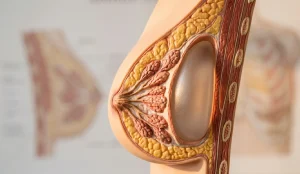
•Capsular Contracture (Tissue Immune Response): When a foreign object is placed in the body, the immune system naturally produces a protective wall of scar tissue around it. This is a capsule of fibrous tissue surrounding the implant. In a small number of cases, this scar tissue can grow to abnormal proportions, becoming thick, tight, and highly contracted. The capsule can squeeze the implant so much that the breast feels rock-hard, looks unnatural round, and causes physical discomfort on a daily basis that requires removal of the capsule and replacing of the implant.
•Structural Shell Failure (Rupture or Deflation): After about ten years of continuous bodily movement, the direction, pull, and resistance of the gravitational forces, and micro-frictional abrasion, the silicone elastomer shell outside the implant may become stressed due to fatigue until tiny, but harmful, cracks (microscopic tears) can develop. If, for example, the micro-fracture appears in a Saline Breast Implant, the liquid content will simply leak out without any harm. Whereas, in most cases involving the modern “gummy bear” cohesive silicone gel implants, such tears usually lead to silent ruptures where the thick gel substance stays completely encapsulated within the scar capsule and is usually identified only during routine screening ultrasound or MRI exams.
•Glandular Ptosis and Tissue Aging: As the years roll by, natural tissue factors will play their role in causing the transformation of your surrounding breast tissue. These might involve dramatic weight fluctuations, new childbirths, lactating phases of the child-breast bonding period, and, of course, the gradual loss of skin elasticity due to advancing age. Although the implant is completely intact, the natural breast tissue overlying the implant may begin showing signs of slack or downward displacement (ptosis), or the implant may shift under the natural breast tissue. This means the change in appearance would be the result of either an implant exchange (with no need for breast lift) or a breast lift combined with an implant exchange.
Monitoring Post-Opera Kinematics and Ensuring the Success of Revision
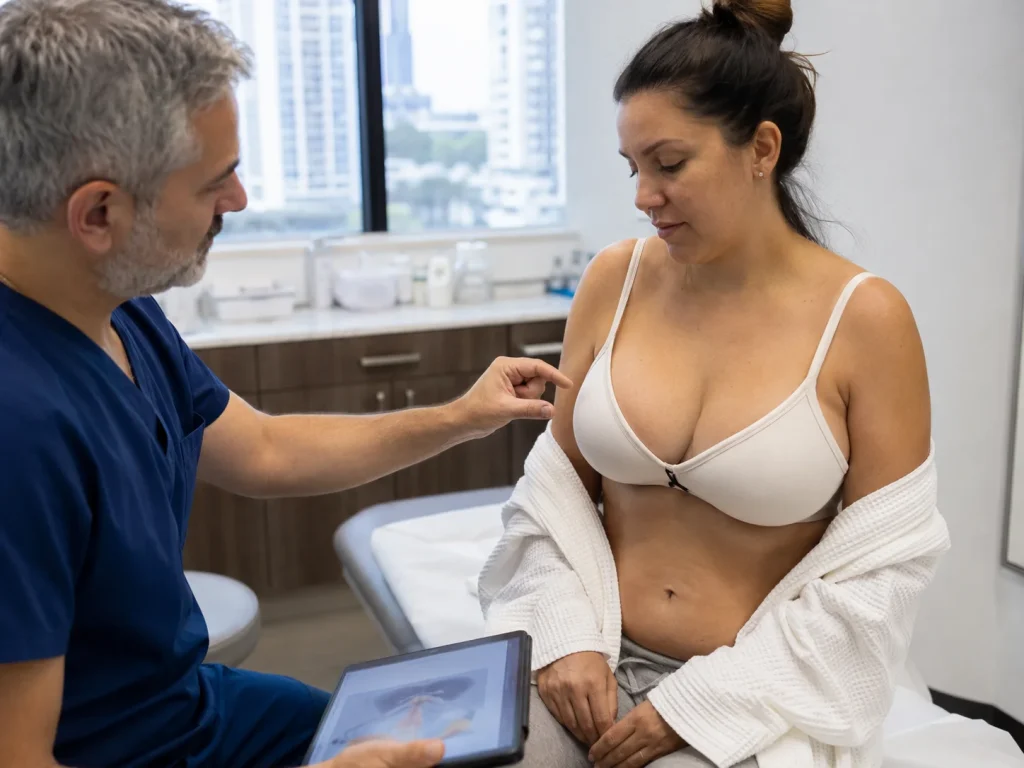
It’s also a well-known fact that for those seeking the most refined body silhouette, there is one thing to remember in terms of breast health: how much you do or can do on your own will not help with the mechanical stress of your implant. The reason is that the structural integrity of your breast compartment is crucial to the survival of both you and the device in the long run. If you are still in the recovery phase of your initial procedure or you are thinking of a scheduled implant overhaul, be sure to follow the instructions to avoid causing an overstretched lower tissue envelope and, as a result, premature pocket displacement or that new implants bottom out.
For the sake of maintaining the perfect breast shape post-revision and the soft healing of the internal capsule around your breast implant, you are advised to wear a specialist supportive (wire-free) surgical bra continuously for the first six weeks (which, by the way, is the minimum requirement) of recovery. This is a medical dress that serves as the outer skeleton (scaffolding), protecting your body skin and breast tissue by diverting mechanical wear to the pectoral muscles and distributing weight evenly over your chest. As for another aspect of your healing, completely removing all products that have tobacco or nicotine is absolutely compulsory. One of the main properties of nicotine, being a systemic vasoconstrictor, is that microvessels supplying the breast’s skin are narrowed instantaneously, thereby preventing oxygenated blood from coming to the healing internal capsule and the remodeling tissues through microcirculation and depriving their growth.
The Timeline of the Device Cycle and Keeping Your Implants Healthy
If you keep track of your breast implant’s life, you will stay on a high note. The main point here is being relaxed because you will get the clinical guidance you desire while you go through your augmentation phases as milestones. You will always be informed and you will know when and why a particular procedure is needed at any stage, from the planning phase until the long-term care phase.
| Timeline Phase | Expected Clinical Status | Required Diagnostic Action & Care |
| Weeks 1–6 | Acute capsule formation | Continuous compression garments; zero strenuous upper-body lifting. |
| Years 1–5 | Peak device stability & softness | Annual physical checkups with your clinical team; normal lifestyle activities. |
| Years 6–10 | Material maturation window | Baseline ultrasound or MRI screening to monitor shell integrity and capsule thickness. |
| Years 10–15+ | Expected material fatigue | Periodic screening; elective replacement or lift options considered if tissue changes occur. |
Choosing a Breast Clinic in Turkey
Choosing LIN Europe Clinic means that you will be welcomed not only as a patient but also as a guest to the finest clinic for aesthetic medical services. Your breast appearance, complicated implant revisions, and operation plan will be professionally overseen at an unmatched level of precision and attention to detail in our clinic in Istanbul (Turkey). We are fully aware that monitoring the capsule, diagnosing problems, taking capsule samples, and determining the right time for an implant exchange all require the most delicate and expert medical work. That is why we provide a top medical team in Turkey with all necessary equipment and facilities to support breast surgeries of every difficulty level.
LIN Europe Clinic is a state-of-the-art center for advanced breast remodeling and plastic surgery follow-up in Turkey. It is also a beautiful location for medical and wellness spa tourism that is very popular with international clients. The patient care of high end safety standards is very dear to us. We want you to be absolutely sure that the decisions you make about your surgery are the ones that will benefit both you and your body the most. We have made this website as a reference source of all possible information you may need about the surgical steps, medical risks, healing stages, implant care, and your health and beauty. You can contact us at any point during your surgical journey for any concerns you have about your breast surgery, plastic surgery, or other areas of physical beauty and health and well-being.
FAQ:
Breast implants are not lifelong devices. They eventually need to be replaced due to natural structural wear over time, capsular contracture (hardening of the scar tissue), device rupture, or natural changes in your breast tissue due to aging.
Modern cohesive silicone gel implants usually experience what is known as a “silent rupture,” meaning the gel stays contained within the scar capsule and causes no visible changes. It is best detected via a routine diagnostic ultrasound or MRI scan.
No, it is completely harmless. Saline is sterile saltwater, so if the shell leaks, your body safely reabsorbs and eliminates the fluid naturally within a few days. The breast will simply look flat, indicating it is time for a replacement.
Most premier implant manufacturers offer comprehensive, lifetime product replacement warranties that provide new devices if a structural rupture is proven. Our concierge team at LIN Europe will help you verify your specific warranty parameters.
Absolutely. An implant exchange appointment is the perfect opportunity to adjust your aesthetic profile, whether you wish to downsize for a sleeker, athletic frame or increase volume for enhanced curves.
Tebbetts, J. B. (2002). Dual plane breast augmentation: Optimizing tissue coverage, managing capsular contracture vectors, and long-term pocket stability. Plastic and Reconstructive Surgery, 109(3), 1017-1024.
Spear, S. L., et al. (2007). Breast implant life expectancy and cosmetic longevity: Analyzing structural shell failure, rupture kinetics, and revision rates. Plastic and Reconstructive Surgery, 120(7), 89S-99S.
Rohrich, R. J., et al. (2014). Advanced postoperative care, pocket geometry engineering, and long-term architectural stability in secondary breast augmentation. Aesthetic Surgery Journal, 34(5), 587-595.