
What is the Recovery Period After Axillary Liposuction?

Medically reviewed by Op. Dr. EmrePlastic and Aesthetic Surgeon
Recovery usually takes about 1–2 weeks.
The axilla (armpit) is a particular area of the body that is often considered in aesthetic plastic surgery due to its high use, complex lymph system, and numerous nerve and blood vessels passing through it. Surgery by liposuction of the axillary area is typically requested when a patient wants to localize their lipodystrophy or accessory breast tissue that causes a visible bulge. The surgical phase might be short, but the recovery period is packed with the body's inflammatory response and the time needed for tissue re-adhesion since it is a high-motion zone.
We at Lin Health Europe Clinic consider recovery a process with several phases which generally lasts for a few weeks. Different from larger areas, such as the abdomen, the axilla needs more range-of-motion preservation and local edema management. For patients who come to Turkey for treatment, locating the clinical milestones—from the peak of inflammation up to the total healing of the subcutaneous adipose tissue—is a must for a smooth operation and a safe resumption of everyday life activities.
First 48 Hours: The Acute Inflammatory Phase

The period that follows surgery most closely is accompanied by inflammation triggered at the cellular level. As the axillary area is quite vascular, patients will notice ecchymosis (bruising) and swelling due to the mechanical stomping of impact on fat cells. At this stage, the tumescent anesthesia utilized in the operation will slowly be absorbed or moved out through the cut openings. Armpit tightness or discomfort can occur hence limiting the full motion of arm adduction temporarily.
At Lin Health Europe Clinic, we treat pain and make the patient safe and stable during this time. We advise our patients to rest yet to make simple hand and wrist movements to get the blood flowing. In Turkey, our protocols involve the intervention with special absorbent dressings and the instant use of a compression garment. Wearing this garment is crucial as it reduces the space where blood or fluid can accumulate, offers the necessary support and thus it lessens the discomfort.
Inflammation and Compression Management
Recovery week 2 will mark the entrance to the subacute phase and here, the primary focus clinically will be the management of edema. The axilla, being the main network of the lymphatic system, is a potential source of persistent swelling that may even spread down the inner part of the arm. Usage of the compression medical-grade vest around the clock will prevent this.
The vest pushes lymph fluid into different channels thus supporting lymphatic circulation above the tissue operated on. If compression garments are disregarded, seroma fluid retention might occur or hardening of the tissue might go on for quite some time. At Lin Health Europe Clinic in Turkey, we explain to our patients that most of the swelling will be gone within days 10-14 but some residual "firmness" is a usual wound healing phenomenon since the subcutaneous fat layer is undergoing remodeling and fibrosis.
Regaining Upper Extremity Movement
Besides tissue healing, regaining arm motion is extremely important after axillary surgery. Since the axillary skin has to attach itself to the fascia beneath it, doing too much or heavy lifting very early after surgery could cause the operation to fail due to shearing forces. On the other hand, being completely immobile is also not allowed since that could cause joint stiffness. Patients are told that they should not use their arms to lift something heavier than 2 kgs for the first 14 days.
From week 3 onwards, the majority of clients from Lin Health Europe Clinic discover that their arm flexibility is back to normal or very close to it. We recommend patients doing mild stretching and light exercises like walking to keep the blood flowing and to be less exposed to the risk of venous thromboembolism. In Turkey, our teams provide specific instructions on when to undertake more demanding activities such as yoga, swimming, or running, which is mostly between 4 and 6 weeks from the day of your surgery; the interval depends on the patient’s progress and tissue elasticity.
Final Tissue Healing and Reshaping
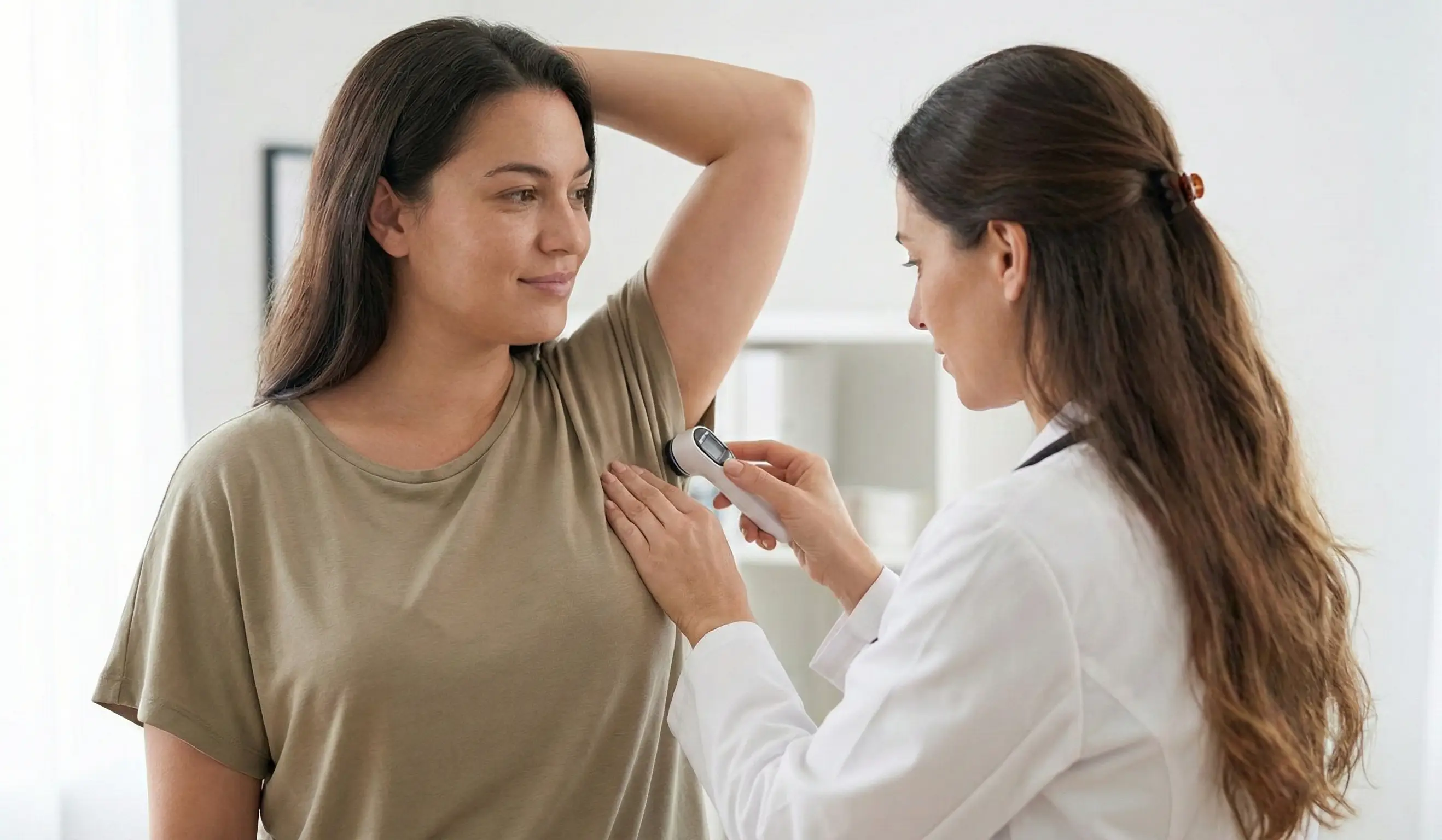
The last step in the recuperation process is the healing or maturation phase and in almost all patients, this can be somewhere between 3 and 6 months. At this time period, the final disappearance of edema and a very slight retraction of the skin still occur. The incisions for the cannula, which were once red or pink, become white and flat. When Vaser technology is used, the result will be significantly better skin due to upregulated neocollagenesis.
Patients need to be aware that the final look of the axilla cannot be seen straight away. What they call a "tight" feeling will become less and less as the internal scar tissue gets older and stronger. At Lin Health Europe Clinic, we provide our international clients with virtual and face-to-face follow-ups to make sure that their healing is on track according to plan. After 6 months, the subcutaneous adipose tissue has come to rest, and the final results of a liposuction procedure in Turkey are permanent and will be naturally incorporated into the patient’s new silhouette.
 ▶
▶Having Axillary Liposuction in Turkey
At Lin Health Europe Clinic, we consider our commitment to be beyond the convention of the operating room. We understand the recovery phase as a crucial moment of the overall surgical experience, and we supply a comprehensive aftercare package for each patient coming to Turkey. The package, among other things, contains top-notch compression garments, instructions on how to take care of wounds, and a direct communication channel with our clinical team so that the patient’s fears can be answered during the healing time.
Lin Health Europe Clinic promotes a safe and well-planned recovery as one of the main pillars of every surgical procedure. We perform surgeries using the latest and most technically advanced methods which help minimize the trauma of tissues and thereby bring about faster healing times. From the moment of your initial consultation until the day of your final check-up, with Lin Health Europe Clinic, you will have the know-how and support to go through your cosmetic journey in Turkey with confidence and peace of mind.
Frequently Asked Questions About Axillary Liposuction Recovery
References
Rohrich, R. J., et al. (2004). The role of subcutaneous fat in body contouring. Plastic and Reconstructive Surgery.
Mentz, H. A., et al. (1993). Abdominal etching: differential liposuction to detail abdominal anatomy. Aesthetic Plastic Surgery.
Kenkel, J. M., et al. (2012). Ultrasound-assisted liposuction: a review of the literature. Plastic and Reconstructive Surgery.
Frequently asked questions
When can I return to work after axillary liposuction?
Generally, most patients are able to return to a sedentary office job within three to five days after surgery. It is recommended that you wait at least a couple of weeks before going back to work that involves heavy use of your arms.
How long must I wear the compression garment?
To control the swelling, the medical-grade garment should be worn non-stop for the first two to three weeks. The surgeon at Lin Health Europe Clinic will give you the green light for part-time wearing.
Is it normal to feel numbness in my arm after the surgery?
Temporary numbness or a slight tingling sensation may result from the inflammation of the sensory nerves caused by the tissue damage during surgery. Such sensations disappear naturally within a few weeks as the swelling goes down.
When can I start exercising my arms again after Axillary Liposuction?
Walking for exercise can be done right after the surgery, but no upper body workouts for four weeks at least. The reason behind this is to prevent skin from getting stretched out when it isn't yet properly attached to the muscle.
Will the swelling move to my hands after the procedure?
Some minor swelling might, by the effect of gravity and lymphatic drainage, sometimes travel down the arm towards the elbow or hand. The best way to avoid this fluid shift is to keep the arms up and wear a compression garment.
This article is general information, not medical advice, and does not replace a consultation. Every procedure carries risk and outcomes vary from person to person.
Last reviewed 20 February 2026