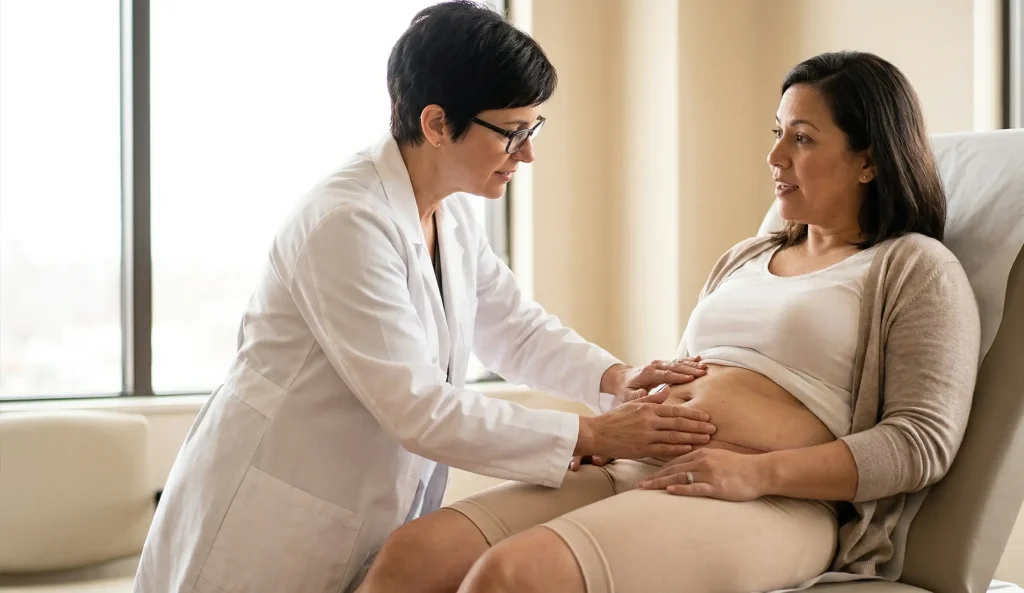
First three days are most difficult.
In the nuanced art of high-definition body sculpting and abdominal restoration, recovery post tummy tuck (or abdominoplasty) abides by a natural biological sequence. The first day post-surgery features the most significant physiological changes. However, clinical studies and patient testimonials show that Days 2 to 4 tend to be the most difficult. This timeframe corresponds to the peak of post-operative swelling (edema) and the stage when the effect of long-acting local anesthetics wanes, uncovering the full extent of the muscle tightening done underneath. As the body enters the essential stage of neocollagenesis to firmly hold the newly firmed abdominal wall, the management of this peak inflammatory phase with professional precision is necessary for efficient recovery in Turkey.
The Peak of Inflammatory Response: Days 2 through 4
It is mainly the body’s inflammatory response that makes the second, third, and fourth days difficult. Local swelling becomes so extreme that it is only after the lymphatic system clears the fluid that occurs due to the operation that it goes down. This restriction of movement and tightness gives a feeling of even more restriction on deep breathing than happened on the first day. Besides this, the repair of the rectus diastasis (tightening of the muscles) results in quite heavy core tension to which the nervous system is not yet fully accustomed.
At Lin Health Europe Clinic, we recognize these three days as the “Critical Stabilization Phase”. Our Turkey-based experts implement in-depth pain relief procedures that consider a peak in pain before it actually happens and work to keep you at ease and moving without difficulty. For guests from abroad who stay with us in Turkey, we offer high-definition biometric monitoring which helps you keep track of your inflammatory markers in real-time. This kind of professional thoroughness guarantees that these most difficult days are handled under an elite clinical watch, which permits the neocollagenesis phase to start in an environment that is both stable and well supported.
The First 24 Hours: The Anesthetic Transition
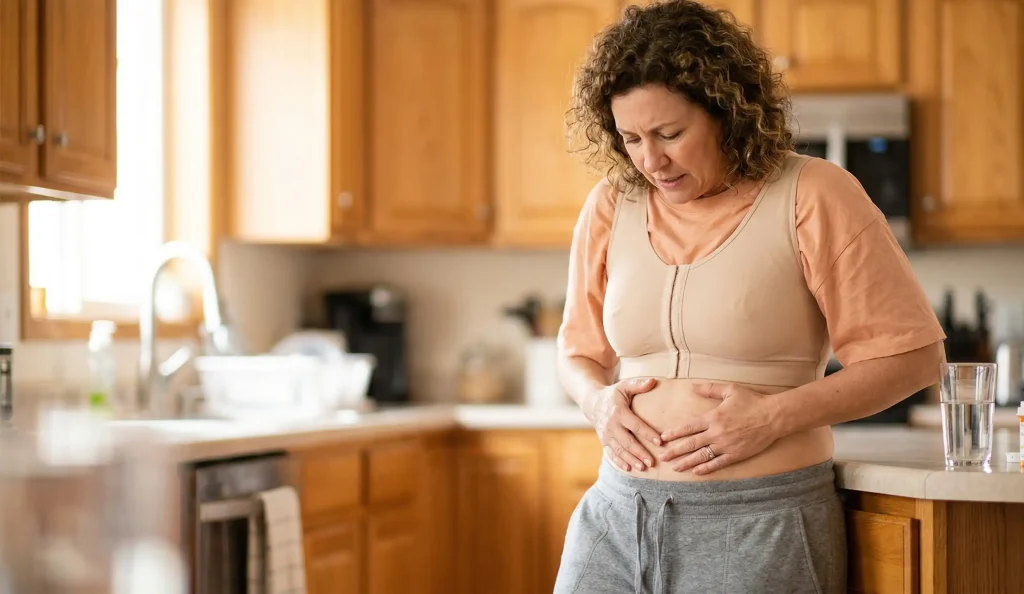
If we say that the first postoperative day is mostly marked by a sense of “heaviness” or sleepiness as the general anesthesia is expelled from the body, it won’t be far from the truth. Although the surgical area remains numb to some extent due to the partial effect of the long-acting blocks, the major problem here is the transition to a walking posture where the back is slightly bent. Keeping this slight bend is necessary for the protection of the incision from overstretching. At the very earliest stage of the body’s metabolic alteration, patients get a combination of tiredness and a high level of core tightness.
At Lin Health Europe Clinic, our knowledge of the “Early Mobilization Protocol” enables us to initiate it within a few hours after finishing your surgery in Istanbul. For those who we host from other countries Turkey, we help you walk safely through biometric-assisted walking without any stress on the internal repairs. Thanks to encouraging early movement, it results in increased blood flow and lowered risk of complications which leads to a very good base for the neocollagenesis phase. Our healthcare professionals at Istanbul do their utmost to help you on the first day so that you are able and willing to continue with the recovery curve peak.
Managing Digestive Reset and Core Stability
The digestive system’s reaction to surgery and medication is one of the major reasons why the “hardest day” is the day when the patient is most uncomfortable. Anesthetic agents that have been used in surgery may cause atony of the intestines temporarily, resulting in bloating and internal pressure which may lead to more pain in the abdominal wounds. If this digestive discomfort coincides with the surgical swelling peak on Day 3, then it may give a patient a considerable feeling of being very unwell. Drinking enough water and using clinically approved stool softeners are two of the main steps that need to be taken to relieve this pressure while at the same time giving protection to the internal sutures that are being strengthened.
The dietary experts at Lin Health Europe Clinic tailor a specific “Digestive Recovery Menu” for each patient in Turkey. In Istanbul, we emphasize including in your diet high-protein, anti-inflammatory foods that aid in tissue healing without being hard on the stomach. In our view, professional rigor extends to your metabolic health. Your team in Turkey will keep the internal environment calm and, by handling your digestive biometrics, help neocollagenesis in strengthening the abdominal wall without unnecessary internal tension.
The Turning Point: Transitioning to Comfort
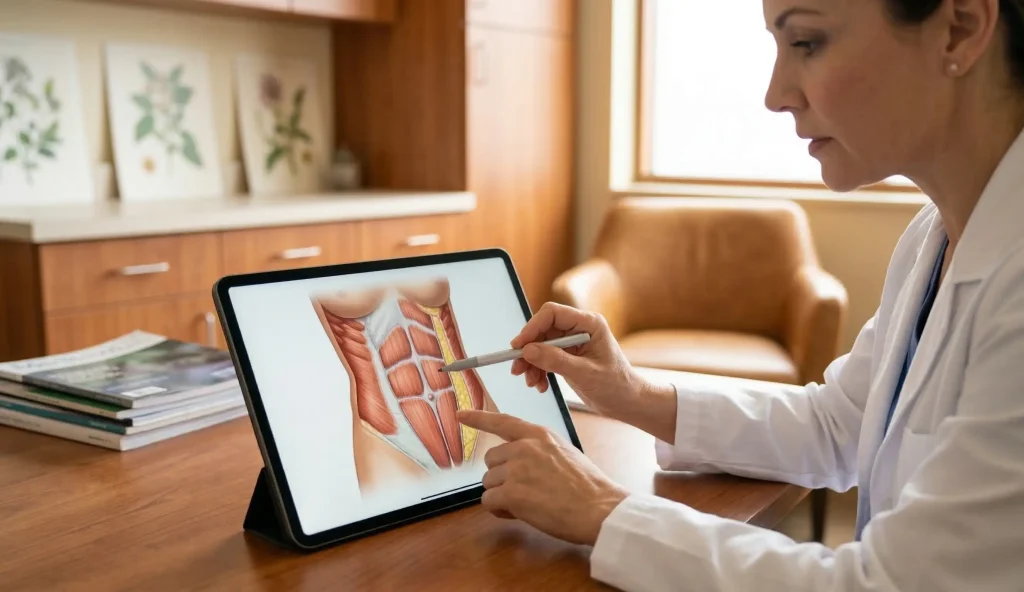
Many patients reach a sort of “turning point” on the fifth or sixth day. The peak of the swelling has usually passed, and the body accommodates well the altered position of the abdominal muscles. It is highly likely that you will have to continue wearing your compression garment and limit your physical activities.
Lin Health Europe Clinic offers its international clientele a “Recovery Concierge” service 24/7 in Turkey. In Istanbul, we make it our priority to check your condition regularly and to change your compression garment schedule while keeping professional rigor in the consideration of your comfort. Our main objective is the “long-term aesthetic integrity” of your results, meaning that your recovery through the hardest times shall result in a permanent and high-definition silhouette. For those whom we welcome in Turkey, proper clinical oversight means that even the toughest parts of the journey are backed by the best bariatric and aesthetic experts in the world.
Tummy Tuck in Turkey
Lin Health Europe Clinic is the worldwide refuge for those who require the absolute finest surgical skills and top quality care. Our base in Turkey symbolizes medical advancement, where high-definition body contouring is offered amid a world-class JCI-accredited setting. We use the most cutting-edge hospitals in Istanbul reflecting our position as the number one in medical tourism and body restoration realm. Trusting our clinic is a decision for you to be in the care of the most professional, safety-oriented hand in the world. We provide every transformation with unrelenting professional rigor and unmatched hospitality.
FAQ:
Usually, days 2 to 4 are the ones when patients feel the most pain. The level of swelling caused due to a tummy tuck in Istanbul is at its worst during these days while the very first effect of the long-acting numbing medications is gone and hence, pain management in Turkey has to be more intensive.
The main cause of this tightness is the extreme post-operative swelling and the body’s natural inflammatory reaction. In Turkey, our professional procedures include the use of specialized compression and mobility protocols in Istanbul to reduce this effect while your body is undergoing the phase of neocollagenesis.
Most patients start standing up more upright between Day 7 and Day 14; however, a fully “straight” posture may take up to three weeks. Our team of doctors in Turkey keeps a close eye on incision tension in Istanbul so that you can safely move to a full upright position.
Most important things are scheduled pain medication, frequent moving through short walks and a high protein diet. Lin Health Europe Clinic offers 24/7 assistance in Istanbul as well as step-by-step biometric monitoring of your first week.
Internal tightening of the abdominal muscles results in a much higher level of core tension than a skin-only procedure. However, this is exactly what yields the high-definition result in Istanbul and the pain is very effectively controlled through our top clinical protocols in Turkey.
- Matarasso, A. (1989). Abdominolipoplasty: a system of classification and recovery milestones. Aesthetic Plastic Surgery.
- Pollack, H., & Pollack, T. (2000). Progressive tension sutures and the management of post-operative edema. Plastic and Reconstructive Surgery.
- Nahas, F. X. (2001). The Anatomy of Abdominal Muscle Repair and Recovery. Quality Medical Publishing.
- Aly, A. S., et al. (2003). Belt lipectomy and the management of acute recovery in massive weight loss patients. Plastic and Reconstructive Surgery.
- Swanson, E. (2015). A prospective study of 100 consecutive tummy tucks: defining the “hardest” recovery days. Plastic and Reconstructive Surgery.