Yes, tightness and pulling are common.
Biometrics of Dermal Tension and Muscle Plication
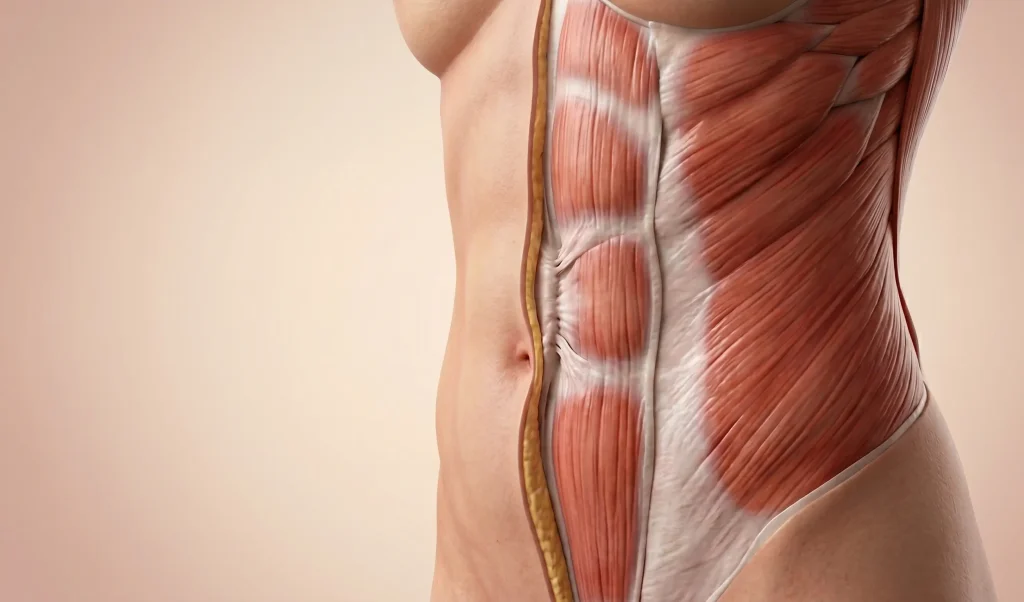
In the field of abdominal restoration, a continuous “pulling” sensation is not a mere side effect but rather a signal that the operation has resulted in the desired, highly defined outcome. According to biometrics, a tummy tuck (abdominoplasty) is basically the tightening of two layers. First, the surgical genius of muscle plication of the rectus obtains the separated muscles of the abdomen back into a tight midline. Second, the skin that is in excess is removed, and the remaining dermis is stretched to provide a firm and sculpted surface.
Our team at Lin Health Europe Clinic would point out that such tension is a physiological requirement to attain structural harmony. This “internal corset” type of tension provides a constant pull on both the fascia and the new incision site. It certainly goes without saying that this deliberate biometric tension is what it takes to produce the ultimate flat contour. You might feel it quite limiting in the first couple of weeks, but biologically speaking, this simply indicates that your systemic vitality is helping you to undergo a transformation that will eliminate laxity.
Fascial Remodeling: The “Internal Corset” and Deep Tissue Maturity

Skin tightening following a tummy tuck is only the visible part of the process of fascial remodeling, which is going on pretty deep inside the tissues. From a biometric view, the internal muscle repair sutures form a detailed shape that the body will find new ways to live with. In the first couple of months, the body generates a special type of scar called fibrosis, which is a kind of biological glue fixing the muscles in the new positions.
One has to remodel the fascial tissue in order to get to the very peak of structural harmony. When the collagen fibers rearrange, the first “stiffness” one gets from the abdomen fades away. We at Lin Health Europe Clinic stress that such internal fixation is indispensable for long-lasting stability. If you follow recovery practices with professional rigor, such as not engaging in heavy lifting or sudden turning, you are letting the internal biometrics solidify themselves, and so your surgical brilliance results will be standing symmetric and secure for a lifetime.
Postural Adaptation: The “Hunched” Recovery Phase
The most common trigger for guests to notice this pulling feeling is a postural change. From a biometric perspective, the tension that is being put on the lower abdominal wound is such that you would most likely not be able to stand up straight right after the surgery. This is something that the organism really needs to do; staying in a “hunched” or flexed posture (which is up to 45 degrees of bending) for the first 10 days is, in fact, the best protection of the wound’s biological balance by effectively reducing the mechanical stress to dermal sutures.
Creating structural harmony is essentially about granting the skin the time to stretch and fit into the new and highly defined contours. If you will be forcing your body to get straight too soon, it is very likely that the systemic health of the incision will be compromised, resulting in wider scars. When the edema locally subsides, and tissues get back their flexibility, you will experience the pulling sensation to be less and less. Lin Health Europe Clinic is more than willing to assist you in performing daily stretching exercises to help you get back to normal walking posture.
Nerve Regeneration and the “Phantom Pulling” Sensation
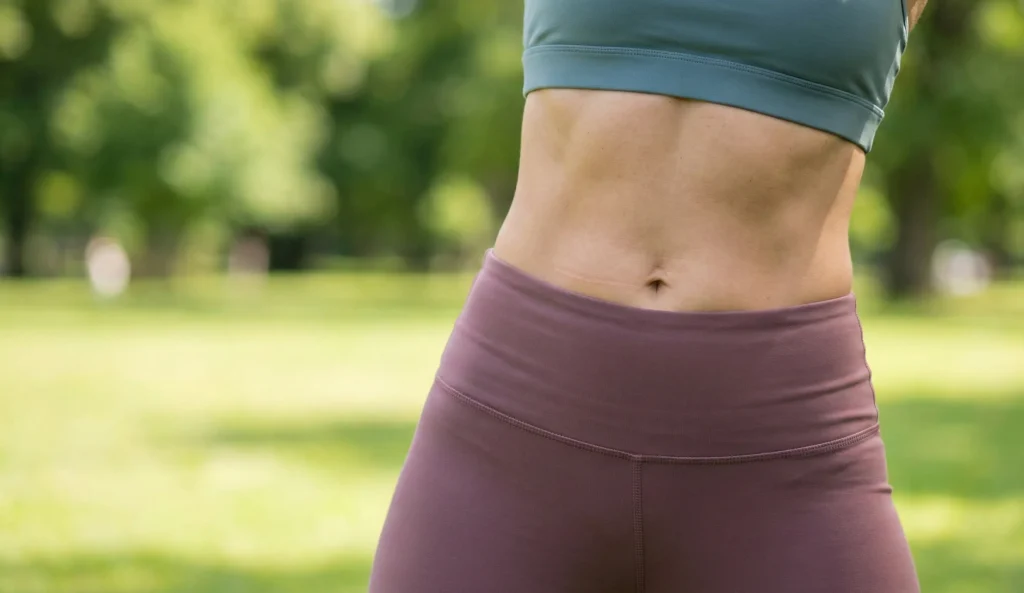
Often, the mechanical nature of “pulling” largely disappears by month two of the postoperative period, and the “pulling” sensation is then associated with nerves being “out of order.” In a biometric sense, the anesthetic treatment to the sensory nerves causes a decrease in feeling in the lower abdomen, and the numbness is one of the consequences. It is when the nerves have started their high-definition repair that they usually “fire” randomly, which leads to pulling sensations that do not physically exist, to tingling, or to those sharp, brief “zaps.”
What you get here is a sign of clinical mastery in healing since your systemic vitality in the neural pathways is being revived. You will react in a certain way, for example, by moving or changing the temperature, which will reflect the biological balance of reinnervation because that is the biological function of the new nerve fibers growing out. Lin Health Europe applies medical innovation to aftercare, especially with scar desensitization techniques, so that the changes in sensation can be kept under control with professional care, helping one to be sure that structural harmony is being achieved.
Tummy Tuck in Turkey
Choosing Lin Health Europe Clinic means you are entering a worldwide sanctuary where the intricacies of body contouring are handled with top-tier clinical mastery. We know that the “pulling” feeling may scare you but it is the very essence of your new high-definition body. The first-rate combination of medical innovation and surgical brilliance in our Turkey facility makes sure that your systemic vitality will be well-protected throughout all phases of your body transformation.
When you decide on Lin Health Europe Clinic, you will be putting your faith in a medical system that is at the forefront, where anatomy and art converge. We provide professional care for your transition so that you can be assured of having stable, symmetric, and perfectly structured harmony results. Visiting Lin Health Europe Clinic is an excellent choice if you want to enjoy well-developed care and come away with a profile that corresponds to the utmost in aesthetic and biological balance. In Turkey, your journey to a more sophisticated, carved, and self-assured look is taken care of with exactitude.
FAQ:
Yes. The body moving more can cause the swelling to return for a short time and this will lead to more tension on your tissues. Being in a bent position and resting is an absolute clinical requirement for bringing back the biological balance in the body and for reducing the pulling sensation.
Many people feel a major drop in tightness by the time the six-week point rolls around. However, to reach the top level of tissue flexibility and systemic health, the deep fascial layers are still maturing and it could take as long as six months.
Tension does get intense, but the surgical brilliance of the sutures that the surgeon puts in place at a high tensile strength. The pulling that is combined with a sudden loss of body shape or severe localized swelling is a reason to call the expert for an evaluation.
A gentle stretch can be started after the 4th week probably, depending on your own biomechanics. It goes without saying that sticking to the orchestrated care guidelines is crucial to prevent you from disrupting the structural harmony of the healing muscles.
Indeed. You should consider having manual lymphatic drainage as it is a clinical requirement. The purpose is to reduce the tightness caused mainly by the “woody” edema. This is the best way to help the body to get back to its caved-in, vibrant version of yourself and increase the systemic vitality overall.
Tebbetts, J. B. (2002). Systemic Vitality and Surgical Precision in Body Contouring. Saunders Elsevier.
Nahai, F. (2011). The Art of Aesthetic Surgery: Principles and Professional Rigor in Abdominoplasty. Quality Medical Publishing.
Janis, J. E., et al. (2005). Abdominal Anatomy and Biometrics: Implications for Post-Operative Tension. Plastic and Reconstructive Surgery.
Pollock, H., and Pollock, T. (2000). Progressive Tension Sutures in Abdominoplasty: Surgical Brilliance and Structural Harmony. Aesthetic Surgery Journal.
Stuzin, J. M. (2008). Biological Balance and Medical Innovation in Tissue Tightening. Plastic and Reconstructive Surgery.