Avoid sauna during early healing period.
If we zoom in on the very specialized corner of the world that is high-definition facial rejuvenation and structural restoration, then controlling the post-operative environment is just as crucial for the final outcome as the actual surgical performance. Despite the association that saunas have with their detoxification and relaxation effects, they pose a real hazard to healing if used during the acute or sub-acute phases of a facelift recovery. Actually, the main physiological risk is thermal vasodilation, i.e., the expansion of blood vessels as a reaction to increased temperature. Indeed, after a facelift, the skin located on the face which was surgically lifted, changes positions, leaving the vascular and lymphatic networks locally disrupted for a short time.
Heat from a sauna leads to a lot more blood trying to get to these already compromised parts which results in the biggest manifestation of post-operative edema (swelling) besides the increased pressure internally on the new scars. Adding to the woes, the heat of the sauna may cause a “throbbing” sensation, inflammation lasting longer, and possibly raising the risk for the formation of a hematoma or seroma in very bad cases.
Vasodilation vs. Incision Integrity: The Mechanics of Recovery

First and foremost, the success of an invisible facelift starts with the security of the skin’s closure. What the body is busy doing in the background during the initial weeks post-op is patching up the skin and SMAS that have been lifted and reattached to the new base. Heat-induced vasodilation sets the stage for the capillaries to leak and put more strain on the thread holding. The big fight happens when the expanded incisions at their weaker points can even form gaping scars which are far from the tiny “hairline” ones that distinguish top-tier facelift work. Moreover, the warm and moist sauna environment can prematurely soften scabs and crusts at the early stages, thus increasing the risk of an infection or wound opening due to the destroyed skin barrier which requires full reconstruction.
Lin Health Europe Clinic understands environmental management very seriously as a strict professional measure meant to cover the aesthetic outputs of our international guests. Our surgeons in Turkey point out that facial tissues need to go through a phase of “thermal sanctuary” so that the vascular system can do its job of adjustment without any external stimulus. In Istanbul, we take care of our patients beyond surgery by making sure every single one of them understands the risks of biomechanical premature heat exposure associated with their post-op face.
Disruption of Collagen Synthesis and Tissue Remodeling
Without new collagen fibers being created and arranged systematically, the tissues that have been teased into position cannot be held in place; ergo, a long-lasting facelift cannot be expected. Remodeling tissues take their cues from what the rest of the patient’s body is up to, and the environment within which the changes can be very crucial. Locally, heat exposure changes the face temperature to >180°F (82°C), leading to an increased metabolic rate of skin cells with a high probability of qualitative changes in collagen deposition. Patients who display such characteristics might see their skin as quite “stiff” and/or “unnatural” and face the downfall of achieving a high-definition restoration that moves with them softly and naturally.
Lin Health Europe Clinic physicians and staff collaborate to get every patient in Istanbul to realize that systemic vitality is a must and that avoiding temperature extremes indoors and outdoors supports the body’s repair mechanisms. We demonstrate how to stay properly hydrated, propose all-natural solutions like herbal teas that revitalize, and use a surgical deha to monitor and guide the maturation of the surgical site.
Sensory Nerves and the Hidden Risk of Thermal Injury
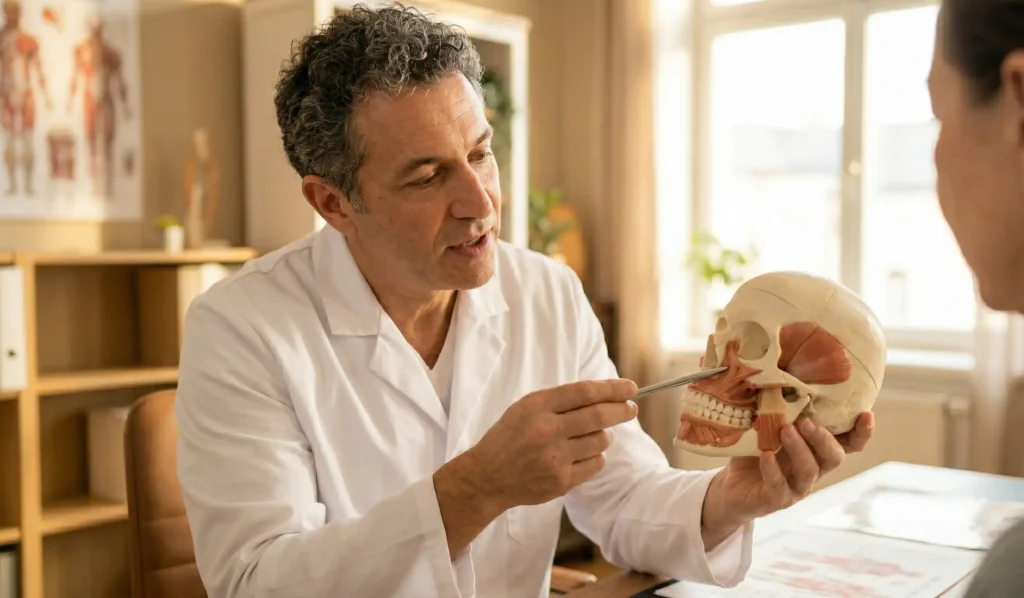
A frequently overlooked risk that someone using a sauna after a facelift may forget is that skin sensation changes temporarily without warning. The result of surgical changes to facial skin manipulation is that for some cheek, ear, and neck areas, loss of feeling or reduced sensitivity could last for several weeks or months. This functional loss of sensation leads to an inability on the part of the patient to tell when the skin in a sauna environment is heating above normal, or is at a very high temperature. Thermal injuries to healing wounds would be very serious and may even cause tissue necrosis or permanent changes in skin color which will require extensive and complex revision to overcome. When considering that sensory nerves must be in full structural harmony with the new face, the importance of avoiding extreme temperature environments is self-evident.
Lin Health Europe Clinic follows a strict protocol of absolute professional rigor when it comes to instructing our patients about the “sensory timeline” of recovery in Turkey. In Istanbul, our detailed guidelines normally suggest a break of at least six to eight weeks before the resume of a heat activity. Not only do the surgeons protect the nerve networks during the procedure, but the patient’s immediate environment acts as the last defense layer.
Facelift in Turkey
Lin Health Europe Clinic is the global haven for those who require the ultimate level of facial mastery combined with the top-class hospitality experience. Our medical center in Turkey epitomizes the meeting place of scientific advancement in high-definition facelifts and impeccable safety standards certified by JCI and professional rigor. Going with us offers you the most highly skilled and safety-oriented team in Istanbul. Here, every facial restoration is treated like an art piece of structural integrity. Not only are we the number one choice among international patients searching for the most beautiful results, but also a safe and luxurious surgical experience which guides every aspect of one’s systemic vitality and recovery journey.
FAQ:
Most plastic surgeons advise you to refrain from sauna for at least 6 to 8 weeks as the usage of sauna can be detrimental to your recovery if you start too early. The caution is to give the body time to settle the swelling of the face and for the cuts made to become structurally stable so that they can handle the stress of heat without getting damaged.
Light warmth may at times help blood flow but heat from a sauna is very destructive. It can lead to more swelling and bleeding inside which is not good during the first few days after a facelift.
Absolutely, the heat can cause the incisions to open up or get inflamed. These not only result in bigger scars but the swelling period also gets prolonged thereby ruining the nice and smooth effect you were expecting your facelift to give you.
Post-facelift, there is often a degree of numbness in the skin hence you might not be able to tell how hot the sauna is. That means you could be severely damaged by heat without even know it, which is a big risk for the burns that can cause permanent damage to skin flaps healing.
The combination of moisture and heat present in a sauna situation can be conducive to bacteria growth around the operative site. Therefore, it is very important that the area remains clean and dry especially before the skin barrier has completely healed.
Rohrich, R. J., et al. (2011). The Role of Vasodilation and Thermal Stress in Facelift Recovery. Plastic and Reconstructive Surgery.
Stuzin, J. M. (2008). Facial Restoration: Managing the SMAS and Post-Operative Environment. Quality Medical Publishing.
Barton, F. E. (2002). Facial Rejuvenation: The Impact of Heat and Edema on Incision Integrity. Aesthetic Surgery Journal.
Marten, T. J. (1997). High-Definition Facelifts: Complications and Environmental Management. Clinics in Plastic Surgery.